
9781461383116 - control motivation and social cognition (15 resultados)

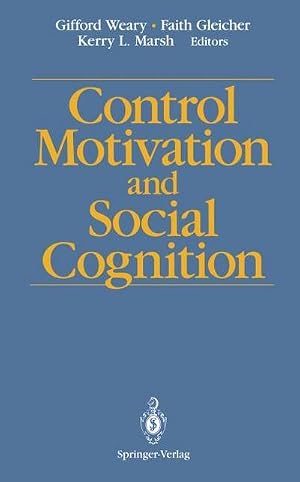
Control Motivation and Social Cognition
Weary, Gifford (EDT); Gleicher, Faith (EDT); Marsh, Kerry L. (EDT)
- Tapa blanda
Librería: GreatBookPrices, Columbia, MD, Estados Unidos de AmericaGreatBookPrices
Contactar con el vendedorVendedor de 5 estrellasCondición: Nuevo
EUR 53,67
Envío por EUR 2,31Se envía dentro de Estados Unidos de AmericaCantidad disponible: 15 disponibles
Condición: New.

Control Motivation and Social Cognition
Weary, Gifford (EDT); Gleicher, Faith (EDT); Marsh, Kerry L. (EDT)
- Tapa blanda
Librería: GreatBookPrices, Columbia, MD, Estados Unidos de AmericaGreatBookPrices
Contactar con el vendedorVendedor de 5 estrellasCondición: Usado - Como Nuevo
EUR 62,57
Envío por EUR 2,31Se envía dentro de Estados Unidos de AmericaCantidad disponible: 15 disponibles
Condición: As New. Unread book in perfect condition.
- Tapa blanda
Librería: Ria Christie Collections, Uxbridge, Reino UnidoRia Christie Collections
Contactar con el vendedorVendedor de 5 estrellasCondición: Nuevo
EUR 61,08
Envío por EUR 13,99Se envía de Reino Unido a Estados Unidos de AmericaCantidad disponible: Más de 20 disponibles
Condición: New. In.
- Tapa blanda
Librería: Chiron Media, Wallingford, Reino UnidoChiron Media
Contactar con el vendedorVendedor de 5 estrellasCondición: Nuevo
EUR 57,48
Envío por EUR 18,08Se envía de Reino Unido a Estados Unidos de AmericaCantidad disponible: 10 disponibles
Paperback. Condición: New.
- Tapa blanda
Librería: Books Puddle, New York, NY, Estados Unidos de AmericaBooks Puddle
Contactar con el vendedorVendedor de 4 estrellasCondición: Nuevo
EUR 81,94
Envío por EUR 3,49Se envía dentro de Estados Unidos de AmericaCantidad disponible: 4 disponibles
Condición: New. pp. 366.
Control Motivation and Social Cognition
Weary, Gifford (Editor) / Gleicher, Faith (Editor) / Marsh, Kerry L. (Editor)
- Tapa blanda
Librería: Revaluation Books, Exeter, Reino UnidoRevaluation Books
Contactar con el vendedorVendedor de 5 estrellasCondición: Nuevo
EUR 80,76
Envío por EUR 14,59Se envía de Reino Unido a Estados Unidos de AmericaCantidad disponible: 2 disponibles
Paperback. Condición: Brand New. reprint edition. 360 pages. 9.25x6.10x0.87 inches. In Stock.

- Tapa blanda
Librería: moluna, Greven, Alemaniamoluna
Contactar con el vendedorVendedor de 5 estrellasCondición: Nuevo
EUR 48,37
Envío por EUR 48,99Se envía de Alemania a Estados Unidos de AmericaCantidad disponible: Más de 20 disponibles
Condición: New.
 Más imágenes
- Tapa blanda
Librería: preigu, Osnabrück, Alemaniapreigu
Contactar con el vendedorVendedor de 5 estrellasCondición: Nuevo
EUR 50,40
Envío por EUR 70,00Se envía de Alemania a Estados Unidos de AmericaCantidad disponible: 5 disponibles
Taschenbuch. Condición: Neu. Control Motivation and Social Cognition | Gifford Weary (u. a.) | Taschenbuch | xvi | Englisch | 2012 | Humana | EAN 9781461383116 | Verantwortliche Person für die EU: Springer Verlag GmbH, Tiergartenstr. 17, 69121 Heidelberg, juergen[dot]hartmann[at]springer[dot]com | Anbieter: preigu.
- Tapa blanda
Librería: AHA-BUCH GmbH, Einbeck, AlemaniaAHA-BUCH GmbH
Contactar con el vendedorVendedor de 5 estrellasCondición: Nuevo
EUR 59,97
Envío por EUR 62,76Se envía de Alemania a Estados Unidos de AmericaCantidad disponible: 1 disponibles
Taschenbuch. Condición: Neu. Druck auf Anfrage Neuware - Printed after ordering - Over the past two decades theorists and researchers have given increasing attention to the effects, both beneficial and harmful, of various control related motivations and beliefs. People's notions of how much personal control they have or desire t…o have over important events in their lives have been used to explain a host of performance and adaptational outcomes, including motivational and performance deficits associated with learned helplessness (Abramson, Seligman, & Teasdale, 1978) and depression (Abramson, Metalsky, & Alloy, 1989), adaptation to aging (Baltes & Baltes, 1986; Rodin, 1986), cardiovascular disease (Matthews, 1982), cancer (Sklar & Anisman, 1979), increased reports of physical symptoms (Pennebaker, 1982), enhanced learning (Savage, Perlmutter, & Monty, 1979), achievement-related behaviors (Dweck & Licht, 1980; Ryckman, 1979), and post abortion adjustment (Mueller & Major, 1989). The notion that control motivation plays a fundamental role in a variety of basic, social psychological processes also has a long historical tradition. A number of theorists (Heider, 1958; Jones & Davis, 1965; Kelley, 1967), for example, have suggested that causal inferences arise from a desire to render the social world predictable and controllable. Similarly, control has been implicated as an important mediator of cognitive dissonance (Wicklund & Brehm, 1976) and attitude phenomena (Brehm & Brehm, 1981; Kiesler, Collins, & Miller, 1969). Despite the apparent centrality of control motivation to a variety of social psychological phenomena, until recently there has been relatively little research explicitly concerned with the effects of control motivation on the cognitive processes underlying such phenomena (cf.
- Tapa blanda
Librería: Buchpark, Trebbin, AlemaniaBuchpark
Contactar con el vendedorVendedor de 5 estrellasCondición: Usado - Excelente
EUR 36,94
Envío por EUR 105,00Se envía de Alemania a Estados Unidos de AmericaCantidad disponible: 1 disponibles
Condición: Sehr gut. Zustand: Sehr gut | Seiten: 364 | Sprache: Englisch | Produktart: Bücher | Over the past two decades theorists and researchers have given increasing attention to the effects, both beneficial and harmful, of various control related motivations and beliefs. People's notions of how much personal control they h…ave or desire to have over important events in their lives have been used to explain a host of performance and adaptational outcomes, including motivational and performance deficits associated with learned helplessness (Abramson, Seligman, & Teasdale, 1978) and depression (Abramson, Metalsky, & Alloy, 1989), adaptation to aging (Baltes & Baltes, 1986; Rodin, 1986), cardiovascular disease (Matthews, 1982), cancer (Sklar & Anisman, 1979), increased reports of physical symptoms (Pennebaker, 1982), enhanced learning (Savage, Perlmutter, & Monty, 1979), achievement-related behaviors (Dweck & Licht, 1980; Ryckman, 1979), and post abortion adjustment (Mueller & Major, 1989). The notion that control motivation plays a fundamental role in a variety of basic, social psychological processes also has a long historical tradition. A number of theorists (Heider, 1958; Jones & Davis, 1965; Kelley, 1967), for example, have suggested that causal inferences arise from a desire to render the social world predictable and controllable. Similarly, control has been implicated as an important mediator of cognitive dissonance (Wicklund & Brehm, 1976) and attitude phenomena (Brehm & Brehm, 1981; Kiesler, Collins, & Miller, 1969). Despite the apparent centrality of control motivation to a variety of social psychological phenomena, until recently there has been relatively little research explicitly concerned with the effects of control motivation on the cognitive processes underlying such phenomena (cf.
- Tapa blanda
- Impresión bajo demanda
Librería: Brook Bookstore On Demand, Napoli, NA, ItaliaBrook Bookstore On Demand
Contactar con el vendedorVendedor de 5 estrellasCondición: Nuevo
EUR 46,22
Envío por EUR 6,80Se envía de Italia a Estados Unidos de AmericaCantidad disponible: Más de 20 disponibles
Condición: new. Questo è un articolo print on demand.

- Tapa blanda
- Impresión bajo demanda
Librería: BuchWeltWeit Ludwig Meier e.K., Bergisch Gladbach, AlemaniaBuchWeltWeit Ludwig Meier e.K.
Contactar con el vendedorVendedor de 5 estrellasCondición: Nuevo
EUR 53,49
Envío por EUR 23,00Se envía de Alemania a Estados Unidos de AmericaCantidad disponible: 2 disponibles
Taschenbuch. Condición: Neu. This item is printed on demand - it takes 3-4 days longer - Neuware -Over the past two decades theorists and researchers have given increasing attention to the effects, both beneficial and harmful, of various control related motivations and beliefs. People's notions of how much personal control they…have or desire to have over important events in their lives have been used to explain a host of performance and adaptational outcomes, including motivational and performance deficits associated with learned helplessness (Abramson, Seligman, & Teasdale, 1978) and depression (Abramson, Metalsky, & Alloy, 1989), adaptation to aging (Baltes & Baltes, 1986; Rodin, 1986), cardiovascular disease (Matthews, 1982), cancer (Sklar & Anisman, 1979), increased reports of physical symptoms (Pennebaker, 1982), enhanced learning (Savage, Perlmutter, & Monty, 1979), achievement-related behaviors (Dweck & Licht, 1980; Ryckman, 1979), and post abortion adjustment (Mueller & Major, 1989). The notion that control motivation plays a fundamental role in a variety of basic, social psychological processes also has a long historical tradition. A number of theorists (Heider, 1958; Jones & Davis, 1965; Kelley, 1967), for example, have suggested that causal inferences arise from a desire to render the social world predictable and controllable. Similarly, control has been implicated as an important mediator of cognitive dissonance (Wicklund & Brehm, 1976) and attitude phenomena (Brehm & Brehm, 1981; Kiesler, Collins, & Miller, 1969). Despite the apparent centrality of control motivation to a variety of social psychological phenomena, until recently there has been relatively little research explicitly concerned with the effects of control motivation on the cognitive processes underlying such phenomena (cf. 364 pp. Englisch.
- Tapa blanda
- Impresión bajo demanda
Librería: Majestic Books, Hounslow, Reino UnidoMajestic Books
Contactar con el vendedorVendedor de 4 estrellasCondición: Nuevo
EUR 82,16
Envío por EUR 7,59Se envía de Reino Unido a Estados Unidos de AmericaCantidad disponible: 4 disponibles
Condición: New. Print on Demand pp. 366 49:B&W 6.14 x 9.21 in or 234 x 156 mm (Royal 8vo) Perfect Bound on White w/Gloss Lam.
- Tapa blanda
- Impresión bajo demanda
Librería: Biblios, frankfurt am main, HESSE, AlemaniaBiblios
Contactar con el vendedorVendedor de 4 estrellasCondición: Nuevo
EUR 82,29
Envío por EUR 9,95Se envía de Alemania a Estados Unidos de AmericaCantidad disponible: 4 disponibles
Condición: New. PRINT ON DEMAND pp. 366.

- Tapa blanda
- Impresión bajo demanda
Librería: buchversandmimpf2000, Emtmannsberg, BAYE, Alemaniabuchversandmimpf2000
Contactar con el vendedorVendedor de 5 estrellasCondición: Nuevo
EUR 53,49
Envío por EUR 60,00Se envía de Alemania a Estados Unidos de AmericaCantidad disponible: 1 disponibles
Taschenbuch. Condición: Neu. This item is printed on demand - Print on Demand Titel. Neuware -Over the past two decades theorists and researchers have given increasing attention to the effects, both beneficial and harmful, of various control related motivations and beliefs. People's notions of how much personal control they have… or desire to have over important events in their lives have been used to explain a host of performance and adaptational outcomes, including motivational and performance deficits associated with learned helplessness (Abramson, Seligman, & Teasdale, 1978) and depression (Abramson, Metalsky, & Alloy, 1989), adaptation to aging (Baltes & Baltes, 1986; Rodin, 1986), cardiovascular disease (Matthews, 1982), cancer (Sklar & Anisman, 1979), increased reports of physical symptoms (Pennebaker, 1982), enhanced learning (Savage, Perlmutter, & Monty, 1979), achievement-related behaviors (Dweck & Licht, 1980; Ryckman, 1979), and post abortion adjustment (Mueller & Major, 1989). The notion that control motivation plays a fundamental role in a variety of basic, social psychological processes also has a long historical tradition. A number of theorists (Heider, 1958; Jones & Davis, 1965; Kelley, 1967), for example, have suggested that causal inferences arise from a desire to render the social world predictable and controllable. Similarly, control has been implicated as an important mediator of cognitive dissonance (Wicklund & Brehm, 1976) and attitude phenomena (Brehm & Brehm, 1981; Kiesler, Collins, & Miller, 1969). Despite the apparent centrality of control motivation to a variety of social psychological phenomena, until recently there has been relatively little research explicitly concerned with the effects of control motivation on the cognitive processes underlying such phenomena (cf.Springer-Verlag KG, Sachsenplatz 4-6, 1201 Wien 364 pp. Englisch.


