
9780811770637 - all roads led to gettysburg: a new look at the civil war's pivotal battle de harman, troy d (25 resultados)
- Tapa dura
Librería: Better World Books, Mishawaka, IN, Estados Unidos de AmericaBetter World Books
Contactar con el vendedorVendedor de 5 estrellasCondición: Usado - Aceptable
EUR 18,67
Gastos de envío gratisSe envía dentro de Estados Unidos de AmericaCantidad disponible: 1 disponibles
Condición: Good. Former library copy. Pages intact with minimal writing/highlighting. The binding may be loose and creased. Dust jackets/supplements are not included. Includes library markings. Stock photo provided. Product includes identifying sticker. Better World Books: Buy Books. Do Good.
 Más imágenes
- Tapa dura
- Primera edición
Librería: Southampton Books, Sag Harbor, NY, Estados Unidos de AmericaSouthampton Books
Contactar con el vendedorVendedor de 5 estrellasCondición: Usado - Como Nuevo
EUR 18,03
Envío por EUR 4,37Se envía dentro de Estados Unidos de AmericaCantidad disponible: 1 disponibles
Hardcover. Condición: Like New. First Edition. First Edition, First Printing. Not price-clipped. Published by Stackpole Books, 2022. Octavo. Hardcover. Book is like new. Dust jacket is like new.100% positive feedback. 30 day money back guarantee. NEXT DAY SHIPPING! Excellent customer service. Please email with any questions. All… books packed carefully and ship with free delivery confirmation/tracking. All books come with free bookmarks. Ships from Sag Harbor, New York.
- Tapa dura
Librería: INDOO, Avenel, NJ, Estados Unidos de AmericaINDOO
Contactar con el vendedorVendedor de 5 estrellasCondición: Usado - Como Nuevo
EUR 22,76
Gastos de envío gratisSe envía dentro de Estados Unidos de AmericaCantidad disponible: Más de 20 disponibles
Condición: As New. Unread copy in mint condition.
- Tapa dura
Librería: INDOO, Avenel, NJ, Estados Unidos de AmericaINDOO
Contactar con el vendedorVendedor de 5 estrellasCondición: Nuevo
EUR 22,85
Gastos de envío gratisSe envía dentro de Estados Unidos de AmericaCantidad disponible: Más de 20 disponibles
Condición: New. Brand New.
- Tapa dura
Librería: GreatBookPrices, Columbia, MD, Estados Unidos de AmericaGreatBookPrices
Contactar con el vendedorVendedor de 5 estrellasCondición: Nuevo
EUR 26,23
Envío por EUR 2,31Se envía dentro de Estados Unidos de AmericaCantidad disponible: 1 disponibles
Condición: New.
- Tapa dura
- Primera edición
Librería: Military Books, Washington, DC, Estados Unidos de AmericaMilitary Books
Contactar con el vendedorVendedor de 5 estrellasCondición: Nuevo
EUR 21,63
Envío por EUR 6,78Se envía dentro de Estados Unidos de AmericaCantidad disponible: 1 disponibles
Hardcover. Condición: New. Estado de la sobrecubierta: New. 1st. 1st ed. 349p. Photos. Maps. Jacket priced. New/New copy. Book.

- Tapa dura
Librería: Rarewaves.com USA, London, LONDO, Reino UnidoRarewaves.com USA
Contactar con el vendedorVendedor de 5 estrellasCondición: Nuevo
EUR 29,35
Gastos de envío gratisSe envía de Reino Unido a Estados Unidos de AmericaCantidad disponible: 2 disponibles
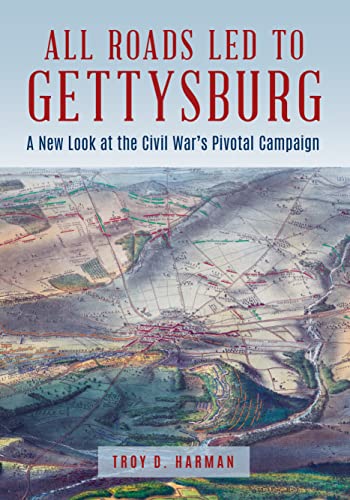
Hardback. Condición: New. It has long been a trope of Civil War history that Gettysburg was an accidental battlefield. General Lee, the old story goes, marched blindly into Pennsylvania while his chief cavalryman Jeb Stuart rode and raided incommunicado. Meanwhile, General Meade, in command only a few days, gave uncertain chase…to an enemy whose exact positions he did not know. And so these ignorant armies clashed by first light at Gettysburg on July 1, 1863. In the spirit of his iconoclastic Lee's Real Plan at Gettysburg, Troy D. Harman argues for a new interpretation: once Lee invaded Pennsylvania and the Union army pursued, a battle at Gettysburg was entirely predictable, perhaps inevitable.Most Civil War battles took place along major roads, railroads, and waterways; the armies needed to move men and equipment, and they needed water for men, horses, and artillery. And yet this perspective hasn't been fully explored when it comes to Gettysburg. Look at an 1863 map, says Harman: look at the area framed in the north by the Susquehanna River and in the south by the Potomac, in the east by the Northern Central Railroad and in the west by the Cumberland Valley Railroad. This is where the armies played a high-stakes game of chess in late June 1863. Their movements were guided by strategies of caution and constrained by roads, railroads, mountains and mountain passes, rivers and creeks, all of which led the armies to Gettysburg. It's true that Lee was disadvantaged by Stuart's roaming and Meade by his newness to command, which led both to default to the old strategic and logistical bedrocks they learned at West Point-and these instincts helped reinforce the magnetic pull toward Gettysburg.Moreover, once the battle started, Harman argues, the blue and gray fought tactically for the two creeks-Marsh and Rock, essential for watering men and horses and sponging artillery-that mark the battlefield in the east and the west as well as for the roadways that led to Gettysburg from all points of the compass. This is a perspective often overlooked in many accounts of the battle, which focus on the high ground-the Round Tops, Cemetery Hill-as key tactical objectives.Gettysburg Ranger and historian Troy Harman draws on a lifetime of researching the Civil War and more than thirty years of studying the terrain of Gettysburg and south-central Pennsylvania and northern Maryland to reframe the story of the Battle of Gettysburg. In the process he shows there's still much to say about one of history's most written-about battles. This is revisionism of the best kind.
- Tapa dura
Librería: GreatBookPrices, Columbia, MD, Estados Unidos de AmericaGreatBookPrices
Contactar con el vendedorVendedor de 5 estrellasCondición: Usado - Como Nuevo
EUR 27,91
Envío por EUR 2,31Se envía dentro de Estados Unidos de AmericaCantidad disponible: 1 disponibles
Condición: As New. Unread book in perfect condition.
- Tapa dura
Librería: PBShop.store US, Wood Dale, IL, Estados Unidos de AmericaPBShop.store US
Contactar con el vendedorVendedor de 5 estrellasCondición: Nuevo
EUR 30,94
Gastos de envío gratisSe envía dentro de Estados Unidos de AmericaCantidad disponible: 1 disponibles
HRD. Condición: New. New Book. Shipped from UK. Established seller since 2000.
- Tapa dura
Librería: PBShop.store UK, Fairford, GLOS, Reino UnidoPBShop.store UK
Contactar con el vendedorVendedor de 5 estrellasCondición: Nuevo
EUR 27,94
Envío por EUR 5,91Se envía de Reino Unido a Estados Unidos de AmericaCantidad disponible: 1 disponibles
HRD. Condición: New. New Book. Shipped from UK. Established seller since 2000.

Idioma: Inglés
Editorial: Stackpole Books, Mechanicsburg, Pennsylvania, 2022
- Tapa dura
Librería: Grand Eagle Retail, Bensenville, IL, Estados Unidos de AmericaGrand Eagle Retail
Contactar con el vendedorVendedor de 5 estrellasCondición: Nuevo
EUR 41,38
Gastos de envío gratisSe envía dentro de Estados Unidos de AmericaCantidad disponible: 1 disponibles
Hardcover. Condición: new. Hardcover. It has long been a trope of Civil War history that Gettysburg was an accidental battlefield. General Lee, the old story goes, marched blindly into Pennsylvania while his chief cavalryman Jeb Stuart rode and raided incommunicado. Meanwhile, General Meade, in command only a few days, gave unce…rtain chase to an enemy whose exact positions he did not know. And so these ignorant armies clashed by first light at Gettysburg on July 1, 1863. In the spirit of his iconoclastic Lees Real Plan at Gettysburg, Troy D. Harman argues for a new interpretation: once Lee invaded Pennsylvania and the Union army pursued, a battle at Gettysburg was entirely predictable, perhaps inevitable.Most Civil War battles took place along major roads, railroads, and waterways; the armies needed to move men and equipment, and they needed water for men, horses, and artillery. And yet this perspective hasnt been fully explored when it comes to Gettysburg. Look at an 1863 map, says Harman: look at the area framed in the north by the Susquehanna River and in the south by the Potomac, in the east by the Northern Central Railroad and in the west by the Cumberland Valley Railroad. This is where the armies played a high-stakes game of chess in late June 1863. Their movements were guided by strategies of caution and constrained by roads, railroads, mountains and mountain passes, rivers and creeks, all of which led the armies to Gettysburg. Its true that Lee was disadvantaged by Stuarts roaming and Meade by his newness to command, which led both to default to the old strategic and logistical bedrocks they learned at West Pointand these instincts helped reinforce the magnetic pull toward Gettysburg.Moreover, once the battle started, Harman argues, the blue and gray fought tactically for the two creeksMarsh and Rock, essential for watering men and horses and sponging artillerythat mark the battlefield in the east and the west as well as for the roadways that led to Gettysburg from all points of the compass. This is a perspective often overlooked in many accounts of the battle, which focus on the high groundthe Round Tops, Cemetery Hillas key tactical objectives.Gettysburg Ranger and historian Troy Harman draws on a lifetime of researching the Civil War and more than thirty years of studying the terrain of Gettysburg and south-central Pennsylvania and northern Maryland to reframe the story of the Battle of Gettysburg. In the process he shows theres still much to say about one of historys most written-about battles. This is revisionism of the best kind. Gettysburg Ranger and historian Troy Harman reframes the story of the Battle of Gettysburg from the historical view that it was an "accidental" battle to show that it was instead a logical and strategic clash, based on his years of researching the Civil War and studying the terrain of Gettysburg, south-central Pennsylvania, and northern Maryland. Shipping may be from multiple locations in the US or from the UK, depending on stock availability.
- Tapa dura
Librería: Chiron Media, Wallingford, Reino UnidoChiron Media
Contactar con el vendedorVendedor de 5 estrellasCondición: Nuevo
EUR 24,39
Envío por EUR 18,22Se envía de Reino Unido a Estados Unidos de AmericaCantidad disponible: 1 disponibles
Hardcover. Condición: New.
- Tapa dura
Librería: GreatBookPricesUK, Woodford Green, Reino UnidoGreatBookPricesUK
Contactar con el vendedorVendedor de 5 estrellasCondición: Nuevo
EUR 26,40
Envío por EUR 17,65Se envía de Reino Unido a Estados Unidos de AmericaCantidad disponible: 9 disponibles
Condición: New.
- Tapa dura
Librería: Revaluation Books, Exeter, Reino UnidoRevaluation Books
Contactar con el vendedorVendedor de 5 estrellasCondición: Nuevo
EUR 29,08
Envío por EUR 14,71Se envía de Reino Unido a Estados Unidos de AmericaCantidad disponible: 2 disponibles
Hardcover. Condición: Brand New. 288 pages. 9.00x6.00x1.21 inches. In Stock.
- Tapa dura
Librería: Ria Christie Collections, Uxbridge, Reino UnidoRia Christie Collections
Contactar con el vendedorVendedor de 5 estrellasCondición: Nuevo
EUR 32,87
Envío por EUR 14,10Se envía de Reino Unido a Estados Unidos de AmericaCantidad disponible: 8 disponibles
Condición: New. In.
- Tapa dura
Librería: THE SAINT BOOKSTORE, Southport, Reino UnidoTHE SAINT BOOKSTORE
Contactar con el vendedorVendedor de 5 estrellasCondición: Nuevo
EUR 33,08
Envío por EUR 19,38Se envía de Reino Unido a Estados Unidos de AmericaCantidad disponible: 5 disponibles
Hardback. Condición: New. New copy - Usually dispatched within 4 working days.

- Tapa dura
Librería: Wegmann1855, Zwiesel, AlemaniaWegmann1855
Contactar con el vendedorVendedor de 5 estrellasCondición: Nuevo
EUR 31,50
Envío por EUR 25,95Se envía de Alemania a Estados Unidos de AmericaCantidad disponible: 1 disponibles
Buch. Condición: Neu. Neuware -It has long been a trope of Civil War history that Gettysburg was an accidental battlefield. General Lee, the old story goes, marched blindly into Pennsylvania while his chief cavalryman Jeb Stuart rode and raided incommunicado. Meanwhile, General Meade, in command only a few days, gave uncertain c…hase to an enemy whose exact positions he did not know. And so these ignorant armies clashed by first light at Gettysburg on July 1, 1863. In the spirit of his iconoclastic Lee's Real Plan at Gettysburg, Troy D. Harman argues for a new interpretation: once Lee invaded Pennsylvania and the Union army pursued, a battle at Gettysburg was entirely predictable, perhaps inevitable.Most Civil War battles took place along major roads, railroads, and waterways; the armies needed to move men and equipment, and they needed water for men, horses, and artillery. And yet this perspective hasn't been fully explored when it comes to Gettysburg. Look at an 1863 map, says Harman: look at the area framed in the north by the Susquehanna River and in the south by the Potomac, in the east by the Northern Central Railroad and in the west by the Cumberland Valley Railroad. This is where the armies played a high-stakes game of chess in late June 1863. Their movements were guided by strategies of caution and constrained by roads, railroads, mountains and mountain passes, rivers and creeks, all of which led the armies to Gettysburg. It's true that Lee was disadvantaged by Stuart's roaming and Meade by his newness to command, which led both to default to the old strategic and logistical bedrocks they learned at West Pointand these instincts helped reinforce the magnetic pull toward Gettysburg.Moreover, once the battle started, Harman argues, the blue and gray fought tactically for the two creeksMarsh and Rock, essential for watering men and horses and sponging artillerythat mark the battlefield in the east and the west as well as for the roadways that led to Gettysburg from all points of the compass. This is a perspective often overlooked in many accounts of the battle, which focus on the high groundthe Round Tops, Cemetery Hillas key tactical objectives.Gettysburg Ranger and historian Troy Harman draws on a lifetime of researching the Civil War and more than thirty years of studying the terrain of Gettysburg and south-central Pennsylvania and northern Maryland to reframe the story of the Battle of Gettysburg. In the process he shows there's still much to say about one of history's most written-about battles. This is revisionism of the best kind.

Idioma: Inglés
Editorial: Stackpole Books, Mechanicsburg, Pennsylvania, 2022
- Tapa dura
Librería: AussieBookSeller, Truganina, VIC, AustraliaAussieBookSeller
Contactar con el vendedorVendedor de 5 estrellasCondición: Nuevo
EUR 50,63
Envío por EUR 32,38Se envía de Australia a Estados Unidos de AmericaCantidad disponible: 1 disponibles
Hardcover. Condición: new. Hardcover. It has long been a trope of Civil War history that Gettysburg was an accidental battlefield. General Lee, the old story goes, marched blindly into Pennsylvania while his chief cavalryman Jeb Stuart rode and raided incommunicado. Meanwhile, General Meade, in command only a few days, gave unce…rtain chase to an enemy whose exact positions he did not know. And so these ignorant armies clashed by first light at Gettysburg on July 1, 1863. In the spirit of his iconoclastic Lees Real Plan at Gettysburg, Troy D. Harman argues for a new interpretation: once Lee invaded Pennsylvania and the Union army pursued, a battle at Gettysburg was entirely predictable, perhaps inevitable.Most Civil War battles took place along major roads, railroads, and waterways; the armies needed to move men and equipment, and they needed water for men, horses, and artillery. And yet this perspective hasnt been fully explored when it comes to Gettysburg. Look at an 1863 map, says Harman: look at the area framed in the north by the Susquehanna River and in the south by the Potomac, in the east by the Northern Central Railroad and in the west by the Cumberland Valley Railroad. This is where the armies played a high-stakes game of chess in late June 1863. Their movements were guided by strategies of caution and constrained by roads, railroads, mountains and mountain passes, rivers and creeks, all of which led the armies to Gettysburg. Its true that Lee was disadvantaged by Stuarts roaming and Meade by his newness to command, which led both to default to the old strategic and logistical bedrocks they learned at West Pointand these instincts helped reinforce the magnetic pull toward Gettysburg.Moreover, once the battle started, Harman argues, the blue and gray fought tactically for the two creeksMarsh and Rock, essential for watering men and horses and sponging artillerythat mark the battlefield in the east and the west as well as for the roadways that led to Gettysburg from all points of the compass. This is a perspective often overlooked in many accounts of the battle, which focus on the high groundthe Round Tops, Cemetery Hillas key tactical objectives.Gettysburg Ranger and historian Troy Harman draws on a lifetime of researching the Civil War and more than thirty years of studying the terrain of Gettysburg and south-central Pennsylvania and northern Maryland to reframe the story of the Battle of Gettysburg. In the process he shows theres still much to say about one of historys most written-about battles. This is revisionism of the best kind. Gettysburg Ranger and historian Troy Harman reframes the story of the Battle of Gettysburg from the historical view that it was an "accidental" battle to show that it was instead a logical and strategic clash, based on his years of researching the Civil War and studying the terrain of Gettysburg, south-central Pennsylvania, and northern Maryland. Shipping may be from our Sydney, NSW warehouse or from our UK or US warehouse, depending on stock availability.
- Tapa dura
Librería: GreatBookPricesUK, Woodford Green, Reino UnidoGreatBookPricesUK
Contactar con el vendedorVendedor de 5 estrellasCondición: Usado - Como Nuevo
EUR 68,12
Envío por EUR 17,65Se envía de Reino Unido a Estados Unidos de AmericaCantidad disponible: 9 disponibles
Condición: As New. Unread book in perfect condition.

- Tapa dura
Librería: preigu, Osnabrück, Alemaniapreigu
Contactar con el vendedorVendedor de 5 estrellasCondición: Nuevo
EUR 24,20
Envío por EUR 70,00Se envía de Alemania a Estados Unidos de AmericaCantidad disponible: 1 disponibles
Buch. Condición: Neu. All Roads Led to Gettysburg | A New Look at the Civil War's Pivotal Battle | Troy D. Harman | Buch | Stackpole Books GPQ | Gebunden | Englisch | 2022 | Globe Pequot Publishing Group Inc | EAN 9780811770637 | Verantwortliche Person für die EU: Libri GmbH, Europaallee 1, 36244 Bad Hersfeld, gpsr[at]libri[dot]…de | Anbieter: preigu.

- Tapa dura
Librería: AHA-BUCH GmbH, Einbeck, AlemaniaAHA-BUCH GmbH
Contactar con el vendedorVendedor de 5 estrellasCondición: Nuevo
EUR 31,88
Envío por EUR 63,21Se envía de Alemania a Estados Unidos de AmericaCantidad disponible: 1 disponibles
Buch. Condición: Neu. Neuware - It has long been a trope of Civil War history that Gettysburg was an accidental battlefield. General Lee, the old story goes, marched blindly into Pennsylvania while his chief cavalryman Jeb Stuart rode and raided incommunicado. Meanwhile, General Meade, in command only a few days, gave uncertain…chase to an enemy whose exact positions he did not know. And so these ignorant armies clashed by first light at Gettysburg on July 1, 1863. In the spirit of his iconoclastic Lee's Real Plan at Gettysburg, Troy D. Harman argues for a new interpretation: once Lee invaded Pennsylvania and the Union army pursued, a battle at Gettysburg was entirely predictable, perhaps inevitable.Most Civil War battles took place along major roads, railroads, and waterways; the armies needed to move men and equipment, and they needed water for men, horses, and artillery. And yet this perspective hasn't been fully explored when it comes to Gettysburg. Look at an 1863 map, says Harman: look at the area framed in the north by the Susquehanna River and in the south by the Potomac, in the east by the Northern Central Railroad and in the west by the Cumberland Valley Railroad. This is where the armies played a high-stakes game of chess in late June 1863. Their movements were guided by strategies of caution and constrained by roads, railroads, mountains and mountain passes, rivers and creeks, all of which led the armies to Gettysburg. It's true that Lee was disadvantaged by Stuart's roaming and Meade by his newness to command, which led both to default to the old strategic and logistical bedrocks they learned at West Pointand these instincts helped reinforce the magnetic pull toward Gettysburg.Moreover, once the battle started, Harman argues, the blue and gray fought tactically for the two creeksMarsh and Rock, essential for watering men and horses and sponging artillerythat mark the battlefield in the east and the west as well as for the roadways that led to Gettysburg from all points of the compass. This is a perspective often overlooked in many accounts of the battle, which focus on the high groundthe Round Tops, Cemetery Hillas key tactical objectives.Gettysburg Ranger and historian Troy Harman draws on a lifetime of researching the Civil War and more than thirty years of studying the terrain of Gettysburg and south-central Pennsylvania and northern Maryland to reframe the story of the Battle of Gettysburg. In the process he shows there's still much to say about one of history's most written-about battles. This is revisionism of the best kind.

- Tapa dura
Librería: Rarewaves.com UK, London, Reino UnidoRarewaves.com UK
Contactar con el vendedorVendedor de 5 estrellasCondición: Nuevo
EUR 26,41
Envío por EUR 76,48Se envía de Reino Unido a Estados Unidos de AmericaCantidad disponible: 2 disponibles
Hardback. Condición: New. It has long been a trope of Civil War history that Gettysburg was an accidental battlefield. General Lee, the old story goes, marched blindly into Pennsylvania while his chief cavalryman Jeb Stuart rode and raided incommunicado. Meanwhile, General Meade, in command only a few days, gave uncertain chase…to an enemy whose exact positions he did not know. And so these ignorant armies clashed by first light at Gettysburg on July 1, 1863. In the spirit of his iconoclastic Lee's Real Plan at Gettysburg, Troy D. Harman argues for a new interpretation: once Lee invaded Pennsylvania and the Union army pursued, a battle at Gettysburg was entirely predictable, perhaps inevitable.Most Civil War battles took place along major roads, railroads, and waterways; the armies needed to move men and equipment, and they needed water for men, horses, and artillery. And yet this perspective hasn't been fully explored when it comes to Gettysburg. Look at an 1863 map, says Harman: look at the area framed in the north by the Susquehanna River and in the south by the Potomac, in the east by the Northern Central Railroad and in the west by the Cumberland Valley Railroad. This is where the armies played a high-stakes game of chess in late June 1863. Their movements were guided by strategies of caution and constrained by roads, railroads, mountains and mountain passes, rivers and creeks, all of which led the armies to Gettysburg. It's true that Lee was disadvantaged by Stuart's roaming and Meade by his newness to command, which led both to default to the old strategic and logistical bedrocks they learned at West Point-and these instincts helped reinforce the magnetic pull toward Gettysburg.Moreover, once the battle started, Harman argues, the blue and gray fought tactically for the two creeks-Marsh and Rock, essential for watering men and horses and sponging artillery-that mark the battlefield in the east and the west as well as for the roadways that led to Gettysburg from all points of the compass. This is a perspective often overlooked in many accounts of the battle, which focus on the high ground-the Round Tops, Cemetery Hill-as key tactical objectives.Gettysburg Ranger and historian Troy Harman draws on a lifetime of researching the Civil War and more than thirty years of studying the terrain of Gettysburg and south-central Pennsylvania and northern Maryland to reframe the story of the Battle of Gettysburg. In the process he shows there's still much to say about one of history's most written-about battles. This is revisionism of the best kind.

- Tapa dura
Librería: Books-by-Floh, Paderborn, AlemaniaBooks-by-Floh
Contactar con el vendedorVendedor de 4 estrellasCondición: Nuevo
EUR 44,94
Envío por EUR 105,00Se envía de Alemania a Estados Unidos de AmericaCantidad disponible: 1 disponibles
Buch. Condición: Neu. Neuware -It has long been a trope of Civil War history that Gettysburg was an accidental battlefield. General Lee, the old story goes, marched blindly into Pennsylvania while his chief cavalryman Jeb Stuart rode and raided incommunicado. Meanwhile, General Meade, in command only a few days, gave uncertain c…hase to an enemy whose exact positions he did not know. And so these ignorant armies clashed by first light at Gettysburg on July 1, 1863. In the spirit of his iconoclastic Lee's Real Plan at Gettysburg, Troy D. Harman argues for a new interpretation: once Lee invaded Pennsylvania and the Union army pursued, a battle at Gettysburg was entirely predictable, perhaps inevitable.Most Civil War battles took place along major roads, railroads, and waterways; the armies needed to move men and equipment, and they needed water for men, horses, and artillery. And yet this perspective hasn't been fully explored when it comes to Gettysburg. Look at an 1863 map, says Harman: look at the area framed in the north by the Susquehanna River and in the south by the Potomac, in the east by the Northern Central Railroad and in the west by the Cumberland Valley Railroad. This is where the armies played a high-stakes game of chess in late June 1863. Their movements were guided by strategies of caution and constrained by roads, railroads, mountains and mountain passes, rivers and creeks, all of which led the armies to Gettysburg. It's true that Lee was disadvantaged by Stuart's roaming and Meade by his newness to command, which led both to default to the old strategic and logistical bedrocks they learned at West Pointand these instincts helped reinforce the magnetic pull toward Gettysburg.Moreover, once the battle started, Harman argues, the blue and gray fought tactically for the two creeksMarsh and Rock, essential for watering men and horses and sponging artillerythat mark the battlefield in the east and the west as well as for the roadways that led to Gettysburg from all points of the compass. This is a perspective often overlooked in many accounts of the battle, which focus on the high groundthe Round Tops, Cemetery Hillas key tactical objectives.Gettysburg Ranger and historian Troy Harman draws on a lifetime of researching the Civil War and more than thirty years of studying the terrain of Gettysburg and south-central Pennsylvania and northern Maryland to reframe the story of the Battle of Gettysburg. In the process he shows there's still much to say about one of history's most written-about battles. This is revisionism of the best kind. 360 pp. Englisch.

- Tapa dura
- Impresión bajo demanda
Librería: moluna, Greven, Alemaniamoluna
Contactar con el vendedorVendedor de 5 estrellasCondición: Nuevo
EUR 24,56
Envío por EUR 48,99Se envía de Alemania a Estados Unidos de AmericaCantidad disponible: Más de 20 disponibles
Condición: New. Dieser Artikel ist ein Print on Demand Artikel und wird nach Ihrer Bestellung fuer Sie gedruckt. Über den AutorTroy D. Harman has been a National Park Service ranger since 1984, including stints at Appomattox Court House National Historic Park, Mammoth Cave National Park, Fredericksburg & Spotsylvania Nationa…l Military Park..

Idioma: Inglés
Editorial: Stackpole Books, Mechanicsburg, Pennsylvania, 2022
- Tapa dura
- Impresión bajo demanda
Librería: CitiRetail, Stevenage, Reino UnidoCitiRetail
Contactar con el vendedorVendedor de 5 estrellasCondición: Nuevo
EUR 36,94
Envío por EUR 43,53Se envía de Reino Unido a Estados Unidos de AmericaCantidad disponible: 1 disponibles
Hardcover. Condición: new. Hardcover. It has long been a trope of Civil War history that Gettysburg was an accidental battlefield. General Lee, the old story goes, marched blindly into Pennsylvania while his chief cavalryman Jeb Stuart rode and raided incommunicado. Meanwhile, General Meade, in command only a few days, gave unce…rtain chase to an enemy whose exact positions he did not know. And so these ignorant armies clashed by first light at Gettysburg on July 1, 1863. In the spirit of his iconoclastic Lees Real Plan at Gettysburg, Troy D. Harman argues for a new interpretation: once Lee invaded Pennsylvania and the Union army pursued, a battle at Gettysburg was entirely predictable, perhaps inevitable.Most Civil War battles took place along major roads, railroads, and waterways; the armies needed to move men and equipment, and they needed water for men, horses, and artillery. And yet this perspective hasnt been fully explored when it comes to Gettysburg. Look at an 1863 map, says Harman: look at the area framed in the north by the Susquehanna River and in the south by the Potomac, in the east by the Northern Central Railroad and in the west by the Cumberland Valley Railroad. This is where the armies played a high-stakes game of chess in late June 1863. Their movements were guided by strategies of caution and constrained by roads, railroads, mountains and mountain passes, rivers and creeks, all of which led the armies to Gettysburg. Its true that Lee was disadvantaged by Stuarts roaming and Meade by his newness to command, which led both to default to the old strategic and logistical bedrocks they learned at West Pointand these instincts helped reinforce the magnetic pull toward Gettysburg.Moreover, once the battle started, Harman argues, the blue and gray fought tactically for the two creeksMarsh and Rock, essential for watering men and horses and sponging artillerythat mark the battlefield in the east and the west as well as for the roadways that led to Gettysburg from all points of the compass. This is a perspective often overlooked in many accounts of the battle, which focus on the high groundthe Round Tops, Cemetery Hillas key tactical objectives.Gettysburg Ranger and historian Troy Harman draws on a lifetime of researching the Civil War and more than thirty years of studying the terrain of Gettysburg and south-central Pennsylvania and northern Maryland to reframe the story of the Battle of Gettysburg. In the process he shows theres still much to say about one of historys most written-about battles. This is revisionism of the best kind. Gettysburg Ranger and historian Troy Harman reframes the story of the Battle of Gettysburg from the historical view that it was an "accidental" battle to show that it was instead a logical and strategic clash, based on his years of researching the Civil War and studying the terrain of Gettysburg, south-central Pennsylvania, and northern Maryland. This item is printed on demand. Shipping may be from our UK warehouse or from our Australian or US warehouses, depending on stock availability.


