
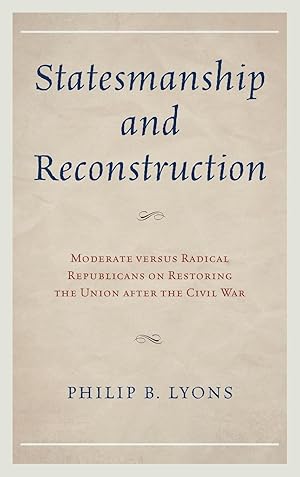
9780739185070 - statesmanship and reconstruction: moderate versus radical republicans on restoring the union after the civil war de lyons, philip b. (8 resultados)

- Tapa dura
Librería: Ria Christie Collections, Uxbridge, Reino UnidoRia Christie Collections
Contactar con el vendedorVendedor de 5 estrellasCondición: Nuevo
EUR 164,42
Envío por EUR 13,87Se envía de Reino Unido a Estados Unidos de AmericaCantidad disponible: Más de 20 disponibles
Condición: New. In.
- Tapa dura
Librería: Revaluation Books, Exeter, Reino UnidoRevaluation Books
Contactar con el vendedorVendedor de 5 estrellasCondición: Nuevo
EUR 269,15
Envío por EUR 14,47Se envía de Reino Unido a Estados Unidos de AmericaCantidad disponible: 2 disponibles
Hardcover. Condición: Brand New. 343 pages. 8.00x5.00x1.00 inches. In Stock.
- Tapa dura
- Impresión bajo demanda
Librería: PBShop.store US, Wood Dale, Estados Unidos de AmericaPBShop.store US
Contactar con el vendedorVendedor de 5 estrellasCondición: Nuevo
EUR 173,22
Gastos de envío gratisSe envía dentro de Estados Unidos de AmericaCantidad disponible: Más de 20 disponibles
HRD. Condición: New. New Book. Shipped from UK. THIS BOOK IS PRINTED ON DEMAND. Established seller since 2000.
- Tapa dura
- Impresión bajo demanda
Librería: PBShop.store UK, Fairford, Reino UnidoPBShop.store UK
Contactar con el vendedorVendedor de 5 estrellasCondición: Nuevo
EUR 166,62
Envío por EUR 5,81Se envía de Reino Unido a Estados Unidos de AmericaCantidad disponible: Más de 20 disponibles
HRD. Condición: New. New Book. Delivered from our UK warehouse in 4 to 14 business days. THIS BOOK IS PRINTED ON DEMAND. Established seller since 2000.
- Tapa dura
- Impresión bajo demanda
Librería: Grand Eagle Retail, Bensenville, Estados Unidos de AmericaGrand Eagle Retail
Contactar con el vendedorVendedor de 5 estrellasCondición: Nuevo
EUR 215,43
Gastos de envío gratisSe envía dentro de Estados Unidos de AmericaCantidad disponible: 1 disponibles
Hardcover. Condición: new. Hardcover. Besides massive race prejudice and the perceived vindictiveness of the radical Republicans, another factor that contributed strongly to the derailment of reconstruction after the Civil War was the conflicting decisions taken by the political leaders. Lincoln warned against differences betwee…n the friends of freedom, and to overcome these, took charge of the reconstruction of Louisiana and showed how it should be done by pitting benefits of enlightened free government against the prejudices of the populace. Unfortunately, his example was lost on his successor, Andrew Johnson, whose encouragement of Southern resistance to the Norths terms aggravated factionalism within the Republican party. The moderates dominated in the drafting of the Fourteenth Amendment, where they incorporated the statesmanlike principle of a benefit, self-government in exchange for Southerners protecting the rights of all their citizens, black and white. However, this statesmanlike bargain was practically abandoned in Congresss response to the Southern states rejection of the Fourteenth Amendment, the Congressional Reconstructions Act. The fears of the moderates that the new state governments would not protect rights led them to propose universal suffrage, while the fears of the radicals that disloyal men would rule led them to provide for the disfranchisement of many ex-rebels and to hold any governments established, provisional only, subject to congressional change at will. As result the incentive for native white Southerners to participate in the new state governments in exchange for rights protection was drastically weakened. The consequences of this legislative "straight jacket" made it extremely difficult for Republicans in the defeated states to establish permanent political footholds. Some tried to hold onto power without attempting to cultivate native white support and lost their states for the Republicans. Three other leaders efforts to strike a balance between radicals and Democrats fell flat. Imprudent decisions of the Grant Administration shattered the attempts of three more states to establish a common ground with moderate Democrats. On the positive side, there was a leader in Virginia who figured out the kind of political arrangement necessary for Republicans to survive, and in Florida, a moderate Republican Governor, Ossian Bingley Hart, exercised real statesmanship to lead the most successful of all reconstruction governments.Statesmanship in reconstruction could have spared the South some severe hardships. Despite the vast change in public opinion on race relations over the last nearly 150 years, there are still lessons drawn from this study that can be applied to present day Civil Rights Policy. This book examines how statesmanship in reconstruction could have spared the South some severe hardships after the Civil War. Despite the vast change in public opinion on race relations over the last nearly 150 years, there are still lessons drawn from this study that can be applied to present day Civil Rights Policy. This item is printed on demand. Shipping may be from multiple locations in the US or from the UK, depending on stock availability.
- Tapa dura
- Impresión bajo demanda
Librería: CitiRetail, Stevenage, Reino UnidoCitiRetail
Contactar con el vendedorVendedor de 5 estrellasCondición: Nuevo
EUR 175,91
Envío por EUR 42,85Se envía de Reino Unido a Estados Unidos de AmericaCantidad disponible: 1 disponibles
Hardcover. Condición: new. Hardcover. Besides massive race prejudice and the perceived vindictiveness of the radical Republicans, another factor that contributed strongly to the derailment of reconstruction after the Civil War was the conflicting decisions taken by the political leaders. Lincoln warned against differences betwee…n the friends of freedom, and to overcome these, took charge of the reconstruction of Louisiana and showed how it should be done by pitting benefits of enlightened free government against the prejudices of the populace. Unfortunately, his example was lost on his successor, Andrew Johnson, whose encouragement of Southern resistance to the Norths terms aggravated factionalism within the Republican party. The moderates dominated in the drafting of the Fourteenth Amendment, where they incorporated the statesmanlike principle of a benefit, self-government in exchange for Southerners protecting the rights of all their citizens, black and white. However, this statesmanlike bargain was practically abandoned in Congresss response to the Southern states rejection of the Fourteenth Amendment, the Congressional Reconstructions Act. The fears of the moderates that the new state governments would not protect rights led them to propose universal suffrage, while the fears of the radicals that disloyal men would rule led them to provide for the disfranchisement of many ex-rebels and to hold any governments established, provisional only, subject to congressional change at will. As result the incentive for native white Southerners to participate in the new state governments in exchange for rights protection was drastically weakened. The consequences of this legislative "straight jacket" made it extremely difficult for Republicans in the defeated states to establish permanent political footholds. Some tried to hold onto power without attempting to cultivate native white support and lost their states for the Republicans. Three other leaders efforts to strike a balance between radicals and Democrats fell flat. Imprudent decisions of the Grant Administration shattered the attempts of three more states to establish a common ground with moderate Democrats. On the positive side, there was a leader in Virginia who figured out the kind of political arrangement necessary for Republicans to survive, and in Florida, a moderate Republican Governor, Ossian Bingley Hart, exercised real statesmanship to lead the most successful of all reconstruction governments.Statesmanship in reconstruction could have spared the South some severe hardships. Despite the vast change in public opinion on race relations over the last nearly 150 years, there are still lessons drawn from this study that can be applied to present day Civil Rights Policy. This book examines how statesmanship in reconstruction could have spared the South some severe hardships after the Civil War. Despite the vast change in public opinion on race relations over the last nearly 150 years, there are still lessons drawn from this study that can be applied to present day Civil Rights Policy. This item is printed on demand. Shipping may be from our UK warehouse or from our Australian or US warehouses, depending on stock availability.
- Tapa dura
- Impresión bajo demanda
Librería: moluna, Greven, Alemaniamoluna
Contactar con el vendedorVendedor de 4 estrellasCondición: Nuevo
EUR 174,87
Envío por EUR 48,99Se envía de Alemania a Estados Unidos de AmericaCantidad disponible: Más de 20 disponibles
Gebunden. Condición: New. Dieser Artikel ist ein Print on Demand Artikel und wird nach Ihrer Bestellung fuer Sie gedruckt. This book examines how statesmanship in reconstruction could have spared the South some severe hardships after the Civil War. Despite the vast change in public opinion on race relations over the last nearly…150 years, there are still lessons drawn from this.
- Tapa dura
- Impresión bajo demanda
Librería: AHA-BUCH GmbH, Einbeck, AlemaniaAHA-BUCH GmbH
Contactar con el vendedorVendedor de 5 estrellasCondición: Nuevo
EUR 216,66
Envío por EUR 63,74Se envía de Alemania a Estados Unidos de AmericaCantidad disponible: 1 disponibles
Buch. Condición: Neu. nach der Bestellung gedruckt Neuware - Printed after ordering - Besides massive race prejudice and the perceived vindictiveness of the radical Republicans, another factor that contributed strongly to the derailment of reconstruction after the Civil War was the conflicting decisions taken by the political le…aders. Lincoln warned against differences between the friends of freedom, and to overcome these, took charge of the reconstruction of Louisiana and showed how it should be done by pitting benefits of enlightened free government against the prejudices of the populace.Unfortunately, his example was lost on his successor, Andrew Johnson, whose encouragement of Southern resistance to the North's terms aggravated factionalism within the Republican party. The moderates dominated in the drafting of the Fourteenth Amendment, where they incorporated the statesmanlike principle of a benefit, self-government in exchange for Southerners protecting the rights of all their citizens, black and white. However, this statesmanlike bargain was practically abandoned in Congress's response to the Southern states' rejection of the Fourteenth Amendment, the Congressional Reconstructions Act. The fears of the moderates that the new state governments would not protect rights led them to propose universal suffrage, while the fears of the radicals that disloyal men would rule led them to provide for the disfranchisement of many ex-rebels and to hold any governments established, provisional only, subject to congressional change at will. As result the incentive for native white Southerners to participate in the new state governments in exchange for rights protection was drastically weakened.The consequences of this legislative 'straight jacket' made it extremely difficult for Republicans in the defeated states to establish permanent political footholds. Some tried to hold onto power without attempting to cultivate native white support and lost their states for the Republicans. Three other leaders' efforts to strike a balance between radicals and Democrats fell flat. Imprudent decisions of the Grant Administration shattered the attempts of three more states to establish a common ground with moderate Democrats. On the positive side, there was a leader in Virginia who figured out the kind of political arrangement necessary for Republicans to survive, and in Florida, a moderate Republican Governor, Ossian Bingley Hart, exercised real statesmanship to lead the most successful of all reconstruction governments.Statesmanship in reconstruction could have spared the South some severe hardships. Despite the vast change in public opinion on race relations over the last nearly 150 years, there are still lessons drawn from this study that can be applied to present day Civil Rights Policy.


