

Importe total (1 artículo artículos):
Destino del pedido:

9780691166735 - States of Credit: Size, Power, and the Development of European Polities (The Princeton Economic History of the Western World): 35 de Stasavage, David (19 resultados)
Ir a los resultados principales
Filtros de búsqueda
Tipo de artículo
- Todos los tipos de productos
- Libros (19)
- Revistas y publicaciones (No hay ningún otro resultado que coincida con este filtro.)
- Cómics (No hay ningún otro resultado que coincida con este filtro.)
- Partituras (No hay ningún otro resultado que coincida con este filtro.)
- Arte, grabados y pósters (No hay ningún otro resultado que coincida con este filtro.)
- Fotografías (No hay ningún otro resultado que coincida con este filtro.)
- Mapas (No hay ningún otro resultado que coincida con este filtro.)
- Manuscritos y coleccionismo de papel (No hay ningún otro resultado que coincida con este filtro.)
Condición Más información
- Nuevo (17)
- Como nuevo, Excelente o Muy bueno (2)
- Bueno o Aceptable (No hay ningún otro resultado que coincida con este filtro.)
- Regular o Pobre (No hay ningún otro resultado que coincida con este filtro.)
- Tal como se indica (No hay ningún otro resultado que coincida con este filtro.)
Encuadernación
- Todas
- Tapa dura (No hay ningún otro resultado que coincida con este filtro.)
- Tapa blanda (19)
Más atributos
- Primera edición (No hay ningún otro resultado que coincida con este filtro.)
- Firmado (No hay ningún otro resultado que coincida con este filtro.)
- Sobrecubierta (No hay ningún otro resultado que coincida con este filtro.)
- Con imágenes (11)
- No impresión bajo demanda (15)
Idioma (1)
Precio
- Cualquier precio
- Menos de EUR 20 (No hay ningún otro resultado que coincida con este filtro.)
- EUR 20 a EUR 45
- Más de EUR 45
Gastos de envío gratis
Ubicación del vendedor
Valoración de los vendedores
-

States of Credit
Libro 8 de 55: The Princeton Economic History of the Western WorldIdioma: Inglés
Publicado por Princeton University Press, 2015
ISBN 10: 0691166730 ISBN 13: 9780691166735
Librería: PBShop.store US, Wood Dale, IL, Estados Unidos de America
Calificación del vendedor: 5 de 5 estrellas

EUR 27,39
Gastos de envío gratis
Se envía dentro de Estados Unidos de AmericaCantidad disponible: 2 disponibles
Añadir al carritoPAP. Condición: New. New Book. Shipped from UK. Established seller since 2000.
-

States of Credit
Libro 8 de 55: The Princeton Economic History of the Western WorldIdioma: Inglés
Publicado por Princeton University Press, US, 2015
ISBN 10: 0691166730 ISBN 13: 9780691166735
Librería: Rarewaves.com USA, London, LONDO, Reino Unido
Calificación del vendedor: 5 de 5 estrellas
EUR 29,59
Gastos de envío gratis
Se envía de Reino Unido a Estados Unidos de AmericaCantidad disponible: 1 disponibles
Añadir al carritoPaperback. Condición: New. States of Credit provides the first comprehensive look at the joint development of representative assemblies and public borrowing in Europe during the medieval and early modern eras. In this pioneering book, David Stasavage argues that unique advances in political representation allowed certain European states to gain early and advantageous access to credit, but the emergence of an active form of political representation itself depended on two underlying factors: compact geography and a strong mercantile presence. Stasavage shows that active representative assemblies were more likely to be sustained in geographically small polities. These assemblies, dominated by mercantile groups that lent to governments, were in turn more likely to preserve access to credit. Given these conditions, smaller European city-states, such as Genoa and Cologne, had an advantage over larger territorial states, including France and Castile, because mercantile elites structured political institutions in order to effectively monitor public credit.While creditor oversight of public funds became an asset for city-states in need of finance, Stasavage suggests that the long-run implications were more ambiguous. City-states with the best access to credit often had the most closed and oligarchic systems of representation, hindering their ability to accept new economic innovations. This eventually transformed certain city-states from economic dynamos into rentier republics. Exploring the links between representation and debt in medieval and early modern Europe, States of Credit contributes to broad debates about state formation and Europe's economic rise.
-

States of Credit : Size, Power, and the Development of European Polities
Libro 8 de 55: The Princeton Economic History of the Western WorldIdioma: Inglés
Publicado por Princeton University Press, 2015
ISBN 10: 0691166730 ISBN 13: 9780691166735
Librería: GreatBookPrices, Columbia, MD, Estados Unidos de America
Calificación del vendedor: 5 de 5 estrellas
EUR 30,65
Envío por EUR 2,27
Se envía dentro de Estados Unidos de AmericaCantidad disponible: 3 disponibles
Añadir al carritoCondición: As New. Unread book in perfect condition.
-
States of Credit
Libro 8 de 55: The Princeton Economic History of the Western WorldIdioma: Inglés
Publicado por Princeton University Press, 2015
ISBN 10: 0691166730 ISBN 13: 9780691166735
Librería: PBShop.store UK, Fairford, GLOS, Reino Unido
Calificación del vendedor: 4 de 5 estrellas

EUR 30,29
Envío por EUR 4,82
Se envía de Reino Unido a Estados Unidos de AmericaCantidad disponible: 2 disponibles
Añadir al carritoPAP. Condición: New. New Book. Shipped from UK. Established seller since 2000.
-

States of Credit : Size, Power, and the Development of European Polities
Libro 8 de 55: The Princeton Economic History of the Western WorldIdioma: Inglés
Publicado por Princeton University Press, 2015
ISBN 10: 0691166730 ISBN 13: 9780691166735
Librería: GreatBookPrices, Columbia, MD, Estados Unidos de America
Calificación del vendedor: 5 de 5 estrellas
EUR 32,59
Envío por EUR 2,27
Se envía dentro de Estados Unidos de AmericaCantidad disponible: 3 disponibles
Añadir al carritoCondición: New.
-

States of Credit
Libro 8 de 55: The Princeton Economic History of the Western WorldIdioma: Inglés
Publicado por Princeton University Press, US, 2015
ISBN 10: 0691166730 ISBN 13: 9780691166735
Librería: Rarewaves USA, OSWEGO, IL, Estados Unidos de America
Calificación del vendedor: 5 de 5 estrellas
EUR 34,94
Gastos de envío gratis
Se envía dentro de Estados Unidos de AmericaCantidad disponible: Más de 20 disponibles
Añadir al carritoPaperback. Condición: New. States of Credit provides the first comprehensive look at the joint development of representative assemblies and public borrowing in Europe during the medieval and early modern eras. In this pioneering book, David Stasavage argues that unique advances in political representation allowed certain European states to gain early and advantageous access to credit, but the emergence of an active form of political representation itself depended on two underlying factors: compact geography and a strong mercantile presence. Stasavage shows that active representative assemblies were more likely to be sustained in geographically small polities. These assemblies, dominated by mercantile groups that lent to governments, were in turn more likely to preserve access to credit. Given these conditions, smaller European city-states, such as Genoa and Cologne, had an advantage over larger territorial states, including France and Castile, because mercantile elites structured political institutions in order to effectively monitor public credit.While creditor oversight of public funds became an asset for city-states in need of finance, Stasavage suggests that the long-run implications were more ambiguous. City-states with the best access to credit often had the most closed and oligarchic systems of representation, hindering their ability to accept new economic innovations. This eventually transformed certain city-states from economic dynamos into rentier republics. Exploring the links between representation and debt in medieval and early modern Europe, States of Credit contributes to broad debates about state formation and Europe's economic rise.
-
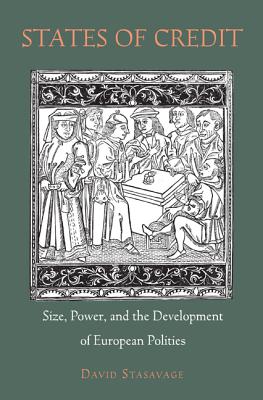
States of Credit: Size, Power, and the Development of European Polities (Paperback or Softback)
Libro 8 de 55: The Princeton Economic History of the Western WorldIdioma: Inglés
Publicado por Princeton University Press 6/23/2015, 2015
ISBN 10: 0691166730 ISBN 13: 9780691166735
Librería: BargainBookStores, Grand Rapids, MI, Estados Unidos de America
Calificación del vendedor: 5 de 5 estrellas
EUR 35,84
Gastos de envío gratis
Se envía dentro de Estados Unidos de AmericaCantidad disponible: 5 disponibles
Añadir al carritoPaperback or Softback. Condición: New. States of Credit: Size, Power, and the Development of European Polities. Book.
-
States of Credit: Size, Power, and the Development of European Polities
Libro 8 de 55: The Princeton Economic History of the Western WorldIdioma: Inglés
Publicado por Princeton University Press, 2015
ISBN 10: 0691166730 ISBN 13: 9780691166735
Librería: Kennys Bookshop and Art Galleries Ltd., Galway, GY, Irlanda
Calificación del vendedor: 5 de 5 estrellas
EUR 28,15
Envío por EUR 10,50
Se envía de Irlanda a Estados Unidos de AmericaCantidad disponible: 1 disponibles
Añadir al carritoCondición: New. 2015. Reprint. Paperback. . . . . .
-
States of Credit: Size, Power, and the Development of European Polities
Libro 8 de 55: The Princeton Economic History of the Western WorldIdioma: Inglés
Publicado por Princeton University Press, 2015
ISBN 10: 0691166730 ISBN 13: 9780691166735
Librería: Kennys Bookstore, Olney, MD, Estados Unidos de America
Calificación del vendedor: 5 de 5 estrellas
EUR 34,18
Envío por EUR 9,05
Se envía dentro de Estados Unidos de AmericaCantidad disponible: 1 disponibles
Añadir al carritoCondición: New. 2015. Reprint. Paperback. . . . . . Books ship from the US and Ireland.
-
States of Credit: Size, Power, and the Development of European Polities
Libro 8 de 55: The Princeton Economic History of the Western WorldIdioma: Inglés
Publicado por Princeton University Press, 2015
ISBN 10: 0691166730 ISBN 13: 9780691166735
Librería: THE SAINT BOOKSTORE, Southport, Reino Unido
Calificación del vendedor: 5 de 5 estrellas
EUR 30,44
Envío por EUR 16,47
Se envía de Reino Unido a Estados Unidos de AmericaCantidad disponible: 2 disponibles
Añadir al carritoPaperback / softback. Condición: New. New copy - Usually dispatched within 4 working days.
-

States of Credit : Size, Power, and the Development of European Polities
Libro 8 de 55: The Princeton Economic History of the Western WorldIdioma: Inglés
Publicado por Princeton University Press, 2015
ISBN 10: 0691166730 ISBN 13: 9780691166735
Librería: GreatBookPricesUK, Woodford Green, Reino Unido
Calificación del vendedor: 5 de 5 estrellas
EUR 35,92
Envío por EUR 17,37
Se envía de Reino Unido a Estados Unidos de AmericaCantidad disponible: 3 disponibles
Añadir al carritoCondición: New.
-
States of Credit Size, Power, and the Development of European Polities
Libro 8 de 55: The Princeton Economic History of the Western WorldLibrería: Revaluation Books, Exeter, Reino Unido
Calificación del vendedor: 5 de 5 estrellas
EUR 47,84
Envío por EUR 11,58
Se envía de Reino Unido a Estados Unidos de AmericaCantidad disponible: 2 disponibles
Añadir al carritoPaperback. Condición: Brand New. reprint edition. 192 pages. 9.50x6.50x0.50 inches. In Stock.
-
States of Credit : Size, Power, and the Development of European Polities
Libro 8 de 55: The Princeton Economic History of the Western WorldIdioma: Inglés
Publicado por Princeton University Press, 2015
ISBN 10: 0691166730 ISBN 13: 9780691166735
Librería: GreatBookPricesUK, Woodford Green, Reino Unido
Calificación del vendedor: 5 de 5 estrellas
EUR 43,11
Envío por EUR 17,37
Se envía de Reino Unido a Estados Unidos de AmericaCantidad disponible: 3 disponibles
Añadir al carritoCondición: As New. Unread book in perfect condition.
-

States of Credit
Libro 8 de 55: The Princeton Economic History of the Western WorldIdioma: Inglés
Publicado por Princeton University Press, US, 2015
ISBN 10: 0691166730 ISBN 13: 9780691166735
Librería: Rarewaves USA United, OSWEGO, IL, Estados Unidos de America
Calificación del vendedor: 5 de 5 estrellas
EUR 36,83
Envío por EUR 43,07
Se envía dentro de Estados Unidos de AmericaCantidad disponible: Más de 20 disponibles
Añadir al carritoPaperback. Condición: New. States of Credit provides the first comprehensive look at the joint development of representative assemblies and public borrowing in Europe during the medieval and early modern eras. In this pioneering book, David Stasavage argues that unique advances in political representation allowed certain European states to gain early and advantageous access to credit, but the emergence of an active form of political representation itself depended on two underlying factors: compact geography and a strong mercantile presence. Stasavage shows that active representative assemblies were more likely to be sustained in geographically small polities. These assemblies, dominated by mercantile groups that lent to governments, were in turn more likely to preserve access to credit. Given these conditions, smaller European city-states, such as Genoa and Cologne, had an advantage over larger territorial states, including France and Castile, because mercantile elites structured political institutions in order to effectively monitor public credit.While creditor oversight of public funds became an asset for city-states in need of finance, Stasavage suggests that the long-run implications were more ambiguous. City-states with the best access to credit often had the most closed and oligarchic systems of representation, hindering their ability to accept new economic innovations. This eventually transformed certain city-states from economic dynamos into rentier republics. Exploring the links between representation and debt in medieval and early modern Europe, States of Credit contributes to broad debates about state formation and Europe's economic rise.
-

States of Credit
Libro 8 de 55: The Princeton Economic History of the Western WorldIdioma: Inglés
Publicado por Princeton University Press, US, 2015
ISBN 10: 0691166730 ISBN 13: 9780691166735
Librería: Rarewaves.com UK, London, Reino Unido
Calificación del vendedor: 5 de 5 estrellas
EUR 28,20
Envío por EUR 75,25
Se envía de Reino Unido a Estados Unidos de AmericaCantidad disponible: 1 disponibles
Añadir al carritoPaperback. Condición: New. States of Credit provides the first comprehensive look at the joint development of representative assemblies and public borrowing in Europe during the medieval and early modern eras. In this pioneering book, David Stasavage argues that unique advances in political representation allowed certain European states to gain early and advantageous access to credit, but the emergence of an active form of political representation itself depended on two underlying factors: compact geography and a strong mercantile presence. Stasavage shows that active representative assemblies were more likely to be sustained in geographically small polities. These assemblies, dominated by mercantile groups that lent to governments, were in turn more likely to preserve access to credit. Given these conditions, smaller European city-states, such as Genoa and Cologne, had an advantage over larger territorial states, including France and Castile, because mercantile elites structured political institutions in order to effectively monitor public credit.While creditor oversight of public funds became an asset for city-states in need of finance, Stasavage suggests that the long-run implications were more ambiguous. City-states with the best access to credit often had the most closed and oligarchic systems of representation, hindering their ability to accept new economic innovations. This eventually transformed certain city-states from economic dynamos into rentier republics. Exploring the links between representation and debt in medieval and early modern Europe, States of Credit contributes to broad debates about state formation and Europe's economic rise.
-
States of Credit Size, Power, and the Development of European Polities
Libro 8 de 55: The Princeton Economic History of the Western WorldLibrería: Revaluation Books, Exeter, Reino Unido
Calificación del vendedor: 5 de 5 estrellas
EUR 32,08
Envío por EUR 11,58
Se envía de Reino Unido a Estados Unidos de AmericaCantidad disponible: 2 disponibles
Añadir al carritoPaperback. Condición: Brand New. reprint edition. 192 pages. 9.50x6.50x0.50 inches. In Stock. This item is printed on demand.
-

States of Credit
Libro 8 de 55: The Princeton Economic History of the Western WorldIdioma: Inglés
Publicado por Princeton University Press, 2015
ISBN 10: 0691166730 ISBN 13: 9780691166735
Librería: moluna, Greven, Alemania
Calificación del vendedor: 5 de 5 estrellas
EUR 31,01
Envío por EUR 48,99
Se envía de Alemania a Estados Unidos de AmericaCantidad disponible: Más de 20 disponibles
Añadir al carritoCondición: New. Dieser Artikel ist ein Print on Demand Artikel und wird nach Ihrer Bestellung fuer Sie gedruckt. Über den AutorDavid Stasavage is professor of politics at New York University. He is the author of Public Debt and the Birth of the Democratic State.KlappentextrnrnStates of Credit provides the firs.
-

States of Credit : Size, Power, and the Development of European Polities
Libro 8 de 55: The Princeton Economic History of the Western WorldIdioma: Inglés
Publicado por Princeton University Press, 2015
ISBN 10: 0691166730 ISBN 13: 9780691166735
Librería: AHA-BUCH GmbH, Einbeck, Alemania
Calificación del vendedor: 5 de 5 estrellas
EUR 36,87
Envío por EUR 61,83
Se envía de Alemania a Estados Unidos de AmericaCantidad disponible: 1 disponibles
Añadir al carritoTaschenbuch. Condición: Neu. nach der Bestellung gedruckt Neuware - Printed after ordering - States of Credit provides the first comprehensive look at the joint development of representative assemblies and public borrowing in Europe during the medieval and early modern eras. In this pioneering book, David Stasavage argues that unique advances in political representation allowed certain European states to gain early and advantageous access to credit, but the emergence of an active form of political representation itself depended on two underlying factors: compact geography and a strong mercantile presence.Stasavage shows that active representative assemblies were more likely to be sustained in geographically small polities. These assemblies, dominated by mercantile groups that lent to governments, were in turn more likely to preserve access to credit. Given these conditions, smaller European city-states, such as Genoa and Cologne, had an advantage over larger territorial states, including France and Castile, because mercantile elites structured political institutions in order to effectively monitor public credit. While creditor oversight of public funds became an asset for city-states in need of finance, Stasavage suggests that the long-run implications were more ambiguous. City-states with the best access to credit often had the most closed and oligarchic systems of representation, hindering their ability to accept new economic innovations. This eventually transformed certain city-states from economic dynamos into rentier republics.Exploring the links between representation and debt in medieval and early modern Europe, States of Credit contributes to broad debates about state formation and Europe's economic rise.
-

States of Credit | Size, Power, and the Development of European Polities
Libro 8 de 55: The Princeton Economic History of the Western WorldIdioma: Inglés
Publicado por Princeton University Press, 2015
ISBN 10: 0691166730 ISBN 13: 9780691166735
Librería: preigu, Osnabrück, Alemania
Calificación del vendedor: 5 de 5 estrellas
EUR 32,25
Envío por EUR 70,00
Se envía de Alemania a Estados Unidos de AmericaCantidad disponible: 5 disponibles
Añadir al carritoTaschenbuch. Condición: Neu. States of Credit | Size, Power, and the Development of European Polities | David Stasavage | Taschenbuch | Einband - flex.(Paperback) | Englisch | 2015 | Princeton University Press | EAN 9780691166735 | Verantwortliche Person für die EU: Libri GmbH, Europaallee 1, 36244 Bad Hersfeld, gpsr[at]libri[dot]de | Anbieter: preigu Print on Demand.

