
Yiching (25 resultados)

- Tapa blanda
Librería: Books Puddle, New York, NY, Estados Unidos de AmericaBooks Puddle
Contactar con el vendedorVendedor de 4 estrellasCondición: Nuevo
EUR 18,06
Envío por EUR 3,45Se envía dentro de Estados Unidos de AmericaCantidad disponible: 4 disponibles
Condición: New. pp. 152.
- Tapa blanda
- Primera edición
Librería: PsychoBabel & Skoob Books, Didcot, Reino UnidoPsychoBabel & Skoob Books
Contactar con el vendedorVendedor de 5 estrellasCondición: Usado - Bueno
EUR 8,37
Envío por EUR 14,48Se envía de Reino Unido a Estados Unidos de AmericaCantidad disponible: 1 disponibles
paperback. Condición: Very Good. First Edition. Paperback. Bumped/creased slightly at top-left corner; otherwise almost as-new; contents clean, sound, bright throughout. TPW. Used.

Editorial: Wageningen 1998
- Tapa blanda
Librería: Book Dispensary, Concord, ON, CanadaBook Dispensary
Contactar con el vendedorVendedor de 5 estrellasCondición: Usado - Bueno
EUR 13,35
Envío por EUR 6,04Se envía de Canada a Estados Unidos de AmericaCantidad disponible: 1 disponibles
Soft cover. Condición: Very Good. VERY GOOD softcover, no marks in text, tight uncreased spine, clean exterior. Book.
 Más imágenes
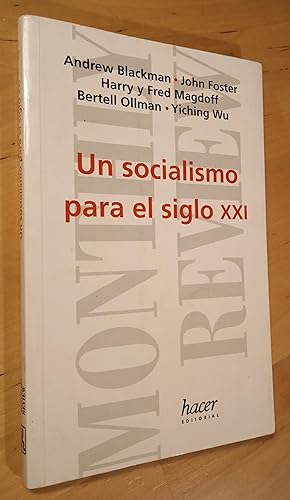
Un socialismo para el siglo XXI
Blackman, Andrew; Foster, John; Magdoff, Harry; Magdoff, Fred; Ollman, Bertell; Wu, Yiching
Idioma: Español
Editorial: Hacer 2007
- Tapa blanda
Librería: Llibres Bombeta, Terrassa, B, EspañaLlibres Bombeta
Contactar con el vendedorVendedor de 4 estrellasCondición: Usado - Aceptable
EUR 8,85
Envío por EUR 23,95Se envía de España a Estados Unidos de AmericaCantidad disponible: 1 disponibles
Encuadernación de tapa blanda. Condición: Bien.

- Tapa dura
Librería: BooksRun, Philadelphia, PA, Estados Unidos de AmericaBooksRun
Contactar con el vendedorVendedor de 5 estrellasCondición: Usado - Bueno
EUR 40,37
Gastos de envío gratisSe envía dentro de Estados Unidos de AmericaCantidad disponible: 1 disponibles
Hardcover. Condición: Very Good. With dust jacket. It's a well-cared-for item that has seen limited use. The item may show minor signs of wear. All the text is legible, with all pages included. It may have slight markings and/or highlighting.
- Tapa dura
Librería: BooksRun, Philadelphia, PA, Estados Unidos de AmericaBooksRun
Contactar con el vendedorVendedor de 5 estrellasCondición: Usado - Bueno
EUR 40,37
Gastos de envío gratisSe envía dentro de Estados Unidos de AmericaCantidad disponible: 1 disponibles
Hardcover. Condición: Very Good. With dust jacket. It's a well-cared-for item that has seen limited use. The item may show minor signs of wear. All the text is legible, with all pages included. It may have slight markings and/or highlighting.

Editorial: Wien, Mandelbaum . 2019
- Tapa blanda
Librería: Versandantiquariat Wolfgang Petry, Hannover, , AlemaniaVersandantiquariat Wolfgang Petry
Contactar con el vendedorVendedor de 5 estrellasCondición: Usado
EUR 15,00
Envío por EUR 18,00Se envía de Alemania a Estados Unidos de AmericaCantidad disponible: 1 disponibles
353 Seiten, 8°, Orig.-Broschur (eine Ecke leicht bestoßen; sonst gutes Exemplar). - (SW: China; Geschichte; Kommunismus; Maoismus).

UN SOCIALISMO PARA EL SIGLO XXI.
BLACKMAN/FOSTER/FRED MAGDOFF/OLLMAN/WU, Andrew/John/Harry y Fred/Bertell/Yiching.
Editorial: Hacer Editorial., Barcelona, 2007
- Tapa blanda
Librería: Libreria Lopez de Araujo, RIVAS VACIAMADRID, M, EspañaLibreria Lopez de Araujo
Contactar con el vendedorVendedor de 5 estrellasCondición: Usado
EUR 8,50
Envío por EUR 30,00Se envía de España a Estados Unidos de AmericaCantidad disponible: 1 disponibles
21 x 13 cm., 164 pag. LEA LAS CONDICIONES DE ENVIO DE LA LIBRERÍA. Tapa blanda con solapas, buen estado de conservacion.

Editorial: Practical Action Publishing, Rugby 2010
- Tapa blanda
- Primera edición
Librería: Webbooks, Wigtown, Wigtown, , Reino UnidoWebbooks, Wigtown
Contactar con el vendedorVendedor de 5 estrellasCondición: Usado - Bueno
EUR 11,93
Envío por EUR 34,76Se envía de Reino Unido a Estados Unidos de AmericaCantidad disponible: 1 disponibles
Paperback. Condición: Very Good. No Jacket. First Edition. C00003726.

- Tapa dura
Librería: GreatBookPrices, Columbia, MD, Estados Unidos de AmericaGreatBookPrices
Contactar con el vendedorVendedor de 5 estrellasCondición: Usado - Como Nuevo
EUR 79,57
Envío por EUR 2,28Se envía dentro de Estados Unidos de AmericaCantidad disponible: Más de 20 disponibles
Condición: As New. Unread book in perfect condition.
- Tapa blanda
- Impresión bajo demanda
Librería: Majestic Books, Hounslow, , Reino UnidoMajestic Books
Contactar con el vendedorVendedor de 4 estrellasCondición: Nuevo
EUR 12,42
Envío por EUR 7,53Se envía de Reino Unido a Estados Unidos de AmericaCantidad disponible: 4 disponibles
Condición: New. Print on Demand pp. 152.

- Tapa dura
Librería: GreatBookPrices, Columbia, MD, Estados Unidos de AmericaGreatBookPrices
Contactar con el vendedorVendedor de 5 estrellasCondición: Nuevo
EUR 85,66
Envío por EUR 2,28Se envía dentro de Estados Unidos de AmericaCantidad disponible: Más de 20 disponibles
Condición: New.

- Tapa dura
Librería: Rarewaves USA, OSWEGO, IL, Estados Unidos de AmericaRarewaves USA
Contactar con el vendedorVendedor de 5 estrellasCondición: Nuevo
EUR 88,02
Gastos de envío gratisSe envía dentro de Estados Unidos de AmericaCantidad disponible: Más de 20 disponibles
Hardback. Condición: New. Mao Zedong envisioned a great struggle to "wreak havoc under the heaven" when he launched the Cultural Revolution in 1966. But as radicalized Chinese youth rose up against Party officials, events quickly slipped from the government's grasp, and rebellion took on a life of its own. Turmoil became a reali…ty in a way the Great Leader had not foreseen. The Cultural Revolution at the Margins recaptures these formative moments from the perspective of the disenfranchised and disobedient rebels Mao unleashed and later betrayed.The Cultural Revolution began as a "revolution from above," and Mao had only a tenuous relationship with the Red Guard students and workers who responded to his call. Yet it was these young rebels at the grassroots who advanced the Cultural Revolution's more radical possibilities, Yiching Wu argues, and who not only acted for themselves but also transgressed Maoism by critically reflecting on broader issues concerning Chinese socialism. As China's state machinery broke down and the institutional foundations of the PRC were threatened, Mao resolved to suppress the crisis. Leaving out in the cold the very activists who had taken its transformative promise seriously, the Cultural Revolution devoured its children and exhausted its political energy.The mass demobilizations of 1968-69, Wu shows, were the starting point of a series of crisis-coping maneuvers to contain and neutralize dissent, producing immense changes in Chinese society a decade later.
- Tapa dura
Librería: GreatBookPricesUK, Woodford Green, Reino UnidoGreatBookPricesUK
Contactar con el vendedorVendedor de 5 estrellasCondición: Usado - Como Nuevo
EUR 86,83
Envío por EUR 17,38Se envía de Reino Unido a Estados Unidos de AmericaCantidad disponible: Más de 20 disponibles
Condición: As New. Unread book in perfect condition.
- Tapa dura
Librería: GreatBookPricesUK, Woodford Green, Reino UnidoGreatBookPricesUK
Contactar con el vendedorVendedor de 5 estrellasCondición: Nuevo
EUR 90,82
Envío por EUR 17,38Se envía de Reino Unido a Estados Unidos de AmericaCantidad disponible: Más de 20 disponibles
Condición: New.

- Tapa dura
Librería: Rarewaves.com USA, London, LONDO, Reino UnidoRarewaves.com USA
Contactar con el vendedorVendedor de 5 estrellasCondición: Nuevo
EUR 111,91
Gastos de envío gratisSe envía de Reino Unido a Estados Unidos de AmericaCantidad disponible: Más de 20 disponibles
Hardback. Condición: New. Mao Zedong envisioned a great struggle to "wreak havoc under the heaven" when he launched the Cultural Revolution in 1966. But as radicalized Chinese youth rose up against Party officials, events quickly slipped from the government's grasp, and rebellion took on a life of its own. Turmoil became a reali…ty in a way the Great Leader had not foreseen. The Cultural Revolution at the Margins recaptures these formative moments from the perspective of the disenfranchised and disobedient rebels Mao unleashed and later betrayed.The Cultural Revolution began as a "revolution from above," and Mao had only a tenuous relationship with the Red Guard students and workers who responded to his call. Yet it was these young rebels at the grassroots who advanced the Cultural Revolution's more radical possibilities, Yiching Wu argues, and who not only acted for themselves but also transgressed Maoism by critically reflecting on broader issues concerning Chinese socialism. As China's state machinery broke down and the institutional foundations of the PRC were threatened, Mao resolved to suppress the crisis. Leaving out in the cold the very activists who had taken its transformative promise seriously, the Cultural Revolution devoured its children and exhausted its political energy.The mass demobilizations of 1968-69, Wu shows, were the starting point of a series of crisis-coping maneuvers to contain and neutralize dissent, producing immense changes in Chinese society a decade later.
- Tapa dura
Librería: Revaluation Books, Exeter, , Reino UnidoRevaluation Books
Contactar con el vendedorVendedor de 5 estrellasCondición: Nuevo
EUR 104,90
Envío por EUR 14,48Se envía de Reino Unido a Estados Unidos de AmericaCantidad disponible: 2 disponibles
Hardcover. Condición: Brand New. 335 pages. 9.75x6.25x1.25 inches. In Stock.
- Tapa blanda
- Impresión bajo demanda
Librería: Biblios, frankfurt am main, HESSE, AlemaniaBiblios
Contactar con el vendedorVendedor de 4 estrellasCondición: Nuevo
EUR 13,33
Envío por EUR 9,95Se envía de Alemania a Estados Unidos de AmericaCantidad disponible: 4 disponibles
Condición: New. PRINT ON DEMAND pp. 152.

- Tapa dura
Librería: moluna, Greven, , Alemaniamoluna
Contactar con el vendedorVendedor de 5 estrellasCondición: Nuevo
EUR 79,66
Envío por EUR 48,99Se envía de Alemania a Estados Unidos de AmericaCantidad disponible: Más de 20 disponibles
Gebunden. Condición: New. The Cultural Revolution began from above, yet it was students and workers at the grassroots who advanced the movement s radical possibilities by acting and thinking for themselves. Resolving to suppress the resulting crisis, Mao set events in motion in 1968.

- Tapa dura
Librería: Rarewaves USA United, OSWEGO, IL, Estados Unidos de AmericaRarewaves USA United
Contactar con el vendedorVendedor de 5 estrellasCondición: Nuevo
EUR 90,83
Envío por EUR 43,21Se envía dentro de Estados Unidos de AmericaCantidad disponible: Más de 20 disponibles
Hardback. Condición: New. Mao Zedong envisioned a great struggle to "wreak havoc under the heaven" when he launched the Cultural Revolution in 1966. But as radicalized Chinese youth rose up against Party officials, events quickly slipped from the government's grasp, and rebellion took on a life of its own. Turmoil became a reali…ty in a way the Great Leader had not foreseen. The Cultural Revolution at the Margins recaptures these formative moments from the perspective of the disenfranchised and disobedient rebels Mao unleashed and later betrayed.The Cultural Revolution began as a "revolution from above," and Mao had only a tenuous relationship with the Red Guard students and workers who responded to his call. Yet it was these young rebels at the grassroots who advanced the Cultural Revolution's more radical possibilities, Yiching Wu argues, and who not only acted for themselves but also transgressed Maoism by critically reflecting on broader issues concerning Chinese socialism. As China's state machinery broke down and the institutional foundations of the PRC were threatened, Mao resolved to suppress the crisis. Leaving out in the cold the very activists who had taken its transformative promise seriously, the Cultural Revolution devoured its children and exhausted its political energy.The mass demobilizations of 1968-69, Wu shows, were the starting point of a series of crisis-coping maneuvers to contain and neutralize dissent, producing immense changes in Chinese society a decade later.

- Tapa dura
Librería: AHA-BUCH GmbH, Einbeck, AlemaniaAHA-BUCH GmbH
Contactar con el vendedorVendedor de 5 estrellasCondición: Nuevo
EUR 108,28
Envío por EUR 63,29Se envía de Alemania a Estados Unidos de AmericaCantidad disponible: 2 disponibles
Buch. Condición: Neu. Neuware - The Cultural Revolution began from above, yet it was students and workers at the grassroots who advanced the movement's radical possibilities by acting and thinking for themselves. Resolving to suppress the resulting crisis, Mao set events in motion in 1968 that left out in the cold those rebels w…ho had taken it most seriously, Yiching Wu shows.

- Tapa dura
Librería: Rarewaves.com UK, London, Reino UnidoRarewaves.com UK
Contactar con el vendedorVendedor de 5 estrellasCondición: Nuevo
EUR 105,27
Envío por EUR 75,31Se envía de Reino Unido a Estados Unidos de AmericaCantidad disponible: Más de 20 disponibles
Hardback. Condición: New. Mao Zedong envisioned a great struggle to "wreak havoc under the heaven" when he launched the Cultural Revolution in 1966. But as radicalized Chinese youth rose up against Party officials, events quickly slipped from the government's grasp, and rebellion took on a life of its own. Turmoil became a reali…ty in a way the Great Leader had not foreseen. The Cultural Revolution at the Margins recaptures these formative moments from the perspective of the disenfranchised and disobedient rebels Mao unleashed and later betrayed.The Cultural Revolution began as a "revolution from above," and Mao had only a tenuous relationship with the Red Guard students and workers who responded to his call. Yet it was these young rebels at the grassroots who advanced the Cultural Revolution's more radical possibilities, Yiching Wu argues, and who not only acted for themselves but also transgressed Maoism by critically reflecting on broader issues concerning Chinese socialism. As China's state machinery broke down and the institutional foundations of the PRC were threatened, Mao resolved to suppress the crisis. Leaving out in the cold the very activists who had taken its transformative promise seriously, the Cultural Revolution devoured its children and exhausted its political energy.The mass demobilizations of 1968-69, Wu shows, were the starting point of a series of crisis-coping maneuvers to contain and neutralize dissent, producing immense changes in Chinese society a decade later.
Idioma: Alemán
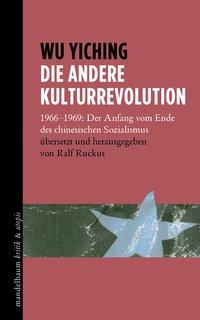
Editorial: Mandelbaum kritik & utopie, Wien 2019
- Tapa blanda
Librería: Antiquariat Mackensen & Niemann, Berlin, , AlemaniaAntiquariat Mackensen & Niemann
Contactar con el vendedorVendedor de 4 estrellasCondición: Usado
EUR 15,00
Envío por EUR 52,00Se envía de Alemania a Estados Unidos de AmericaCantidad disponible: 1 disponibles
1. Auflage, aus dem Englischen von Ralf Ruckus, 353 S., sehr gutes Exemplar, Original-Broschur.
- Tapa blanda
Librería: moluna, Greven, , Alemaniamoluna
Contactar con el vendedorVendedor de 5 estrellasCondición: Nuevo
EUR 27,00
Envío por EUR 48,99Se envía de Alemania a Estados Unidos de AmericaCantidad disponible: Más de 20 disponibles
Condición: New.

- Tapa blanda
Librería: AHA-BUCH GmbH, Einbeck, AlemaniaAHA-BUCH GmbH
Contactar con el vendedorVendedor de 5 estrellasCondición: Nuevo
EUR 27,00
Envío por EUR 62,71Se envía de Alemania a Estados Unidos de AmericaCantidad disponible: 2 disponibles
Taschenbuch. Condición: Neu. Neuware - Als Mao Zedong 1966 in China die Kulturrevolution lostrat, wollte er »großes Chaos unter dem Himmel« stiften. Dann erhob sich die radikalisierte Jugend gegen die Parteioffiziellen. Die Rebellion entglitt dem Zugriff der Regierung und erreichte ein Ausmaß, das der »Große Vorsitzende« nicht e…rwartet hatte.In Die andere Kulturrevolution lässt Wu Yiching die prägenden historischen Momente Revue passieren, erzählt aus der Perspektive der Rebellen und Rebellinnen, die erst Maos Aufruf folgten und dann von ihm verraten wurden. Laut Wu trieben sie die Kulturrevolution von unten an, sprengten die Grenzen des Maoismus und entwickelten eine grundsätzliche Kritik an Chinas Sozialismus. Als die Partei- und Staatsorgane 1967 unter den Massenangriffen kollabierten, setzte die Führung die Volksbefreiungsarmee ein, und die Kulturrevolution verschlang ihre Kinder. Die folgende Niederschlagung der Massenbewegungen war laut Wu ein erster Schritt in Richtung auf die großen Reformen, die Chinas Gesellschaft ab Ende der 1970er Jahre grundlegend verändern sollten.


