
Bonner jay (27 resultados)
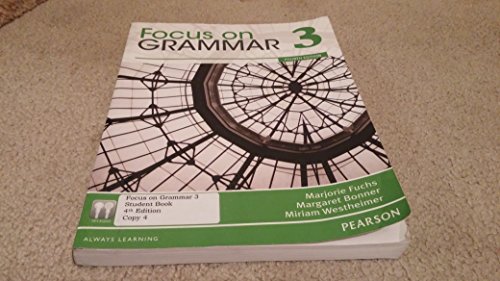
Focus on Grammar 3
Westheimer, Miriam, Schoenberg, Irene, Fuchs, Marjorie, Maurer, Jay, Bonner, Margaret
- Tapa blanda
Librería: Better World Books, Mishawaka, IN, Estados Unidos de AmericaBetter World Books
Contactar con el vendedorVendedor de 5 estrellasCondición: Usado - Aceptable
EUR 6,85
Gastos de envío gratisSe envía dentro de Estados Unidos de AmericaCantidad disponible: 1 disponibles
Condición: Good. 4 Edition. Pages intact with minimal writing/highlighting. The binding may be loose and creased. Dust jackets/supplements are not included. Stock photo provided. Product includes identifying sticker. Better World Books: Buy Books. Do Good.
Focus on Grammar 3
Westheimer, Miriam, Schoenberg, Irene, Fuchs, Marjorie, Maurer, Jay, Bonner, Margaret
- Tapa blanda
Librería: Better World Books: West, Reno, NV, Estados Unidos de AmericaBetter World Books: West
Contactar con el vendedorVendedor de 5 estrellasCondición: Usado - Aceptable
EUR 6,85
Gastos de envío gratisSe envía dentro de Estados Unidos de AmericaCantidad disponible: 3 disponibles
Condición: Good. 4 Edition. Pages intact with minimal writing/highlighting. The binding may be loose and creased. Dust jackets/supplements are not included. Stock photo provided. Product includes identifying sticker. Better World Books: Buy Books. Do Good.
 Más imágenes
Idioma: Inglés
Editorial: Dell Magazine, New York, 2002
- Tapa blanda
- Primera edición
- Publicación periódica
Librería: Scene of the Crime, ABAC, IOBA, St. Catharines, ON, CanadaScene of the Crime, ABAC, IOBA
Contactar con el vendedorVendedor de 5 estrellasCondición: Usado - Excelente
EUR 13,53
Gastos de envío gratisSe envía de Canada a Estados Unidos de AmericaCantidad disponible: 1 disponibles
Soft cover. Condición: Fine. 1st Edition. First Edition, First Printing of this Collection of 14 Short Stories. Featured are In My House by Barbara Owens, Give or Take a Summer or Two by Peter Turnbull, Main Line Lazarus by Terence Faherty, The Second Crime Around by Donald Olson, Alternating Currents by Barry Baldwin, Trenton M…akes, the World Takes by Jeffrey T Williamson, The Theft of the Wedding Doves by Edward D Hoch, The Born Natural by Brynn Bonner, Under Ice by Patricia Rutale, By Book or by Crook by Gene Fehler, Holmes Emerging by Cynthia Ruffy, A One-Minute Hound by Donald A Yates, Mystery Express by Jay Alter and the Mystery Crossword by Robert Kesling. In Fine Condition.
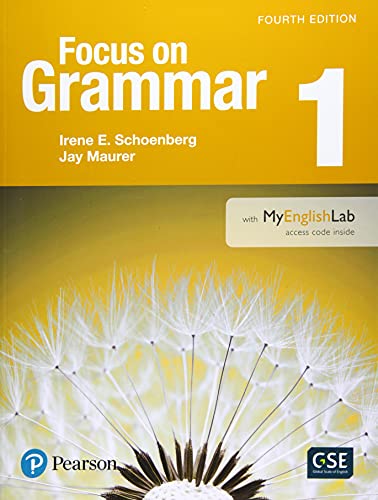
Focus on Grammar
Westheimer, Miriam, Schoenberg, Irene, Fuchs, Marjorie, Maurer, Jay, Bonner, Margaret
- Tapa blanda
Librería: Better World Books: West, Reno, NV, Estados Unidos de AmericaBetter World Books: West
Contactar con el vendedorVendedor de 5 estrellasCondición: Usado - Aceptable
EUR 22,91
Gastos de envío gratisSe envía dentro de Estados Unidos de AmericaCantidad disponible: 1 disponibles
Condición: Good. 4th Edition. Pages intact with minimal writing/highlighting. The binding may be loose and creased. Dust jackets/supplements are not included. Stock photo provided. Product includes identifying sticker. Better World Books: Buy Books. Do Good.
 Más imágenes
Editorial: University of Delaware, Wilmington DE, 1960
- Tapa blanda
- Primera edición
Librería: biblioboy, North Providence, RI, Estados Unidos de Americabiblioboy
Contactar con el vendedorVendedor de 5 estrellasCondición: Usado - Bueno
EUR 9,02
Envío por EUR 6,13Se envía dentro de Estados Unidos de AmericaCantidad disponible: 1 disponibles
Paperback. Condición: Very Good. First Edition. wilmington DE University of Delaware 1960 First edition. Magazine. Pictorial/decorated wrappers [about 6" x 9"], saddle-stapled, 27 pages, illustrated. Poet Percival R. Roberts III has written his name ["PRRobertsIII"] and added other material [including critical ratings of the iss…ue] to the title page, and continued to scatter his critical annotations throughout the issue. Very good with light wear. whb3E.

- Tapa blanda
Librería: Better World Books: West, Reno, NV, Estados Unidos de AmericaBetter World Books: West
Contactar con el vendedorVendedor de 5 estrellasCondición: Usado - Bueno
EUR 25,54
Gastos de envío gratisSe envía dentro de Estados Unidos de AmericaCantidad disponible: 1 disponibles
Condición: Very Good. Pages intact with possible writing/highlighting. Binding strong with minor wear. Dust jackets/supplements may not be included. Stock photo provided. Product includes identifying sticker. Better World Books: Buy Books. Do Good.

- Tapa dura
Librería: medimops, Berlin, Alemaniamedimops
Contactar con el vendedorVendedor de 5 estrellasCondición: Usado - Aceptable
EUR 81,69
Envío por EUR 10,00Se envía de Alemania a Estados Unidos de AmericaCantidad disponible: 1 disponibles
Condición: good. Befriedigend/Good: Durchschnittlich erhaltenes Buch bzw. Schutzumschlag mit Gebrauchsspuren, aber vollständigen Seiten. / Describes the average WORN book or dust jacket that has all the pages present.

- Tapa blanda
Librería: Grand Eagle Retail, Bensenville, IL, Estados Unidos de AmericaGrand Eagle Retail
Contactar con el vendedorVendedor de 5 estrellasCondición: Nuevo
EUR 117,90
Gastos de envío gratisSe envía dentro de Estados Unidos de AmericaCantidad disponible: 1 disponibles
Paperback. Condición: new. Paperback. The main focus of this unique book is an in-depth examination of the polygonal technique; the primary method used by master artists of the past in creating Islamic geometric patterns. The author details the design methodology responsible for this all-but-lost art form and presents evidence f…or its use from the historical record, both of which are vital contributions to the understanding of this ornamental tradition. Additionally, the author examines the historical development of Islamic geometric patterns, the significance of geometric design within the broader context of Islamic ornament as a whole, the formative role that geometry plays throughout the Islamic ornamental arts (including calligraphy, the floral idiom, dome decoration, geometric patterns, and more), and the underexamined question of pattern classification.Featuring over 600 beautiful color images, Islamic Geometric Patterns: Their Historical Development and Traditional Methods of Construction is a valuable addition to the literature of Islamic art, architecture and geometric patterns. This book is ideal for students and scholars of geometry, the history of mathematics, and the history of Islamic art, architecture, and culture. In addition, artists, designers, craftspeople, and architects will all find this book an exceptionally informative and useful asset in their fields.Jay Bonner is an architectural ornamentalist and unaffiliated scholar of Islamic geometric design. He received his MDes from the Royal College of Art in London (1983). He has contributed ornamental designs for many international architectural projects, including the expansion of both the al-Masjid al-Haram (Grand Mosque) in Mecca, and the al-Masjid an Nawabi (Prophets Mosque) in Medina, as well the Tomb of Sheikh Hujwiri in Lahore, and the Ismaili Centre in London to name but a few. He is committed to the revitalization of Islamic geometric design through the teaching of traditional methodological practices. To this end, in addition to publishing, Jay Bonner has lectured and taught design seminars at many universities and conferences in North America, Europe, North Africa and Asia. Islamic Geometric Patterns presents an in-depth examination of the polygonal technique, the primary method used in creating Islamic geometric patterns. The text details the methodology behind this dead art form, and presents historical evidence, both of which are vital to the ornamental tradition. Shipping may be from multiple locations in the US or from the UK, depending on stock availability.
Idioma: Inglés
Editorial: Springer-Verlag New York Inc., New York, NY, 2017
- Tapa dura
- Primera edición
Librería: Grand Eagle Retail, Bensenville, IL, Estados Unidos de AmericaGrand Eagle Retail
Contactar con el vendedorVendedor de 5 estrellasCondición: Nuevo
EUR 137,76
Gastos de envío gratisSe envía dentro de Estados Unidos de AmericaCantidad disponible: 1 disponibles
Hardcover. Condición: new. Hardcover. The main focus of this unique book is an in-depth examination of the polygonal technique; the primary method used by master artists of the past in creating Islamic geometric patterns. The author details the design methodology responsible for this all-but-lost art form and presents evidence f…or its use from the historical record, both of which are vital contributions to the understanding of this ornamental tradition. Additionally, the author examines the historical development of Islamic geometric patterns, the significance of geometric design within the broader context of Islamic ornament as a whole, the formative role that geometry plays throughout the Islamic ornamental arts (including calligraphy, the floral idiom, dome decoration, geometric patterns, and more), and the underexamined question of pattern classification.Featuring over 600 beautiful color images, Islamic Geometric Patterns: Their Historical Development and Traditional Methods of Construction is a valuable addition to the literature of Islamic art, architecture and geometric patterns. This book is ideal for students and scholars of geometry, the history of mathematics, and the history of Islamic art, architecture, and culture. In addition, artists, designers, craftspeople, and architects will all find this book an exceptionally informative and useful asset in their fields.Jay Bonner is an architectural ornamentalist and unaffiliated scholar of Islamic geometric design. He received his MDes from the Royal College of Art in London (1983). He has contributed ornamental designs for many international architectural projects, including the expansion of both the al-Masjid al-Haram (Grand Mosque) in Mecca, and the al-Masjid an Nawabi (Prophets Mosque) in Medina, as well the Tomb of Sheikh Hujwiri in Lahore, and the Ismaili Centre in London to name but a few. He is committed to the revitalization of Islamic geometric design through the teaching of traditional methodological practices. To this end, in addition to publishing, Jay Bonner has lectured and taught design seminars at many universities and conferences in North America, Europe, North Africa and Asia. Islamic Geometric Patterns presents an in-depth examination of the polygonal technique, the primary method used in creating Islamic geometric patterns. The text details the methodology behind this dead art form, and presents historical evidence, both of which are vital to the ornamental tradition. Shipping may be from multiple locations in the US or from the UK, depending on stock availability.

- Tapa blanda
Librería: preigu, Osnabrück, Alemaniapreigu
Contactar con el vendedorVendedor de 5 estrellasCondición: Nuevo
EUR 95,25
Envío por EUR 70,00Se envía de Alemania a Estados Unidos de AmericaCantidad disponible: 5 disponibles
Taschenbuch. Condición: Neu. Islamic Geometric Patterns | Their Historical Development and Traditional Methods of Construction | Jay Bonner | Taschenbuch | xxv | Englisch | 2018 | Springer | EAN 9781493979219 | Verantwortliche Person für die EU: Springer Verlag GmbH, Tiergartenstr. 17, 69121 Heidelberg, juergen[dot]hartmann[at]s…pringer[dot]com | Anbieter: preigu.

- Tapa blanda
Librería: AHA-BUCH GmbH, Einbeck, AlemaniaAHA-BUCH GmbH
Contactar con el vendedorVendedor de 5 estrellasCondición: Nuevo
EUR 113,44
Envío por EUR 67,49Se envía de Alemania a Estados Unidos de AmericaCantidad disponible: 1 disponibles
Taschenbuch. Condición: Neu. Druck auf Anfrage Neuware - Printed after ordering - The main focus of this unique book is an in-depth examination of the polygonal technique; the primary method used by master artists of the past in creating Islamic geometric patterns. The author details the design methodology responsible for this a…ll-but-lost art form and presents evidence for its use from the historical record, both of which are vital contributions to the understanding of this ornamental tradition. Additionally, the author examines the historical development of Islamic geometric patterns, the significance of geometric design within the broader context of Islamic ornament as a whole, the formative role that geometry plays throughout the Islamic ornamental arts (including calligraphy, the floral idiom, dome decoration, geometric patterns, and more), and the underexamined question of pattern classification.Featuring over 600 beautiful color images,Islamic Geometric Patterns: Their HistoricalDevelopment and Traditional Methods of Constructionis a valuable addition to the literature of Islamic art, architecture and geometric patterns. This book is ideal for students and scholars of geometry, the history of mathematics, and the history of Islamic art, architecture, and culture. In addition, artists, designers, craftspeople, and architects will all find this book an exceptionally informative and useful asset in their fields.Jay Bonneris an architectural ornamentalist and unaffiliated scholar of Islamic geometric design. He received his MDes from the Royal College of Art in London (1983). He has contributed ornamental designs for many international architectural projects, including the expansion of both the al-Masjid al-Haram (Grand Mosque) in Mecca, and the al-Masjid an Nawabi (Prophet's Mosque) in Medina, as well the Tomb of Sheikh Hujwiri in Lahore, and the Ismaili Centre in London - to name but a few. He is committed to the revitalization of Islamic geometric design through the teaching of traditional methodological practices. To this end, in addition to publishing, Jay Bonner has lectured and taught design seminars at many universities and conferences in North America, Europe, North Africa and Asia.
- Tapa dura
Librería: Books Puddle, New York, NY, Estados Unidos de AmericaBooks Puddle
Contactar con el vendedorVendedor de 4 estrellasCondición: Nuevo
EUR 190,94
Envío por EUR 3,49Se envía dentro de Estados Unidos de AmericaCantidad disponible: 4 disponibles
Condición: New.
- Tapa blanda
Librería: AussieBookSeller, Truganina, VIC, AustraliaAussieBookSeller
Contactar con el vendedorVendedor de 5 estrellasCondición: Nuevo
EUR 176,43
Envío por EUR 32,41Se envía de Australia a Estados Unidos de AmericaCantidad disponible: 1 disponibles
Paperback. Condición: new. Paperback. The main focus of this unique book is an in-depth examination of the polygonal technique; the primary method used by master artists of the past in creating Islamic geometric patterns. The author details the design methodology responsible for this all-but-lost art form and presents evidence f…or its use from the historical record, both of which are vital contributions to the understanding of this ornamental tradition. Additionally, the author examines the historical development of Islamic geometric patterns, the significance of geometric design within the broader context of Islamic ornament as a whole, the formative role that geometry plays throughout the Islamic ornamental arts (including calligraphy, the floral idiom, dome decoration, geometric patterns, and more), and the underexamined question of pattern classification.Featuring over 600 beautiful color images, Islamic Geometric Patterns: Their Historical Development and Traditional Methods of Construction is a valuable addition to the literature of Islamic art, architecture and geometric patterns. This book is ideal for students and scholars of geometry, the history of mathematics, and the history of Islamic art, architecture, and culture. In addition, artists, designers, craftspeople, and architects will all find this book an exceptionally informative and useful asset in their fields.Jay Bonner is an architectural ornamentalist and unaffiliated scholar of Islamic geometric design. He received his MDes from the Royal College of Art in London (1983). He has contributed ornamental designs for many international architectural projects, including the expansion of both the al-Masjid al-Haram (Grand Mosque) in Mecca, and the al-Masjid an Nawabi (Prophets Mosque) in Medina, as well the Tomb of Sheikh Hujwiri in Lahore, and the Ismaili Centre in London to name but a few. He is committed to the revitalization of Islamic geometric design through the teaching of traditional methodological practices. To this end, in addition to publishing, Jay Bonner has lectured and taught design seminars at many universities and conferences in North America, Europe, North Africa and Asia. Islamic Geometric Patterns presents an in-depth examination of the polygonal technique, the primary method used in creating Islamic geometric patterns. The text details the methodology behind this dead art form, and presents historical evidence, both of which are vital to the ornamental tradition. Shipping may be from our Sydney, NSW warehouse or from our UK or US warehouse, depending on stock availability.

- Tapa dura
Librería: AHA-BUCH GmbH, Einbeck, AlemaniaAHA-BUCH GmbH
Contactar con el vendedorVendedor de 5 estrellasCondición: Nuevo
EUR 145,22
Envío por EUR 68,76Se envía de Alemania a Estados Unidos de AmericaCantidad disponible: 1 disponibles
Buch. Condición: Neu. Druck auf Anfrage Neuware - Printed after ordering - The main focus of this unique book is an in-depth examination of the polygonal technique; the primary method used by master artists of the past in creating Islamic geometric patterns. The author details the design methodology responsible for this all-but-…lost art form and presents evidence for its use from the historical record, both of which are vital contributions to the understanding of this ornamental tradition. Additionally, the author examines the historical development of Islamic geometric patterns, the significance of geometric design within the broader context of Islamic ornament as a whole, the formative role that geometry plays throughout the Islamic ornamental arts (including calligraphy, the floral idiom, dome decoration, geometric patterns, and more), and the underexamined question of pattern classification.Featuring over 600 beautiful color images,Islamic Geometric Patterns: Their HistoricalDevelopment and Traditional Methods of Constructionis a valuable addition to the literature of Islamic art, architecture and geometric patterns. This book is ideal for students and scholars of geometry, the history of mathematics, and the history of Islamic art, architecture, and culture. In addition, artists, designers, craftspeople, and architects will all find this book an exceptionally informative and useful asset in their fields.Jay Bonneris an architectural ornamentalist and unaffiliated scholar of Islamic geometric design. He received his MDes from the Royal College of Art in London (1983). He has contributed ornamental designs for many international architectural projects, including the expansion of both the al-Masjid al-Haram (Grand Mosque) in Mecca, and the al-Masjid an Nawabi (Prophet's Mosque) in Medina, as well the Tomb of Sheikh Hujwiri in Lahore, and the Ismaili Centre in London - to name but a few. He is committed to the revitalization of Islamic geometric design through the teaching of traditional methodological practices. To this end, in addition to publishing, Jay Bonner has lectured and taught design seminars at many universities and conferences in North America, Europe, North Africa and Asia.
- Tapa dura
Librería: Mispah books, Redhill, SURRE, Reino UnidoMispah books
Contactar con el vendedorVendedor de 4 estrellasCondición: Nuevo
EUR 215,19
Envío por EUR 29,34Se envía de Reino Unido a Estados Unidos de AmericaCantidad disponible: 1 disponibles
Hardcover. Condición: New. NEW. SHIPS FROM MULTIPLE LOCATIONS. book.
Idioma: Inglés
Editorial: Springer-Verlag New York Inc., New York, NY, 2017
- Tapa dura
- Primera edición
Librería: AussieBookSeller, Truganina, VIC, AustraliaAussieBookSeller
Contactar con el vendedorVendedor de 5 estrellasCondición: Nuevo
EUR 210,67
Envío por EUR 32,41Se envía de Australia a Estados Unidos de AmericaCantidad disponible: 1 disponibles
Hardcover. Condición: new. Hardcover. The main focus of this unique book is an in-depth examination of the polygonal technique; the primary method used by master artists of the past in creating Islamic geometric patterns. The author details the design methodology responsible for this all-but-lost art form and presents evidence f…or its use from the historical record, both of which are vital contributions to the understanding of this ornamental tradition. Additionally, the author examines the historical development of Islamic geometric patterns, the significance of geometric design within the broader context of Islamic ornament as a whole, the formative role that geometry plays throughout the Islamic ornamental arts (including calligraphy, the floral idiom, dome decoration, geometric patterns, and more), and the underexamined question of pattern classification.Featuring over 600 beautiful color images, Islamic Geometric Patterns: Their Historical Development and Traditional Methods of Construction is a valuable addition to the literature of Islamic art, architecture and geometric patterns. This book is ideal for students and scholars of geometry, the history of mathematics, and the history of Islamic art, architecture, and culture. In addition, artists, designers, craftspeople, and architects will all find this book an exceptionally informative and useful asset in their fields.Jay Bonner is an architectural ornamentalist and unaffiliated scholar of Islamic geometric design. He received his MDes from the Royal College of Art in London (1983). He has contributed ornamental designs for many international architectural projects, including the expansion of both the al-Masjid al-Haram (Grand Mosque) in Mecca, and the al-Masjid an Nawabi (Prophets Mosque) in Medina, as well the Tomb of Sheikh Hujwiri in Lahore, and the Ismaili Centre in London to name but a few. He is committed to the revitalization of Islamic geometric design through the teaching of traditional methodological practices. To this end, in addition to publishing, Jay Bonner has lectured and taught design seminars at many universities and conferences in North America, Europe, North Africa and Asia. Islamic Geometric Patterns presents an in-depth examination of the polygonal technique, the primary method used in creating Islamic geometric patterns. The text details the methodology behind this dead art form, and presents historical evidence, both of which are vital to the ornamental tradition. Shipping may be from our Sydney, NSW warehouse or from our UK or US warehouse, depending on stock availability.
- Tapa blanda
- Impresión bajo demanda
Librería: Brook Bookstore On Demand, Napoli, NA, ItaliaBrook Bookstore On Demand
Contactar con el vendedorVendedor de 5 estrellasCondición: Nuevo
EUR 86,24
Envío por EUR 13,50Se envía de Italia a Estados Unidos de AmericaCantidad disponible: Más de 20 disponibles
Condición: new. Questo è un articolo print on demand.

- Tapa blanda
- Impresión bajo demanda
Librería: BuchWeltWeit Ludwig Meier e.K., Bergisch Gladbach, AlemaniaBuchWeltWeit Ludwig Meier e.K.
Contactar con el vendedorVendedor de 5 estrellasCondición: Nuevo
EUR 96,29
Envío por EUR 23,00Se envía de Alemania a Estados Unidos de AmericaCantidad disponible: 1 disponibles
Taschenbuch. Condición: Neu. This item is printed on demand - it takes 3-4 days longer - Neuware -The main focus of this unique book is an in-depth examination of the polygonal technique; the primary method used by master artists of the past in creating Islamic geometric patterns. The author details the design methodology respon…sible for this all-but-lost art form and presents evidence for its use from the historical record, both of which are vital contributions to the understanding of this ornamental tradition. Additionally, the author examines the historical development of Islamic geometric patterns, the significance of geometric design within the broader context of Islamic ornament as a whole, the formative role that geometry plays throughout the Islamic ornamental arts (including calligraphy, the floral idiom, dome decoration, geometric patterns, and more), and the underexamined question of pattern classification.Featuring over 600 beautiful color images,Islamic Geometric Patterns: Their HistoricalDevelopment and Traditional Methods of Constructionis a valuable addition to the literature of Islamic art, architecture and geometric patterns. This book is ideal for students and scholars of geometry, the history of mathematics, and the history of Islamic art, architecture, and culture. In addition, artists, designers, craftspeople, and architects will all find this book an exceptionally informative and useful asset in their fields.Jay Bonneris an architectural ornamentalist and unaffiliated scholar of Islamic geometric design. He received his MDes from the Royal College of Art in London (1983). He has contributed ornamental designs for many international architectural projects, including the expansion of both the al-Masjid al-Haram (Grand Mosque) in Mecca, and the al-Masjid an Nawabi (Prophet's Mosque) in Medina, as well the Tomb of Sheikh Hujwiri in Lahore, and the Ismaili Centre in London - to name but a few. He is committed to the revitalization of Islamic geometric design through the teaching of traditional methodological practices. To this end, in addition to publishing, Jay Bonner has lectured and taught design seminars at many universities and conferences in North America, Europe, North Africa and Asia. 624 pp. Englisch.
- Tapa dura
- Impresión bajo demanda
Librería: Brook Bookstore On Demand, Napoli, NA, ItaliaBrook Bookstore On Demand
Contactar con el vendedorVendedor de 5 estrellasCondición: Nuevo
EUR 110,26
Envío por EUR 20,00Se envía de Italia a Estados Unidos de AmericaCantidad disponible: Más de 20 disponibles
Condición: new. Questo è un articolo print on demand.

- Tapa blanda
- Impresión bajo demanda
Librería: moluna, Greven, Alemaniamoluna
Contactar con el vendedorVendedor de 5 estrellasCondición: Nuevo
EUR 89,99
Envío por EUR 48,99Se envía de Alemania a Estados Unidos de AmericaCantidad disponible: Más de 20 disponibles
Condición: New. Dieser Artikel ist ein Print on Demand Artikel und wird nach Ihrer Bestellung fuer Sie gedruckt. Valuable asset to mathematicians, historians, artists, designers, craftspeople and architects Unique, in-depth presentation of the polygonal technique, featuring evidence from the historical record and exposition…of the methodology behind the.

- Tapa dura
- Impresión bajo demanda
Librería: BuchWeltWeit Ludwig Meier e.K., Bergisch Gladbach, AlemaniaBuchWeltWeit Ludwig Meier e.K.
Contactar con el vendedorVendedor de 5 estrellasCondición: Nuevo
EUR 139,09
Envío por EUR 23,00Se envía de Alemania a Estados Unidos de AmericaCantidad disponible: 2 disponibles
Buch. Condición: Neu. This item is printed on demand - it takes 3-4 days longer - Neuware -The main focus of this unique book is an in-depth examination of the polygonal technique; the primary method used by master artists of the past in creating Islamic geometric patterns. The author details the design methodology responsible f…or this all-but-lost art form and presents evidence for its use from the historical record, both of which are vital contributions to the understanding of this ornamental tradition. Additionally, the author examines the historical development of Islamic geometric patterns, the significance of geometric design within the broader context of Islamic ornament as a whole, the formative role that geometry plays throughout the Islamic ornamental arts (including calligraphy, the floral idiom, dome decoration, geometric patterns, and more), and the underexamined question of pattern classification.Featuring over 600 beautiful color images,Islamic Geometric Patterns: Their HistoricalDevelopment and Traditional Methods of Constructionis a valuable addition to the literature of Islamic art, architecture and geometric patterns. This book is ideal for students and scholars of geometry, the history of mathematics, and the history of Islamic art, architecture, and culture. In addition, artists, designers, craftspeople, and architects will all find this book an exceptionally informative and useful asset in their fields.Jay Bonneris an architectural ornamentalist and unaffiliated scholar of Islamic geometric design. He received his MDes from the Royal College of Art in London (1983). He has contributed ornamental designs for many international architectural projects, including the expansion of both the al-Masjid al-Haram (Grand Mosque) in Mecca, and the al-Masjid an Nawabi (Prophet's Mosque) in Medina, as well the Tomb of Sheikh Hujwiri in Lahore, and the Ismaili Centre in London - to name but a few. He is committed to the revitalization of Islamic geometric design through the teaching of traditional methodological practices. To this end, in addition to publishing, Jay Bonner has lectured and taught design seminars at many universities and conferences in North America, Europe, North Africa and Asia. 624 pp. Englisch.

- Tapa dura
- Impresión bajo demanda
Librería: moluna, Greven, Alemaniamoluna
Contactar con el vendedorVendedor de 5 estrellasCondición: Nuevo
EUR 115,65
Envío por EUR 48,99Se envía de Alemania a Estados Unidos de AmericaCantidad disponible: Más de 20 disponibles
Condición: New. Dieser Artikel ist ein Print on Demand Artikel und wird nach Ihrer Bestellung fuer Sie gedruckt. Valuable asset to mathematicians, historians, artists, designers, craftspeople and architects Unique, in-depth presentation of the polygonal technique, featuring evidence from the historical record and exposition…of the methodology behind the.

- Tapa blanda
- Impresión bajo demanda
Librería: buchversandmimpf2000, Emtmannsberg, BAYE, Alemaniabuchversandmimpf2000
Contactar con el vendedorVendedor de 5 estrellasCondición: Nuevo
EUR 106,99
Envío por EUR 60,00Se envía de Alemania a Estados Unidos de AmericaCantidad disponible: 1 disponibles
Taschenbuch. Condición: Neu. This item is printed on demand - Print on Demand Titel. Neuware -Valuable asset to mathematicians, historians, artists, designers, craftspeople and architectsUnique, in-depth presentation of the polygonal technique, featuring evidence from the historical record and exposition of the methodology behin…d the dead art formComprehensive bibliography, index and geometric pattern appendixBroad view of historical development of Islamic ornamentSpringer-Verlag KG, Sachsenplatz 4-6, 1201 Wien 624 pp. Englisch.

- Tapa dura
- Impresión bajo demanda
Librería: preigu, Osnabrück, Alemaniapreigu
Contactar con el vendedorVendedor de 5 estrellasCondición: Nuevo
EUR 119,95
Envío por EUR 70,00Se envía de Alemania a Estados Unidos de AmericaCantidad disponible: 5 disponibles
Buch. Condición: Neu. Islamic Geometric Patterns | Their Historical Development and Traditional Methods of Construction | Jay Bonner | Buch | xxv | Englisch | 2017 | Springer | EAN 9781441902160 | Verantwortliche Person für die EU: Springer Verlag GmbH, Tiergartenstr. 17, 69121 Heidelberg, juergen[dot]hartmann[at]springer[dot]co…m | Anbieter: preigu Print on Demand.
- Tapa dura
- Impresión bajo demanda
Librería: Majestic Books, Hounslow, Reino UnidoMajestic Books
Contactar con el vendedorVendedor de 4 estrellasCondición: Nuevo
EUR 194,09
Envío por EUR 7,63Se envía de Reino Unido a Estados Unidos de AmericaCantidad disponible: 4 disponibles
Condición: New. Print on Demand.

- Tapa dura
- Impresión bajo demanda
Librería: buchversandmimpf2000, Emtmannsberg, BAYE, Alemaniabuchversandmimpf2000
Contactar con el vendedorVendedor de 5 estrellasCondición: Nuevo
EUR 139,09
Envío por EUR 60,00Se envía de Alemania a Estados Unidos de AmericaCantidad disponible: 1 disponibles
Buch. Condición: Neu. This item is printed on demand - Print on Demand Titel. Neuware -Valuable asset to mathematicians, historians, artists, designers, craftspeople and architectsUnique, in-depth presentation of the polygonal technique, featuring evidence from the historical record and exposition of the methodology behind the d…ead art formComprehensive bibliography, index and geometric pattern appendixBroad view of historical development of Islamic ornamentSpringer-Verlag KG, Sachsenplatz 4-6, 1201 Wien 624 pp. Englisch.
- Tapa dura
- Impresión bajo demanda
Librería: Biblios, frankfurt am main, HESSE, AlemaniaBiblios
Contactar con el vendedorVendedor de 4 estrellasCondición: Nuevo
EUR 194,33
Envío por EUR 9,95Se envía de Alemania a Estados Unidos de AmericaCantidad disponible: 4 disponibles
Condición: New. PRINT ON DEMAND.


