
Alkire brian (29 resultados)

- Tapa blanda
Librería: GreatBookPrices, Columbia, MD, Estados Unidos de AmericaGreatBookPrices
Contactar con el vendedorVendedor de 5 estrellasCondición: Nuevo
EUR 20,00
Envío por EUR 2,31Se envía dentro de Estados Unidos de AmericaCantidad disponible: 10 disponibles
Condición: New.
- Tapa blanda
Librería: Grand Eagle Retail, Bensenville, IL, Estados Unidos de AmericaGrand Eagle Retail
Contactar con el vendedorVendedor de 5 estrellasCondición: Nuevo
EUR 22,39
Gastos de envío gratisSe envía dentro de Estados Unidos de AmericaCantidad disponible: 1 disponibles
Paperback. Condición: new. Paperback. Johann Georg Hamann (173088) remains one of the most influential and yet least understood figures in the history of German thought and literature. Throughout his life, he had major influence on figures as diverse as Goethe, Schiller, Kant, Hegel, Hoelderlin, Kierkegaard, and a host of others…. Hamann is also one of the most difficult-to-read authors in the German language, writing in an ultracondensed, hyperallusive language for which he became infamousand which his detractors constantly used to dismiss him. Today, Hamann has been picked up by literary theorists as a precursor of the linguistic turn. The Last Mask focuses on Hamanns final work, Entkleidung und Verklaerung (1786), which was consciously conceived of as an Abschluss of his kleine Autorschaft and a final defense against his critics. Equally philological and theoretical, it identifies a number of previously unnoticed manuscript alterations that help answer some long-standing questions in Hamann scholarship as well as open new doors for inquiry. Importantly, the manuscripts show that Hamann is one of the earliest theorists of the virtual in our sense of the word today, using the word virtualiter to describe his own theory. He links this theory with the concept of the mask or disguise, and conceives of texts as fabrics or textiles composed of threads and strings. The philological focus is on Hamanns understanding of intertextuality, and on the basis of his dominant string images his notion of virtuality is brought into conversation with Deleuzes idea of a plane of immanence through the image of a skein of immanence, a knotted bundle of thread which solidifies into a three-dimensional virtual spacea new perspective in contemporary discussions surrounding the nature of virtuality. Hamanns Theater of the Grotesque. An examination of the final work of a key, yet little understood, German thinker Shipping may be from multiple locations in the US or from the UK, depending on stock availability.

On Obliteration : An Interview With Françoise Armengaud Concerning the Work of Sacha Sosno
Levinas, Emmanuel; Cohen, Richard (TRN); Bennke, Johannes (FRW); Mersch, Dieter (AFT); Alkire, Brian (TRN)
- Tapa blanda
Librería: GreatBookPrices, Columbia, MD, Estados Unidos de AmericaGreatBookPrices
Contactar con el vendedorVendedor de 5 estrellasCondición: Nuevo
EUR 20,06
Envío por EUR 2,31Se envía dentro de Estados Unidos de AmericaCantidad disponible: 11 disponibles
Condición: New.

On Obliteration : An Interview With Françoise Armengaud Concerning the Work of Sacha Sosno
Levinas, Emmanuel; Cohen, Richard (TRN); Bennke, Johannes (FRW); Mersch, Dieter (AFT); Alkire, Brian (TRN)
- Tapa blanda
Librería: GreatBookPrices, Columbia, MD, Estados Unidos de AmericaGreatBookPrices
Contactar con el vendedorVendedor de 5 estrellasCondición: Usado - Como Nuevo
EUR 21,03
Envío por EUR 2,31Se envía dentro de Estados Unidos de AmericaCantidad disponible: 11 disponibles
Condición: As New. Unread book in perfect condition.

- Tapa blanda
Librería: Rarewaves.com USA, London, LONDO, Reino UnidoRarewaves.com USA
Contactar con el vendedorVendedor de 5 estrellasCondición: Nuevo
EUR 24,70
Gastos de envío gratisSe envía de Reino Unido a Estados Unidos de AmericaCantidad disponible: 4 disponibles
Paperback. Condición: New. Johann Georg Hamann (1730-88) remains one of the most influential and yet least understood figures in the history of German thought and literature. Throughout his life, he had major influence on figures as diverse as Goethe, Schiller, Kant, Hegel, Hölderlin, Kierkegaard, and a host of others. Hamann is… also one of the most difficult-to-read authors in the German language, writing in an ultracondensed, hyperallusive language for which he became infamous-and which his detractors constantly used to dismiss him. Today, Hamann has been picked up by literary theorists as a precursor of the linguistic turn. The Last Mask focuses on Hamann's final work, Entkleidung und Verklärung (1786), which was consciously conceived of as an "Abschluss" of his "kleine Autorschaft" and a final defense against his critics. Equally philological and theoretical, it identifies a number of previously unnoticed manuscript alterations that help answer some long-standing questions in Hamann scholarship as well as open new doors for inquiry. Importantly, the manuscripts show that Hamann is one of the earliest theorists of the virtual in our sense of the word today, using the word "virtualiter" to describe his own theory. He links this theory with the concept of the mask or disguise, and conceives of texts as fabrics or textiles composed of threads and strings. The philological focus is on Hamann's understanding of intertextuality, and on the basis of his dominant string images his notion of virtuality is brought into conversation with Deleuze's idea of a plane of immanence through the image of a skein of immanence, a knotted bundle of thread which solidifies into a three-dimensional virtual space-a new perspective in contemporary discussions surrounding the nature of virtuality.
- Tapa blanda
Librería: PBShop.store US, Wood Dale, IL, Estados Unidos de AmericaPBShop.store US
Contactar con el vendedorVendedor de 5 estrellasCondición: Nuevo
EUR 25,02
Gastos de envío gratisSe envía dentro de Estados Unidos de AmericaCantidad disponible: 8 disponibles
PAP. Condición: New. New Book. Shipped from UK. Established seller since 2000.
- Tapa blanda
Librería: Brook Bookstore On Demand, Napoli, NA, ItaliaBrook Bookstore On Demand
Contactar con el vendedorVendedor de 5 estrellasCondición: Nuevo
EUR 21,01
Envío por EUR 4,00Se envía de Italia a Estados Unidos de AmericaCantidad disponible: 8 disponibles
Condición: new.
- Tapa blanda
Librería: PBShop.store UK, Fairford, GLOS, Reino UnidoPBShop.store UK
Contactar con el vendedorVendedor de 5 estrellasCondición: Nuevo
EUR 24,74
Envío por EUR 3,87Se envía de Reino Unido a Estados Unidos de AmericaCantidad disponible: 8 disponibles
PAP. Condición: New. New Book. Shipped from UK. Established seller since 2000.
- Tapa blanda
Librería: Kennys Bookshop and Art Galleries Ltd., Galway, GY, IrlandaKennys Bookshop and Art Galleries Ltd.
Contactar con el vendedorVendedor de 5 estrellasCondición: Nuevo
EUR 21,34
Envío por EUR 10,50Se envía de Irlanda a Estados Unidos de AmericaCantidad disponible: 1 disponibles
Condición: New. 2021. Paperback. . . . . .
- Tapa blanda
Librería: Majestic Books, Hounslow, Reino UnidoMajestic Books
Contactar con el vendedorVendedor de 4 estrellasCondición: Nuevo
EUR 24,91
Envío por EUR 7,65Se envía de Reino Unido a Estados Unidos de AmericaCantidad disponible: 3 disponibles
Condición: New.
- Tapa blanda
Librería: Revaluation Books, Exeter, Reino UnidoRevaluation Books
Contactar con el vendedorVendedor de 5 estrellasCondición: Nuevo
EUR 21,59
Envío por EUR 11,77Se envía de Reino Unido a Estados Unidos de AmericaCantidad disponible: 2 disponibles
Paperback. Condición: Brand New. 128 pages. 7.50x4.75x0.75 inches. In Stock.
- Tapa blanda
Librería: Books Puddle, New York, NY, Estados Unidos de AmericaBooks Puddle
Contactar con el vendedorVendedor de 4 estrellasCondición: Nuevo
EUR 31,54
Envío por EUR 3,49Se envía dentro de Estados Unidos de AmericaCantidad disponible: 3 disponibles
Condición: New.
- Tapa blanda
Librería: Kennys Bookstore, Olney, MD, Estados Unidos de AmericaKennys Bookstore
Contactar con el vendedorVendedor de 5 estrellasCondición: Nuevo
EUR 26,07
Envío por EUR 9,19Se envía dentro de Estados Unidos de AmericaCantidad disponible: 1 disponibles
Condición: New. 2021. Paperback. . . . . . Books ship from the US and Ireland.
- Tapa blanda
Librería: Chiron Media, Wallingford, Reino UnidoChiron Media
Contactar con el vendedorVendedor de 5 estrellasCondición: Nuevo
EUR 19,84
Envío por EUR 18,22Se envía de Reino Unido a Estados Unidos de AmericaCantidad disponible: 1 disponibles
Paperback. Condición: New.

On Obliteration : An Interview With Françoise Armengaud Concerning the Work of Sacha Sosno
Levinas, Emmanuel; Cohen, Richard (TRN); Bennke, Johannes (FRW); Mersch, Dieter (AFT); Alkire, Brian (TRN)
- Tapa blanda
Librería: GreatBookPricesUK, Woodford Green, Reino UnidoGreatBookPricesUK
Contactar con el vendedorVendedor de 5 estrellasCondición: Nuevo
EUR 20,78
Envío por EUR 17,65Se envía de Reino Unido a Estados Unidos de AmericaCantidad disponible: 11 disponibles
Condición: New.
- Tapa blanda
Librería: GreatBookPrices, Columbia, MD, Estados Unidos de AmericaGreatBookPrices
Contactar con el vendedorVendedor de 5 estrellasCondición: Usado - Como Nuevo
EUR 38,15
Envío por EUR 2,31Se envía dentro de Estados Unidos de AmericaCantidad disponible: 10 disponibles
Condición: As New. Unread book in perfect condition.
- Tapa blanda
Librería: GreatBookPricesUK, Woodford Green, Reino UnidoGreatBookPricesUK
Contactar con el vendedorVendedor de 5 estrellasCondición: Nuevo
EUR 22,45
Envío por EUR 17,65Se envía de Reino Unido a Estados Unidos de AmericaCantidad disponible: 10 disponibles
Condición: New.

Aesthetic Theory
Mersch, Dieter (EDT); Sasse, Sylvia (EDT); Zanetti, Sandro (EDT); Alkire, Brian (TRN)
- Tapa blanda
Librería: GreatBookPrices, Columbia, MD, Estados Unidos de AmericaGreatBookPrices
Contactar con el vendedorVendedor de 5 estrellasCondición: Nuevo
EUR 40,28
Envío por EUR 2,31Se envía dentro de Estados Unidos de AmericaCantidad disponible: 11 disponibles
Condición: New.

On Obliteration : An Interview With Françoise Armengaud Concerning the Work of Sacha Sosno
Levinas, Emmanuel; Cohen, Richard (TRN); Bennke, Johannes (FRW); Mersch, Dieter (AFT); Alkire, Brian (TRN)
- Tapa blanda
Librería: GreatBookPricesUK, Woodford Green, Reino UnidoGreatBookPricesUK
Contactar con el vendedorVendedor de 5 estrellasCondición: Usado - Como Nuevo
EUR 24,63
Envío por EUR 17,65Se envía de Reino Unido a Estados Unidos de AmericaCantidad disponible: 11 disponibles
Condición: As New. Unread book in perfect condition.

Aesthetic Theory
Mersch, Dieter (EDT); Sasse, Sylvia (EDT); Zanetti, Sandro (EDT); Alkire, Brian (TRN)
- Tapa blanda
Librería: GreatBookPrices, Columbia, MD, Estados Unidos de AmericaGreatBookPrices
Contactar con el vendedorVendedor de 5 estrellasCondición: Usado - Como Nuevo
EUR 42,99
Envío por EUR 2,31Se envía dentro de Estados Unidos de AmericaCantidad disponible: 11 disponibles
Condición: As New. Unread book in perfect condition.

Aesthetic Theory
Mersch, Dieter (EDT); Sasse, Sylvia (EDT); Zanetti, Sandro (EDT); Alkire, Brian (TRN)
- Tapa blanda
Librería: GreatBookPricesUK, Woodford Green, Reino UnidoGreatBookPricesUK
Contactar con el vendedorVendedor de 5 estrellasCondición: Nuevo
EUR 38,90
Envío por EUR 17,65Se envía de Reino Unido a Estados Unidos de AmericaCantidad disponible: 11 disponibles
Condición: New.
Aesthetic Theory
Mersch, Dieter (EDT); Sasse, Sylvia (EDT); Zanetti, Sandro (EDT); Alkire, Brian (TRN)
- Tapa blanda
Librería: GreatBookPricesUK, Woodford Green, Reino UnidoGreatBookPricesUK
Contactar con el vendedorVendedor de 5 estrellasCondición: Usado - Como Nuevo
EUR 44,13
Envío por EUR 17,65Se envía de Reino Unido a Estados Unidos de AmericaCantidad disponible: 11 disponibles
Condición: As New. Unread book in perfect condition.
- Tapa blanda
Librería: AussieBookSeller, Truganina, VIC, AustraliaAussieBookSeller
Contactar con el vendedorVendedor de 5 estrellasCondición: Nuevo
EUR 33,51
Envío por EUR 32,38Se envía de Australia a Estados Unidos de AmericaCantidad disponible: 1 disponibles
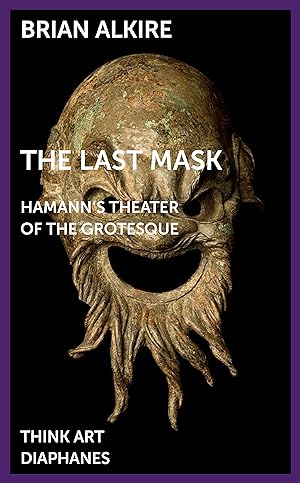
Paperback. Condición: new. Paperback. Johann Georg Hamann (173088) remains one of the most influential and yet least understood figures in the history of German thought and literature. Throughout his life, he had major influence on figures as diverse as Goethe, Schiller, Kant, Hegel, Hoelderlin, Kierkegaard, and a host of others…. Hamann is also one of the most difficult-to-read authors in the German language, writing in an ultracondensed, hyperallusive language for which he became infamousand which his detractors constantly used to dismiss him. Today, Hamann has been picked up by literary theorists as a precursor of the linguistic turn. The Last Mask focuses on Hamanns final work, Entkleidung und Verklaerung (1786), which was consciously conceived of as an Abschluss of his kleine Autorschaft and a final defense against his critics. Equally philological and theoretical, it identifies a number of previously unnoticed manuscript alterations that help answer some long-standing questions in Hamann scholarship as well as open new doors for inquiry. Importantly, the manuscripts show that Hamann is one of the earliest theorists of the virtual in our sense of the word today, using the word virtualiter to describe his own theory. He links this theory with the concept of the mask or disguise, and conceives of texts as fabrics or textiles composed of threads and strings. The philological focus is on Hamanns understanding of intertextuality, and on the basis of his dominant string images his notion of virtuality is brought into conversation with Deleuzes idea of a plane of immanence through the image of a skein of immanence, a knotted bundle of thread which solidifies into a three-dimensional virtual spacea new perspective in contemporary discussions surrounding the nature of virtuality. Hamanns Theater of the Grotesque. An examination of the final work of a key, yet little understood, German thinker Shipping may be from our Sydney, NSW warehouse or from our UK or US warehouse, depending on stock availability.
- Tapa blanda
Librería: moluna, Greven, Alemaniamoluna
Contactar con el vendedorVendedor de 5 estrellasCondición: Nuevo
EUR 18,00
Envío por EUR 48,99Se envía de Alemania a Estados Unidos de AmericaCantidad disponible: Más de 20 disponibles
Condición: New. Johann Georg Hamann (1730-1788) remains one of the most influential and yet least understood figures in the history of German thought and literature. His provocative style and relentless interrogation of the limits of language and writing have for centur.

- Tapa blanda
Librería: Wissenschaftl. Antiquariat Th. Haker e.K, Klettgau, AlemaniaWissenschaftl. Antiquariat Th. Haker e.K
Contactar con el vendedorVendedor de 5 estrellasCondición: Usado - Como Nuevo
EUR 7,60
Envío por EUR 31,49Se envía de Alemania a Estados Unidos de AmericaCantidad disponible: 3 disponibles
softcover. Condición: Wie neu. 144 Seiten, ISBN: 9783035803709 Sprache: Deutsch Gewicht in Gramm: 149.
- Tapa blanda
Librería: GreatBookPricesUK, Woodford Green, Reino UnidoGreatBookPricesUK
Contactar con el vendedorVendedor de 5 estrellasCondición: Usado - Como Nuevo
EUR 61,67
Envío por EUR 17,65Se envía de Reino Unido a Estados Unidos de AmericaCantidad disponible: 10 disponibles
Condición: As New. Unread book in perfect condition.

- Tapa blanda
Librería: AHA-BUCH GmbH, Einbeck, AlemaniaAHA-BUCH GmbH
Contactar con el vendedorVendedor de 5 estrellasCondición: Nuevo
EUR 18,00
Envío por EUR 60,75Se envía de Alemania a Estados Unidos de AmericaCantidad disponible: 2 disponibles
Taschenbuch. Condición: Neu. Neuware - Johann Georg Hamann (1730-1788) remains one of the most influential and yet least understood figures in the history of German thought and literature. His provocative style and relentless interrogation of the limits of language and writing have for centuries fascinated and frustrated thinker…s ranging from Goethe and Hegel to Wittgenstein and Benjamin. In The Last Mask Brian Alkire reapproaches Hamann through the lens of his final work Disrobing and Transfiguration (1786), revealing a writer attempting to understand, clarify, and defend 'the entire fable' of his 'little authorship' (which 'is also a mask'), a project ultimately abandoned in exhaustion, ending his final manuscript with the words 'etc. I can't anymore-'A meticulous examination of the handwritten manuscripts reveals a number of previously unknown dimensions to Hamann's work, where theory and criticism become a form of theater and masquerade-in a theory of the virtual and virtual theory, a term used in an unpublished manuscript fragment to describe his own method. The Last Mask moves with Hamann from philology to theory, uncovering a restless and brutally antagonistic skeptic who senses a Dionysian frenzy at the heart of philosophy-with major implications for contemporary theories of power, desire, and virtuality.

- Tapa blanda
Librería: preigu, Osnabrück, Alemaniapreigu
Contactar con el vendedorVendedor de 5 estrellasCondición: Nuevo
EUR 18,00
Envío por EUR 70,00Se envía de Alemania a Estados Unidos de AmericaCantidad disponible: 2 disponibles
Taschenbuch. Condición: Neu. The Last Mask | Hamann's Theater of the Grotesque, DENKT KUNST | Brian Alkire | Taschenbuch | 120 S. | Englisch | 2021 | DIAPHANES AG | EAN 9783035803709 | Verantwortliche Person für die EU: diaphanes verlag, Dresdener Str. 118, 10999 Berlin, vertrieb[at]diaphanes[dot]net | Anbieter: preigu.

- Tapa blanda
Librería: Rarewaves.com UK, London, Reino UnidoRarewaves.com UK
Contactar con el vendedorVendedor de 5 estrellasCondición: Nuevo
EUR 22,46
Envío por EUR 76,48Se envía de Reino Unido a Estados Unidos de AmericaCantidad disponible: 4 disponibles
Paperback. Condición: New. Johann Georg Hamann (1730-88) remains one of the most influential and yet least understood figures in the history of German thought and literature. Throughout his life, he had major influence on figures as diverse as Goethe, Schiller, Kant, Hegel, Hölderlin, Kierkegaard, and a host of others. Hamann is… also one of the most difficult-to-read authors in the German language, writing in an ultracondensed, hyperallusive language for which he became infamous-and which his detractors constantly used to dismiss him. Today, Hamann has been picked up by literary theorists as a precursor of the linguistic turn. The Last Mask focuses on Hamann's final work, Entkleidung und Verklärung (1786), which was consciously conceived of as an "Abschluss" of his "kleine Autorschaft" and a final defense against his critics. Equally philological and theoretical, it identifies a number of previously unnoticed manuscript alterations that help answer some long-standing questions in Hamann scholarship as well as open new doors for inquiry. Importantly, the manuscripts show that Hamann is one of the earliest theorists of the virtual in our sense of the word today, using the word "virtualiter" to describe his own theory. He links this theory with the concept of the mask or disguise, and conceives of texts as fabrics or textiles composed of threads and strings. The philological focus is on Hamann's understanding of intertextuality, and on the basis of his dominant string images his notion of virtuality is brought into conversation with Deleuze's idea of a plane of immanence through the image of a skein of immanence, a knotted bundle of thread which solidifies into a three-dimensional virtual space-a new perspective in contemporary discussions surrounding the nature of virtuality.


