

Importe total (1 artículo artículos):
Destino del pedido:

9783940924001 - The gulf region: economic development et diversification. de Collectif (10 resultados)
Ir a los resultados principales
Filtros de búsqueda
Tipo de artículo
- Todos los tipos de productos
- Libros (10)
- Revistas y publicaciones (No hay ningún otro resultado que coincida con este filtro.)
- Cómics (No hay ningún otro resultado que coincida con este filtro.)
- Partituras (No hay ningún otro resultado que coincida con este filtro.)
- Arte, grabados y pósters (No hay ningún otro resultado que coincida con este filtro.)
- Fotografías (No hay ningún otro resultado que coincida con este filtro.)
- Mapas (No hay ningún otro resultado que coincida con este filtro.)
- Manuscritos y coleccionismo de papel (No hay ningún otro resultado que coincida con este filtro.)
Condición Más información
- Nuevo (7)
- Como nuevo, Excelente o Muy bueno (3)
- Bueno o Aceptable (No hay ningún otro resultado que coincida con este filtro.)
- Regular o Pobre (No hay ningún otro resultado que coincida con este filtro.)
- Tal como se indica (No hay ningún otro resultado que coincida con este filtro.)
Encuadernación
- Todas
- Tapa dura (10)
- Tapa blanda (No hay ningún otro resultado que coincida con este filtro.)
Más atributos
- Primera edición (1)
- Firmado (No hay ningún otro resultado que coincida con este filtro.)
- Sobrecubierta (No hay ningún otro resultado que coincida con este filtro.)
- Con imágenes (2)
- No impresión bajo demanda (10)
Idioma (1)
Precio
- Cualquier precio
- Menos de EUR 20 (No hay ningún otro resultado que coincida con este filtro.)
- EUR 20 a EUR 45 (No hay ningún otro resultado que coincida con este filtro.)
- Más de EUR 45
Gastos de envío gratis
Ubicación del vendedor
Valoración de los vendedores
-
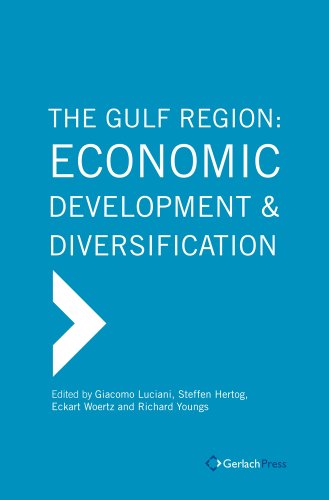
The Gulf Region: Economic Development and Diversification
Librería: Mispah books, Redhill, SURRE, Reino Unido
Calificación del vendedor: 4 de 5 estrellas

EUR 415,68
Envío por EUR 29,33
Se envía de Reino Unido a Estados Unidos de AmericaCantidad disponible: 1 disponibles
Añadir al carritoHardcover. Condición: Like New. LIKE NEW. SHIPS FROM MULTIPLE LOCATIONS. book.
-
Gulf Region : Economic Development and Diversification
Librería: GreatBookPricesUK, Woodford Green, Reino Unido
Calificación del vendedor: 5 de 5 estrellas

EUR 426,97
Envío por EUR 17,60
Se envía de Reino Unido a Estados Unidos de AmericaCantidad disponible: 1 disponibles
Añadir al carritoCondición: As New. Unread book in perfect condition.
-
Gulf Region : Economic Development and Diversification
Librería: GreatBookPrices, Columbia, MD, Estados Unidos de America
Calificación del vendedor: 5 de 5 estrellas
EUR 450,45
Envío por EUR 2,31
Se envía dentro de Estados Unidos de AmericaCantidad disponible: 1 disponibles
Añadir al carritoCondición: New.
-
Gulf Region : Economic Development and Diversification
Librería: GreatBookPrices, Columbia, MD, Estados Unidos de America
Calificación del vendedor: 5 de 5 estrellas
EUR 450,45
Envío por EUR 2,31
Se envía dentro de Estados Unidos de AmericaCantidad disponible: 1 disponibles
Añadir al carritoCondición: As New. Unread book in perfect condition.
-
Gulf Region
Librería: ISD LLC, Bristol, CT, Estados Unidos de America
Calificación del vendedor: 5 de 5 estrellas
Original o primera edición
EUR 471,17
Gastos de envío gratis
Se envía dentro de Estados Unidos de AmericaCantidad disponible: 5 disponibles
Añadir al carritohardcover. Condición: New. 1st.
-
Gulf Region : Economic Development and Diversification
Librería: GreatBookPricesUK, Woodford Green, Reino Unido
Calificación del vendedor: 5 de 5 estrellas
EUR 518,47
Envío por EUR 17,60
Se envía de Reino Unido a Estados Unidos de AmericaCantidad disponible: 1 disponibles
Añadir al carritoCondición: New.
-
The Gulf Region: Economic Development and Diversification
Librería: Revaluation Books, Exeter, Reino Unido
Calificación del vendedor: 5 de 5 estrellas
EUR 512,46
Envío por EUR 23,46
Se envía de Reino Unido a Estados Unidos de AmericaCantidad disponible: 1 disponibles
Añadir al carritoHardcover. Condición: Brand New. 1136 pages. 9.50x6.50x3.50 inches. In Stock.
-
The Gulf Region: Economic Development and Diversification
Librería: Ria Christie Collections, Uxbridge, Reino Unido
Calificación del vendedor: 5 de 5 estrellas
EUR 543,04
Envío por EUR 14,05
Se envía de Reino Unido a Estados Unidos de AmericaCantidad disponible: 2 disponibles
Añadir al carritoCondición: New. In.
-
The Gulf Region: Economic Development and Diversification
Librería: Rarewaves.com USA, London, LONDO, Reino Unido
Calificación del vendedor: 5 de 5 estrellas
EUR 606,73
Gastos de envío gratis
Se envía de Reino Unido a Estados Unidos de AmericaCantidad disponible: 1 disponibles
Añadir al carritoHardback. Condición: New. Illustrated. The four volumes in this major research collection address the key economic issues which affect the future development and diversification of the member states of the Gulf Cooperation Council (GCC), namely Saudi Arabia, Kuwait, Bahrain, Qatar, UAE and Oman. Specifically, this recent research covers: Economic Diversification Development of Global Partnerships Labor Markets and Migration Financial Markets as Global Players The work brings together state-of-the-art analysis by some 40 international scholars who participated in a major joint initiative by the EU and the GCC, the al-Jisr Gulf-Europe Research Program. This collection will prove an essential reference work for policy makers and scholars on all the critical issues facing the Gulf countries as their economies develop beyond dependence on the oil and gas sector and forge new international alliances. Additional information on the four volumes The GCC in the Global Economy, edited by Richard Youngs (Director-General, FRIDE, Madrid) Changing geopolitical realities have seen the Gulf region turning to Asia and Africa to build new economic links, while strengthening old ones. This proactive internationalism is visible not just in economics and energy, but also in politics and security where a host of new agreements has been developed. This work provides an overview of the ways in which the GCC states now need to move ahead with reforms that will reflect issues such as raised expectations from a period of high revenues and the region's demographics. 200 pages Resources Blessed: Diversification and the Gulf Development Model, edited by Giacomo Luciani (Paris School of International Affairs, Sciences-Po, and Princeton Global Scholar) The Gulf countries have adopted a unique combination of policies to encourage diversification with largely positive results, while there are significant distinctions between the individual cases. This work evaluates various examples to show the extent to which the Gulf economies have diversifed to date, and how results can be measured, taking into consideration factors such as composition of GDP or exports; government services; and the categorization of industrial activities downstream of resources extraction (oil refining, petrochemicals) and their availability (aluminium, phosphates, iron, steel, glass and other energy- and resource-intensive industries). 328 pages. GCC Financial Markets: The World's New Money Centers, edited by Eckart Woertz (Princeton Environmental Institute, Princeton University) Bond markets in the GCC countries are underdeveloped, and the capital mix is heavily skewed towards banks, while ambitious development plans in fields like petrochemicals and infrastructure, as well as a rapidly growing population, create an increased need for finance. This study outlines the structure of various segments of GCC financial markets and points to regulatory challenges and future developments, ranging from capital market structures to the planned GCC.
-

The Gulf Region: Economic Development and Diversification
Librería: Rarewaves.com UK, London, Reino Unido
Calificación del vendedor: 5 de 5 estrellas
EUR 576,95
Envío por EUR 76,26
Se envía de Reino Unido a Estados Unidos de AmericaCantidad disponible: 1 disponibles
Añadir al carritoHardback. Condición: New. Illustrated. The four volumes in this major research collection address the key economic issues which affect the future development and diversification of the member states of the Gulf Cooperation Council (GCC), namely Saudi Arabia, Kuwait, Bahrain, Qatar, UAE and Oman. Specifically, this recent research covers: Economic Diversification Development of Global Partnerships Labor Markets and Migration Financial Markets as Global Players The work brings together state-of-the-art analysis by some 40 international scholars who participated in a major joint initiative by the EU and the GCC, the al-Jisr Gulf-Europe Research Program. This collection will prove an essential reference work for policy makers and scholars on all the critical issues facing the Gulf countries as their economies develop beyond dependence on the oil and gas sector and forge new international alliances. Additional information on the four volumes The GCC in the Global Economy, edited by Richard Youngs (Director-General, FRIDE, Madrid) Changing geopolitical realities have seen the Gulf region turning to Asia and Africa to build new economic links, while strengthening old ones. This proactive internationalism is visible not just in economics and energy, but also in politics and security where a host of new agreements has been developed. This work provides an overview of the ways in which the GCC states now need to move ahead with reforms that will reflect issues such as raised expectations from a period of high revenues and the region's demographics. 200 pages Resources Blessed: Diversification and the Gulf Development Model, edited by Giacomo Luciani (Paris School of International Affairs, Sciences-Po, and Princeton Global Scholar) The Gulf countries have adopted a unique combination of policies to encourage diversification with largely positive results, while there are significant distinctions between the individual cases. This work evaluates various examples to show the extent to which the Gulf economies have diversifed to date, and how results can be measured, taking into consideration factors such as composition of GDP or exports; government services; and the categorization of industrial activities downstream of resources extraction (oil refining, petrochemicals) and their availability (aluminium, phosphates, iron, steel, glass and other energy- and resource-intensive industries). 328 pages. GCC Financial Markets: The World's New Money Centers, edited by Eckart Woertz (Princeton Environmental Institute, Princeton University) Bond markets in the GCC countries are underdeveloped, and the capital mix is heavily skewed towards banks, while ambitious development plans in fields like petrochemicals and infrastructure, as well as a rapidly growing population, create an increased need for finance. This study outlines the structure of various segments of GCC financial markets and points to regulatory challenges and future developments, ranging from capital market structures to the planned GCC.


