
9783110345940 - pipac: pressurized intraperitoneal aerosol chemotherapy - cancer under pressure: 17 (phenomenology & mind) (16 resultados)
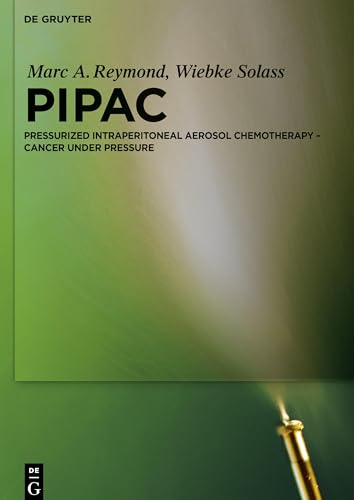
- Tapa dura
Librería: Brook Bookstore On Demand, Napoli, NA, ItaliaBrook Bookstore On Demand
Contactar con el vendedorVendedor de 3 estrellasCondición: Nuevo
EUR 156,15
Envío por EUR 6,80Se envía de Italia a Estados Unidos de AmericaCantidad disponible: Más de 20 disponibles
Condición: new.
- Tapa dura
Librería: GreatBookPrices, Columbia, MD, Estados Unidos de AmericaGreatBookPrices
Contactar con el vendedorVendedor de 5 estrellasCondición: Usado - Como Nuevo
EUR 169,46
Envío por EUR 2,28Se envía dentro de Estados Unidos de AmericaCantidad disponible: Más de 20 disponibles
Condición: As New. Unread book in perfect condition.
- Tapa dura
Librería: GreatBookPrices, Columbia, MD, Estados Unidos de AmericaGreatBookPrices
Contactar con el vendedorVendedor de 5 estrellasCondición: Nuevo
EUR 170,32
Envío por EUR 2,28Se envía dentro de Estados Unidos de AmericaCantidad disponible: Más de 20 disponibles
Condición: New.
- Tapa dura
Librería: GreatBookPricesUK, Woodford Green, Reino UnidoGreatBookPricesUK
Contactar con el vendedorVendedor de 5 estrellasCondición: Nuevo
EUR 168,51
Envío por EUR 17,38Se envía de Reino Unido a Estados Unidos de AmericaCantidad disponible: Más de 20 disponibles
Condición: New.
- Tapa dura
Librería: GreatBookPricesUK, Woodford Green, Reino UnidoGreatBookPricesUK
Contactar con el vendedorVendedor de 5 estrellasCondición: Usado - Como Nuevo
EUR 170,33
Envío por EUR 17,38Se envía de Reino Unido a Estados Unidos de AmericaCantidad disponible: Más de 20 disponibles
Condición: As New. Unread book in perfect condition.
- Tapa dura
Librería: Revaluation Books, Exeter, , Reino UnidoRevaluation Books
Contactar con el vendedorVendedor de 5 estrellasCondición: Nuevo
EUR 181,84
Envío por EUR 14,48Se envía de Reino Unido a Estados Unidos de AmericaCantidad disponible: 2 disponibles
Hardcover. Condición: Brand New. 252 pages. 6.29x9.44x0.63 inches. In Stock.
- Tapa dura
Librería: Ria Christie Collections, Uxbridge, Reino UnidoRia Christie Collections
Contactar con el vendedorVendedor de 5 estrellasCondición: Nuevo
EUR 191,39
Envío por EUR 13,88Se envía de Reino Unido a Estados Unidos de AmericaCantidad disponible: Más de 20 disponibles
Condición: New. In.
- Tapa dura
Librería: AHA-BUCH GmbH, Einbeck, AlemaniaAHA-BUCH GmbH
Contactar con el vendedorVendedor de 5 estrellasCondición: Nuevo
EUR 169,95
Envío por EUR 63,32Se envía de Alemania a Estados Unidos de AmericaCantidad disponible: 1 disponibles
Buch. Condición: Neu. Druck auf Anfrage Neuware - Printed after ordering - Peritoneal dissemination is a common route of cancer metastasis. The benefit of administering chemotherapy directly into the peritoneal cavity is supported by preclinical and pharmacokinetic data. In comparison to intravenous (IV) treatment, intraperitone…al (IP) administration results in a several-fold increase in drug concentration within the abdominal cavity. There is now growing evidence from clinical studies showing a survival advantage for IP chemotherapy in various tumor typies, including ovarian, gastric and colorectal cancer.However, while the use of IP chemotherapy is slowly gaining acceptance, it is not universal, largely due to the greater toxicity associated with this approach. Moreover, efficacy of IP chemotherapy is limited by poor distribution within the abdominal cavity and by poor tissue penetration. A new way of IP chemotherapy is the application of cytotoxics in form of a pressurized aerosol into the abdominal of thoracic cavity. Pressurized intraperitoneal aerosol chemotherapy (PIPAC) is applied through laparoscopic access using two balloon trocars in an operating room equipped with laminar air-flow. In a first step,a normothermic capnoperitoneum is established with a pressure of 12 mmHg. A cytotoxic solution (about 10% of a normal systemic dose) is nebulized with a micropump into the abdominal cavity, and maintained for 30 min. The aerosol is then removed through a closed suction system. Applying an aerosol in the peritoneal cavity allows a homogeneous distribution of the chemotherapeutic agent within the abdomen. Furthermore, an artificial pressure gradient is generated that overcomes tumoral interstitial fluid pressure, an obstacle in cancer therapy. This results in a higher local drug concentration compared to conventional IP or IV chemotherapy. At the same time the plasma concentration of the chemotherapeutic agent remains low. In first clinical studies with limited number of patients in ovarian, gastric and colorectal cancer, as well as peritoneal mesothelioma, PIPAC has obtained encouraging tumor response rates and survival, with a low-side effects profile. Larger clinical trials are currently ongoing to examine if these data can be reproduced and extrapolated to other situations.
- Tapa dura
Librería: Majestic Books, Hounslow, , Reino UnidoMajestic Books
Contactar con el vendedorVendedor de 4 estrellasCondición: Nuevo
EUR 242,98
Envío por EUR 7,53Se envía de Reino Unido a Estados Unidos de AmericaCantidad disponible: 3 disponibles
Condición: New.
- Tapa dura
Librería: Books Puddle, New York, NY, Estados Unidos de AmericaBooks Puddle
Contactar con el vendedorVendedor de 4 estrellasCondición: Nuevo
EUR 261,28
Envío por EUR 3,45Se envía dentro de Estados Unidos de AmericaCantidad disponible: 3 disponibles
Condición: New.
- Tapa dura
Librería: Kennys Bookshop and Art Galleries Ltd., Galway, GY, IrlandaKennys Bookshop and Art Galleries Ltd.
Contactar con el vendedorVendedor de 5 estrellasCondición: Nuevo
EUR 289,80
Envío por EUR 10,50Se envía de Irlanda a Estados Unidos de AmericaCantidad disponible: Más de 20 disponibles
Condición: New. 2014. Hardcover. . . . . .

- Tapa dura
- Primera edición
Librería: Rarewaves USA, OSWEGO, IL, Estados Unidos de AmericaRarewaves USA
Contactar con el vendedorVendedor de 5 estrellasCondición: Nuevo
EUR 311,40
Gastos de envío gratisSe envía dentro de Estados Unidos de AmericaCantidad disponible: Más de 20 disponibles
Hardback. Condición: New. 1st. Peritoneal dissemination is a common route of cancer metastasis. The benefit of administering chemotherapy directly into the peritoneal cavity is supported by preclinical and pharmacokinetic data. In comparison to intravenous (IV) treatment, intraperitoneal (IP) administration results in a several-…fold increase in drug concentration within the abdominal cavity. There is now growing evidence from clinical studies showing a survival advantage for IP chemotherapy in various tumor typies, including ovarian, gastric and colorectal cancer.However, while the use of IP chemotherapy is slowly gaining acceptance, it is not universal, largely due to the greater toxicity associated with this approach. Moreover, efficacy of IP chemotherapy is limited by poor distribution within the abdominal cavity and by poor tissue penetration. A new way of IP chemotherapy is the application of cytotoxics in form of a pressurized aerosol into the abdominal of thoracic cavity. Pressurized intraperitoneal aerosol chemotherapy (PIPAC) is applied through laparoscopic access using two balloon trocars in an operating room equipped with laminar air-flow. In a first step,a normothermic capnoperitoneum is established with a pressure of 12 mmHg. A cytotoxic solution (about 10% of a normal systemic dose) is nebulized with a micropump into the abdominal cavity, and maintained for 30 min. The aerosol is then removed through a closed suction system. Applying an aerosol in the peritoneal cavity allows a homogeneous distribution of the chemotherapeutic agent within the abdomen. Furthermore, an artificial pressure gradient is generated that overcomes tumoral interstitial fluid pressure, an obstacle in cancer therapy. This results in a higher local drug concentration compared to conventional IP or IV chemotherapy. At the same time the plasma concentration of the chemotherapeutic agent remains low. In first clinical studies with limited number of patients in ovarian, gastric and colorectal cancer, as well as peritoneal mesothelioma, PIPAC has obtained encouraging tumor response rates and survival, with a low-side effects profile. Larger clinical trials are currently ongoing to examine if these data can be reproduced and extrapolated to other situations.

- Tapa dura
- Primera edición
Librería: Rarewaves USA United, OSWEGO, IL, Estados Unidos de AmericaRarewaves USA United
Contactar con el vendedorVendedor de 5 estrellasCondición: Nuevo
EUR 316,18
Envío por EUR 43,21Se envía dentro de Estados Unidos de AmericaCantidad disponible: Más de 20 disponibles
Hardback. Condición: New. 1st. Peritoneal dissemination is a common route of cancer metastasis. The benefit of administering chemotherapy directly into the peritoneal cavity is supported by preclinical and pharmacokinetic data. In comparison to intravenous (IV) treatment, intraperitoneal (IP) administration results in a several-…fold increase in drug concentration within the abdominal cavity. There is now growing evidence from clinical studies showing a survival advantage for IP chemotherapy in various tumor typies, including ovarian, gastric and colorectal cancer.However, while the use of IP chemotherapy is slowly gaining acceptance, it is not universal, largely due to the greater toxicity associated with this approach. Moreover, efficacy of IP chemotherapy is limited by poor distribution within the abdominal cavity and by poor tissue penetration. A new way of IP chemotherapy is the application of cytotoxics in form of a pressurized aerosol into the abdominal of thoracic cavity. Pressurized intraperitoneal aerosol chemotherapy (PIPAC) is applied through laparoscopic access using two balloon trocars in an operating room equipped with laminar air-flow. In a first step,a normothermic capnoperitoneum is established with a pressure of 12 mmHg. A cytotoxic solution (about 10% of a normal systemic dose) is nebulized with a micropump into the abdominal cavity, and maintained for 30 min. The aerosol is then removed through a closed suction system. Applying an aerosol in the peritoneal cavity allows a homogeneous distribution of the chemotherapeutic agent within the abdomen. Furthermore, an artificial pressure gradient is generated that overcomes tumoral interstitial fluid pressure, an obstacle in cancer therapy. This results in a higher local drug concentration compared to conventional IP or IV chemotherapy. At the same time the plasma concentration of the chemotherapeutic agent remains low. In first clinical studies with limited number of patients in ovarian, gastric and colorectal cancer, as well as peritoneal mesothelioma, PIPAC has obtained encouraging tumor response rates and survival, with a low-side effects profile. Larger clinical trials are currently ongoing to examine if these data can be reproduced and extrapolated to other situations.
- Tapa dura
Librería: Kennys Bookstore, Olney, MD, Estados Unidos de AmericaKennys Bookstore
Contactar con el vendedorVendedor de 5 estrellasCondición: Nuevo
EUR 364,58
Envío por EUR 9,07Se envía dentro de Estados Unidos de AmericaCantidad disponible: Más de 20 disponibles
Condición: New. 2014. Hardcover. . . . . . Books ship from the US and Ireland.
- Tapa blanda
- Impresión bajo demanda
Librería: moluna, Greven, , Alemaniamoluna
Contactar con el vendedorVendedor de 5 estrellasCondición: Nuevo
EUR 149,37
Envío por EUR 48,99Se envía de Alemania a Estados Unidos de AmericaCantidad disponible: Más de 20 disponibles
Hardcover. Condición: New. Dieser Artikel ist ein Print on Demand Artikel und wird nach Ihrer Bestellung fuer Sie gedruckt. Peritoneal dissemination is a common r.
- Tapa dura
- Impresión bajo demanda
Librería: BuchWeltWeit Ludwig Meier e.K., Bergisch Gladbach, , AlemaniaBuchWeltWeit Ludwig Meier e.K.
Contactar con el vendedorVendedor de 5 estrellasCondición: Nuevo
EUR 199,95
Envío por EUR 23,00Se envía de Alemania a Estados Unidos de AmericaCantidad disponible: 2 disponibles
Buch. Condición: Neu. This item is printed on demand - it takes 3-4 days longer - Neuware -Peritoneal dissemination is a common route of cancer metastasis. The benefit of administering chemotherapy directly into the peritoneal cavity is supported by preclinical and pharmacokinetic data. In comparison to intravenous (IV) treatmen…t, intraperitoneal (IP) administration results in a several-fold increase in drug concentration within the abdominal cavity. There is now growing evidence from clinical studies showing a survival advantage for IP chemotherapy in various tumor typies, including ovarian, gastric and colorectal cancer.However, while the use of IP chemotherapy is slowly gaining acceptance, it is not universal, largely due to the greater toxicity associated with this approach. Moreover, efficacy of IP chemotherapy is limited by poor distribution within the abdominal cavity and by poor tissue penetration. A new way of IP chemotherapy is the application of cytotoxics in form of a pressurized aerosol into the abdominal of thoracic cavity. Pressurized intraperitoneal aerosol chemotherapy (PIPAC) is applied through laparoscopic access using two balloon trocars in an operating room equipped with laminar air-flow. In a first step,a normothermic capnoperitoneum is established with a pressure of 12 mmHg. A cytotoxic solution (about 10% of a normal systemic dose) is nebulized with a micropump into the abdominal cavity, and maintained for 30 min. The aerosol is then removed through a closed suction system. Applying an aerosol in the peritoneal cavity allows a homogeneous distribution of the chemotherapeutic agent within the abdomen. Furthermore, an artificial pressure gradient is generated that overcomes tumoral interstitial fluid pressure, an obstacle in cancer therapy. This results in a higher local drug concentration compared to conventional IP or IV chemotherapy. At the same time the plasma concentration of the chemotherapeutic agent remains low. In first clinical studies with limited number of patients in ovarian, gastric and colorectal cancer, as well as peritoneal mesothelioma, PIPAC has obtained encouraging tumor response rates and survival, with a low-side effects profile. Larger clinical trials are currently ongoing to examine if these data can be reproduced and extrapolated to other situations. 252 pp. Englisch.


