
9780691609683 - the evolution of the international economic order (eliot janeway lectures on historical economics) (princeton legacy library) de lewis, william arthur (19 resultados)
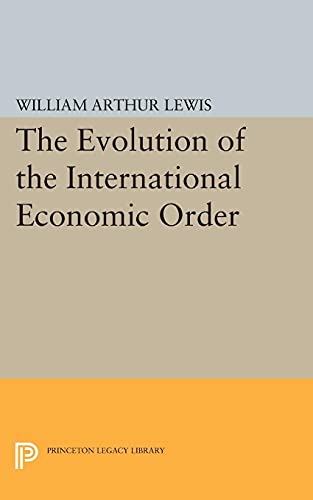
- Tapa blanda
Librería: Ammareal, Morangis, FranciaAmmareal
Contactar con el vendedorVendedor de 5 estrellasCondición: Usado - Muy bueno
EUR 5,84
Envío por EUR 16,50Se envía de Francia a Estados Unidos de AmericaCantidad disponible: 1 disponibles
No jacket. Condición: Bon. Ancien livre de bibliothèque avec équipements. Sans jaquette. Couverture différente. Edition 1978. Ammareal reverse jusqu'à 15% du prix net de cet article à des organisations caritatives. ENGLISH DESCRIPTION Book Condition: Used, Good. Former library book. No dust jacket. Different cover. Edition 1978.… Ammareal gives back up to 15% of this item's net price to charity organizations.

- Tapa blanda
Librería: GreatBookPrices, Columbia, MD, Estados Unidos de AmericaGreatBookPrices
Contactar con el vendedorVendedor de 5 estrellasCondición: Nuevo
EUR 32,77
Envío por EUR 2,32Se envía dentro de Estados Unidos de AmericaCantidad disponible: 1 disponibles
Condición: New.
- Tapa blanda
Librería: PBShop.store US, Wood Dale, IL, Estados Unidos de AmericaPBShop.store US
Contactar con el vendedorVendedor de 5 estrellasCondición: Nuevo
EUR 35,17
Gastos de envío gratisSe envía dentro de Estados Unidos de AmericaCantidad disponible: 2 disponibles
PAP. Condición: New. New Book. Shipped from UK. Established seller since 2000.
- Tapa blanda
Librería: PBShop.store UK, Fairford, GLOS, Reino UnidoPBShop.store UK
Contactar con el vendedorVendedor de 5 estrellasCondición: Nuevo
EUR 34,57
Envío por EUR 3,86Se envía de Reino Unido a Estados Unidos de AmericaCantidad disponible: 2 disponibles
PAP. Condición: New. New Book. Shipped from UK. Established seller since 2000.

- Tapa blanda
Librería: GreatBookPrices, Columbia, MD, Estados Unidos de AmericaGreatBookPrices
Contactar con el vendedorVendedor de 5 estrellasCondición: Usado - Como Nuevo
EUR 36,76
Envío por EUR 2,32Se envía dentro de Estados Unidos de AmericaCantidad disponible: 1 disponibles
Condición: As New. Unread book in perfect condition.
- Tapa blanda
Librería: Kennys Bookshop and Art Galleries Ltd., Galway, GY, IrlandaKennys Bookshop and Art Galleries Ltd.
Contactar con el vendedorVendedor de 5 estrellasCondición: Nuevo
EUR 34,73
Envío por EUR 9,50Se envía de Irlanda a Estados Unidos de AmericaCantidad disponible: 1 disponibles
Condición: New. 2015. Paperback. . . . . .
- Tapa blanda
Librería: Kennys Bookstore, Olney, MD, Estados Unidos de AmericaKennys Bookstore
Contactar con el vendedorVendedor de 5 estrellasCondición: Nuevo
EUR 43,47
Envío por EUR 9,21Se envía dentro de Estados Unidos de AmericaCantidad disponible: 1 disponibles
Condición: New. 2015. Paperback. . . . . . Books ship from the US and Ireland.
- Tapa blanda
Librería: GreatBookPricesUK, Woodford Green, Reino UnidoGreatBookPricesUK
Contactar con el vendedorVendedor de 5 estrellasCondición: Nuevo
EUR 34,55
Envío por EUR 17,60Se envía de Reino Unido a Estados Unidos de AmericaCantidad disponible: 1 disponibles
Condición: New.

- Tapa blanda
Librería: GreatBookPricesUK, Woodford Green, Reino UnidoGreatBookPricesUK
Contactar con el vendedorVendedor de 5 estrellasCondición: Usado - Como Nuevo
EUR 40,02
Envío por EUR 17,60Se envía de Reino Unido a Estados Unidos de AmericaCantidad disponible: 1 disponibles
Condición: As New. Unread book in perfect condition.
- Tapa blanda
Librería: THE SAINT BOOKSTORE, Southport, Reino UnidoTHE SAINT BOOKSTORE
Contactar con el vendedorVendedor de 5 estrellasCondición: Nuevo
EUR 42,59
Envío por EUR 16,83Se envía de Reino Unido a Estados Unidos de AmericaCantidad disponible: 2 disponibles
Paperback / softback. Condición: New. New copy - Usually dispatched within 4 working days.
- Tapa blanda
Librería: Revaluation Books, Exeter, Reino UnidoRevaluation Books
Contactar con el vendedorVendedor de 5 estrellasCondición: Nuevo
EUR 60,02
Envío por EUR 11,73Se envía de Reino Unido a Estados Unidos de AmericaCantidad disponible: 2 disponibles
Paperback. Condición: Brand New. 96 pages. 8.00x5.00x0.73 inches. In Stock.

- Tapa blanda
- Impresión bajo demanda
Librería: Rarewaves.com USA, London, LONDO, Reino UnidoRarewaves.com USA
Contactar con el vendedorVendedor de 5 estrellasCondición: Nuevo
EUR 40,06
Gastos de envío gratisSe envía de Reino Unido a Estados Unidos de AmericaCantidad disponible: 1 disponibles
Paperback. Condición: New. Do rich industrial nations underestimate the threat to their economic stability posed by demands for a new international economic order? Are the developing countries wrong to assume that their economic advancement depends on a transfer of wealth from the richer nations? Sir W. Arthur Lewis's provocativ…e analysis of the present economic order and its origins suggests that the answer to both questions is yes. Professor Lewis perceptively illuminates aspects of recent economic history that have often been overlooked by observers of international affairs. He asks first how the world came to be divided into countries exporting manufactures and countries exporting primary commodities. High agricultural productivity and a good investment climate allowed countries in Northwest Europe to industrialize rapidly, while the favorable terms of trade they enjoyed assured them and the temperate lands to which Europeans migrated of continuing dominance over the tropical countries.At the core of the author's argument lies the contention that as the structure of international trade changes, the tropical countries move rapidly toward becoming net importers of agricultural commodities and net exporters of manufactures. Even so, they continue to depend on the markets of the richer countries for their growth, and they continue to trade on unfavorable terms. Both of these disadvantages, he concludes, stem from large agricultural sectors with low productivity and will disappear only as the technology of tropical food production is revolutionized. Originally published in 1978. The Princeton Legacy Library uses the latest print-on-demand technology to again make available previously out-of-print books from the distinguished backlist of Princeton University Press. These editions preserve the original texts of these important books while presenting them in durable paperback and hardcover editions. The goal of the Princeton Legacy Library is to vastly increase access to the rich scholarly heritage found in the thousands of books published by Princeton University Press since its founding in 1905.

- Tapa blanda
- Impresión bajo demanda
Librería: Rarewaves USA, OSWEGO, IL, Estados Unidos de AmericaRarewaves USA
Contactar con el vendedorVendedor de 5 estrellasCondición: Nuevo
EUR 44,31
Gastos de envío gratisSe envía dentro de Estados Unidos de AmericaCantidad disponible: Más de 20 disponibles
Paperback. Condición: New. Do rich industrial nations underestimate the threat to their economic stability posed by demands for a new international economic order? Are the developing countries wrong to assume that their economic advancement depends on a transfer of wealth from the richer nations? Sir W. Arthur Lewis's provocativ…e analysis of the present economic order and its origins suggests that the answer to both questions is yes. Professor Lewis perceptively illuminates aspects of recent economic history that have often been overlooked by observers of international affairs. He asks first how the world came to be divided into countries exporting manufactures and countries exporting primary commodities. High agricultural productivity and a good investment climate allowed countries in Northwest Europe to industrialize rapidly, while the favorable terms of trade they enjoyed assured them and the temperate lands to which Europeans migrated of continuing dominance over the tropical countries.At the core of the author's argument lies the contention that as the structure of international trade changes, the tropical countries move rapidly toward becoming net importers of agricultural commodities and net exporters of manufactures. Even so, they continue to depend on the markets of the richer countries for their growth, and they continue to trade on unfavorable terms. Both of these disadvantages, he concludes, stem from large agricultural sectors with low productivity and will disappear only as the technology of tropical food production is revolutionized. Originally published in 1978. The Princeton Legacy Library uses the latest print-on-demand technology to again make available previously out-of-print books from the distinguished backlist of Princeton University Press. These editions preserve the original texts of these important books while presenting them in durable paperback and hardcover editions. The goal of the Princeton Legacy Library is to vastly increase access to the rich scholarly heritage found in the thousands of books published by Princeton University Press since its founding in 1905.
- Tapa blanda
- Impresión bajo demanda
Librería: Revaluation Books, Exeter, Reino UnidoRevaluation Books
Contactar con el vendedorVendedor de 5 estrellasCondición: Nuevo
EUR 45,23
Envío por EUR 11,73Se envía de Reino Unido a Estados Unidos de AmericaCantidad disponible: 2 disponibles
Paperback. Condición: Brand New. 96 pages. 8.00x5.00x0.73 inches. In Stock. This item is printed on demand.

- Tapa blanda
- Impresión bajo demanda
Librería: Rarewaves USA United, OSWEGO, IL, Estados Unidos de AmericaRarewaves USA United
Contactar con el vendedorVendedor de 5 estrellasCondición: Nuevo
EUR 45,84
Envío por EUR 43,85Se envía dentro de Estados Unidos de AmericaCantidad disponible: Más de 20 disponibles
Paperback. Condición: New. Do rich industrial nations underestimate the threat to their economic stability posed by demands for a new international economic order? Are the developing countries wrong to assume that their economic advancement depends on a transfer of wealth from the richer nations? Sir W. Arthur Lewis's provocativ…e analysis of the present economic order and its origins suggests that the answer to both questions is yes. Professor Lewis perceptively illuminates aspects of recent economic history that have often been overlooked by observers of international affairs. He asks first how the world came to be divided into countries exporting manufactures and countries exporting primary commodities. High agricultural productivity and a good investment climate allowed countries in Northwest Europe to industrialize rapidly, while the favorable terms of trade they enjoyed assured them and the temperate lands to which Europeans migrated of continuing dominance over the tropical countries.At the core of the author's argument lies the contention that as the structure of international trade changes, the tropical countries move rapidly toward becoming net importers of agricultural commodities and net exporters of manufactures. Even so, they continue to depend on the markets of the richer countries for their growth, and they continue to trade on unfavorable terms. Both of these disadvantages, he concludes, stem from large agricultural sectors with low productivity and will disappear only as the technology of tropical food production is revolutionized. Originally published in 1978. The Princeton Legacy Library uses the latest print-on-demand technology to again make available previously out-of-print books from the distinguished backlist of Princeton University Press. These editions preserve the original texts of these important books while presenting them in durable paperback and hardcover editions. The goal of the Princeton Legacy Library is to vastly increase access to the rich scholarly heritage found in the thousands of books published by Princeton University Press since its founding in 1905.

- Tapa blanda
- Impresión bajo demanda
Librería: moluna, Greven, Alemaniamoluna
Contactar con el vendedorVendedor de 5 estrellasCondición: Nuevo
EUR 45,49
Envío por EUR 48,99Se envía de Alemania a Estados Unidos de AmericaCantidad disponible: Más de 20 disponibles
Condición: New. Dieser Artikel ist ein Print on Demand Artikel und wird nach Ihrer Bestellung fuer Sie gedruckt. Über den AutorWilliam Arthur LewisKlappentextrnrnDo rich industrial nations underestimate the threat to their economic stability posed by demands for a new international economic order? Are the developing countri.

- Tapa blanda
- Impresión bajo demanda
Librería: Rarewaves.com UK, London, Reino UnidoRarewaves.com UK
Contactar con el vendedorVendedor de 5 estrellasCondición: Nuevo
EUR 36,41
Envío por EUR 76,27Se envía de Reino Unido a Estados Unidos de AmericaCantidad disponible: 1 disponibles
Paperback. Condición: New. Do rich industrial nations underestimate the threat to their economic stability posed by demands for a new international economic order? Are the developing countries wrong to assume that their economic advancement depends on a transfer of wealth from the richer nations? Sir W. Arthur Lewis's provocativ…e analysis of the present economic order and its origins suggests that the answer to both questions is yes. Professor Lewis perceptively illuminates aspects of recent economic history that have often been overlooked by observers of international affairs. He asks first how the world came to be divided into countries exporting manufactures and countries exporting primary commodities. High agricultural productivity and a good investment climate allowed countries in Northwest Europe to industrialize rapidly, while the favorable terms of trade they enjoyed assured them and the temperate lands to which Europeans migrated of continuing dominance over the tropical countries.At the core of the author's argument lies the contention that as the structure of international trade changes, the tropical countries move rapidly toward becoming net importers of agricultural commodities and net exporters of manufactures. Even so, they continue to depend on the markets of the richer countries for their growth, and they continue to trade on unfavorable terms. Both of these disadvantages, he concludes, stem from large agricultural sectors with low productivity and will disappear only as the technology of tropical food production is revolutionized. Originally published in 1978. The Princeton Legacy Library uses the latest print-on-demand technology to again make available previously out-of-print books from the distinguished backlist of Princeton University Press. These editions preserve the original texts of these important books while presenting them in durable paperback and hardcover editions. The goal of the Princeton Legacy Library is to vastly increase access to the rich scholarly heritage found in the thousands of books published by Princeton University Press since its founding in 1905.

- Tapa blanda
- Impresión bajo demanda
Librería: AHA-BUCH GmbH, Einbeck, AlemaniaAHA-BUCH GmbH
Contactar con el vendedorVendedor de 5 estrellasCondición: Nuevo
EUR 54,81
Envío por EUR 60,55Se envía de Alemania a Estados Unidos de AmericaCantidad disponible: 1 disponibles
Taschenbuch. Condición: Neu. nach der Bestellung gedruckt Neuware - Printed after ordering - Do rich industrial nations underestimate the threat to their economic stability posed by demands for a new international economic order Are the developing countries wrong to assume that their economic advancement depends on a transfer of… wealth from the richer nations Sir W. Arthur Lewis's provocative analysis of the present economic order and its origins suggests that the answer to both questions is yes.Professor Lewis perceptively illuminates aspects of recent economic history that have often been overlooked by observers of international affairs. He asks first how the world came to be divided into countries exporting manufactures and countries exporting primary commodities. High agricultural productivity and a good investment climate allowed countries in Northwest Europe to industrialize rapidly, while the favorable terms of trade they enjoyed assured them and the temperate lands to which Europeans migrated of continuing dominance over the tropical countries. At the core of the author's argument lies the contention that as the structure of international trade changes, the tropical countries move rapidly toward becoming net importers of agricultural commodities and net exporters of manufactures. Even so, they continue to depend on the markets of the richer countries for their growth, and they continue to trade on unfavorable terms. Both of these disadvantages, he concludes, stem from large agricultural sectors with low productivity and will disappear only as the technology of tropical food production is revolutionized.Originally published in 1978.The Princeton Legacy Library uses the latest print-on-demand technology to again make available previously out-of-print books from the distinguished backlist of Princeton University Press. These editions preserve the original texts of these important books while presenting them in durable paperback and hardcover editions. The goal of the Princeton Legacy Library is to vastly increase access to the rich scholarly heritage found in the thousands of books published by Princeton University Press since its founding in 1905.

- Tapa blanda
- Impresión bajo demanda
Librería: preigu, Osnabrück, Alemaniapreigu
Contactar con el vendedorVendedor de 5 estrellasCondición: Nuevo
EUR 47,25
Envío por EUR 70,00Se envía de Alemania a Estados Unidos de AmericaCantidad disponible: 5 disponibles
Taschenbuch. Condición: Neu. The Evolution of the International Economic Order | William Arthur Lewis | Taschenbuch | Einband - flex.(Paperback) | Englisch | 2015 | Princeton University Press | EAN 9780691609683 | Verantwortliche Person für die EU: Libri GmbH, Europaallee 1, 36244 Bad Hersfeld, gpsr[at]libri[dot]de | Anbieter: p…reigu Print on Demand.


