
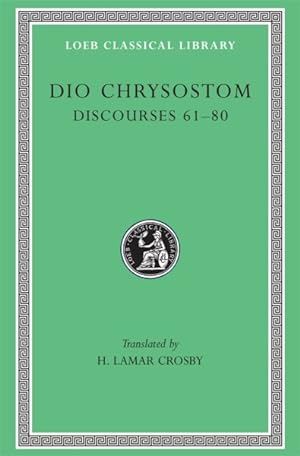
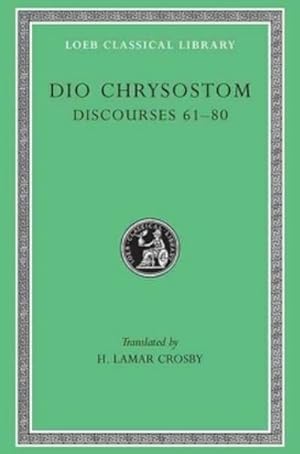
9780674994249 - discourses 61–80: 385 (loeb classical library) de dio chrysostom (30 resultados)

Idioma: Inglés
Editorial: Harvard University, 1985
Serie: Loeb Classical Library: Dio Chrysostom, Libro 5 de 5. Libro 5 de 5 - Loeb Classical Library: Dio Chrysostom
- Tapa dura
Librería: Windows Booksellers, Eugene, OR, Estados Unidos de AmericaWindows Booksellers
Contactar con el vendedorVendedor de 5 estrellasCondición: Usado
EUR 14,40
Envío por EUR 6,55Se envía dentro de Estados Unidos de AmericaCantidad disponible: 1 disponibles
Hardcover, no dust jacket. Very good 504 pp.
Idioma: Inglés
Editorial: Harvard Univ Pr, Cumbreland, Rhode Island, U.S.A., 2005
Serie: Loeb Classical Library: Dio Chrysostom, Libro 5 de 5. Libro 5 de 5 - Loeb Classical Library: Dio Chrysostom
- Tapa dura
Librería: William H. Allen Bookseller, Shillington, PA, Estados Unidos de AmericaWilliam H. Allen Bookseller
Contactar con el vendedorVendedor de 5 estrellasCondición: Usado - Bueno
EUR 16,20
Envío por EUR 4,81Se envía dentro de Estados Unidos de AmericaCantidad disponible: 1 disponibles
Hard Cover. Condición: Very Good. Estado de la sobrecubierta: Good. Loeb Library Edition. Vol. 5 only. Size: 12mo.
Idioma: Inglés
Editorial: Harvard University Press January 1951, 1951
Serie: Loeb Classical Library: Dio Chrysostom, Libro 5 de 5. Libro 5 de 5 - Loeb Classical Library: Dio Chrysostom
- Tapa dura
Librería: Magus Books Seattle, Seattle, WA, Estados Unidos de AmericaMagus Books Seattle
Contactar con el vendedorVendedor de 5 estrellasCondición: Usado - Bueno
EUR 20,56
Envío por EUR 4,37Se envía dentro de Estados Unidos de AmericaCantidad disponible: 1 disponibles
Hardcover. Condición: VG. Estado de la sobrecubierta: Good. used hardcover in a dust jacket. jacket is slightly worn about the edges, but with no tears and not price clipped. pages and binding are clean, straight and tight. there are no marks to the text or other serious flaws.
Idioma: Inglés
Editorial: Harvard University Press, 1951
Serie: Loeb Classical Library: Dio Chrysostom, Libro 5 de 5. Libro 5 de 5 - Loeb Classical Library: Dio Chrysostom
- Tapa dura
Librería: HPB-Red, Dallas, TX, Estados Unidos de AmericaHPB-Red
Contactar con el vendedorVendedor de 5 estrellasCondición: Usado - Aceptable
EUR 22,06
Envío por EUR 3,28Se envía dentro de Estados Unidos de AmericaCantidad disponible: 1 disponibles
hardcover. Condición: Good. Connecting readers with great books since 1972! Used textbooks may not include companion materials such as access codes, etc. May have some wear or writing/highlighting. We ship orders daily and Customer Service is our top priority.
Idioma: Inglés
Editorial: Harvard University Press, 1951
Serie: Loeb Classical Library: Dio Chrysostom, Libro 5 de 5. Libro 5 de 5 - Loeb Classical Library: Dio Chrysostom
- Tapa dura
Librería: GreatBookPrices, Columbia, MD, Estados Unidos de AmericaGreatBookPrices
Contactar con el vendedorVendedor de 5 estrellasCondición: Nuevo
EUR 29,89
Envío por EUR 2,31Se envía dentro de Estados Unidos de AmericaCantidad disponible: 2 disponibles
Condición: New.
Idioma: Inglés
Editorial: Loeb, 1951
Serie: Loeb Classical Library: Dio Chrysostom, Libro 5 de 5. Libro 5 de 5 - Loeb Classical Library: Dio Chrysostom
- Tapa dura
Librería: PBShop.store US, Wood Dale, IL, Estados Unidos de AmericaPBShop.store US
Contactar con el vendedorVendedor de 5 estrellasCondición: Nuevo
EUR 32,28
Gastos de envío gratisSe envía dentro de Estados Unidos de AmericaCantidad disponible: 15 disponibles
HRD. Condición: New. New Book. Shipped from UK. Established seller since 2000.
Idioma: Inglés
Editorial: Loeb, 1951
Serie: Loeb Classical Library: Dio Chrysostom, Libro 5 de 5. Libro 5 de 5 - Loeb Classical Library: Dio Chrysostom
- Tapa dura
Librería: PBShop.store UK, Fairford, GLOS, Reino UnidoPBShop.store UK
Contactar con el vendedorVendedor de 5 estrellasCondición: Nuevo
EUR 30,61
Envío por EUR 4,90Se envía de Reino Unido a Estados Unidos de AmericaCantidad disponible: 15 disponibles
HRD. Condición: New. New Book. Shipped from UK. Established seller since 2000.

Idioma: Inglés
Editorial: Harvard University Press, 1951
Serie: Loeb Classical Library: Dio Chrysostom, Libro 5 de 5. Libro 5 de 5 - Loeb Classical Library: Dio Chrysostom
- Tapa dura
Librería: GreatBookPrices, Columbia, MD, Estados Unidos de AmericaGreatBookPrices
Contactar con el vendedorVendedor de 5 estrellasCondición: Usado - Como Nuevo
EUR 32,67
Envío por EUR 2,31Se envía dentro de Estados Unidos de AmericaCantidad disponible: 2 disponibles
Condición: As New. Unread book in perfect condition.

Idioma: Inglés
Editorial: Harvard University Press, US, 1951
Serie: Loeb Classical Library: Dio Chrysostom, Libro 5 de 5. Libro 5 de 5 - Loeb Classical Library: Dio Chrysostom
- Tapa dura
Librería: Rarewaves.com USA, London, LONDO, Reino UnidoRarewaves.com USA
Contactar con el vendedorVendedor de 5 estrellasCondición: Nuevo
EUR 35,80
Gastos de envío gratisSe envía de Reino Unido a Estados Unidos de AmericaCantidad disponible: 8 disponibles
Hardback. Condición: New. The man with the golden mouth.Dio Cocceianus Chrysostomus (AD ca. 40-ca. 120), of Prusa in Bithynia, Asia Minor, inherited with his brothers large properties and debts from his generous father Pasicrates. He became a skilled rhetorician hostile to philosophers. But in the course of his travels he went t…o Rome in Vespasian's reign (69-79) and was converted to Stoicism. Strongly critical of the emperor Domitian (81-96) he was about 82 banned by him from Italy and Bithynia and wandered in poverty, especially in lands north of the Aegean, as far as the Danube and the primitive Getae. In 97 he spoke publicly to Greeks assembled at Olympia, was welcomed at Rome by emperor Nerva (96-98), and returned to Prusa. Arriving again at Rome on an embassy of thanks about 98-99 he became a firm friend of emperor Trajan. In 102 he traveled to Alexandria and elsewhere. Involved in a lawsuit about plans to beautify Prusa at his own expense, he stated his case before the governor of Bithynia, Pliny the Younger, 111-112. The rest of his life is unknown. Nearly all of Dio's extant Discourses (or Orations) reflect political concerns (the most important of them dealing with affairs in Bithynia and affording valuable details about conditions in Asia Minor) or moral questions (mostly written in later life; they contain much of his best writing). Some philosophical and historical works, including one on the Getae, are lost. What survives of his achievement as a whole makes him prominent in the revival of Greek literature in the last part of the first century and the first part of the second. The Loeb Classical Library edition of Dio Chrysostom is in five volumes.
Idioma: Inglés
Editorial: Harvard University Press, 1989
Serie: Loeb Classical Library: Dio Chrysostom, Libro 5 de 5. Libro 5 de 5 - Loeb Classical Library: Dio Chrysostom
- Tapa dura
Librería: The Bookseller, Edmonton, AB, CanadaThe Bookseller
Contactar con el vendedorVendedor de 5 estrellasCondición: Usado - Muy bueno
EUR 23,08
Envío por EUR 16,59Se envía de Canada a Estados Unidos de AmericaCantidad disponible: 1 disponibles
Hardcover. Condición: Near Fine. Estado de la sobrecubierta: Near Fine. Near fine unmarked book in dust jacket.

Idioma: Inglés
Editorial: Harvard University Press, Cambridge, Mass, 1951
Serie: Loeb Classical Library: Dio Chrysostom, Libro 5 de 5. Libro 5 de 5 - Loeb Classical Library: Dio Chrysostom
- Tapa dura
Librería: Grand Eagle Retail, Bensenville, IL, Estados Unidos de AmericaGrand Eagle Retail
Contactar con el vendedorVendedor de 5 estrellasCondición: Nuevo
EUR 40,44
Gastos de envío gratisSe envía dentro de Estados Unidos de AmericaCantidad disponible: 1 disponibles
Hardcover. Condición: new. Hardcover. Dio Cocceianus Chrysostomus, ca. 40ca. 120 CE, of Prusa in Bithynia, Asia Minor, inherited with his brothers large properties and debts from his generous father Pasicrates. He became a skilled rhetorician hostile to philosophers. But in the course of his travels he went to Rome in Vespasian'…s reign (6979) and was converted to Stoicism. Strongly critical of the emperor Domitian (8196) he was about 82 banned by him from Italy and Bithynia and wandered in poverty, especially in lands north of the Aegean, as far as the Danube and the primitive Getae. In 97 he spoke publicly to Greeks assembled at Olympia, was welcomed at Rome by emperor Nerva (9698), and returned to Prusa. Arriving again at Rome on an embassy of thanks about 9899 he became a firm friend of emperor Trajan. In 102 he travelled to Alexandria and elsewhere. Involved in a lawsuit about plans to beautify Prusa at his own expense, he stated his case before the governor of Bithynia, Pliny the Younger, 111112. The rest of his life is unknown.Nearly all of Dio's extant Discourses (or Orations) reflect political concerns (the most important of them dealing with affairs in Bithynia and affording valuable details about conditions in Asia Minor) or moral questions (mostly written in later life; they contain much of his best writing). Some philosophical and historical works, including one on the Getae, are lost. What survives of his achievement as a whole makes him prominent in the revival of Greek literature in the last part of the first century and the first part of the second.The Loeb Classical Library edition of Dio Chrysostom is in five volumes. Dio Chrysostomus (c. 40 c. 120 CE) was a rhetorician hostile to philosophers, whose Discourses (or Orations) reflect political or moral concerns. What survives of his works make him prominent in the revival of Greek literature in the late first and early second century CE. Shipping may be from multiple locations in the US or from the UK, depending on stock availability.
Idioma: Inglés
Editorial: Loeb Classical Library, 1951
Serie: Loeb Classical Library: Dio Chrysostom, Libro 5 de 5. Libro 5 de 5 - Loeb Classical Library: Dio Chrysostom
- Tapa dura
Librería: Kennys Bookshop and Art Galleries Ltd., Galway, GY, IrlandaKennys Bookshop and Art Galleries Ltd.
Contactar con el vendedorVendedor de 5 estrellasCondición: Nuevo
EUR 32,48
Envío por EUR 10,50Se envía de Irlanda a Estados Unidos de AmericaCantidad disponible: 15 disponibles
Condición: New. 1951. Hardcover. . . . . .
Idioma: Inglés
Editorial: Harvard University Press, 1951
Serie: Loeb Classical Library: Dio Chrysostom, Libro 5 de 5. Libro 5 de 5 - Loeb Classical Library: Dio Chrysostom
- Tapa dura
Librería: Majestic Books, Hounslow, Reino UnidoMajestic Books
Contactar con el vendedorVendedor de 4 estrellasCondición: Nuevo
EUR 36,51
Envío por EUR 7,65Se envía de Reino Unido a Estados Unidos de AmericaCantidad disponible: 3 disponibles
Condición: New. pp. 512.
Idioma: Inglés
Editorial: Harvard University Press, 1951
Serie: Loeb Classical Library: Dio Chrysostom, Libro 5 de 5. Libro 5 de 5 - Loeb Classical Library: Dio Chrysostom
- Tapa dura
Librería: Brook Bookstore On Demand, Napoli, NA, ItaliaBrook Bookstore On Demand
Contactar con el vendedorVendedor de 5 estrellasCondición: Nuevo
EUR 32,35
Envío por EUR 11,00Se envía de Italia a Estados Unidos de AmericaCantidad disponible: 15 disponibles
Condición: new.
Idioma: Inglés
Editorial: Loeb Classical Library, 1951
Serie: Loeb Classical Library: Dio Chrysostom, Libro 5 de 5. Libro 5 de 5 - Loeb Classical Library: Dio Chrysostom
- Tapa dura
Librería: Revaluation Books, Exeter, Reino UnidoRevaluation Books
Contactar con el vendedorVendedor de 5 estrellasCondición: Nuevo
EUR 35,85
Envío por EUR 11,78Se envía de Reino Unido a Estados Unidos de AmericaCantidad disponible: 1 disponibles
Hardcover. Condición: Brand New. 528 pages. 6.75x4.50x1.00 inches. In Stock.
Discourses 61-80. Fragments. Letters (Loeb Classical Library 385)
Dio Chrysostom, Dio Chrysostom Dio Chrysostom Dio Chrysostom, H. Lamar Crosby,
Idioma: Inglés
Editorial: Loeb, 1951
Serie: Loeb Classical Library: Dio Chrysostom, Libro 5 de 5. Libro 5 de 5 - Loeb Classical Library: Dio Chrysostom
- Tapa dura
Librería: Chiron Media, Wallingford, Reino UnidoChiron Media
Contactar con el vendedorVendedor de 5 estrellasCondición: Nuevo
EUR 29,55
Envío por EUR 18,24Se envía de Reino Unido a Estados Unidos de AmericaCantidad disponible: 1 disponibles
hardcover. Condición: New.
Idioma: Inglés
Editorial: Harvard University Press, 1951
Serie: Loeb Classical Library: Dio Chrysostom, Libro 5 de 5. Libro 5 de 5 - Loeb Classical Library: Dio Chrysostom
- Tapa dura
Librería: GreatBookPricesUK, Woodford Green, Reino UnidoGreatBookPricesUK
Contactar con el vendedorVendedor de 5 estrellasCondición: Nuevo
EUR 30,59
Envío por EUR 17,66Se envía de Reino Unido a Estados Unidos de AmericaCantidad disponible: 2 disponibles
Condición: New.
Idioma: Inglés
Editorial: Harvard University Press, 1951
Serie: Loeb Classical Library: Dio Chrysostom, Libro 5 de 5. Libro 5 de 5 - Loeb Classical Library: Dio Chrysostom
- Tapa dura
Librería: Ria Christie Collections, Uxbridge, Reino UnidoRia Christie Collections
Contactar con el vendedorVendedor de 5 estrellasCondición: Nuevo
EUR 34,79
Envío por EUR 14,11Se envía de Reino Unido a Estados Unidos de AmericaCantidad disponible: 1 disponibles
Condición: New. In English.
Idioma: Inglés
Editorial: Loeb Classical Library, 1951
Serie: Loeb Classical Library: Dio Chrysostom, Libro 5 de 5. Libro 5 de 5 - Loeb Classical Library: Dio Chrysostom
- Tapa dura
Librería: Kennys Bookstore, Olney, MD, Estados Unidos de AmericaKennys Bookstore
Contactar con el vendedorVendedor de 5 estrellasCondición: Nuevo
EUR 39,46
Envío por EUR 9,17Se envía dentro de Estados Unidos de AmericaCantidad disponible: 15 disponibles
Condición: New. 1951. Hardcover. . . . . . Books ship from the US and Ireland.
Idioma: Inglés
Editorial: Harvard University Press, 1951
Serie: Loeb Classical Library: Dio Chrysostom, Libro 5 de 5. Libro 5 de 5 - Loeb Classical Library: Dio Chrysostom
- Tapa dura
Librería: Books Puddle, New York, NY, Estados Unidos de AmericaBooks Puddle
Contactar con el vendedorVendedor de 4 estrellasCondición: Nuevo
EUR 47,47
Envío por EUR 3,49Se envía dentro de Estados Unidos de AmericaCantidad disponible: 3 disponibles
Condición: New. pp. 512 Index.
Idioma: Inglés
Editorial: Harvard University Press, Cambridge (MSS), 1985
Serie: Loeb Classical Library: Dio Chrysostom, Libro 5 de 5. Libro 5 de 5 - Loeb Classical Library: Dio Chrysostom
- Tapa dura
Librería: MARCIAL PONS LIBRERO, MADRID, M, EspañaMARCIAL PONS LIBRERO
Contactar con el vendedorVendedor de 4 estrellasCondición: Nuevo
EUR 29,82
Envío por EUR 21,00Se envía de España a Estados Unidos de AmericaCantidad disponible: 1 disponibles
TAPA DURA. Condición: New.

Idioma: Inglés
Editorial: Harvard University Press, 1951
Serie: Loeb Classical Library: Dio Chrysostom, Libro 5 de 5. Libro 5 de 5 - Loeb Classical Library: Dio Chrysostom
- Tapa dura
Librería: GreatBookPricesUK, Woodford Green, Reino UnidoGreatBookPricesUK
Contactar con el vendedorVendedor de 5 estrellasCondición: Usado - Como Nuevo
EUR 35,40
Envío por EUR 17,66Se envía de Reino Unido a Estados Unidos de AmericaCantidad disponible: 2 disponibles
Condición: As New. Unread book in perfect condition.
Idioma: Inglés
Editorial: Harvard University Press, 1951
Serie: Loeb Classical Library: Dio Chrysostom, Libro 5 de 5. Libro 5 de 5 - Loeb Classical Library: Dio Chrysostom
- Tapa dura
Librería: THE SAINT BOOKSTORE, Southport, Reino UnidoTHE SAINT BOOKSTORE
Contactar con el vendedorVendedor de 5 estrellasCondición: Nuevo
EUR 37,64
Envío por EUR 16,96Se envía de Reino Unido a Estados Unidos de AmericaCantidad disponible: 19 disponibles
Hardback. Condición: New. New copy - Usually dispatched within 4 working days.
Idioma: Inglés
Editorial: Harvard University Press, 1951
Serie: Loeb Classical Library: Dio Chrysostom, Libro 5 de 5. Libro 5 de 5 - Loeb Classical Library: Dio Chrysostom
- Tapa dura
Librería: Librairie Guillaume Bude-Belles Lettres, Paris, FranciaLibrairie Guillaume Bude-Belles Lettres
Contactar con el vendedorVendedor de 4 estrellasCondición: Usado
EUR 25,00
Envío por EUR 35,00Se envía de Francia a Estados Unidos de AmericaCantidad disponible: 1 disponibles
Idioma: Inglés
Editorial: Harvard University Press, 1951
Serie: Loeb Classical Library: Dio Chrysostom, Libro 5 de 5. Libro 5 de 5 - Loeb Classical Library: Dio Chrysostom
- Tapa dura
Librería: Speedyhen, Hertfordshire, Reino UnidoSpeedyhen
Contactar con el vendedorVendedor de 5 estrellasCondición: Nuevo
EUR 28,57
Envío por EUR 48,28Se envía de Reino Unido a Estados Unidos de AmericaCantidad disponible: 1 disponibles
Condición: NEW.
Idioma: Inglés
Editorial: Harvard University Press, 1989
Serie: Loeb Classical Library: Dio Chrysostom, Libro 5 de 5. Libro 5 de 5 - Loeb Classical Library: Dio Chrysostom
- Tapa dura
Librería: moluna, Greven, Alemaniamoluna
Contactar con el vendedorVendedor de 5 estrellasCondición: Nuevo
EUR 36,22
Envío por EUR 48,99Se envía de Alemania a Estados Unidos de AmericaCantidad disponible: 1 disponibles
Condición: New. Dio Chrysostomus (c. 40-c. 120 CE) was a rhetorician hostile to philosophers, whose Discourses (or Orations) reflect political or moral concerns. What survives of his works make him prominent in the revival of Greek literature in the late first and early se.
Idioma: Inglés
Editorial: Harvard University Press, Cambridge, Mass, 1951
Serie: Loeb Classical Library: Dio Chrysostom, Libro 5 de 5. Libro 5 de 5 - Loeb Classical Library: Dio Chrysostom
- Tapa dura
Librería: AussieBookSeller, Truganina, VIC, AustraliaAussieBookSeller
Contactar con el vendedorVendedor de 5 estrellasCondición: Nuevo
EUR 61,82
Envío por EUR 32,33Se envía de Australia a Estados Unidos de AmericaCantidad disponible: 1 disponibles
Hardcover. Condición: new. Hardcover. Dio Cocceianus Chrysostomus, ca. 40ca. 120 CE, of Prusa in Bithynia, Asia Minor, inherited with his brothers large properties and debts from his generous father Pasicrates. He became a skilled rhetorician hostile to philosophers. But in the course of his travels he went to Rome in Vespasian'…s reign (6979) and was converted to Stoicism. Strongly critical of the emperor Domitian (8196) he was about 82 banned by him from Italy and Bithynia and wandered in poverty, especially in lands north of the Aegean, as far as the Danube and the primitive Getae. In 97 he spoke publicly to Greeks assembled at Olympia, was welcomed at Rome by emperor Nerva (9698), and returned to Prusa. Arriving again at Rome on an embassy of thanks about 9899 he became a firm friend of emperor Trajan. In 102 he travelled to Alexandria and elsewhere. Involved in a lawsuit about plans to beautify Prusa at his own expense, he stated his case before the governor of Bithynia, Pliny the Younger, 111112. The rest of his life is unknown.Nearly all of Dio's extant Discourses (or Orations) reflect political concerns (the most important of them dealing with affairs in Bithynia and affording valuable details about conditions in Asia Minor) or moral questions (mostly written in later life; they contain much of his best writing). Some philosophical and historical works, including one on the Getae, are lost. What survives of his achievement as a whole makes him prominent in the revival of Greek literature in the last part of the first century and the first part of the second.The Loeb Classical Library edition of Dio Chrysostom is in five volumes. Dio Chrysostomus (c. 40 c. 120 CE) was a rhetorician hostile to philosophers, whose Discourses (or Orations) reflect political or moral concerns. What survives of his works make him prominent in the revival of Greek literature in the late first and early second century CE. Shipping may be from our Sydney, NSW warehouse or from our UK or US warehouse, depending on stock availability.
Idioma: Inglés
Editorial: Harvard University Press Jan 1951, 1951
Serie: Loeb Classical Library: Dio Chrysostom, Libro 5 de 5. Libro 5 de 5 - Loeb Classical Library: Dio Chrysostom
- Tapa dura
Librería: AHA-BUCH GmbH, Einbeck, AlemaniaAHA-BUCH GmbH
Contactar con el vendedorVendedor de 5 estrellasCondición: Nuevo
EUR 34,90
Envío por EUR 61,68Se envía de Alemania a Estados Unidos de AmericaCantidad disponible: 2 disponibles
Buch. Condición: Neu. Neuware - Dio Cocceianus Chrysostomus, AD ca. 40- ca. 120, of Prusa in Bithynia, Asia Minor, inherited with his brothers large properties and debts from his generous father Pasicrates. He became a skilled rhetorician hostile to philosophers. But in the course of his travels he went to Rome in Vespasian's re…ign (69- 79) and was converted to Stoicism. Strongly critical of the emperor Domitian (81- 96) he was about 82 banned by him from Italy and Bithynia and wandered in poverty, especially in lands north of the Aegean, as far as the Danube and the primitive Getae. In 97 he spoke publicly to Greeks assembled at Olympia, was welcomed at Rome by emperor Nerva (96- 98), and returned to Prusa. Arriving again at Rome on an embassy of thanks about 98- 99 he became a firm friend of emperor Trajan. In 102 he travelled to Alexandria and elsewhere. Involved in a lawsuit about plans to beautify Prusa at his own expense, he stated his case before the governor of Bithynia, Pliny the Younger, 111- 112. The rest of his life is unknown. Nearly all of Dio's extant Discourses (or Orations) reflect political concerns (the most important of them dealing with affairs in Bithynia and affording valuable details about conditions in Asia Minor) or moral questions (mostly written in later life; they contain much of his best writing). Some philosophical and historical works, including one on the Getae, are lost. What survives of his achievement as a whole makes him prominent in the revival of Greek literature in the last part of the first century and the first part of the second. The Loeb Classical Library edition of Dio Chrysostom is in five volumes.

Idioma: Inglés
Editorial: Harvard University Press, US, 1951
Serie: Loeb Classical Library: Dio Chrysostom, Libro 5 de 5. Libro 5 de 5 - Loeb Classical Library: Dio Chrysostom
- Tapa dura
Librería: Rarewaves.com UK, London, Reino UnidoRarewaves.com UK
Contactar con el vendedorVendedor de 5 estrellasCondición: Nuevo
EUR 29,30
Envío por EUR 76,54Se envía de Reino Unido a Estados Unidos de AmericaCantidad disponible: 8 disponibles
Hardback. Condición: New. The man with the golden mouth.Dio Cocceianus Chrysostomus (AD ca. 40-ca. 120), of Prusa in Bithynia, Asia Minor, inherited with his brothers large properties and debts from his generous father Pasicrates. He became a skilled rhetorician hostile to philosophers. But in the course of his travels he went t…o Rome in Vespasian's reign (69-79) and was converted to Stoicism. Strongly critical of the emperor Domitian (81-96) he was about 82 banned by him from Italy and Bithynia and wandered in poverty, especially in lands north of the Aegean, as far as the Danube and the primitive Getae. In 97 he spoke publicly to Greeks assembled at Olympia, was welcomed at Rome by emperor Nerva (96-98), and returned to Prusa. Arriving again at Rome on an embassy of thanks about 98-99 he became a firm friend of emperor Trajan. In 102 he traveled to Alexandria and elsewhere. Involved in a lawsuit about plans to beautify Prusa at his own expense, he stated his case before the governor of Bithynia, Pliny the Younger, 111-112. The rest of his life is unknown. Nearly all of Dio's extant Discourses (or Orations) reflect political concerns (the most important of them dealing with affairs in Bithynia and affording valuable details about conditions in Asia Minor) or moral questions (mostly written in later life; they contain much of his best writing). Some philosophical and historical works, including one on the Getae, are lost. What survives of his achievement as a whole makes him prominent in the revival of Greek literature in the last part of the first century and the first part of the second. The Loeb Classical Library edition of Dio Chrysostom is in five volumes.

Idioma: Inglés
Editorial: Harvard University Press, 1989
Serie: Loeb Classical Library: Dio Chrysostom, Libro 5 de 5. Libro 5 de 5 - Loeb Classical Library: Dio Chrysostom
- Tapa dura
Librería: preigu, Osnabrück, Alemaniapreigu
Contactar con el vendedorVendedor de 5 estrellasCondición: Nuevo
EUR 41,20
Envío por EUR 70,00Se envía de Alemania a Estados Unidos de AmericaCantidad disponible: 1 disponibles
Buch. Condición: Neu. Discourses 61-80 | Dio Chrysostom | Buch | Loeb Classical Library | Einband - fest (Hardcover) | Englisch | 1989 | Harvard University Press | EAN 9780674994249 | Verantwortliche Person für die EU: Libri GmbH, Europaallee 1, 36244 Bad Hersfeld, gpsr[at]libri[dot]de | Anbieter: preigu.


