
9780198766834 - redesigning life: how genome editing will transform the world de parrington, john (18 resultados)

- Tapa blanda
Librería: WorldofBooks, Goring-By-Sea, WS, Reino UnidoWorldofBooks
Contactar con el vendedorVendedor de 5 estrellasCondición: Usado - Bueno
EUR 8,02
Envío por EUR 6,56Se envía de Reino Unido a Estados Unidos de AmericaCantidad disponible: 2 disponibles
Paperback. Condición: Very Good. The book has been read, but is in excellent condition. Pages are intact and not marred by notes or highlighting. The spine remains undamaged.
- Tapa blanda
Librería: MusicMagpie, Stockport, Reino UnidoMusicMagpie
Contactar con el vendedorVendedor de 5 estrellasCondición: Usado - Bueno
EUR 9,25
Envío por EUR 6,43Se envía de Reino Unido a Estados Unidos de AmericaCantidad disponible: 1 disponibles
Condición: Very Good. Estado de la sobrecubierta: 48063900. 1781424907. 6/14/2026 8:15:07 AM.
- Tapa blanda
Librería: GreatBookPrices, Columbia, MD, Estados Unidos de AmericaGreatBookPrices
Contactar con el vendedorVendedor de 5 estrellasCondición: Nuevo
EUR 14,37
Envío por EUR 2,31Se envía dentro de Estados Unidos de AmericaCantidad disponible: 4 disponibles
Condición: New.
- Tapa blanda
Librería: INDOO, Avenel, NJ, Estados Unidos de AmericaINDOO
Contactar con el vendedorVendedor de 5 estrellasCondición: Nuevo
EUR 16,76
Gastos de envío gratisSe envía dentro de Estados Unidos de AmericaCantidad disponible: Más de 20 disponibles
Condición: New.
- Tapa blanda
Librería: California Books, Miami, FL, Estados Unidos de AmericaCalifornia Books
Contactar con el vendedorVendedor de 4 estrellasCondición: Nuevo
EUR 18,95
Gastos de envío gratisSe envía dentro de Estados Unidos de AmericaCantidad disponible: Más de 20 disponibles
Condición: New.

- Tapa blanda
Librería: GreatBookPrices, Columbia, MD, Estados Unidos de AmericaGreatBookPrices
Contactar con el vendedorVendedor de 5 estrellasCondición: Usado - Como Nuevo
EUR 16,59
Envío por EUR 2,31Se envía dentro de Estados Unidos de AmericaCantidad disponible: 4 disponibles
Condición: As New. Unread book in perfect condition.

- Tapa blanda
Librería: Grand Eagle Retail, Bensenville, IL, Estados Unidos de AmericaGrand Eagle Retail
Contactar con el vendedorVendedor de 5 estrellasCondición: Nuevo
EUR 21,06
Gastos de envío gratisSe envía dentro de Estados Unidos de AmericaCantidad disponible: 1 disponibles
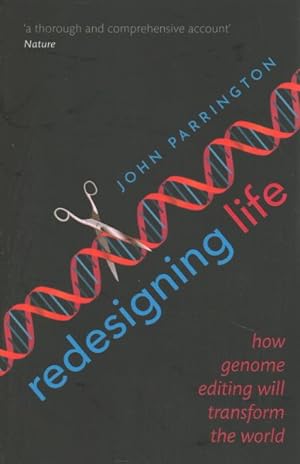
Paperback. Condición: new. Paperback. Since the birth of civilisation, human beings have manipulated other life-forms.We have selectively bred plants and animals for thousands of years to maximise agricultural production and cater to our taste in pets. The observation of the creation of artificial animal and plant variants was a… key stimulant for Charles Darwin's theory of evolution. The ability to directly engineer the genomes of organisms first became possiblein the 1970s, when the gene for human insulin was introduced into bacteria to produce this protein for diabetics. At the same time, mice were modified to produce human growth hormone, and grew huge as a result. Butthese were only our first tottering steps into the possibilities of genetic engineering.In the past few years, the pace of progress has accelerated enormously. We can now cut and paste genes using molecular scissors with astonishing ease, and the new technology of genome editing can be applied to practically any species of plants or animals. 'Mutation chain reaction' can be used to alter the genes of a population of pests, such as flies; as the modified creatures breed,the mutation is spread through the population, so that within a few generations the organism is almost completely altered. At the same time, scientists are also beginning to synthesize new organismsfrom scratch.These new technologies hold much promise for improving lives. Genome editing has already been used clinically to treat AIDS patients, by genetically modifying their white blood cells to be resistant to HIV. In agriculture, genome editing could be used to engineer species with increased food output, and the ability to thrive in challenging climates. New bacterial forms may be used to generate energy. But these powerful new techniques also raise importantethical dilemmas and potential dangers, pressing issues that are already upon us given the speed of scientific developments. To what extent should parents be able to manipulate the genetics of theiroffspring DL and would designer babies be limited to the rich? Can we effectively weigh up the risks from introducing synthetic lifeforms into complex ecosystems? In this extensively revised paperback edition, John Parrington explains the nature and possibilities of these new scientific developments, which could usher in a brave, new world. We must rapidly come to understand its implications if we are to direct its huge potential to the good of humanity and the planet. Genetic engineering allows the production of the human insulin protein for diabetics, the modification of crops, and the building of synthetic life forms. In the future we could even remove genetic diseases from the germ line. In this book, John Parrington explains the rise of this new, sophisticated science. Shipping may be from multiple locations in the US or from the UK, depending on stock availability.
- Tapa blanda
Librería: Anybook.com, Lincoln, Reino UnidoAnybook.com
Contactar con el vendedorVendedor de 5 estrellasCondición: Usado - Aceptable
EUR 9,04
Envío por EUR 15,94Se envía de Reino Unido a Estados Unidos de AmericaCantidad disponible: 1 disponibles
Condición: Good. This is an ex-library book and may have the usual library/used-book markings inside.This book has soft covers. In good all round condition. Please note the Image in this listing is a stock photo and may not match the covers of the actual item,400grams, ISBN:9780198766834.
- Tapa blanda
Librería: Anybook.com, Lincoln, Reino UnidoAnybook.com
Contactar con el vendedorVendedor de 5 estrellasCondición: Usado - Aceptable
EUR 9,03
Envío por EUR 15,94Se envía de Reino Unido a Estados Unidos de AmericaCantidad disponible: 1 disponibles
Condición: Good. This is an ex-library book and may have the usual library/used-book markings inside.This book has soft covers. In good all round condition. Please note the Image in this listing is a stock photo and may not match the covers of the actual item,500grams, ISBN:9780198766834.
- Tapa blanda
Librería: Kennys Bookshop and Art Galleries Ltd., Galway, GY, IrlandaKennys Bookshop and Art Galleries Ltd.
Contactar con el vendedorVendedor de 5 estrellasCondición: Nuevo
EUR 23,60
Envío por EUR 9,50Se envía de Irlanda a Estados Unidos de AmericaCantidad disponible: Más de 20 disponibles
Condición: New. 2020. Paperback. . . . . .
- Tapa blanda
Librería: Revaluation Books, Exeter, Reino UnidoRevaluation Books
Contactar con el vendedorVendedor de 5 estrellasCondición: Nuevo
EUR 22,56
Envío por EUR 11,72Se envía de Reino Unido a Estados Unidos de AmericaCantidad disponible: 2 disponibles
Paperback. Condición: Brand New. 360 pages. 7.50x4.75x0.75 inches. In Stock.
- Tapa blanda
Librería: Kennys Bookstore, Olney, MD, Estados Unidos de AmericaKennys Bookstore
Contactar con el vendedorVendedor de 5 estrellasCondición: Nuevo
EUR 28,44
Envío por EUR 9,20Se envía dentro de Estados Unidos de AmericaCantidad disponible: Más de 20 disponibles
Condición: New. 2020. Paperback. . . . . . Books ship from the US and Ireland.
- Tapa blanda
Librería: THE SAINT BOOKSTORE, Southport, Reino UnidoTHE SAINT BOOKSTORE
Contactar con el vendedorVendedor de 5 estrellasCondición: Nuevo
EUR 22,96
Envío por EUR 17,87Se envía de Reino Unido a Estados Unidos de AmericaCantidad disponible: 15 disponibles
Paperback / softback. Condición: New. New copy - Usually dispatched within 4 working days.

- Tapa blanda
Librería: BuchWeltWeit Ludwig Meier e.K., Bergisch Gladbach, AlemaniaBuchWeltWeit Ludwig Meier e.K.
Contactar con el vendedorVendedor de 5 estrellasCondición: Nuevo
EUR 17,10
Envío por EUR 23,00Se envía de Alemania a Estados Unidos de AmericaCantidad disponible: 1 disponibles
Taschenbuch. Condición: Neu. Neuware -Since the birth of civilisation, human beings have manipulated other life-forms. We have selectively bred plants and animals for thousands of years to maximise agricultural production and cater to our taste in pets. The observation of the creation of artificial animal and plant variants was…a key stimulant for Charles Darwin's theory of evolution. The ability to directly engineer the genomes of organisms first became possible in the 1970s, when the gene for human insulin was introduced into bacteria to produce this protein for diabetics. At the same time, mice were modified to produce human growth hormone, and grew huge as a result. But these were only our first tottering steps into the possibilities of genetic engineering.In the past few years, the pace of progress has accelerated enormously. We can now cut and paste genes using molecular scissors with astonishing ease, and the new technology of genome editing can be applied to practically any species of plants or animals. 'Mutation chain reaction' can be used to alter the genes of a population of pests, such as flies; as the modified creatures breed, the mutation is spread through the population, so that within a few generations the organism is almost completely altered. At the same time, scientists are also beginning to synthesize new organisms from scratch.These new technologies hold much promise for improving lives. Genome editing has already been used clinically to treat AIDS patients, by genetically modifying their white blood cells to be resistant to HIV. In agriculture, genome editing could be used to engineer species with increased food output, and the ability to thrive in challenging climates. New bacterial forms may be used to generate energy. But these powerful new techniques also raise important ethical dilemmas and potential dangers, pressing issues that are already upon us given the speed of scientific developments. To what extent should parents be able to manipulate the genetics of their offspring - and would designer babies be limited to the rich Can we effectively weigh up the risks from introducing synthetic lifeforms into complex ecosystems In this extensively revised paperback edition, John Parrington explains the nature and possibilities of these new scientific developments, which could usher in a brave, new world. We must rapidly come to understand its implications if we are to direct its huge potential to the good of humanity and the planet. 384 pp. Englisch.

- Tapa blanda
Librería: moluna, Greven, Alemaniamoluna
Contactar con el vendedorVendedor de 5 estrellasCondición: Nuevo
EUR 19,65
Envío por EUR 48,99Se envía de Alemania a Estados Unidos de AmericaCantidad disponible: 1 disponibles
Condición: New. Genetic engineering allows the production of the human insulin protein for diabetics, the modification of crops, and the building of synthetic life forms. In the future we could even remove genetic diseases from the germ line. In this book, John Parrington .

- Tapa blanda
Librería: AHA-BUCH GmbH, Einbeck, AlemaniaAHA-BUCH GmbH
Contactar con el vendedorVendedor de 5 estrellasCondición: Nuevo
EUR 20,96
Envío por EUR 61,43Se envía de Alemania a Estados Unidos de AmericaCantidad disponible: 1 disponibles
Taschenbuch. Condición: Neu. Neuware - Since the birth of civilisation, human beings have manipulated other life-forms. We have selectively bred plants and animals for thousands of years to maximise agricultural production and cater to our taste in pets. The observation of the creation of artificial animal and plant variants was… a key stimulant for Charles Darwin's theory of evolution. The ability to directly engineer the genomes of organisms first became possible in the 1970s, when the gene for human insulin was introduced into bacteria to produce this protein for diabetics. At the same time, mice were modified to produce human growth hormone, and grew huge as a result. But these were only our first tottering steps into the possibilities of genetic engineering.In the past few years, the pace of progress has accelerated enormously. We can now cut and paste genes using molecular scissors with astonishing ease, and the new technology of genome editing can be applied to practically any species of plants or animals. 'Mutation chain reaction' can be used to alter the genes of a population of pests, such as flies; as the modified creatures breed, the mutation is spread through the population, so that within a few generations the organism is almost completely altered. At the same time, scientists are also beginning to synthesize new organisms from scratch.These new technologies hold much promise for improving lives. Genome editing has already been used clinically to treat AIDS patients, by genetically modifying their white blood cells to be resistant to HIV. In agriculture, genome editing could be used to engineer species with increased food output, and the ability to thrive in challenging climates. New bacterial forms may be used to generate energy. But these powerful new techniques also raise important ethical dilemmas and potential dangers, pressing issues that are already upon us given the speed of scientific developments. To what extent should parents be able to manipulate the genetics of their offspring - and would designer babies be limited to the rich Can we effectively weigh up the risks from introducing synthetic lifeforms into complex ecosystems In this extensively revised paperback edition, John Parrington explains the nature and possibilities of these new scientific developments, which could usher in a brave, new world. We must rapidly come to understand its implications if we are to direct its huge potential to the good of humanity and the planet.

- Tapa blanda
Librería: preigu, Osnabrück, Alemaniapreigu
Contactar con el vendedorVendedor de 5 estrellasCondición: Nuevo
EUR 18,00
Envío por EUR 70,00Se envía de Alemania a Estados Unidos de AmericaCantidad disponible: 1 disponibles
Taschenbuch. Condición: Neu. Redesigning Life | How Genome Editing Will Transform the World | John Parrington | Taschenbuch | 368 S. | Englisch | 2020 | Oxford University Press | EAN 9780198766834 | Verantwortliche Person für die EU: Oxford University Press España S.A., El Parque Empresarial San Fernando de Henares, Avendia de C…astilla 2, 28830 MADRID, SPANIEN, product[dot]safety[at]oup[dot]com | Anbieter: preigu.
- Tapa blanda
- Impresión bajo demanda
Librería: Brook Bookstore On Demand, Napoli, NA, ItaliaBrook Bookstore On Demand
Contactar con el vendedorVendedor de 5 estrellasCondición: Nuevo
EUR 18,24
Envío por EUR 11,00Se envía de Italia a Estados Unidos de AmericaCantidad disponible: Más de 20 disponibles
Condición: new. Questo è un articolo print on demand.


