

Importe total (1 artículo artículos):
Destino del pedido:

wiggins lyna wright jeff (11 resultados)
Ir a los resultados principales
Filtros de búsqueda
Tipo de artículo
- Todos los tipos de productos
- Libros (11)
- Revistas y publicaciones (No hay ningún otro resultado que coincida con este filtro.)
- Cómics (No hay ningún otro resultado que coincida con este filtro.)
- Partituras (No hay ningún otro resultado que coincida con este filtro.)
- Arte, grabados y pósters (No hay ningún otro resultado que coincida con este filtro.)
- Fotografías (No hay ningún otro resultado que coincida con este filtro.)
- Mapas (No hay ningún otro resultado que coincida con este filtro.)
- Manuscritos y coleccionismo de papel (No hay ningún otro resultado que coincida con este filtro.)
Condición Más información
- Nuevo (10)
- Como nuevo, Excelente o Muy bueno (1)
- Bueno o Aceptable (No hay ningún otro resultado que coincida con este filtro.)
- Regular o Pobre (No hay ningún otro resultado que coincida con este filtro.)
- Tal como se indica (No hay ningún otro resultado que coincida con este filtro.)
Encuadernación
Más atributos
- Primera edición (No hay ningún otro resultado que coincida con este filtro.)
- Firmado (No hay ningún otro resultado que coincida con este filtro.)
- Sobrecubierta (No hay ningún otro resultado que coincida con este filtro.)
- Con imágenes (4)
- No impresión bajo demanda (6)
Idioma (1)
Precio
- Cualquier precio
- Menos de EUR 20 (No hay ningún otro resultado que coincida con este filtro.)
- EUR 20 a EUR 45 (No hay ningún otro resultado que coincida con este filtro.)
- Más de EUR 45
Gastos de envío gratis
- Envío gratis a Estados Unidos de America (No hay ningún otro resultado que coincida con este filtro.)
Ubicación del vendedor
Valoración de los vendedores
-

Expert Systems in Environmental Planning
Librería: Bookmonger.Ltd, HILLSIDE, NJ, Estados Unidos de America
Calificación del vendedor: 5 de 5 estrellas

EUR 45,99
Envío por EUR 3,43
Se envía dentro de Estados Unidos de AmericaCantidad disponible: 1 disponibles
Añadir al carritoHardcover. Condición: Fine.
-
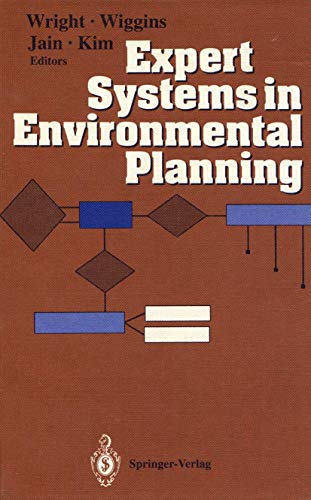
Expert Systems in Environmental Planning
Librería: Ria Christie Collections, Uxbridge, Reino Unido
Calificación del vendedor: 5 de 5 estrellas
EUR 115,23
Envío por EUR 13,83
Se envía de Reino Unido a Estados Unidos de AmericaCantidad disponible: Más de 20 disponibles
Añadir al carritoCondición: New. In.
-

Expert Systems in Environmental Planning
Idioma: Inglés
Publicado por Springer Berlin Heidelberg, 2011
ISBN 10: 3642778720 ISBN 13: 9783642778728
Librería: moluna, Greven, Alemania
Calificación del vendedor: 5 de 5 estrellas
EUR 92,27
Envío por EUR 48,99
Se envía de Alemania a Estados Unidos de AmericaCantidad disponible: Más de 20 disponibles
Añadir al carritoCondición: New.
-
Expert Systems in Environmental Planning
Librería: Books Puddle, New York, NY, Estados Unidos de America
Calificación del vendedor: 4 de 5 estrellas

EUR 143,52
Envío por EUR 3,43
Se envía dentro de Estados Unidos de AmericaCantidad disponible: 4 disponibles
Añadir al carritoCondición: New. pp. 336.
-
Expert Systems in Environmental Planning
Librería: Revaluation Books, Exeter, Reino Unido
Calificación del vendedor: 5 de 5 estrellas
EUR 152,22
Envío por EUR 11,55
Se envía de Reino Unido a Estados Unidos de AmericaCantidad disponible: 2 disponibles
Añadir al carritoPaperback. Condición: Brand New. reprint edition. 332 pages. 9.25x6.10x0.71 inches. In Stock.
-

Expert Systems in Environmental Planning
Idioma: Inglés
Publicado por Springer Berlin Heidelberg, 2011
ISBN 10: 3642778720 ISBN 13: 9783642778728
Librería: AHA-BUCH GmbH, Einbeck, Alemania
Calificación del vendedor: 5 de 5 estrellas
EUR 106,99
Envío por EUR 62,56
Se envía de Alemania a Estados Unidos de AmericaCantidad disponible: 1 disponibles
Añadir al carritoTaschenbuch. Condición: Neu. Druck auf Anfrage Neuware - Printed after ordering - The connections between economics, planning, and the environment are receiv ing increased attention among scholars and policy makers in many countries. The common denominator among these three variables is the earth's life support sys tems, the ecosystems on which the world depends. When we describe our physi cal surroundings as a collection of possible uses, we are establishing linkages between economics, planning, and the environment. Because possible alternative uses compete with each other, and conflicts arise over scarce land resources, the varying environmental impacts of alternative uses are major concerns for the cur rent as well as the next generation. How to achieve sustainable development is the pressing question for today's environmental professionals. Environmental planners and engineers help us study the implications of our choices, and new technologies and techniques that improve the practice of environmental planning should enhance our ability to protect our future. The depletion of the earth's natural resources and loss of biodiversity, the deg radation of air, land, and water quality, the accumulation of greenhouse gases leading to changes in our climate, and the depletion of the ozone layer comprise only a partial list of environmental issues that concern our policy makers. To sup port their decisions, environmental planning must be a multidimensional and multidisciplinary activity that incorporates social, economic, political, geograph ical, and technical factors. Solutions for problems in these areas frequently re quire not only numerical analyses but also heuristic analyses, which in turn depend on the intuitive judgements of planners and engineers.
-
Expert Systems in Environmental Planning (eng)
Librería: Brook Bookstore On Demand, Napoli, NA, Italia
Calificación del vendedor: 3 de 5 estrellas

EUR 86,24
Envío por EUR 5,50
Se envía de Italia a Estados Unidos de AmericaCantidad disponible: Más de 20 disponibles
Añadir al carritoCondición: new. Questo è un articolo print on demand.
-

Expert Systems in Environmental Planning
Idioma: Inglés
Publicado por Springer, Springer Dez 2011, 2011
ISBN 10: 3642778720 ISBN 13: 9783642778728
Librería: BuchWeltWeit Ludwig Meier e.K., Bergisch Gladbach, Alemania
Calificación del vendedor: 5 de 5 estrellas
EUR 106,99
Envío por EUR 23,00
Se envía de Alemania a Estados Unidos de AmericaCantidad disponible: 2 disponibles
Añadir al carritoTaschenbuch. Condición: Neu. This item is printed on demand - it takes 3-4 days longer - Neuware -The connections between economics, planning, and the environment are receiv ing increased attention among scholars and policy makers in many countries. The common denominator among these three variables is the earth's life support sys tems, the ecosystems on which the world depends. When we describe our physi cal surroundings as a collection of possible uses, we are establishing linkages between economics, planning, and the environment. Because possible alternative uses compete with each other, and conflicts arise over scarce land resources, the varying environmental impacts of alternative uses are major concerns for the cur rent as well as the next generation. How to achieve sustainable development is the pressing question for today's environmental professionals. Environmental planners and engineers help us study the implications of our choices, and new technologies and techniques that improve the practice of environmental planning should enhance our ability to protect our future. The depletion of the earth's natural resources and loss of biodiversity, the deg radation of air, land, and water quality, the accumulation of greenhouse gases leading to changes in our climate, and the depletion of the ozone layer comprise only a partial list of environmental issues that concern our policy makers. To sup port their decisions, environmental planning must be a multidimensional and multidisciplinary activity that incorporates social, economic, political, geograph ical, and technical factors. Solutions for problems in these areas frequently re quire not only numerical analyses but also heuristic analyses, which in turn depend on the intuitive judgements of planners and engineers. 336 pp. Englisch.
-
Expert Systems in Environmental Planning
Librería: Majestic Books, Hounslow, Reino Unido
Calificación del vendedor: 4 de 5 estrellas
EUR 148,41
Envío por EUR 7,51
Se envía de Reino Unido a Estados Unidos de AmericaCantidad disponible: 4 disponibles
Añadir al carritoCondición: New. Print on Demand pp. 336 62 Figures, 49:B&W 6.14 x 9.21 in or 234 x 156 mm (Royal 8vo) Perfect Bound on White w/Gloss Lam.
-
Expert Systems in Environmental Planning
Librería: Biblios, Frankfurt am main, HESSE, Alemania
Calificación del vendedor: 4 de 5 estrellas
EUR 149,97
Envío por EUR 9,95
Se envía de Alemania a Estados Unidos de AmericaCantidad disponible: 4 disponibles
Añadir al carritoCondición: New. PRINT ON DEMAND pp. 336.
-

Expert Systems in Environmental Planning
Idioma: Inglés
Publicado por Springer, Springer Dez 2011, 2011
ISBN 10: 3642778720 ISBN 13: 9783642778728
Librería: buchversandmimpf2000, Emtmannsberg, BAYE, Alemania
Calificación del vendedor: 5 de 5 estrellas
EUR 106,99
Envío por EUR 60,00
Se envía de Alemania a Estados Unidos de AmericaCantidad disponible: 1 disponibles
Añadir al carritoTaschenbuch. Condición: Neu. This item is printed on demand - Print on Demand Titel. Neuware -The connections between economics, planning, and the environment are receiv ing increased attention among scholars and policy makers in many countries. The common denominator among these three variables is the earth's life support sys tems, the ecosystems on which the world depends. When we describe our physi cal surroundings as a collection of possible uses, we are establishing linkages between economics, planning, and the environment. Because possible alternative uses compete with each other, and conflicts arise over scarce land resources, the varying environmental impacts of alternative uses are major concerns for the cur rent as well as the next generation. How to achieve sustainable development is the pressing question for today's environmental professionals. Environmental planners and engineers help us study the implications of our choices, and new technologies and techniques that improve the practice of environmental planning should enhance our ability to protect our future. The depletion of the earth's natural resources and loss of biodiversity, the deg radation of air, land, and water quality, the accumulation of greenhouse gases leading to changes in our climate, and the depletion of the ozone layer comprise only a partial list of environmental issues that concern our policy makers. To sup port their decisions, environmental planning must be a multidimensional and multidisciplinary activity that incorporates social, economic, political, geograph ical, and technical factors. Solutions for problems in these areas frequently re quire not only numerical analyses but also heuristic analyses, which in turn depend on the intuitive judgements of planners and engineers.Springer-Verlag KG, Sachsenplatz 4-6, 1201 Wien 336 pp. Englisch.


