

Importe total (1 artículo artículos):
Destino del pedido:

smith whitaker harry (56 resultados)
Ir a los resultados principales
Filtros de búsqueda
Tipo de artículo
- Todos los tipos de productos
- Libros (56)
- Revistas y publicaciones (No hay ningún otro resultado que coincida con este filtro.)
- Cómics (No hay ningún otro resultado que coincida con este filtro.)
- Partituras (No hay ningún otro resultado que coincida con este filtro.)
- Arte, grabados y pósters (No hay ningún otro resultado que coincida con este filtro.)
- Fotografías (No hay ningún otro resultado que coincida con este filtro.)
- Mapas (No hay ningún otro resultado que coincida con este filtro.)
- Manuscritos y coleccionismo de papel (No hay ningún otro resultado que coincida con este filtro.)
Condición Más información
- Nuevo (46)
- Como nuevo, Excelente o Muy bueno (7)
- Bueno o Aceptable (3)
- Regular o Pobre (No hay ningún otro resultado que coincida con este filtro.)
- Tal como se indica (No hay ningún otro resultado que coincida con este filtro.)
Encuadernación
Más atributos
- Primera edición (No hay ningún otro resultado que coincida con este filtro.)
- Firmado (No hay ningún otro resultado que coincida con este filtro.)
- Sobrecubierta (No hay ningún otro resultado que coincida con este filtro.)
- Con imágenes (20)
- No impresión bajo demanda (32)
Idioma (1)
Gastos de envío gratis
- Envío gratis a Estados Unidos de America (No hay ningún otro resultado que coincida con este filtro.)
Ubicación del vendedor
Valoración de los vendedores
-

Brain, Mind and Consciousness in the History of Neuroscience (History, Philosophy and Theory of the Life Sciences, 6)
Libro 6 de 34: History, Philosophy and Theory of the Life SciencesLibrería: Amazing Books Pittsburgh, Pittsburgh, PA, Estados Unidos de America
Calificación del vendedor: 5 de 5 estrellas

EUR 124,97
Envío por EUR 3,48
Se envía dentro de Estados Unidos de AmericaCantidad disponible: 1 disponibles
Añadir al carritoHardcover. Condición: Very Good. Unmarked text. Would be "Like New" but for some very mild cover wear. Page edges crisp and clean with a tight spine. Sturdy copy in excellent condition. PA.
-

Brain, Mind and Medicine:: Essays in Eighteenth-Century Neuroscience
Librería: Ria Christie Collections, Uxbridge, Reino Unido
Calificación del vendedor: 5 de 5 estrellas
EUR 114,97
Envío por EUR 13,80
Se envía de Reino Unido a Estados Unidos de AmericaCantidad disponible: Más de 20 disponibles
Añadir al carritoCondición: New. In.
-

Brain, Mind and Medicine : Essays in Eighteenth-Century Neuroscience
Librería: GreatBookPrices, Columbia, MD, Estados Unidos de America
Calificación del vendedor: 5 de 5 estrellas
EUR 130,27
Envío por EUR 2,30
Se envía dentro de Estados Unidos de AmericaCantidad disponible: Más de 20 disponibles
Añadir al carritoCondición: New.
-
Brain, Mind and Medicine : Essays in Eighteenth-Century Neuroscience
Librería: GreatBookPricesUK, Woodford Green, Reino Unido
Calificación del vendedor: 5 de 5 estrellas
EUR 114,96
Envío por EUR 17,28
Se envía de Reino Unido a Estados Unidos de AmericaCantidad disponible: Más de 20 disponibles
Añadir al carritoCondición: New.
-
Brain
Libro 6 de 34: History, Philosophy and Theory of the Life SciencesLibrería: Optimon Books, Gravesend, KENT, Reino Unido
Calificación del vendedor: 5 de 5 estrellas
EUR 119,85
Envío por EUR 20,74
Se envía de Reino Unido a Estados Unidos de AmericaCantidad disponible: 1 disponibles
Añadir al carritoHardcover. Condición: Good. THERE ARE NO TARIFFS OR CUSTOMS DUTIES ON BOOKS. This volume of essays examines the problem of mind, looking at how the problem has appeared to neuroscientists (in the widest sense) from classical antiquity through to contemporary times. Beginning with a look at ventricular neuropsychology in antiquity, this book goes on to look at Spinozan ideas on the links between mind and body, Thomas Willis and the foundation of Neurology, Hooke's mechanical model of the mind and Joseph Priestley's approach to the mind-body problem.The volume offers a chapter on the 19th century Ottoman perspective on western thinking. Further chapters trace the work of nineteenth century scholars including George Henry Lewes, Herbert Spencer and Emil du Bois-Reymond. The book covers significant work from the twentieth century, including an examination of Alfred North Whitehead and the history of consciousness, and particular attention is given to the development of quantum consciousness. Chapters on slavery and the self and the development of an understanding of Dualism bring this examination up to date on the latest 21st century work in the field.At the heart of this book is the matter of how we devery good the problem of consciousness itself: has there been any progress in our understanding of the working of mind and brain? This work at the interface between science and the humanities will appeal to experts from across many fields who wish to develop their understanding of the problem of consciousness, including scholars of Neuroscience, Behavioural Science and the History of Science.
-

Brain, Mind and Consciousness in the History of Neuroscience
Libro 6 de 34: History, Philosophy and Theory of the Life SciencesLibrería: GreatBookPrices, Columbia, MD, Estados Unidos de America
Calificación del vendedor: 5 de 5 estrellas
EUR 166,59
Envío por EUR 2,30
Se envía dentro de Estados Unidos de AmericaCantidad disponible: 15 disponibles
Añadir al carritoCondición: New.
-
Brain, Mind and Consciousness in the History of Neuroscience
Libro 6 de 34: History, Philosophy and Theory of the Life SciencesLibrería: GreatBookPrices, Columbia, MD, Estados Unidos de America
Calificación del vendedor: 5 de 5 estrellas
EUR 174,82
Envío por EUR 2,30
Se envía dentro de Estados Unidos de AmericaCantidad disponible: 15 disponibles
Añadir al carritoCondición: New.
-
Brain, Mind and Consciousness in the History of Neuroscience (History, Philosophy and Theory of the Life Sciences, 6)
Libro 6 de 34: History, Philosophy and Theory of the Life SciencesLibrería: Ria Christie Collections, Uxbridge, Reino Unido
Calificación del vendedor: 5 de 5 estrellas
EUR 163,58
Envío por EUR 13,80
Se envía de Reino Unido a Estados Unidos de AmericaCantidad disponible: Más de 20 disponibles
Añadir al carritoCondición: New. In.
-
Brain, Mind and Consciousness in the History of Neuroscience (History, Philosophy and Theory of the Life Sciences, 6)
Libro 6 de 34: History, Philosophy and Theory of the Life SciencesLibrería: Ria Christie Collections, Uxbridge, Reino Unido
Calificación del vendedor: 5 de 5 estrellas
EUR 163,58
Envío por EUR 13,80
Se envía de Reino Unido a Estados Unidos de AmericaCantidad disponible: Más de 20 disponibles
Añadir al carritoCondición: New. In.
-

Brain, Mind and Medicine: Essays in Eighteenth-Century Neuroscience
Librería: Ria Christie Collections, Uxbridge, Reino Unido
Calificación del vendedor: 5 de 5 estrellas
EUR 163,58
Envío por EUR 13,80
Se envía de Reino Unido a Estados Unidos de AmericaCantidad disponible: Más de 20 disponibles
Añadir al carritoCondición: New. In.
-

Brain
Librería: Optimon Books, Gravesend, KENT, Reino Unido
Calificación del vendedor: 5 de 5 estrellas
EUR 159,01
Envío por EUR 20,74
Se envía de Reino Unido a Estados Unidos de AmericaCantidad disponible: 1 disponibles
Añadir al carritoHardcover. Condición: Very Good. THERE ARE NO TARIFFS OR CUSTOMS DUTIES ON BOOKS. No books have been published on the practice of neuroscience in the eighteenth century, a time of transition and discovery in science and medicine. This volume explores neuroscience and reviews developments in anatomy, physiology, and medicine in the era some call the Age of Reason, and others the Enlightenment. Topics include how neuroscience adopted electricity as the nerve force, how disorders such as aphasia and hysteria were treated, Mesmerism, and more.
-
Brain, Mind and Medicine : Essays in Eighteenth Century Neuroscience
Librería: GreatBookPrices, Columbia, MD, Estados Unidos de America
Calificación del vendedor: 5 de 5 estrellas
EUR 183,42
Envío por EUR 2,30
Se envía dentro de Estados Unidos de AmericaCantidad disponible: 15 disponibles
Añadir al carritoCondición: New.
-
Brain, Mind and Consciousness in the History of Neuroscience
Libro 6 de 34: History, Philosophy and Theory of the Life SciencesLibrería: GreatBookPrices, Columbia, MD, Estados Unidos de America
Calificación del vendedor: 5 de 5 estrellas
EUR 188,28
Envío por EUR 2,30
Se envía dentro de Estados Unidos de AmericaCantidad disponible: 15 disponibles
Añadir al carritoCondición: As New. Unread book in perfect condition.
-
Brain, Mind and Consciousness in the History of Neuroscience
Libro 6 de 34: History, Philosophy and Theory of the Life SciencesLibrería: GreatBookPrices, Columbia, MD, Estados Unidos de America
Calificación del vendedor: 5 de 5 estrellas
EUR 188,69
Envío por EUR 2,30
Se envía dentro de Estados Unidos de AmericaCantidad disponible: 15 disponibles
Añadir al carritoCondición: As New. Unread book in perfect condition.
-
Brain, Mind and Consciousness in the History of Neuroscience: 6 (History, Philosophy and Theory of the Life Sciences)
Libro 6 de 34: History, Philosophy and Theory of the Life SciencesLibrería: Books Puddle, New York, NY, Estados Unidos de America
Calificación del vendedor: 4 de 5 estrellas

EUR 212,97
Envío por EUR 3,48
Se envía dentro de Estados Unidos de AmericaCantidad disponible: 4 disponibles
Añadir al carritoCondición: New. pp. 383 Softcover reprint of the original 1st ed. 2014 edition NO-PA16APR2015-KAP.
-
Brain, Mind and Consciousness in the History of Neuroscience
Libro 6 de 34: History, Philosophy and Theory of the Life SciencesLibrería: Books Puddle, New York, NY, Estados Unidos de America
Calificación del vendedor: 4 de 5 estrellas
EUR 213,26
Envío por EUR 3,48
Se envía dentro de Estados Unidos de AmericaCantidad disponible: 4 disponibles
Añadir al carritoCondición: New. pp. 384.
-
Brain, Mind and Medicine: | Essays in Eighteenth-Century Neuroscience
Librería: preigu, Osnabrück, Alemania
Calificación del vendedor: 5 de 5 estrellas
EUR 140,00
Envío por EUR 70,00
Se envía de Alemania a Estados Unidos de AmericaCantidad disponible: 5 disponibles
Añadir al carritoTaschenbuch. Condición: Neu. Brain, Mind and Medicine: | Essays in Eighteenth-Century Neuroscience | Harry Whitaker (u. a.) | Taschenbuch | xiii | Englisch | 2010 | Springer | EAN 9781441943682 | Verantwortliche Person für die EU: Springer Verlag GmbH, Tiergartenstr. 17, 69121 Heidelberg, juergen[dot]hartmann[at]springer[dot]com | Anbieter: preigu.
-
Brain, Mind and Medicine
Librería: Books Puddle, New York, NY, Estados Unidos de America
Calificación del vendedor: 4 de 5 estrellas
EUR 215,48
Envío por EUR 3,48
Se envía dentro de Estados Unidos de AmericaCantidad disponible: 4 disponibles
Añadir al carritoCondición: New. pp. 392.
-

Brain, Mind and Consciousness in the History of Neuroscience
Libro 6 de 34: History, Philosophy and Theory of the Life SciencesLibrería: preigu, Osnabrück, Alemania
Calificación del vendedor: 5 de 5 estrellas
EUR 140,00
Envío por EUR 70,00
Se envía de Alemania a Estados Unidos de AmericaCantidad disponible: 5 disponibles
Añadir al carritoTaschenbuch. Condición: Neu. Brain, Mind and Consciousness in the History of Neuroscience | C. U. M. Smith (u. a.) | Taschenbuch | History, Philosophy and Theory of the Life Sciences | xiv | Englisch | 2016 | Springer | EAN 9789402406191 | Verantwortliche Person für die EU: Springer Verlag GmbH, Tiergartenstr. 17, 69121 Heidelberg, juergen[dot]hartmann[at]springer[dot]com | Anbieter: preigu.
-
Brain, Mind and Medicine:: Essays in Eighteenth-Century Neuroscience
Librería: Books Puddle, New York, NY, Estados Unidos de America
Calificación del vendedor: 4 de 5 estrellas
EUR 217,59
Envío por EUR 3,48
Se envía dentro de Estados Unidos de AmericaCantidad disponible: 4 disponibles
Añadir al carritoCondición: New. pp. xiii + 376 1st Edition.
-

Brain, Mind and Consciousness in the History of Neuroscience
Libro 6 de 34: History, Philosophy and Theory of the Life SciencesLibrería: AHA-BUCH GmbH, Einbeck, Alemania
Calificación del vendedor: 5 de 5 estrellas
EUR 166,62
Envío por EUR 63,70
Se envía de Alemania a Estados Unidos de AmericaCantidad disponible: 1 disponibles
Añadir al carritoBuch. Condición: Neu. Druck auf Anfrage Neuware - Printed after ordering - This volume of essays examines the problem of mind, looking at how the problem has appeared to neuroscientists (in the widest sense) from classical antiquity through to contemporary times. Beginning with a look at ventricular neuropsychology in antiquity, this book goes on to look at Spinozan ideas on the links between mind and body, Thomas Willis and the foundation of Neurology, Hooke's mechanical model of the mind and Joseph Priestley's approach to the mind-body problem.The volume offers a chapter on the 19th century Ottoman perspective on western thinking. Further chapters trace the work of nineteenth century scholars including George Henry Lewes, Herbert Spencer and Emil du Bois-Reymond. The book covers significant work from the twentieth century, including an examination of Alfred North Whitehead and the history of consciousness, and particular attention is given to the development of quantum consciousness. Chapters on slavery and the self and the development of an understanding of Dualism bring this examination up to date on the latest 21st century work in the field.At the heart of this book is the matter of how we define the problem of consciousness itself: has there been any progress in our understanding of the working of mind and brain This work at the interface between science and the humanities will appeal to experts from across many fields who wish to develop their understanding of the problem of consciousness, including scholars of Neuroscience, Behavioural Science and the History of Science.
-

Brain, Mind and Consciousness in the History of Neuroscience
Libro 6 de 34: History, Philosophy and Theory of the Life SciencesLibrería: AHA-BUCH GmbH, Einbeck, Alemania
Calificación del vendedor: 5 de 5 estrellas
EUR 168,73
Envío por EUR 62,91
Se envía de Alemania a Estados Unidos de AmericaCantidad disponible: 1 disponibles
Añadir al carritoTaschenbuch. Condición: Neu. Druck auf Anfrage Neuware - Printed after ordering - This volume of essays examines the problem of mind, looking at how the problem has appeared to neuroscientists (in the widest sense) from classical antiquity through to contemporary times. Beginning with a look at ventricular neuropsychology in antiquity, this book goes on to look at Spinozan ideas on the links between mind and body, Thomas Willis and the foundation of Neurology, Hooke's mechanical model of the mind and Joseph Priestley's approach to the mind-body problem.The volume offers a chapter on the 19th century Ottoman perspective on western thinking. Further chapters trace the work of nineteenth century scholars including George Henry Lewes, Herbert Spencer and Emil du Bois-Reymond. The book covers significant work from the twentieth century, including an examination of Alfred North Whitehead and the history of consciousness, and particular attention is given to the development of quantum consciousness. Chapters on slavery and the self and the development of an understanding of Dualism bring this examination up to date on the latest 21st century work in the field.At the heart of this book is the matter of how we define the problem of consciousness itself: has there been any progress in our understanding of the working of mind and brain This work at the interface between science and the humanities will appeal to experts from across many fields who wish to develop their understanding of the problem of consciousness, including scholars of Neuroscience, Behavioural Science and the History of Science.
-
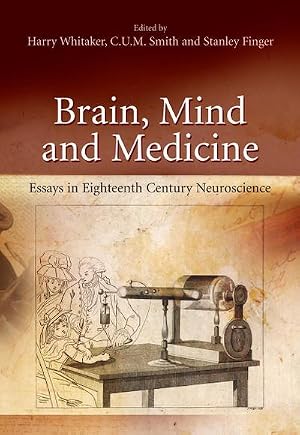
Brain, Mind and Medicine: : Essays in Eighteenth-Century Neuroscience
Idioma: Inglés
Publicado por Springer US, Springer US, 2010
ISBN 10: 1441943684 ISBN 13: 9781441943682
Librería: AHA-BUCH GmbH, Einbeck, Alemania
Calificación del vendedor: 5 de 5 estrellas
EUR 168,73
Envío por EUR 63,68
Se envía de Alemania a Estados Unidos de AmericaCantidad disponible: 1 disponibles
Añadir al carritoTaschenbuch. Condición: Neu. Druck auf Anfrage Neuware - Printed after ordering - Ideas we associate with the 18th century are clearly seen in work published from the latter decades of the 17th century through the first decades of the 19th century. This is the 'long 18th century', a period which exhibits multiple discourses in medicine, brain science and philosophy. The editors have deliberately adopted a 'presentist' subtitle, 'neuroscience', to emphasize that this collection of essays reflect a range of current thought about 18th century-studies of the nervous system in isolation and in context. There are six sections, each preceded by a short introduction.The opening section of Brain, Mind and Medicine: Neuroscience in the 18th Century sets forth a temporal chronology for the long 18th century. This is followed by a background section of essays on (a) brain and mind in the long 18th century, (b) the role of microscopes and microscopy in this period, (c) the nature of 18th century medical education and the place of voluntary hospitals and (d) an illustration of late-18th century medicine, discussing the early career of James Parkinson as an example.The third section contains a series of papers focusing on the nervous system, with (a) an exegesis of John Hunter's work, (b) the contributions of William Cullen and Robert Whytt, (c) a detailed analysis of the physiological and anatomical work of Pourfour du Petit, (d) the debate between Albrecht Haller and Robert Whytt concerning the mechanism of muscle contraction and two essays on developments in animal electricity during this epoch, (e) the early history starting with observations of the electric ray, and (f) the later contributions of Luigi Galvani, medical man and scientist.The fourth section on brain and behavior considers (a) William Porterfield's thoughts on vision, and three essays in speculative philosophy of neuroscience,(b) a discussion of David Hartley's vibration theory, (c) a discussion of Charles Bonnet's vibration theory and an analysis of Emanuel Swedenborg's century-too-soon thoughts on localization of brain function.The next section opens with an essay (a) on the neuroscientific ideas of Hermann Boerhaave and Albrecht Haller, then (b) a discussion of the evolution of our understanding of strokes in this epoch; these are followed by three essays on the development and applications of medical electricity, the first (c) on the contribution of Benjamin Franklin, the second (d) on how medical electricity was discussed in the popular publication, Gentleman's Magazine, and the third (e) on the application of medical electricity in physician's practices. The essays continue with (f) the medical opinions of the clergyman John Wesley, followed by (g) an essay on the best example of the power of suggestion in this era, Franz Anton Mesmer's notions of animal magnetism. The final essay in this section (h) discusses the evolution of the concept of hysteria well in advance of the well-known work of Jean Marie Charcot and Sigmund Freud.The final three essays in the last section capture some of the cultural consequences of 18th century interest in the nervous system: (a) in the context of French materialism, (b) in Jonathan Swift's literary treatment of brain and nervous system and, finally (c) in an analysis of the origin and development of the concept of temperament. Cover illustration: A young woman being treated with medical electricity in the 18th century. (From Adams, 1785; see chapter by Bertucci.).
-

Brain, Mind and Medicine: : Essays in Eighteenth-Century Neuroscience
Idioma: Inglés
Publicado por Springer US, Copernicus, 2007
ISBN 10: 0387709665 ISBN 13: 9780387709666
Librería: AHA-BUCH GmbH, Einbeck, Alemania
Calificación del vendedor: 5 de 5 estrellas
EUR 168,73
Envío por EUR 64,66
Se envía de Alemania a Estados Unidos de AmericaCantidad disponible: 1 disponibles
Añadir al carritoBuch. Condición: Neu. Druck auf Anfrage Neuware - Printed after ordering - Ideas we associate with the 18th century are clearly seen in work published from the latter decades of the 17th century through the first decades of the 19th century. This is the 'long 18th century', a period which exhibits multiple discourses in medicine, brain science and philosophy. The editors have deliberately adopted a 'presentist' subtitle, 'neuroscience', to emphasize that this collection of essays reflect a range of current thought about 18th century-studies of the nervous system in isolation and in context. There are six sections, each preceded by a short introduction.The opening section of Brain, Mind and Medicine: Neuroscience in the 18th Century sets forth a temporal chronology for the long 18th century. This is followed by a background section of essays on (a) brain and mind in the long 18th century, (b) the role of microscopes and microscopy in this period, (c) the nature of 18th century medical education and the place of voluntary hospitals and (d) an illustration of late-18th century medicine, discussing the early career of James Parkinson as an example.The third section contains a series of papers focusing on the nervous system, with (a) an exegesis of John Hunter's work, (b) the contributions of William Cullen and Robert Whytt, (c) a detailed analysis of the physiological and anatomical work of Pourfour du Petit, (d) the debate between Albrecht Haller and Robert Whytt concerning the mechanism of muscle contraction and two essays on developments in animal electricity during this epoch, (e) the early history starting with observations of the electric ray, and (f) the later contributions of Luigi Galvani, medical man and scientist.The fourth section on brain and behavior considers (a) William Porterfield's thoughts on vision, and three essays in speculative philosophy of neuroscience,(b) a discussion of David Hartley's vibration theory, (c) a discussion of Charles Bonnet's vibration theory and an analysis of Emanuel Swedenborg's century-too-soon thoughts on localization of brain function.The next section opens with an essay (a) on the neuroscientific ideas of Hermann Boerhaave and Albrecht Haller, then (b) a discussion of the evolution of our understanding of strokes in this epoch; these are followed by three essays on the development and applications of medical electricity, the first (c) on the contribution of Benjamin Franklin, the second (d) on how medical electricity was discussed in the popular publication, Gentleman's Magazine, and the third (e) on the application of medical electricity in physician's practices. The essays continue with (f) the medical opinions of the clergyman John Wesley, followed by (g) an essay on the best example of the power of suggestion in this era, Franz Anton Mesmer's notions of animal magnetism. The final essay in this section (h) discusses the evolution of the concept of hysteria well in advance of the well-known work of Jean Marie Charcot and Sigmund Freud.The final three essays in the last section capture some of the cultural consequences of 18th century interest in the nervous system: (a) in the context of French materialism, (b) in Jonathan Swift's literary treatment of brain and nervous system and, finally (c) in an analysis of the origin and development of the concept of temperament. Cover illustration: A young woman being treated with medical electricity in the 18th century. (From Adams, 1785; see chapter by Bertucci.).
-
Brain, Mind and Consciousness in the History of Neuroscience
Libro 6 de 34: History, Philosophy and Theory of the Life SciencesLibrería: Revaluation Books, Exeter, Reino Unido
Calificación del vendedor: 5 de 5 estrellas
EUR 238,52
Envío por EUR 14,40
Se envía de Reino Unido a Estados Unidos de AmericaCantidad disponible: 2 disponibles
Añadir al carritoHardcover. Condición: Brand New. 500 pages. 9.50x6.25x1.00 inches. In Stock.
-
Brain, Mind and Medicine: Essays in Eighteenth-Century Neuroscience
Librería: Mispah books, Redhill, SURRE, Reino Unido
Calificación del vendedor: 4 de 5 estrellas
EUR 225,48
Envío por EUR 28,80
Se envía de Reino Unido a Estados Unidos de AmericaCantidad disponible: 1 disponibles
Añadir al carritoHardcover. Condición: Like New. Like New. book.
-
Brain, Mind and Medicine: Essays in Eighteenth Century Neuroscience
Librería: Revaluation Books, Exeter, Reino Unido
Calificación del vendedor: 5 de 5 estrellas
EUR 241,29
Envío por EUR 14,40
Se envía de Reino Unido a Estados Unidos de AmericaCantidad disponible: 2 disponibles
Añadir al carritoHardcover. Condición: Brand New. 1st edition. 320 pages. 10.00x7.00x1.00 inches. In Stock.
-
Brain, Mind and Medicine : Essays in Eighteenth Century Neuroscience
Librería: GreatBookPrices, Columbia, MD, Estados Unidos de America
Calificación del vendedor: 5 de 5 estrellas
EUR 259,52
Envío por EUR 2,30
Se envía dentro de Estados Unidos de AmericaCantidad disponible: 15 disponibles
Añadir al carritoCondición: As New. Unread book in perfect condition.
-
Brain, Mind and Consciousness in the History of Neuroscience
Libro 6 de 34: History, Philosophy and Theory of the Life SciencesLibrería: Revaluation Books, Exeter, Reino Unido
Calificación del vendedor: 5 de 5 estrellas
EUR 236,44
Envío por EUR 40,33
Se envía de Reino Unido a Estados Unidos de AmericaCantidad disponible: 2 disponibles
Añadir al carritoPaperback. Condición: Brand New. reprint edition. 384 pages. 9.25x6.10x0.91 inches. In Stock.
-
Brain, Mind and Medicine : Essays in Eighteenth-Century Neuroscience
Librería: GreatBookPricesUK, Woodford Green, Reino Unido
Calificación del vendedor: 5 de 5 estrellas
EUR 264,63
Envío por EUR 17,28
Se envía de Reino Unido a Estados Unidos de AmericaCantidad disponible: Más de 20 disponibles
Añadir al carritoCondición: As New. Unread book in perfect condition.


