

Importe total (1 artículo artículos):
Destino del pedido:

quast siegfried (15 resultados)
Ir a los resultados principales
Filtros de búsqueda
Tipo de artículo
- Todos los tipos de productos
- Libros (15)
- Revistas y publicaciones (No hay ningún otro resultado que coincida con este filtro.)
- Cómics (No hay ningún otro resultado que coincida con este filtro.)
- Partituras (No hay ningún otro resultado que coincida con este filtro.)
- Arte, grabados y pósters (No hay ningún otro resultado que coincida con este filtro.)
- Fotografías (No hay ningún otro resultado que coincida con este filtro.)
- Mapas (No hay ningún otro resultado que coincida con este filtro.)
- Manuscritos y coleccionismo de papel (No hay ningún otro resultado que coincida con este filtro.)
Condición Más información
- Nuevo (11)
- Como nuevo, Excelente o Muy bueno (2)
- Bueno o Aceptable (1)
- Regular o Pobre (No hay ningún otro resultado que coincida con este filtro.)
- Tal como se indica (1)
Encuadernación
- Todas
- Tapa dura (15)
- Tapa blanda (No hay ningún otro resultado que coincida con este filtro.)
Más atributos
- Primera edición (No hay ningún otro resultado que coincida con este filtro.)
- Firmado (No hay ningún otro resultado que coincida con este filtro.)
- Sobrecubierta (No hay ningún otro resultado que coincida con este filtro.)
- Con imágenes (2)
- No impresión bajo demanda (15)
Idioma (2)
Precio
- Cualquier precio
- Menos de EUR 20 (No hay ningún otro resultado que coincida con este filtro.)
- EUR 20 a EUR 45
- Más de EUR 45
Gastos de envío gratis
Ubicación del vendedor
Valoración de los vendedores
-
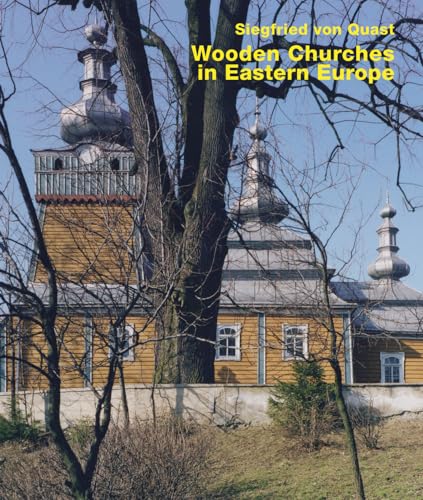
Wooden Churches in Eastern Europe
Librería: GreatBookPrices, Columbia, MD, Estados Unidos de America
Calificación del vendedor: 5 de 5 estrellas

EUR 34,62
Envío por EUR 2,27
Se envía dentro de Estados Unidos de AmericaCantidad disponible: 1 disponibles
Añadir al carritoCondición: New.
-

Wooden Churches in Eastern Europe
Idioma: Inglés
Publicado por Edition Axel Menges, DE, 2023
ISBN 10: 3869050365 ISBN 13: 9783869050362
Librería: Rarewaves.com USA, London, LONDO, Reino Unido
Calificación del vendedor: 5 de 5 estrellas
EUR 36,96
Gastos de envío gratis
Se envía de Reino Unido a Estados Unidos de AmericaCantidad disponible: 2 disponibles
Añadir al carritoHardback. Condición: New. What all these buildings have in common is that with the available material, wood, and the most modest means, places of worship, centres in the villages, were built with much feeling and love. The constructions in wood were derived in an old tradition from the dwellings and farm buildings of the peasant population. Their architecture, the typological forms probably penetrated into this seclusion as an idea. "The idea of a church as a building", brought with them by clergymen and wandering master craftsmen from the more fertile plains and the rich, large mining and trading towns.The oldest churches were built as early as in the 15th century, most of those still standing were built in the 18th and 19th centuries, and quite a few are still being built today. Many were destroyed in the two world wars, many fell victim to ethnic cleansing after 1945. Many were destroyed in the two world wars, many fell victim to ethnic cleansing after 1945, some fell into disrepair during the Soviet era, others were burnt down by lightning or short circuits, and quite a few simply gave way to the more "representative" stone churches as early as the 19th century. But a large number are still standing, consecrated, and believers gather in them. In fact, almost all of them in the various Carpathian countries are protected monuments, and many have been lovingly restored in recent times.More than the architectural-historical value, the question arises here of the aesthetic assessment of these small buildings. It is not a refined canon of forms of great architecture that can be derived and proven from the history of architecture that inspires us so much. Basically, they are not overly sophisticated constructions in terms of craftsmanship, they are safe and beautiful in their simplicity. Their aesthetic appeal, however, also includes the surface-weathered material, deformed structures, colour improvisations, recently ornamented sheet metal, inside wall paintings, altar and iconostasis furnishings derived from Renaissance and Baroque periods, but above all their location in the village, mostly isolated, often elevated, surrounded by old trees, enclosures and graves without cemetery order.
-
Wooden Churches in Eastern Europe
Librería: GreatBookPrices, Columbia, MD, Estados Unidos de America
Calificación del vendedor: 5 de 5 estrellas
EUR 38,30
Envío por EUR 2,27
Se envía dentro de Estados Unidos de AmericaCantidad disponible: 1 disponibles
Añadir al carritoCondición: As New. Unread book in perfect condition.
-
Wooden Churches in Eastern Europe (Hardcover)
Idioma: Inglés
Publicado por Edition Axel Menges, Fellbach, 2023
ISBN 10: 3869050365 ISBN 13: 9783869050362
Librería: Grand Eagle Retail, Bensenville, IL, Estados Unidos de America
Calificación del vendedor: 5 de 5 estrellas
EUR 42,97
Gastos de envío gratis
Se envía dentro de Estados Unidos de AmericaCantidad disponible: 1 disponibles
Añadir al carritoHardcover. Condición: new. Hardcover. What all these buildings have in common is that with the available material, wood, and the most modest means, places of worship, centres in the villages, were built with much feeling and love. The constructions in wood were derived in an old tradition from the dwellings and farm buildings of the peasant population. Their architecture, the typological forms probably penetrated into this seclusion as an idea. "The idea of a church as a building", brought with them by clergymen and wandering master craftsmen from the more fertile plains and the rich, large mining and trading towns.The oldest churches were built as early as in the 15th century, most of those still standing were built in the 18th and 19th centuries, and quite a few are still being built today. Many were destroyed in the two world wars, many fell victim to ethnic cleansing after 1945. Many were destroyed in the two world wars, many fell victim to ethnic cleansing after 1945, some fell into disrepair during the Soviet era, others were burnt down by lightning or short circuits, and quite a few simply gave way to the more "representative" stone churches as early as the 19th century. But a large number are still standing, consecrated, and believers gather in them. In fact, almost all of them in the various Carpathian countries are protected monuments, and many have been lovingly restored in recent times.More than the architectural-historical value, the question arises here of the aesthetic assessment of these small buildings. It is not a refined canon of forms of great architecture that can be derived and proven from the history of architecture that inspires us so much. Basically, they are not overly sophisticated constructions in terms of craftsmanship, they are safe and beautiful in their simplicity. Their aesthetic appeal, however, also includes the surface-weathered material, deformed structures, colour improvisations, recently ornamented sheet metal, inside wall paintings, altar and iconostasis furnishings derived from Renaissance and Baroque periods, but above all their location in the village, mostly isolated, often elevated, surrounded by old trees, enclosures and graves without cemetery order. Shipping may be from multiple locations in the US or from the UK, depending on stock availability.
-
Wooden Churches in Eastern Europe
Librería: Kennys Bookshop and Art Galleries Ltd., Galway, GY, Irlanda
Calificación del vendedor: 5 de 5 estrellas
EUR 39,30
Envío por EUR 10,50
Se envía de Irlanda a Estados Unidos de AmericaCantidad disponible: 2 disponibles
Añadir al carritoCondición: New.
-
Wooden Churches in Eastern Europe
Librería: GreatBookPricesUK, Woodford Green, Reino Unido
Calificación del vendedor: 5 de 5 estrellas
EUR 35,80
Envío por EUR 17,36
Se envía de Reino Unido a Estados Unidos de AmericaCantidad disponible: 5 disponibles
Añadir al carritoCondición: New.
-
Wooden Churches in Eastern Europe
Librería: Kennys Bookstore, Olney, MD, Estados Unidos de America
Calificación del vendedor: 5 de 5 estrellas
EUR 48,77
Envío por EUR 9,03
Se envía dentro de Estados Unidos de AmericaCantidad disponible: 2 disponibles
Añadir al carritoCondición: New.
-
Wooden Churches in Eastern Europe
Librería: Revaluation Books, Exeter, Reino Unido
Calificación del vendedor: 5 de 5 estrellas
EUR 51,81
Envío por EUR 14,47
Se envía de Reino Unido a Estados Unidos de AmericaCantidad disponible: 1 disponibles
Añadir al carritoHardcover. Condición: Brand New. 80 pages. 1175.01x95.01x0.46 inches. In Stock.
-

Münchener Fassaden. Bürgerhäuser des Historismus und des Jugendsitls.
Idioma: Inglés
Publicado por München, Prestel Verlag, 1974., 1974
ISBN 10: 3791300482 ISBN 13: 9783791300481
Librería: Antiquariat Hans Hammerstein, München, Alemania
Calificación del vendedor: 4 de 5 estrellas

EUR 40,00
Envío por EUR 35,00
Se envía de Alemania a Estados Unidos de AmericaCantidad disponible: 1 disponibles
Añadir al carritoOriginal Leinenband, kl.4°, 329 Seiten. Bleistifteintrag auf Titel. Rücken etwas bestossen, mit Anstreichungen und Anmerkungen, sonst guter Zustand.
-
Wooden Churches in Eastern Europe (Hardcover)
Idioma: Inglés
Publicado por Edition Axel Menges, Fellbach, 2023
ISBN 10: 3869050365 ISBN 13: 9783869050362
Librería: CitiRetail, Stevenage, Reino Unido
Calificación del vendedor: 5 de 5 estrellas
EUR 41,12
Envío por EUR 42,83
Se envía de Reino Unido a Estados Unidos de AmericaCantidad disponible: 1 disponibles
Añadir al carritoHardcover. Condición: new. Hardcover. What all these buildings have in common is that with the available material, wood, and the most modest means, places of worship, centres in the villages, were built with much feeling and love. The constructions in wood were derived in an old tradition from the dwellings and farm buildings of the peasant population. Their architecture, the typological forms probably penetrated into this seclusion as an idea. "The idea of a church as a building", brought with them by clergymen and wandering master craftsmen from the more fertile plains and the rich, large mining and trading towns.The oldest churches were built as early as in the 15th century, most of those still standing were built in the 18th and 19th centuries, and quite a few are still being built today. Many were destroyed in the two world wars, many fell victim to ethnic cleansing after 1945. Many were destroyed in the two world wars, many fell victim to ethnic cleansing after 1945, some fell into disrepair during the Soviet era, others were burnt down by lightning or short circuits, and quite a few simply gave way to the more "representative" stone churches as early as the 19th century. But a large number are still standing, consecrated, and believers gather in them. In fact, almost all of them in the various Carpathian countries are protected monuments, and many have been lovingly restored in recent times.More than the architectural-historical value, the question arises here of the aesthetic assessment of these small buildings. It is not a refined canon of forms of great architecture that can be derived and proven from the history of architecture that inspires us so much. Basically, they are not overly sophisticated constructions in terms of craftsmanship, they are safe and beautiful in their simplicity. Their aesthetic appeal, however, also includes the surface-weathered material, deformed structures, colour improvisations, recently ornamented sheet metal, inside wall paintings, altar and iconostasis furnishings derived from Renaissance and Baroque periods, but above all their location in the village, mostly isolated, often elevated, surrounded by old trees, enclosures and graves without cemetery order. Shipping may be from our UK warehouse or from our Australian or US warehouses, depending on stock availability.
-
Wooden Churches in Eastern Europe
Librería: GreatBookPricesUK, Woodford Green, Reino Unido
Calificación del vendedor: 5 de 5 estrellas
EUR 82,80
Envío por EUR 17,36
Se envía de Reino Unido a Estados Unidos de AmericaCantidad disponible: 5 disponibles
Añadir al carritoCondición: As New. Unread book in perfect condition.
-
Wooden Churches in Eastern Europe (Hardcover)
Idioma: Inglés
Publicado por Edition Axel Menges, Fellbach, 2023
ISBN 10: 3869050365 ISBN 13: 9783869050362
Librería: AussieBookSeller, Truganina, VIC, Australia
Calificación del vendedor: 5 de 5 estrellas
EUR 68,80
Envío por EUR 31,84
Se envía de Australia a Estados Unidos de AmericaCantidad disponible: 1 disponibles
Añadir al carritoHardcover. Condición: new. Hardcover. What all these buildings have in common is that with the available material, wood, and the most modest means, places of worship, centres in the villages, were built with much feeling and love. The constructions in wood were derived in an old tradition from the dwellings and farm buildings of the peasant population. Their architecture, the typological forms probably penetrated into this seclusion as an idea. "The idea of a church as a building", brought with them by clergymen and wandering master craftsmen from the more fertile plains and the rich, large mining and trading towns.The oldest churches were built as early as in the 15th century, most of those still standing were built in the 18th and 19th centuries, and quite a few are still being built today. Many were destroyed in the two world wars, many fell victim to ethnic cleansing after 1945. Many were destroyed in the two world wars, many fell victim to ethnic cleansing after 1945, some fell into disrepair during the Soviet era, others were burnt down by lightning or short circuits, and quite a few simply gave way to the more "representative" stone churches as early as the 19th century. But a large number are still standing, consecrated, and believers gather in them. In fact, almost all of them in the various Carpathian countries are protected monuments, and many have been lovingly restored in recent times.More than the architectural-historical value, the question arises here of the aesthetic assessment of these small buildings. It is not a refined canon of forms of great architecture that can be derived and proven from the history of architecture that inspires us so much. Basically, they are not overly sophisticated constructions in terms of craftsmanship, they are safe and beautiful in their simplicity. Their aesthetic appeal, however, also includes the surface-weathered material, deformed structures, colour improvisations, recently ornamented sheet metal, inside wall paintings, altar and iconostasis furnishings derived from Renaissance and Baroque periods, but above all their location in the village, mostly isolated, often elevated, surrounded by old trees, enclosures and graves without cemetery order. Shipping may be from our Sydney, NSW warehouse or from our UK or US warehouse, depending on stock availability.
-
Wooden Churches in Eastern Europe
Librería: GoldBooks, Denver, CO, Estados Unidos de America
Calificación del vendedor: 5 de 5 estrellas
EUR 102,80
Envío por EUR 4,73
Se envía dentro de Estados Unidos de AmericaCantidad disponible: 1 disponibles
Añadir al carritoHardcover. Condición: new. New Copy. Customer Service Guaranteed.
-

Wooden Churches in Eastern Europe
Idioma: Inglés
Publicado por Edition Axel Menges, DE, 2023
ISBN 10: 3869050365 ISBN 13: 9783869050362
Librería: Rarewaves.com UK, London, Reino Unido
Calificación del vendedor: 5 de 5 estrellas
EUR 35,82
Envío por EUR 75,24
Se envía de Reino Unido a Estados Unidos de AmericaCantidad disponible: 2 disponibles
Añadir al carritoHardback. Condición: New. What all these buildings have in common is that with the available material, wood, and the most modest means, places of worship, centres in the villages, were built with much feeling and love. The constructions in wood were derived in an old tradition from the dwellings and farm buildings of the peasant population. Their architecture, the typological forms probably penetrated into this seclusion as an idea. "The idea of a church as a building", brought with them by clergymen and wandering master craftsmen from the more fertile plains and the rich, large mining and trading towns.The oldest churches were built as early as in the 15th century, most of those still standing were built in the 18th and 19th centuries, and quite a few are still being built today. Many were destroyed in the two world wars, many fell victim to ethnic cleansing after 1945. Many were destroyed in the two world wars, many fell victim to ethnic cleansing after 1945, some fell into disrepair during the Soviet era, others were burnt down by lightning or short circuits, and quite a few simply gave way to the more "representative" stone churches as early as the 19th century. But a large number are still standing, consecrated, and believers gather in them. In fact, almost all of them in the various Carpathian countries are protected monuments, and many have been lovingly restored in recent times.More than the architectural-historical value, the question arises here of the aesthetic assessment of these small buildings. It is not a refined canon of forms of great architecture that can be derived and proven from the history of architecture that inspires us so much. Basically, they are not overly sophisticated constructions in terms of craftsmanship, they are safe and beautiful in their simplicity. Their aesthetic appeal, however, also includes the surface-weathered material, deformed structures, colour improvisations, recently ornamented sheet metal, inside wall paintings, altar and iconostasis furnishings derived from Renaissance and Baroque periods, but above all their location in the village, mostly isolated, often elevated, surrounded by old trees, enclosures and graves without cemetery order.
-
![Imagen de archivo de Hagers Handbuch der Pharmazeutischen Praxis, Band 1: Waren und Dienste: Bd. 1 [Gebundene Ausgabe] von R. Braun, F. von Bruchhausen, Hermann Hager, Hubert Schneemann, Gisela Wurm F. von Bruchhausen u. a. (Herausgeber) Hermann Hager (Autor), Franz von Bruchhausen (Autor), Siegfried Ebel (Autor), Eberhard Hackenthal (Autor) a la venta por BUCHSERVICE / ANTIQUARIAT Lars Lutzer](https://pictures.abebooks.com/isbn/9783540521426-es-300.jpg)
Hagers Handbuch der Pharmazeutischen Praxis, Band 1: Waren und Dienste: Bd. 1 [Gebundene Ausgabe] von R. Braun, F. von Bruchhausen, Hermann Hager, Hubert Schneemann, Gisela Wurm F. von Bruchhausen u. a. (Herausgeber) Hermann Hager (Autor), Franz von Bruchhausen (Autor), Siegfried Ebel (Autor), Eberhard Hackenthal (Autor)
Idioma: Alemán
Publicado por Springer Auflage: 5. Vollständ. überarb. (18. Oktober 1990), 1990
ISBN 10: 3540521429 ISBN 13: 9783540521426
Librería: BUCHSERVICE / ANTIQUARIAT Lars Lutzer, Wahlstedt, Alemania
Calificación del vendedor: 4 de 5 estrellas
EUR 249,90
Envío por EUR 39,95
Se envía de Alemania a Estados Unidos de AmericaCantidad disponible: 1 disponibles
Añadir al carritoHardcover. Condición: gut. Hagers Handbuch der Pharmazeutischen Praxis, Band 1Waren und DiensteBd. 1 [Gebundene Ausgabe] von R. Braun, F. von Bruchhausen, Hermann Hager, Hubert Schneemann, Gisela Wurm F. von Bruchhausen u. a. (Herausgeber) Hermann Hager (Autor), Franz von Bruchhausen (Autor), Siegfried Ebel (Autor), Eberhard Hackenthal (Autor) In deutscher Sprache. 780 pages. 25 x 18 x 4,5 cm Auflage: 5. Vollständ. überarb. (18. Oktober 1990).

