
Beckerman sandra mariet (11 resultados)

- Tapa blanda
Librería: AHA-BUCH GmbH, Einbeck, AlemaniaAHA-BUCH GmbH
Contactar con el vendedorVendedor de 5 estrellasCondición: Nuevo
EUR 47,19
Envío por EUR 64,56Se envía de Alemania a Estados Unidos de AmericaCantidad disponible: 1 disponibles
Taschenbuch. Condición: Neu. Neuware - The Corded Ware Culture (c. 2900-2300 BC) is found in a large area, from Russia to the Netherlands and from Scandinavia to Switzerland. Supra-regional elements include beakers decorated with cord and/or spatula imprints, battle-axes, and a funerary customs involving crouched inhumations und…er barrows with gender-specific placement of the body gender-specific funerary gifts. Analysis of ceramics from well-preserved settlements from the Dutch coastal zone have provided very valuable new information on the Corded Ware chronology, social organisation, ideology, subsistence, and use of material culture. A critical review of the commonly applied chronological models shows that many of the underlying premises cannot be supported due to problems with (broad calibration and sample reliability of) 14C dates. This study shows that in the Neolithic Dutch coastal zone, the thin-walled ceramics reflect supra-regional (Corded Ware ) affiliations, whereas the medium-thick-walled and thick-walled ceramics reflect persistent regional (Vlaardingen) traditions. The beakers decorated with cord and spatula impressions were used primarily for cooking; indications for the often proposed use of alcohol (and associated rise of individualisation and elites) were not found. It is argued in this study that the Corded Ware Culture represents an economic alliance, a dynamic totality as well as a network linking regional groups - each with a distinct economic base, material culture and ideology. These communities all participated in a vast supra-regional network that was a platform for inter-community exchanges of goods, skills, ideas and possibly people. Affiliation to this supra-regional network was a vital aspect for all regional groups involved, and membership to it was expressed by using a set of common traits. Decorated thin-walled beakers act as symbols of these supra-regional networks and thus embody both functional and ideological roles.

- Tapa blanda
Librería: Revaluation Books, Exeter, , Reino UnidoRevaluation Books
Contactar con el vendedorVendedor de 5 estrellasCondición: Nuevo
EUR 98,63
Envío por EUR 17,30Se envía de Reino Unido a Estados Unidos de AmericaCantidad disponible: 2 disponibles
Paperback. Condición: Brand New. 1st edition. 302 pages. 11.75x8.50x0.75 inches. In Stock.
- Tapa blanda
Librería: Mispah books, Redhill, SURRE, Reino UnidoMispah books
Contactar con el vendedorVendedor de 4 estrellasCondición: Nuevo
EUR 239,90
Envío por EUR 28,83Se envía de Reino Unido a Estados Unidos de AmericaCantidad disponible: 1 disponibles
paperback. Condición: New. NEW. SHIPS FROM MULTIPLE LOCATIONS. book.

- Tapa dura
Librería: Revaluation Books, Exeter, , Reino UnidoRevaluation Books
Contactar con el vendedorVendedor de 5 estrellasCondición: Nuevo
EUR 295,87
Envío por EUR 17,30Se envía de Reino Unido a Estados Unidos de AmericaCantidad disponible: 2 disponibles
Hardcover. Condición: Brand New. 01 edition. 302 pages. 11.69x8.27x0.83 inches. In Stock.
- Tapa blanda
- Impresión bajo demanda
Librería: BuchWeltWeit Ludwig Meier e.K., Bergisch Gladbach, , AlemaniaBuchWeltWeit Ludwig Meier e.K.
Contactar con el vendedorVendedor de 5 estrellasCondición: Nuevo
EUR 45,00
Envío por EUR 23,00Se envía de Alemania a Estados Unidos de AmericaCantidad disponible: 2 disponibles
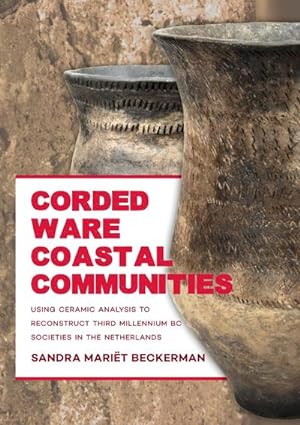
Taschenbuch. Condición: Neu. This item is printed on demand - it takes 3-4 days longer - Neuware -The Corded Ware Culture (c. 2900-2300 BC) is found in a large area, from Russia to the Netherlands and from Scandinavia to Switzerland. Supra-regional elements include beakers decorated with cord and/or spatula imprints, battle-axes…, and a funerary customs involving crouched inhumations under barrows with gender-specific placement of the body gender-specific funerary gifts. Analysis of ceramics from well-preserved settlements from the Dutch coastal zone have provided very valuable new information on the Corded Ware chronology, social organisation, ideology, subsistence, and use of material culture. A critical review of the commonly applied chronological models shows that many of the underlying premises cannot be supported due to problems with (broad calibration and sample reliability of) 14C dates. This study shows that in the Neolithic Dutch coastal zone, the thin-walled ceramics reflect supra-regional (Corded Ware ) affiliations, whereas the medium-thick-walled and thick-walled ceramics reflect persistent regional (Vlaardingen) traditions. The beakers decorated with cord and spatula impressions were used primarily for cooking; indications for the often proposed use of alcohol (and associated rise of individualisation and elites) were not found. It is argued in this study that the Corded Ware Culture represents an economic alliance, a dynamic totality as well as a network linking regional groups - each with a distinct economic base, material culture and ideology. These communities all participated in a vast supra-regional network that was a platform for inter-community exchanges of goods, skills, ideas and possibly people. Affiliation to this supra-regional network was a vital aspect for all regional groups involved, and membership to it was expressed by using a set of common traits. Decorated thin-walled beakers act as symbols of these supra-regional networks and thus embody both functional and ideological roles. 312 pp. Englisch.

- Tapa blanda
- Impresión bajo demanda
Librería: buchversandmimpf2000, Emtmannsberg, BAYE, Alemaniabuchversandmimpf2000
Contactar con el vendedorVendedor de 5 estrellasCondición: Nuevo
EUR 45,00
Envío por EUR 60,00Se envía de Alemania a Estados Unidos de AmericaCantidad disponible: 1 disponibles
Taschenbuch. Condición: Neu. This item is printed on demand - Print on Demand Titel. Neuware -The Corded Ware Culture (c. 2900¿2300 BC) is found in a large area, from Russia to the Netherlands and from Scandinavia to Switzerland. Supra-regional elements include beakers decorated with cord and/or spatula imprints, battle-axes, an…d a funerary customs involving crouched inhumations under barrows with gender-specific placement of the body gender-specific funerary gifts. Analysis of ceramics from well-preserved settlements from the Dutch coastal zone have provided very valuable new information on the Corded Ware chronology, social organisation, ideology, subsistence, and use of material culture. A critical review of the commonly applied chronological models shows that many of the underlying premises cannot be supported due to problems with (broad calibration and sample reliability of) 14C dates. This study shows that in the Neolithic Dutch coastal zone, the thin-walled ceramics reflect supra-regional (Corded Ware ) affiliations, whereas the medium-thick-walled and thick-walled ceramics reflect persistent regional (Vlaardingen) traditions. The beakers decorated with cord and spatula impressions were used primarily for cooking; indications for the often proposed use of alcohol (and associated rise of individualisation and elites) were not found. It is argued in this study that the Corded Ware Culture represents an economic alliance, a dynamic totality as well as a network linking regional groups ¿ each with a distinct economic base, material culture and ideology. These communities all participated in a vast supra-regional network that was a platform for inter-community exchanges of goods, skills, ideas and possibly people. Affiliation to this supra-regional network was a vital aspect for all regional groups involved, and membership to it was expressed by using a set of common traits. Decorated thin-walled beakers act as symbols of these supra-regional networks and thus embody both functional and ideological roles.Books on Demand GmbH, Überseering 33, 22297 Hamburg 312 pp. Englisch.
 Más imágenes
- Tapa blanda
- Impresión bajo demanda
Librería: preigu, Osnabrück, Alemaniapreigu
Contactar con el vendedorVendedor de 5 estrellasCondición: Nuevo
EUR 39,55
Envío por EUR 70,00Se envía de Alemania a Estados Unidos de AmericaCantidad disponible: 5 disponibles
Taschenbuch. Condición: Neu. Corded Ware Coastal Communities | Sandra Mariët Beckerman | Taschenbuch | Englisch | 2015 | Sidestone Press Dissertations | EAN 9789088903182 | Verantwortliche Person für die EU: preigu GmbH & Co. KG, Lengericher Landstr. 19, 49078 Osnabrück, mail[at]preigu[dot]de | Anbieter: preigu Print on Demand.

- Tapa dura
- Impresión bajo demanda
Librería: BuchWeltWeit Ludwig Meier e.K., Bergisch Gladbach, , AlemaniaBuchWeltWeit Ludwig Meier e.K.
Contactar con el vendedorVendedor de 5 estrellasCondición: Nuevo
EUR 135,00
Envío por EUR 23,00Se envía de Alemania a Estados Unidos de AmericaCantidad disponible: 1 disponibles
Buch. Condición: Neu. This item is printed on demand - it takes 3-4 days longer - Neuware -The Corded Ware Culture (c. 2900-2300 BC) is found in a large area, from Russia to the Netherlands and from Scandinavia to Switzerland. Supra-regional elements include beakers decorated with cord and/or spatula imprints, battle-axes, and a… funerary customs involving crouched inhumations under barrows with gender-specific placement of the body gender-specific funerary gifts.Analysis of ceramics from well-preserved settlements from the Dutch coastal zone have provided very valuable new information on the Corded Ware chronology, social organisation, ideology, subsistence, and use of material culture. A critical review of the commonly applied chronological models shows that many of the underlying premises cannot be supported due to problems with (broad calibration and sample reliability of) 14C dates. This study shows that in the Neolithic Dutch coastal zone, the thin-walled ceramics reflect supra-regional (Corded Ware ) affiliations, whereas the medium-thick-walled and thick-walled ceramics reflect persistent regional (Vlaardingen) traditions. The beakers decorated with cord and spatula impressions were used primarily for cooking; indications for the often proposed use of alcohol (and associated rise of individualisation and elites) were not found.It is argued in this study that the Corded Ware Culture represents an economic alliance, a dynamic totality as well as a network linking regional groups - each with a distinct economic base, material culture and ideology. These communities all participated in a vast supra-regional network that was a platform for inter-community exchanges of goods, skills, ideas and possibly people. Affiliation to this supra-regional network was a vital aspect for all regional groups involved, and membership to it was expressed by using a set of common traits. Decorated thin-walled beakers act as symbols of these supra-regional networks and thus embody both functional and ideological roles. 312 pp. Englisch.

- Tapa dura
- Impresión bajo demanda
Librería: preigu, Osnabrück, Alemaniapreigu
Contactar con el vendedorVendedor de 5 estrellasCondición: Nuevo
EUR 109,10
Envío por EUR 70,00Se envía de Alemania a Estados Unidos de AmericaCantidad disponible: 5 disponibles
Buch. Condición: Neu. Corded Ware Coastal Communities | Sandra Mariët Beckerman | Buch | 312 S. | Englisch | 2017 | Sidestone Press Dissertations | EAN 9789088903281 | Verantwortliche Person für die EU: BoD - Books on Demand, In de Tarpen 42, 22848 Norderstedt, info[at]bod[dot]de | Anbieter: preigu Print on Demand.

- Tapa dura
- Impresión bajo demanda
Librería: buchversandmimpf2000, Emtmannsberg, BAYE, Alemaniabuchversandmimpf2000
Contactar con el vendedorVendedor de 5 estrellasCondición: Nuevo
EUR 135,00
Envío por EUR 60,00Se envía de Alemania a Estados Unidos de AmericaCantidad disponible: 1 disponibles
Buch. Condición: Neu. This item is printed on demand - Print on Demand Titel. Neuware -The Corded Ware Culture (c. 2900¿2300 BC) is found in a large area, from Russia to the Netherlands and from Scandinavia to Switzerland. Supra-regional elements include beakers decorated with cord and/or spatula imprints, battle-axes, and a fun…erary customs involving crouched inhumations under barrows with gender-specific placement of the body gender-specific funerary gifts.Analysis of ceramics from well-preserved settlements from the Dutch coastal zone have provided very valuable new information on the Corded Ware chronology, social organisation, ideology, subsistence, and use of material culture. A critical review of the commonly applied chronological models shows that many of the underlying premises cannot be supported due to problems with (broad calibration and sample reliability of) 14C dates. This study shows that in the Neolithic Dutch coastal zone, the thin-walled ceramics reflect supra-regional (Corded Ware ) affiliations, whereas the medium-thick-walled and thick-walled ceramics reflect persistent regional (Vlaardingen) traditions. The beakers decorated with cord and spatula impressions were used primarily for cooking; indications for the often proposed use of alcohol (and associated rise of individualisation and elites) were not found.It is argued in this study that the Corded Ware Culture represents an economic alliance, a dynamic totality as well as a network linking regional groups ¿ each with a distinct economic base, material culture and ideology. These communities all participated in a vast supra-regional network that was a platform for inter-community exchanges of goods, skills, ideas and possibly people. Affiliation to this supra-regional network was a vital aspect for all regional groups involved, and membership to it was expressed by using a set of common traits. Decorated thin-walled beakers act as symbols of these supra-regional networks and thus embody both functional and ideological roles.Books on Demand GmbH, Überseering 33, 22297 Hamburg 312 pp. Englisch.

- Tapa dura
- Impresión bajo demanda
Librería: AHA-BUCH GmbH, Einbeck, AlemaniaAHA-BUCH GmbH
Contactar con el vendedorVendedor de 5 estrellasCondición: Nuevo
EUR 136,62
Envío por EUR 65,91Se envía de Alemania a Estados Unidos de AmericaCantidad disponible: 1 disponibles
Buch. Condición: Neu. nach der Bestellung gedruckt Neuware - Printed after ordering - The Corded Ware Culture (c. 2900-2300 BC) is found in a large area, from Russia to the Netherlands and from Scandinavia to Switzerland. Supra-regional elements include beakers decorated with cord and/or spatula imprints, battle-axes, and a fune…rary customs involving crouched inhumations under barrows with gender-specific placement of the body gender-specific funerary gifts.Analysis of ceramics from well-preserved settlements from the Dutch coastal zone have provided very valuable new information on the Corded Ware chronology, social organisation, ideology, subsistence, and use of material culture. A critical review of the commonly applied chronological models shows that many of the underlying premises cannot be supported due to problems with (broad calibration and sample reliability of) 14C dates. This study shows that in the Neolithic Dutch coastal zone, the thin-walled ceramics reflect supra-regional (Corded Ware ) affiliations, whereas the medium-thick-walled and thick-walled ceramics reflect persistent regional (Vlaardingen) traditions. The beakers decorated with cord and spatula impressions were used primarily for cooking; indications for the often proposed use of alcohol (and associated rise of individualisation and elites) were not found.It is argued in this study that the Corded Ware Culture represents an economic alliance, a dynamic totality as well as a network linking regional groups - each with a distinct economic base, material culture and ideology. These communities all participated in a vast supra-regional network that was a platform for inter-community exchanges of goods, skills, ideas and possibly people. Affiliation to this supra-regional network was a vital aspect for all regional groups involved, and membership to it was expressed by using a set of common traits. Decorated thin-walled beakers act as symbols of these supra-regional networks and thus embody both functional and ideological roles.


