
9781546783664 - the symbolism of freemasonry: illustrating and explaining its science and philosophy, its legends, myths and symbols de mackey m.d., albert g. (14 resultados)

- Tapa blanda
Librería: HPB Inc., Dallas, TX, Estados Unidos de AmericaHPB Inc.
Contactar con el vendedorVendedor de 5 estrellasCondición: Usado - Bueno
EUR 2,63
Envío por EUR 3,28Se envía dentro de Estados Unidos de AmericaCantidad disponible: 1 disponibles
paperback. Condición: Very Good. Connecting readers with great books since 1972! Used books may not include companion materials, and may have some shelf wear or limited writing. We ship orders daily and Customer Service is our top priority.
- Tapa blanda
Librería: HPB-Emerald, Dallas, TX, Estados Unidos de AmericaHPB-Emerald
Contactar con el vendedorVendedor de 5 estrellasCondición: Usado - Bueno
EUR 3,24
Envío por EUR 3,28Se envía dentro de Estados Unidos de AmericaCantidad disponible: 1 disponibles
paperback. Condición: Very Good. Connecting readers with great books since 1972! Used books may not include companion materials, and may have some shelf wear or limited writing. We ship orders daily and Customer Service is our top priority.

Idioma: Inglés
Editorial: CreateSpace Independent Publishing Platform, 2017
- Tapa blanda
Librería: GreatBookPrices, Columbia, MD, Estados Unidos de AmericaGreatBookPrices
Contactar con el vendedorVendedor de 5 estrellasCondición: Usado - Como Nuevo
EUR 9,88
Envío por EUR 2,31Se envía dentro de Estados Unidos de AmericaCantidad disponible: Más de 20 disponibles
Condición: As New. Unread book in perfect condition.
Idioma: Inglés
Editorial: CreateSpace Independent Publishing Platform, 2017
- Tapa blanda
Librería: GreatBookPrices, Columbia, MD, Estados Unidos de AmericaGreatBookPrices
Contactar con el vendedorVendedor de 5 estrellasCondición: Nuevo
EUR 10,23
Envío por EUR 2,31Se envía dentro de Estados Unidos de AmericaCantidad disponible: Más de 20 disponibles
Condición: New.

Idioma: Inglés
Editorial: Createspace Independent Publishing Platform, 2017
- Tapa blanda
Librería: Rarewaves USA, OSWEGO, IL, Estados Unidos de AmericaRarewaves USA
Contactar con el vendedorVendedor de 5 estrellasCondición: Nuevo
EUR 13,10
Gastos de envío gratisSe envía dentro de Estados Unidos de AmericaCantidad disponible: Más de 20 disponibles
Paperback. Condición: New.

Idioma: Inglés
Editorial: Createspace Independent Publishing Platform, 2017
- Tapa blanda
Librería: Rarewaves.com USA, London, LONDO, Reino UnidoRarewaves.com USA
Contactar con el vendedorVendedor de 5 estrellasCondición: Nuevo
EUR 18,00
Gastos de envío gratisSe envía de Reino Unido a Estados Unidos de AmericaCantidad disponible: Más de 20 disponibles
Paperback. Condición: New.
Idioma: Inglés
Editorial: CreateSpace Independent Publishing Platform, 2017
- Tapa blanda
Librería: GreatBookPricesUK, Woodford Green, Reino UnidoGreatBookPricesUK
Contactar con el vendedorVendedor de 5 estrellasCondición: Nuevo
EUR 14,63
Envío por EUR 17,59Se envía de Reino Unido a Estados Unidos de AmericaCantidad disponible: Más de 20 disponibles
Condición: New.
Idioma: Inglés
Editorial: CreateSpace Independent Publishing Platform, 2017
- Tapa blanda
Librería: GreatBookPricesUK, Woodford Green, Reino UnidoGreatBookPricesUK
Contactar con el vendedorVendedor de 5 estrellasCondición: Usado - Como Nuevo
EUR 16,55
Envío por EUR 17,59Se envía de Reino Unido a Estados Unidos de AmericaCantidad disponible: Más de 20 disponibles
Condición: As New. Unread book in perfect condition.
Idioma: Inglés
Editorial: CreateSpace Independent Publishing Platform, 2017
- Tapa blanda
- Impresión bajo demanda
Librería: California Books, Miami, FL, Estados Unidos de AmericaCalifornia Books
Contactar con el vendedorVendedor de 4 estrellasCondición: Nuevo
EUR 12,62
Gastos de envío gratisSe envía dentro de Estados Unidos de AmericaCantidad disponible: Más de 20 disponibles
Condición: New. Print on Demand.

Idioma: Inglés
Editorial: Createspace Independent Publishing Platform, 2017
- Tapa blanda
Librería: Rarewaves USA United, OSWEGO, IL, Estados Unidos de AmericaRarewaves USA United
Contactar con el vendedorVendedor de 5 estrellasCondición: Nuevo
EUR 14,65
Envío por EUR 43,77Se envía dentro de Estados Unidos de AmericaCantidad disponible: Más de 20 disponibles
Paperback. Condición: New.
Idioma: Inglés
Editorial: Createspace Independent Publishing Platform, 2017
- Tapa blanda
- Impresión bajo demanda
Librería: Grand Eagle Retail, Bensenville, IL, Estados Unidos de AmericaGrand Eagle Retail
Contactar con el vendedorVendedor de 5 estrellasCondición: Nuevo
EUR 13,91
Gastos de envío gratisSe envía dentro de Estados Unidos de AmericaCantidad disponible: 1 disponibles
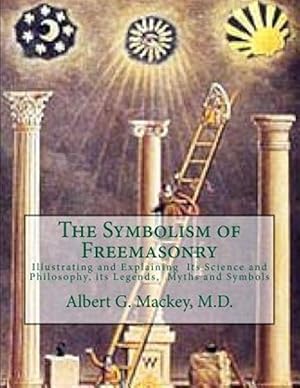
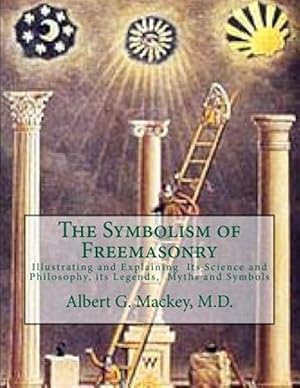
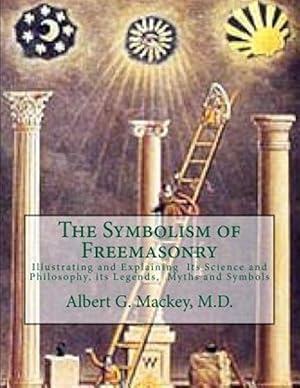
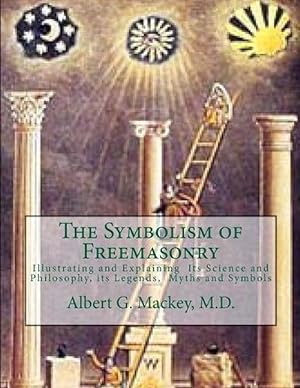
Paperback. Condición: new. Paperback. Of the various modes of communicating instruction to the uninformed, the Masonic student is particularly interested in two; namely, the instruction by legends and that by symbols. It is to these two, almost exclusively, that he is indebted for all that he knows, and for all that he can know,… of the philosophic system which is taught in the institution. All its mysteries and its dogmas, which constitute its philosophy, are entrusted for communication to the neophyte, sometimes to one, sometimes to the other of these two methods of instruction, and sometimes to both of them combined. The Freemason has no way of reaching any of the esoteric teachings of the Order except through the medium of a legend or a symbol. A legend differs from an historical narrative only in this-that it is without documentary evidence of authenticity. It is the offspring solely of tradition. Its details may be true in part or in whole. There may be no internal evidence to the contrary, or there may be internal evidence that they are altogether false. But neither the possibility of truth in the one case, nor the certainty of falsehood in the other, can remove the traditional narrative from the class of legends. It is a legend simply because it rests on no written foundation. It is oral, and therefore legendary. In grave problems of history, such as the establishment of empires, the discovery and settlement of countries, or the rise and fall of dynasties, the knowledge of the truth or falsity of the legendary narrative will be of importance, because the value of history is impaired by the imputation of doubt. But it is not so in Freemasonry. Here there need be no absolute question of the truth or falsity of the legend. The object of the Masonic legends is not to establish historical facts, but to convey philosophical doctrines. They are a method by which esoteric instruction is communicated, and the student accepts them with reference to nothing else except their positive use and meaning as developing Masonic dogmas. Take, for instance, the Hiramic legend of the third degree. Of what importance is it to the disciple of Masonry whether it be true or false? All that he wants to know is its internal signification; and when he learns that it is intended to illustrate the doctrine of the immortality of the soul, he is content with that interpretation, and he does not deem it necessary, except as a matter of curious or antiquarian inquiry, to investigate its historical accuracy, or to reconcile any of its apparent contradictions. So of the lost keystone; so of the second temple; so of the hidden ark: these are to him legendary narratives, which, like the casket, would be of no value were it not for the precious jewel contained within. Each of these legends is the expression of a philosophical idea. But there is another method of Masonic instruction, and that is by symbols. No science is more ancient than that of symbolism. At one time, nearly all the learning of the world was conveyed in symbols. And although modern philosophy now deals only in abstract propositions, Freemasonry still cleaves to the ancient method, and has preserved it in its primitive importance as a means of communicating knowledge. According to the derivation of the word from the Greek, "to symbolize" signifies "to compare one thing with another." Hence a symbol is the expression of an idea that has been derived from the comparison or contrast of some object with a moral conception or attribute. Thus we say that the plumb is a symbol of rectitude of conduct. The physical qualities of the plumb are here compared or contrasted with the moral conception of virtue, or rectitude. Then to the Speculative Mason it becomes, after he has been taught its symbolic meaning, the visible expression of the idea of moral uprightness. Albert G. mackey This item is printed on demand. Shipping may be from multiple locations in the US or from the UK, depending on stock availability.

Idioma: Inglés
Editorial: Createspace Independent Publishing Platform, 2017
- Tapa blanda
Librería: Rarewaves.com UK, London, Reino UnidoRarewaves.com UK
Contactar con el vendedorVendedor de 5 estrellasCondición: Nuevo
EUR 15,67
Envío por EUR 76,22Se envía de Reino Unido a Estados Unidos de AmericaCantidad disponible: Más de 20 disponibles
Paperback. Condición: New.
Idioma: Inglés
Editorial: Createspace Independent Publishing Platform, 2017
- Tapa blanda
- Impresión bajo demanda
Librería: THE SAINT BOOKSTORE, Southport, Reino UnidoTHE SAINT BOOKSTORE
Contactar con el vendedorVendedor de 5 estrellasCondición: Nuevo
EUR 16,91
Envío por EUR 17,98Se envía de Reino Unido a Estados Unidos de AmericaCantidad disponible: Más de 20 disponibles
Paperback. Condición: New. This item is printed on demand. New copy - Usually dispatched within 5-9 working days.
Idioma: Inglés
Editorial: Createspace Independent Publishing Platform, 2017
- Tapa blanda
- Impresión bajo demanda
Librería: CitiRetail, Stevenage, Reino UnidoCitiRetail
Contactar con el vendedorVendedor de 5 estrellasCondición: Nuevo
EUR 19,91
Envío por EUR 43,39Se envía de Reino Unido a Estados Unidos de AmericaCantidad disponible: 1 disponibles
Paperback. Condición: new. Paperback. Of the various modes of communicating instruction to the uninformed, the Masonic student is particularly interested in two; namely, the instruction by legends and that by symbols. It is to these two, almost exclusively, that he is indebted for all that he knows, and for all that he can know,… of the philosophic system which is taught in the institution. All its mysteries and its dogmas, which constitute its philosophy, are entrusted for communication to the neophyte, sometimes to one, sometimes to the other of these two methods of instruction, and sometimes to both of them combined. The Freemason has no way of reaching any of the esoteric teachings of the Order except through the medium of a legend or a symbol. A legend differs from an historical narrative only in this-that it is without documentary evidence of authenticity. It is the offspring solely of tradition. Its details may be true in part or in whole. There may be no internal evidence to the contrary, or there may be internal evidence that they are altogether false. But neither the possibility of truth in the one case, nor the certainty of falsehood in the other, can remove the traditional narrative from the class of legends. It is a legend simply because it rests on no written foundation. It is oral, and therefore legendary. In grave problems of history, such as the establishment of empires, the discovery and settlement of countries, or the rise and fall of dynasties, the knowledge of the truth or falsity of the legendary narrative will be of importance, because the value of history is impaired by the imputation of doubt. But it is not so in Freemasonry. Here there need be no absolute question of the truth or falsity of the legend. The object of the Masonic legends is not to establish historical facts, but to convey philosophical doctrines. They are a method by which esoteric instruction is communicated, and the student accepts them with reference to nothing else except their positive use and meaning as developing Masonic dogmas. Take, for instance, the Hiramic legend of the third degree. Of what importance is it to the disciple of Masonry whether it be true or false? All that he wants to know is its internal signification; and when he learns that it is intended to illustrate the doctrine of the immortality of the soul, he is content with that interpretation, and he does not deem it necessary, except as a matter of curious or antiquarian inquiry, to investigate its historical accuracy, or to reconcile any of its apparent contradictions. So of the lost keystone; so of the second temple; so of the hidden ark: these are to him legendary narratives, which, like the casket, would be of no value were it not for the precious jewel contained within. Each of these legends is the expression of a philosophical idea. But there is another method of Masonic instruction, and that is by symbols. No science is more ancient than that of symbolism. At one time, nearly all the learning of the world was conveyed in symbols. And although modern philosophy now deals only in abstract propositions, Freemasonry still cleaves to the ancient method, and has preserved it in its primitive importance as a means of communicating knowledge. According to the derivation of the word from the Greek, "to symbolize" signifies "to compare one thing with another." Hence a symbol is the expression of an idea that has been derived from the comparison or contrast of some object with a moral conception or attribute. Thus we say that the plumb is a symbol of rectitude of conduct. The physical qualities of the plumb are here compared or contrasted with the moral conception of virtue, or rectitude. Then to the Speculative Mason it becomes, after he has been taught its symbolic meaning, the visible expression of the idea of moral uprightness. Albert G. mackey This item is printed on demand. Shipping may be from our UK warehouse or from our Australian or US warehouses, depending on stock availability.


