

Importe total (1 artículo artículos):
Destino del pedido:

9781472143594 - Ten Things Video Games Can Teach Us: (about life, philosophy and everything) de Webber, Jordan Erica; Griliopoulos, Daniel (31 resultados)
Ir a los resultados principales
Filtros de búsqueda
Tipo de artículo
- Todos los tipos de productos
- Libros (31)
- Revistas y publicaciones (No hay ningún otro resultado que coincida con este filtro.)
- Cómics (No hay ningún otro resultado que coincida con este filtro.)
- Partituras (No hay ningún otro resultado que coincida con este filtro.)
- Arte, grabados y pósters (No hay ningún otro resultado que coincida con este filtro.)
- Fotografías (No hay ningún otro resultado que coincida con este filtro.)
- Mapas (No hay ningún otro resultado que coincida con este filtro.)
- Manuscritos y coleccionismo de papel (No hay ningún otro resultado que coincida con este filtro.)
Condición Más información
- Nuevo (26)
- Como nuevo, Excelente o Muy bueno (2)
- Bueno o Aceptable (2)
- Regular o Pobre (1)
- Tal como se indica (No hay ningún otro resultado que coincida con este filtro.)
Encuadernación
- Todas
- Tapa dura (No hay ningún otro resultado que coincida con este filtro.)
- Tapa blanda (31)
Más atributos
- Primera edición (No hay ningún otro resultado que coincida con este filtro.)
- Firmado (No hay ningún otro resultado que coincida con este filtro.)
- Sobrecubierta (No hay ningún otro resultado que coincida con este filtro.)
- Con imágenes (15)
- No impresión bajo demanda (30)
Idioma (1)
Gastos de envío gratis
Ubicación del vendedor
Valoración de los vendedores
-

Ten Things Video Games Can Teach Us: (about life, philosophy and everything)
Librería: clickgoodwillbooks, Indianapolis, IN, Estados Unidos de America
Calificación del vendedor: 5 de 5 estrellas

EUR 7,51
Envío por EUR 3,49
Se envía dentro de Estados Unidos de AmericaCantidad disponible: 1 disponibles
Añadir al carritoCondición: acceptable. Used - Acceptable: All pages and the cover are intact, but shrink wrap, dust covers, or boxed set case may be missing. Pages may include limited notes, highlighting, or minor water damage but the text is readable. Item may be missing bundled media.
-
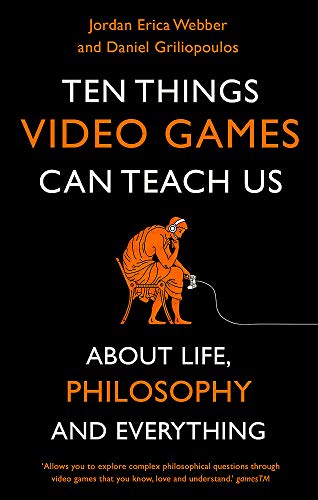
Ten Things Video Games Can Teach Us
Librería: Bookoutlet1, Easley, SC, Estados Unidos de America
Calificación del vendedor: 5 de 5 estrellas
EUR 8,39
Envío por EUR 3,49
Se envía dentro de Estados Unidos de AmericaCantidad disponible: 18 disponibles
Añadir al carritoCondición: Very Good. Great shape! Has a publisher remainder mark. paperback Used - Very Good 2019.
-
Ten Things Video Games Can Teach Us: (about life, philosophy and everything)
Librería: WorldofBooks, Goring-By-Sea, WS, Reino Unido
Calificación del vendedor: 5 de 5 estrellas
EUR 8,98
Envío por EUR 6,58
Se envía de Reino Unido a Estados Unidos de AmericaCantidad disponible: 3 disponibles
Añadir al carritoPaperback. Condición: Very Good. The book has been read, but is in excellent condition. Pages are intact and not marred by notes or highlighting. The spine remains undamaged.
-

Ten Things Video Games Can Teach Us
Librería: GreatBookPrices, Columbia, MD, Estados Unidos de America
Calificación del vendedor: 5 de 5 estrellas
EUR 14,47
Envío por EUR 2,31
Se envía dentro de Estados Unidos de AmericaCantidad disponible: 1 disponibles
Añadir al carritoCondición: As New. Unread book in perfect condition.
-

Ten Things Video Games Can Teach Us
Librería: GreatBookPrices, Columbia, MD, Estados Unidos de America
Calificación del vendedor: 5 de 5 estrellas
EUR 14,83
Envío por EUR 2,31
Se envía dentro de Estados Unidos de AmericaCantidad disponible: 1 disponibles
Añadir al carritoCondición: New.
-

Ten Things Video Games Can Teach Us
Idioma: Inglés
Publicado por Little, Brown Book Group, GB, 2019
ISBN 10: 1472143590 ISBN 13: 9781472143594
Librería: Rarewaves.com USA, London, LONDO, Reino Unido
Calificación del vendedor: 5 de 5 estrellas
EUR 17,21
Gastos de envío gratis
Se envía de Reino Unido a Estados Unidos de AmericaCantidad disponible: 5 disponibles
Añadir al carritoPaperback. Condición: New. WOULD YOU KILL ONE PERSON TO SAVE FIVE OTHERS?If you could upload all of your memories into a machine, would that machine be you? Is it possible we're all already artificial intelligences, living inside a simulation?These sound like questions from a philosophy class, but in fact they're from modern, popular video games. Philosophical discussion often uses thought experiments to consider ideas that we can't test in real life, and media like books, films, and games can make these thought experiments far more accessible to a non-academic audience. Thanks to their interactive nature, video games can be especially effective ways to explore these ideas.Each chapter of this book introduces a philosophical topic through discussion of relevant video games, with interviews with game creators and expert philosophers. In ten chapters, this book demonstrates how video games can help us to consider the following questions:1. Why do video games make for good thought experiments? (From the ethical dilemmas of the Mass Effect series to 'philosophy games'.)2. What can we actually know? (From why Phoenix Wright is right for the wrong reasons to whether No Man's Sky is a lie.)3. Is virtual reality a kind of reality? (On whether VR headsets like the Oculus Rift, PlayStation VR, and HTC Vive deal in mass-market hallucination.)4. What constitutes a mind? (From the souls of Beyond: Two Souls to the synths of Fallout 4.)5. What can you lose before you're no longer yourself? (Identity crises in the likes of The Swapper and BioShock Infinite.)6. Does it mean anything to say we have choice? (Determinism and free will in Bioshock, Portal 2 and Deus Ex.)7. What does it mean to be a good or dutiful person? (Virtue ethics in the Ultima series and duty ethics in Planescape: Torment.)8. Is there anything better in life than to be happy? (Utilitarianism in Bioshock 2 and Harvest Moon.)10. How should we be governed, for whom and by who? (Government and rights in Eve Online, Crusader Kings, Democracy 3 and Fable 3.)11. Is it ever right to take another life? And how do we cope with our own death? (The Harm Thesis and the good death in To The Moon and Lost Odyssey.).
-

Ten Things Video Games Can Teach Us
Idioma: Inglés
Publicado por Little, Brown Book Group, GB, 2019
ISBN 10: 1472143590 ISBN 13: 9781472143594
Librería: Rarewaves USA, OSWEGO, IL, Estados Unidos de America
Calificación del vendedor: 5 de 5 estrellas
EUR 17,89
Gastos de envío gratis
Se envía dentro de Estados Unidos de AmericaCantidad disponible: 1 disponibles
Añadir al carritoPaperback. Condición: New. WOULD YOU KILL ONE PERSON TO SAVE FIVE OTHERS?If you could upload all of your memories into a machine, would that machine be you? Is it possible we're all already artificial intelligences, living inside a simulation?These sound like questions from a philosophy class, but in fact they're from modern, popular video games. Philosophical discussion often uses thought experiments to consider ideas that we can't test in real life, and media like books, films, and games can make these thought experiments far more accessible to a non-academic audience. Thanks to their interactive nature, video games can be especially effective ways to explore these ideas.Each chapter of this book introduces a philosophical topic through discussion of relevant video games, with interviews with game creators and expert philosophers. In ten chapters, this book demonstrates how video games can help us to consider the following questions:1. Why do video games make for good thought experiments? (From the ethical dilemmas of the Mass Effect series to 'philosophy games'.)2. What can we actually know? (From why Phoenix Wright is right for the wrong reasons to whether No Man's Sky is a lie.)3. Is virtual reality a kind of reality? (On whether VR headsets like the Oculus Rift, PlayStation VR, and HTC Vive deal in mass-market hallucination.)4. What constitutes a mind? (From the souls of Beyond: Two Souls to the synths of Fallout 4.)5. What can you lose before you're no longer yourself? (Identity crises in the likes of The Swapper and BioShock Infinite.)6. Does it mean anything to say we have choice? (Determinism and free will in Bioshock, Portal 2 and Deus Ex.)7. What does it mean to be a good or dutiful person? (Virtue ethics in the Ultima series and duty ethics in Planescape: Torment.)8. Is there anything better in life than to be happy? (Utilitarianism in Bioshock 2 and Harvest Moon.)10. How should we be governed, for whom and by who? (Government and rights in Eve Online, Crusader Kings, Democracy 3 and Fable 3.)11. Is it ever right to take another life? And how do we cope with our own death? (The Harm Thesis and the good death in To The Moon and Lost Odyssey.).
-

Ten Things Video Games Can Teach Us (Paperback)
Idioma: Inglés
Publicado por Little, Brown Book Group, London, 2019
ISBN 10: 1472143590 ISBN 13: 9781472143594
Librería: Grand Eagle Retail, Bensenville, IL, Estados Unidos de America
Calificación del vendedor: 5 de 5 estrellas
EUR 19,23
Gastos de envío gratis
Se envía dentro de Estados Unidos de AmericaCantidad disponible: 1 disponibles
Añadir al carritoPaperback. Condición: new. Paperback. WOULD YOU KILL ONE PERSON TO SAVE FIVE OTHERS? If you could upload all of your memories into a machine, would that machine be you? Is it possible we're all already artificial intelligences, living inside a simulation? These sound like questions from a philosophy class, but in fact they're from modern, popular video games. Philosophical discussion often uses thought experiments to consider ideas that we can't test in real life, and media like books, films, and games can make these thought experiments far more accessible to a non-academic audience. Thanks to their interactive nature, video games can be especially effective ways to explore these ideas. Each chapter of this book introduces a philosophical topic through discussion of relevant video games, with interviews with game creators and expert philosophers. In ten chapters, this book demonstrates how video games can help us to consider the following questions: 1. Why do video games make for good thought experiments? (From the ethical dilemmas of the Mass Effect series to 'philosophy games'.)2. What can we actually know? (From why Phoenix Wright is right for the wrong reasons to whether No Man's Sky is a lie.)3. Is virtual reality a kind of reality? (On whether VR headsets like the Oculus Rift, PlayStation VR, and HTC Vive deal in mass-market hallucination.)4. What constitutes a mind? (From the souls of Beyond: Two Souls to the synths of Fallout 4.)5. What can you lose before you're no longer yourself? (Identity crises in the likes of The Swapper and BioShock Infinite.)6. Does it mean anything to say we have choice? (Determinism and free will in Bioshock, Portal 2 and Deus Ex.)7. What does it mean to be a good or dutiful person? (Virtue ethics in the Ultima series and duty ethics in Planescape: Torment.)8. Is there anything better in life than to be happy? (Utilitarianism in Bioshock 2 and Harvest Moon.)10. How should we be governed, for whom and by who? (Government and rights in Eve Online, Crusader Kings, Democracy 3 and Fable 3.)11. Is it ever right to take another life? And how do we cope with our own death? (The Harm Thesis and the good death in To The Moon and Lost Odyssey.) An accessible introduction to the most important philosophical ideas through the lens of modern video games. Shipping may be from multiple locations in the US or from the UK, depending on stock availability.
-
Ten Things Video Games Can Teach Us
Idioma: Inglés
Publicado por Little, Brown Book Group, 2019
ISBN 10: 1472143590 ISBN 13: 9781472143594
Librería: PBShop.store UK, Fairford, GLOS, Reino Unido
Calificación del vendedor: 5 de 5 estrellas
EUR 15,98
Envío por EUR 4,89
Se envía de Reino Unido a Estados Unidos de AmericaCantidad disponible: 2 disponibles
Añadir al carritoPAP. Condición: New. New Book. Shipped from UK. Established seller since 2000.
-
Ten Things Video Games Can Teach Us: (about life, philosophy and everything)
Librería: Majestic Books, Hounslow, Reino Unido
Calificación del vendedor: 4 de 5 estrellas

EUR 14,78
Envío por EUR 7,64
Se envía de Reino Unido a Estados Unidos de AmericaCantidad disponible: 1 disponibles
Añadir al carritoCondición: New. pp. 384.
-
Ten Things Video Games Can Teach Us: (about life, philosophy and everything)
Librería: Books Puddle, New York, NY, Estados Unidos de America
Calificación del vendedor: 4 de 5 estrellas
EUR 19,75
Envío por EUR 3,49
Se envía dentro de Estados Unidos de AmericaCantidad disponible: 1 disponibles
Añadir al carritoCondición: New. pp. 384.
-
Ten Things Video Games Can Teach Us
Librería: Brook Bookstore On Demand, Napoli, NA, Italia
Calificación del vendedor: 5 de 5 estrellas
EUR 15,27
Envío por EUR 11,00
Se envía de Italia a Estados Unidos de AmericaCantidad disponible: 5 disponibles
Añadir al carritoCondición: new.
-
Ten Things Video Games Can Teach Us: (about life, philosophy and everything)
Idioma: Inglés
Publicado por Little, Brown Book Group, 2019
ISBN 10: 1472143590 ISBN 13: 9781472143594
Librería: Kennys Bookshop and Art Galleries Ltd., Galway, GY, Irlanda
Calificación del vendedor: 5 de 5 estrellas
EUR 15,82
Envío por EUR 10,50
Se envía de Irlanda a Estados Unidos de AmericaCantidad disponible: 10 disponibles
Añadir al carritoCondición: New. 2019. Paperback. . . . . .
-
Ten Things Video Games Can Teach Us: (about life, philosophy and everything)
Idioma: Inglés
Publicado por Little, Brown Book Group, 2019
ISBN 10: 1472143590 ISBN 13: 9781472143594
Librería: Kennys Bookstore, Olney, MD, Estados Unidos de America
Calificación del vendedor: 5 de 5 estrellas
EUR 19,08
Envío por EUR 9,18
Se envía dentro de Estados Unidos de AmericaCantidad disponible: 10 disponibles
Añadir al carritoCondición: New. 2019. Paperback. . . . . . Books ship from the US and Ireland.
-
Ten Things Video Games Can Teach Us: (about life, philosophy and everything)
Librería: Chiron Media, Wallingford, Reino Unido
Calificación del vendedor: 5 de 5 estrellas
EUR 12,17
Envío por EUR 18,21
Se envía de Reino Unido a Estados Unidos de AmericaCantidad disponible: 2 disponibles
Añadir al carritopaperback. Condición: New.
-
Ten Things Video Games Can Teach Us: (about life, philosophy and everything)
Idioma: Inglés
Publicado por Little, Brown Book Group, 2019
ISBN 10: 1472143590 ISBN 13: 9781472143594
Librería: THE SAINT BOOKSTORE, Southport, Reino Unido
Calificación del vendedor: 5 de 5 estrellas
EUR 14,66
Envío por EUR 16,31
Se envía de Reino Unido a Estados Unidos de AmericaCantidad disponible: Más de 20 disponibles
Añadir al carritoPaperback / softback. Condición: New. New copy - Usually dispatched within 4 working days.
-
Ten Things Video Games Can Teach Us
Librería: Ria Christie Collections, Uxbridge, Reino Unido
Calificación del vendedor: 5 de 5 estrellas
EUR 16,80
Envío por EUR 14,09
Se envía de Reino Unido a Estados Unidos de AmericaCantidad disponible: Más de 20 disponibles
Añadir al carritoCondición: New. In.
-
Ten Things Video Games Can Teach Us: (about life, philosophy and everything)
Librería: Chiron Media, Wallingford, Reino Unido
Calificación del vendedor: 5 de 5 estrellas
EUR 13,00
Envío por EUR 18,21
Se envía de Reino Unido a Estados Unidos de AmericaCantidad disponible: 10 disponibles
Añadir al carritoPaperback. Condición: New.
-

Ten Things Video Games Can Teach Us
Librería: GreatBookPricesUK, Woodford Green, Reino Unido
Calificación del vendedor: 5 de 5 estrellas
EUR 14,82
Envío por EUR 17,64
Se envía de Reino Unido a Estados Unidos de AmericaCantidad disponible: 1 disponibles
Añadir al carritoCondición: New.
-
Ten Things Video Games Can Teach Us: (about life, philosophy and everything)
Librería: Biblios, Frankfurt am main, HESSE, Alemania
Calificación del vendedor: 4 de 5 estrellas
EUR 22,47
Envío por EUR 9,95
Se envía de Alemania a Estados Unidos de AmericaCantidad disponible: 3 disponibles
Añadir al carritoCondición: New. pp. 384.
-

Ten Things Video Games Can Teach Us
Librería: GreatBookPricesUK, Woodford Green, Reino Unido
Calificación del vendedor: 5 de 5 estrellas
EUR 17,75
Envío por EUR 17,64
Se envía de Reino Unido a Estados Unidos de AmericaCantidad disponible: 1 disponibles
Añadir al carritoCondición: As New. Unread book in perfect condition.
-
Ten Things Video Games Can Teach Us: (about life, philosophy and everything)
Librería: Revaluation Books, Exeter, Reino Unido
Calificación del vendedor: 5 de 5 estrellas
EUR 40,42
Envío por EUR 11,76
Se envía de Reino Unido a Estados Unidos de AmericaCantidad disponible: 2 disponibles
Añadir al carritoPaperback. Condición: Brand New. 364 pages. 7.75x5.00x1.00 inches. In Stock.
-

Ten Things Video Games Can Teach Us (Paperback)
Idioma: Inglés
Publicado por Little, Brown Book Group, London, 2019
ISBN 10: 1472143590 ISBN 13: 9781472143594
Librería: AussieBookSeller, Truganina, VIC, Australia
Calificación del vendedor: 5 de 5 estrellas
EUR 22,47
Envío por EUR 32,34
Se envía de Australia a Estados Unidos de AmericaCantidad disponible: 1 disponibles
Añadir al carritoPaperback. Condición: new. Paperback. WOULD YOU KILL ONE PERSON TO SAVE FIVE OTHERS? If you could upload all of your memories into a machine, would that machine be you? Is it possible we're all already artificial intelligences, living inside a simulation? These sound like questions from a philosophy class, but in fact they're from modern, popular video games. Philosophical discussion often uses thought experiments to consider ideas that we can't test in real life, and media like books, films, and games can make these thought experiments far more accessible to a non-academic audience. Thanks to their interactive nature, video games can be especially effective ways to explore these ideas. Each chapter of this book introduces a philosophical topic through discussion of relevant video games, with interviews with game creators and expert philosophers. In ten chapters, this book demonstrates how video games can help us to consider the following questions: 1. Why do video games make for good thought experiments? (From the ethical dilemmas of the Mass Effect series to 'philosophy games'.)2. What can we actually know? (From why Phoenix Wright is right for the wrong reasons to whether No Man's Sky is a lie.)3. Is virtual reality a kind of reality? (On whether VR headsets like the Oculus Rift, PlayStation VR, and HTC Vive deal in mass-market hallucination.)4. What constitutes a mind? (From the souls of Beyond: Two Souls to the synths of Fallout 4.)5. What can you lose before you're no longer yourself? (Identity crises in the likes of The Swapper and BioShock Infinite.)6. Does it mean anything to say we have choice? (Determinism and free will in Bioshock, Portal 2 and Deus Ex.)7. What does it mean to be a good or dutiful person? (Virtue ethics in the Ultima series and duty ethics in Planescape: Torment.)8. Is there anything better in life than to be happy? (Utilitarianism in Bioshock 2 and Harvest Moon.)10. How should we be governed, for whom and by who? (Government and rights in Eve Online, Crusader Kings, Democracy 3 and Fable 3.)11. Is it ever right to take another life? And how do we cope with our own death? (The Harm Thesis and the good death in To The Moon and Lost Odyssey.) An accessible introduction to the most important philosophical ideas through the lens of modern video games. Shipping may be from our Sydney, NSW warehouse or from our UK or US warehouse, depending on stock availability.
-

Ten Things Video Games Can Teach Us (Paperback)
Idioma: Inglés
Publicado por Little, Brown Book Group, London, 2019
ISBN 10: 1472143590 ISBN 13: 9781472143594
Librería: CitiRetail, Stevenage, Reino Unido
Calificación del vendedor: 5 de 5 estrellas
EUR 16,33
Envío por EUR 43,51
Se envía de Reino Unido a Estados Unidos de AmericaCantidad disponible: 1 disponibles
Añadir al carritoPaperback. Condición: new. Paperback. WOULD YOU KILL ONE PERSON TO SAVE FIVE OTHERS? If you could upload all of your memories into a machine, would that machine be you? Is it possible we're all already artificial intelligences, living inside a simulation? These sound like questions from a philosophy class, but in fact they're from modern, popular video games. Philosophical discussion often uses thought experiments to consider ideas that we can't test in real life, and media like books, films, and games can make these thought experiments far more accessible to a non-academic audience. Thanks to their interactive nature, video games can be especially effective ways to explore these ideas. Each chapter of this book introduces a philosophical topic through discussion of relevant video games, with interviews with game creators and expert philosophers. In ten chapters, this book demonstrates how video games can help us to consider the following questions: 1. Why do video games make for good thought experiments? (From the ethical dilemmas of the Mass Effect series to 'philosophy games'.)2. What can we actually know? (From why Phoenix Wright is right for the wrong reasons to whether No Man's Sky is a lie.)3. Is virtual reality a kind of reality? (On whether VR headsets like the Oculus Rift, PlayStation VR, and HTC Vive deal in mass-market hallucination.)4. What constitutes a mind? (From the souls of Beyond: Two Souls to the synths of Fallout 4.)5. What can you lose before you're no longer yourself? (Identity crises in the likes of The Swapper and BioShock Infinite.)6. Does it mean anything to say we have choice? (Determinism and free will in Bioshock, Portal 2 and Deus Ex.)7. What does it mean to be a good or dutiful person? (Virtue ethics in the Ultima series and duty ethics in Planescape: Torment.)8. Is there anything better in life than to be happy? (Utilitarianism in Bioshock 2 and Harvest Moon.)10. How should we be governed, for whom and by who? (Government and rights in Eve Online, Crusader Kings, Democracy 3 and Fable 3.)11. Is it ever right to take another life? And how do we cope with our own death? (The Harm Thesis and the good death in To The Moon and Lost Odyssey.) An accessible introduction to the most important philosophical ideas through the lens of modern video games. Shipping may be from our UK warehouse or from our Australian or US warehouses, depending on stock availability.
-
TEN THINGS VIDEO GAMES CAN TEACH US
Librería: Speedyhen, Hertfordshire, Reino Unido
Calificación del vendedor: 5 de 5 estrellas
EUR 14,67
Envío por EUR 48,21
Se envía de Reino Unido a Estados Unidos de AmericaCantidad disponible: 2 disponibles
Añadir al carritoCondición: NEW.
-

Ten Things Video Games Can Teach Us
Idioma: Inglés
Publicado por Little, Brown Book Group, GB, 2019
ISBN 10: 1472143590 ISBN 13: 9781472143594
Librería: Rarewaves USA United, OSWEGO, IL, Estados Unidos de America
Calificación del vendedor: 5 de 5 estrellas
EUR 19,46
Envío por EUR 43,71
Se envía dentro de Estados Unidos de AmericaCantidad disponible: 1 disponibles
Añadir al carritoPaperback. Condición: New. WOULD YOU KILL ONE PERSON TO SAVE FIVE OTHERS?If you could upload all of your memories into a machine, would that machine be you? Is it possible we're all already artificial intelligences, living inside a simulation?These sound like questions from a philosophy class, but in fact they're from modern, popular video games. Philosophical discussion often uses thought experiments to consider ideas that we can't test in real life, and media like books, films, and games can make these thought experiments far more accessible to a non-academic audience. Thanks to their interactive nature, video games can be especially effective ways to explore these ideas.Each chapter of this book introduces a philosophical topic through discussion of relevant video games, with interviews with game creators and expert philosophers. In ten chapters, this book demonstrates how video games can help us to consider the following questions:1. Why do video games make for good thought experiments? (From the ethical dilemmas of the Mass Effect series to 'philosophy games'.)2. What can we actually know? (From why Phoenix Wright is right for the wrong reasons to whether No Man's Sky is a lie.)3. Is virtual reality a kind of reality? (On whether VR headsets like the Oculus Rift, PlayStation VR, and HTC Vive deal in mass-market hallucination.)4. What constitutes a mind? (From the souls of Beyond: Two Souls to the synths of Fallout 4.)5. What can you lose before you're no longer yourself? (Identity crises in the likes of The Swapper and BioShock Infinite.)6. Does it mean anything to say we have choice? (Determinism and free will in Bioshock, Portal 2 and Deus Ex.)7. What does it mean to be a good or dutiful person? (Virtue ethics in the Ultima series and duty ethics in Planescape: Torment.)8. Is there anything better in life than to be happy? (Utilitarianism in Bioshock 2 and Harvest Moon.)10. How should we be governed, for whom and by who? (Government and rights in Eve Online, Crusader Kings, Democracy 3 and Fable 3.)11. Is it ever right to take another life? And how do we cope with our own death? (The Harm Thesis and the good death in To The Moon and Lost Odyssey.).
-

Ten Things Video Games Can Teach Us: (about Life, Philosophy and Everything)
Idioma: Inglés
Publicado por Little, Brown Book Group, 2019
ISBN 10: 1472143590 ISBN 13: 9781472143594
Librería: moluna, Greven, Alemania
Calificación del vendedor: 5 de 5 estrellas
EUR 19,17
Envío por EUR 48,99
Se envía de Alemania a Estados Unidos de AmericaCantidad disponible: 2 disponibles
Añadir al carritoKartoniert / Broschiert. Condición: New. An accessible introduction to the most important philosophical ideas through the lens of modern video games.Über den AutorJordan Erica Webber (Author) Jordan Erica Webber is a freelance writer and speaker who special.
-

Ten Things Video Games Can Teach Us : (About Life, Philosophy and Everything)
Idioma: Inglés
Publicado por Little, Brown Book Group Feb 2020, 2020
ISBN 10: 1472143590 ISBN 13: 9781472143594
Librería: AHA-BUCH GmbH, Einbeck, Alemania
Calificación del vendedor: 5 de 5 estrellas
EUR 17,00
Envío por EUR 61,34
Se envía de Alemania a Estados Unidos de AmericaCantidad disponible: 1 disponibles
Añadir al carritoTaschenbuch. Condición: Neu. Neuware - WOULD YOU KILL ONE PERSON TO SAVE FIVE OTHERS If you could upload all of your memories into a machine, would that machine be you Is it possible we're all already artificial intelligences, living inside a simulation What can you lose before you're no longer yourself These sound like philosophical questions, but they're actually posed by popular, modern video games. Philosophy often uses thought experiments to consider ideas that we can't test in real life, and books, films and games can make these thought experiments far more accessible. Given their interactive nature, video games can be especially effective ways to explore these ideas.Drawing on interviews with both game creators and professional philosophers, this book explores ten key philosophical questions - such as, 'What can we actually know ' and 'What does it mean to be a good or dutiful person ' -- through discussion of relevant video games, from BioShock to Ultima.
-

Ten Things Video Games Can Teach Us
Idioma: Inglés
Publicado por Little, Brown Book Group, GB, 2019
ISBN 10: 1472143590 ISBN 13: 9781472143594
Librería: Rarewaves.com UK, London, Reino Unido
Calificación del vendedor: 5 de 5 estrellas
EUR 14,65
Envío por EUR 76,43
Se envía de Reino Unido a Estados Unidos de AmericaCantidad disponible: 5 disponibles
Añadir al carritoPaperback. Condición: New. WOULD YOU KILL ONE PERSON TO SAVE FIVE OTHERS?If you could upload all of your memories into a machine, would that machine be you? Is it possible we're all already artificial intelligences, living inside a simulation?These sound like questions from a philosophy class, but in fact they're from modern, popular video games. Philosophical discussion often uses thought experiments to consider ideas that we can't test in real life, and media like books, films, and games can make these thought experiments far more accessible to a non-academic audience. Thanks to their interactive nature, video games can be especially effective ways to explore these ideas.Each chapter of this book introduces a philosophical topic through discussion of relevant video games, with interviews with game creators and expert philosophers. In ten chapters, this book demonstrates how video games can help us to consider the following questions:1. Why do video games make for good thought experiments? (From the ethical dilemmas of the Mass Effect series to 'philosophy games'.)2. What can we actually know? (From why Phoenix Wright is right for the wrong reasons to whether No Man's Sky is a lie.)3. Is virtual reality a kind of reality? (On whether VR headsets like the Oculus Rift, PlayStation VR, and HTC Vive deal in mass-market hallucination.)4. What constitutes a mind? (From the souls of Beyond: Two Souls to the synths of Fallout 4.)5. What can you lose before you're no longer yourself? (Identity crises in the likes of The Swapper and BioShock Infinite.)6. Does it mean anything to say we have choice? (Determinism and free will in Bioshock, Portal 2 and Deus Ex.)7. What does it mean to be a good or dutiful person? (Virtue ethics in the Ultima series and duty ethics in Planescape: Torment.)8. Is there anything better in life than to be happy? (Utilitarianism in Bioshock 2 and Harvest Moon.)10. How should we be governed, for whom and by who? (Government and rights in Eve Online, Crusader Kings, Democracy 3 and Fable 3.)11. Is it ever right to take another life? And how do we cope with our own death? (The Harm Thesis and the good death in To The Moon and Lost Odyssey.).
-

Ten Things Video Games Can Teach Us | (about life, philosophy and everything)
Idioma: Inglés
Publicado por Little, Brown Book Group, 2019
ISBN 10: 1472143590 ISBN 13: 9781472143594
Librería: preigu, Osnabrück, Alemania
Calificación del vendedor: 5 de 5 estrellas
EUR 21,00
Envío por EUR 70,00
Se envía de Alemania a Estados Unidos de AmericaCantidad disponible: 1 disponibles
Añadir al carritoTaschenbuch. Condición: Neu. Ten Things Video Games Can Teach Us | (about life, philosophy and everything) | Daniel Griliopoulos (u. a.) | Taschenbuch | Kartoniert / Broschiert | Englisch | 2019 | Little, Brown Book Group | EAN 9781472143594 | Verantwortliche Person für die EU: Libri GmbH, Europaallee 1, 36244 Bad Hersfeld, gpsr[at]libri[dot]de | Anbieter: preigu.

