

Importe total (1 artículo artículos):
Destino del pedido:

9781399010382 - The Role of Intelligence in the Battle of Britain de Ridley, Norman (24 resultados)
Ir a los resultados principales
Filtros de búsqueda
Tipo de artículo
- Todos los tipos de productos
- Libros (24)
- Revistas y publicaciones (No hay ningún otro resultado que coincida con este filtro.)
- Cómics (No hay ningún otro resultado que coincida con este filtro.)
- Partituras (No hay ningún otro resultado que coincida con este filtro.)
- Arte, grabados y pósters (No hay ningún otro resultado que coincida con este filtro.)
- Fotografías (No hay ningún otro resultado que coincida con este filtro.)
- Mapas (No hay ningún otro resultado que coincida con este filtro.)
- Manuscritos y coleccionismo de papel (No hay ningún otro resultado que coincida con este filtro.)
Condición Más información
- Nuevo (22)
- Como nuevo, Excelente o Muy bueno (1)
- Bueno o Aceptable (1)
- Regular o Pobre (No hay ningún otro resultado que coincida con este filtro.)
- Tal como se indica (No hay ningún otro resultado que coincida con este filtro.)
Encuadernación
Más atributos
- Primera edición (2)
- Firmado (No hay ningún otro resultado que coincida con este filtro.)
- Sobrecubierta (2)
- Con imágenes (10)
- No impresión bajo demanda (24)
Idioma (1)
Gastos de envío gratis
Ubicación del vendedor
Valoración de los vendedores
-
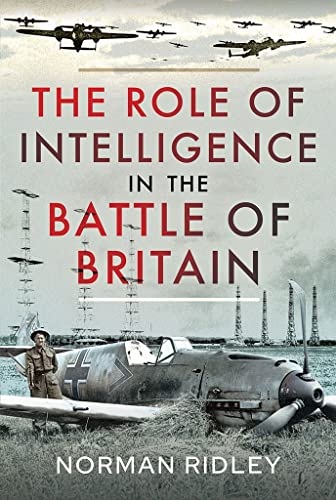
ROLE OF INTELLIGENCE IN THE BATTLE OF BRITAIN
Librería: Naval and Military Press Ltd, Uckfield, Reino Unido
Calificación del vendedor: 3 de 5 estrellas

EUR 8,27
Envío por EUR 16,66
Se envía de Reino Unido a Estados Unidos de AmericaCantidad disponible: 10 disponibles
Añadir al carritoCondición: New. Hardback 288 pages The Battle of Britain was fought between two airborne military elites and was a classic example of pure attack against pure defence. Though it was essentially a âwar of attritionâ, it was an engagement in which the gathering, assessment and reaction to intelligence played a significant role on both sides.In some respects, both the RAF and the Luftwaffe were hamstrung in their endeavours during the Battle of Britain by poor intelligence. The most egregious Luftwaffe blunder was its failure to appreciate the true nature of Fighter Commandâs operational systems and consequently it made fundamental strategic errors when evaluating its plans to degrade them. This was compounded by the Luftwaffeâs Intelligence chief, Major Josef âBeppoâ Schmid, whose consistent underestimation of Fighter Commandâs capabilities had a huge negative impact upon Reichsmarschall GÃ ringâs decision-making at all stages of the conflict.Both the Luftwaffe and the RAF lacked detailed information about each otherâs war production capacity. While the Luftwaffe did have the benefit of pre-war aerial surveillance data it had been unable to update it significantly since the declaration of war in September 1939. Fighter Command did have an distinct advantage through its radar surveillance systems, but this was, in the early stages of the conflict at least, less than totally reliable and it was often difficult to interpret the data coming through due to the inexperience of many of its operators. Another promising source of intelligence was the interception of Luftwaffe communications. It is clear that the Luftwaffe was unable to use intelligence as a âforce multiplierâ, by concentrating resources effectively, and actually fell into a negative spiral where poor intelligence acted as a âforce diluterâ, thus wasting resources in strategically questionable areas. The British, despite being essentially unable to predict enemy intentions, did have the means, however imperfect, to respond quickly and effectively to each new strategic initiative rolled out by the Luftwaffe.
-
The Role of Intelligence in the Battle of Britain
Idioma: Inglés
Publicado por Pen and Sword Books Ltd, 2021
ISBN 10: 1399010387 ISBN 13: 9781399010382
Librería: PBShop.store UK, Fairford, GLOS, Reino Unido
Calificación del vendedor: 4 de 5 estrellas

EUR 24,65
Envío por EUR 6,74
Se envía de Reino Unido a Estados Unidos de AmericaCantidad disponible: 2 disponibles
Añadir al carritoHRD. Condición: New. New Book. Shipped from UK. Established seller since 2000.
-
The Role of Intelligence in the Battle of Britain
Librería: Books From California, Simi Valley, CA, Estados Unidos de America
Calificación del vendedor: 4 de 5 estrellas
EUR 27,56
Envío por EUR 4,29
Se envía dentro de Estados Unidos de AmericaCantidad disponible: 3 disponibles
Añadir al carritohardcover. Condición: Fine.
-

The Role of Intelligence in the Battle of Britain (Hardcover)
Idioma: Inglés
Publicado por Pen & Sword Books Ltd, Barnsley, 2021
ISBN 10: 1399010387 ISBN 13: 9781399010382
Librería: Grand Eagle Retail, Bensenville, IL, Estados Unidos de America
Calificación del vendedor: 5 de 5 estrellas

EUR 33,00
Gastos de envío gratis
Se envía dentro de Estados Unidos de AmericaCantidad disponible: 1 disponibles
Añadir al carritoHardcover. Condición: new. Hardcover. The Battle of Britain was fought between two airborne military elites and was a classic example of pure attack against pure defence. Though it was essentially a 'war of attrition', it was an engagement in which the gathering, assessment and reaction to intelligence played a significant role on both sides. In some respects, both the RAF and the Luftwaffe were hamstrung in their endeavours during the Battle of Britain by poor intelligence. The most egregious Luftwaffe blunder was its failure to appreciate the true nature of Fighter Command's operational systems and consequently it made fundamental strategic errors when evaluating its plans to degrade them. This was compounded by the Luftwaffe's Intelligence chief, Major Josef 'Beppo' Schmid, whose consistent underestimation of Fighter Command's capabilities had a huge negative impact upon Reichsmarschall Goering's decision-making at all stages of the conflict. Both the Luftwaffe and the RAF lacked detailed information about each other's war production capacity. While the Luftwaffe did have the benefit of pre-war aerial surveillance data it had been unable to update it significantly since the declaration of war in September 1939. Fighter Command did have an distinct advantage through its radar surveillance systems, but this was, in the early stages of the conflict at least, less than totally reliable and it was often difficult to interpret the data coming through due to the inexperience of many of its operators. Another promising source of intelligence was the interception of Luftwaffe communications. It is clear that the Luftwaffe was unable to use intelligence as a 'force multiplier', by concentrating resources effectively, and actually fell into a negative spiral where poor intelligence acted as a 'force diluter', thus wasting resources in strategically questionable areas. The British, despite being essentially unable to predict enemy intentions, did have the means, however imperfect, to respond quickly and effectively to each new strategic initiative rolled out by the Luftwaffe. The result of three years intensive research, in this book the author analyses the way in which both the British and German Intelligence services played a part in the Battle of Britain, thereby attempting to throw light on an aspect of the battle that has been hitherto underexposed to scrutiny. AUTHOR: Norman Ridley, an Open University Honours Graduate, sold his business and retired to devote himself to a study of the less well covered aspects of the Battle of Britain. He lives in the Channel Islands, surrounded by his family, and is a regular contributor to local media. The author analyses the way in which both the British and German Intelligence services played a part in the Battle of Britain. Shipping may be from multiple locations in the US or from the UK, depending on stock availability.
-

The Role of Intelligence in the Battle of Britain
Idioma: Inglés
Publicado por Pen and Sword Books Ltd, GB, 2021
ISBN 10: 1399010387 ISBN 13: 9781399010382
Librería: Rarewaves.com USA, London, LONDO, Reino Unido
Calificación del vendedor: 5 de 5 estrellas
EUR 33,42
Gastos de envío gratis
Se envía de Reino Unido a Estados Unidos de AmericaCantidad disponible: 1 disponibles
Añadir al carritoHardback. Condición: New. The Battle of Britain was fought between two airborne military elites and was a classic example of pure attack against pure defence. Though it was essentially a 'war of attrition', it was an engagement in which the gathering, assessment and reaction to intelligence played a significant role on both sides.In some respects, both the RAF and the Luftwaffe were hamstrung in their endeavours during the Battle of Britain by poor intelligence. The most egregious Luftwaffe blunder was its failure to appreciate the true nature of Fighter Command's operational systems and consequently it made fundamental strategic errors when evaluating its plans to degrade them. This was compounded by the Luftwaffe's Intelligence chief, Major Josef 'Beppo' Schmid, whose consistent underestimation of Fighter Command's capabilities had a huge negative impact upon Reichsmarschall Goering's decision-making at all stages of the conflict.Both the Luftwaffe and the RAF lacked detailed information about each other's war production capacity. While the Luftwaffe did have the benefit of pre-war aerial surveillance data it had been unable to update it significantly since the declaration of war in September 1939. Fighter Command did have an distinct advantage through its radar surveillance systems, but this was, in the early stages of the conflict at least, less than totally reliable and it was often difficult to interpret the data coming through due to the inexperience of many of its operators. Another promising source of intelligence was the interception of Luftwaffe communications. It is clear that the Luftwaffe was unable to use intelligence as a 'force multiplier', by concentrating resources effectively, and actually fell into a negative spiral where poor intelligence acted as a 'force diluter', thus wasting resources in strategically questionable areas. The British, despite being essentially unable to predict enemy intentions, did have the means, however imperfect, to respond quickly and effectively to each new strategic initiative rolled out by the Luftwaffe.The result of three years intensive research, in this book the author analyses the way in which both the British and German Intelligence services played a part in the Battle of Britain, thereby attempting to throw light on an aspect of the battle that has been hitherto underexposed to scrutiny.
-
ROLE OF INTELLIGENCE/BATTLE OF BRITAIN
Librería: Speedyhen LLC, Hialeah, FL, Estados Unidos de America
Calificación del vendedor: 5 de 5 estrellas
EUR 35,74
Gastos de envío gratis
Se envía dentro de Estados Unidos de AmericaCantidad disponible: 4 disponibles
Añadir al carritoCondición: NEW.
-
The Role of Intelligence in the Battle of Britain
Idioma: Inglés
Publicado por Pen & Sword Books Ltd, United Kingdom, Barnsley, 2021
ISBN 10: 1399010387 ISBN 13: 9781399010382
Librería: WorldofBooks, Goring-By-Sea, WS, Reino Unido
Calificación del vendedor: 5 de 5 estrellas
EUR 30,28
Envío por EUR 6,43
Se envía de Reino Unido a Estados Unidos de AmericaCantidad disponible: 3 disponibles
Añadir al carritoPaperback. Condición: Very Good. The Battle of Britain was fought between two airborne military elites and was a classic example of pure attack against pure defence. Though it was essentially a 'war of attrition', it was an engagement in which the gathering, assessment and reaction to intelligence played a significant role on both sides. In some respects, both the RAF and the Luftwaffe were hamstrung in their endeavours during the Battle of Britain by poor intelligence. The most egregious Luftwaffe blunder was its failure to appreciate the true nature of Fighter Command's operational systems and consequently it made fundamental strategic errors when evaluating its plans to degrade them. This was compounded by the Luftwaffe's Intelligence chief, Major Josef 'Beppo' Schmid, whose consistent underestimation of Fighter Command's capabilities had a huge negative impact upon Reichsmarschall Goering's decision-making at all stages of the conflict. Both the Luftwaffe and the RAF lacked detailed information about each other's war production capacity. While the Luftwaffe did have the benefit of pre-war aerial surveillance data it had been unable to update it significantly since the declaration of war in September 1939. Fighter Command did have an distinct advantage through its radar surveillance systems, but this was, in the early stages of the conflict at least, less than totally reliable and it was often difficult to interpret the data coming through due to the inexperience of many of its operators. Another promising source of intelligence was the interception of Luftwaffe communications. It is clear that the Luftwaffe was unable to use intelligence as a 'force multiplier', by concentrating resources effectively, and actually fell into a negative spiral where poor intelligence acted as a 'force diluter', thus wasting resources in strategically questionable areas. The British, despite being essentially unable to predict enemy intentions, did have the means, however imperfect, to respond quickly and effectively to each new strategic initiative rolled out by the Luftwaffe. The result of three years intensive research, in this book the author analyses the way in which both the British and German Intelligence services played a part in the Battle of Britain, thereby attempting to throw light on an aspect of the battle that has been hitherto underexposed to scrutiny. The book has been read, but is in excellent condition. Pages are intact and not marred by notes or highlighting. The spine remains undamaged.
-
The Role of Intelligence in the Battle of Britain
Librería: Ria Christie Collections, Uxbridge, Reino Unido
Calificación del vendedor: 5 de 5 estrellas
EUR 25,80
Envío por EUR 13,77
Se envía de Reino Unido a Estados Unidos de AmericaCantidad disponible: 2 disponibles
Añadir al carritoCondición: New. In.
-
The Role of Intelligence in the Battle of Britain
Librería: Kennys Bookshop and Art Galleries Ltd., Galway, GY, Irlanda
Calificación del vendedor: 5 de 5 estrellas
EUR 27,97
Envío por EUR 10,50
Se envía de Irlanda a Estados Unidos de AmericaCantidad disponible: 2 disponibles
Añadir al carritoCondición: New. 2021. Hardcover. . . . . .
-
The Role of Intelligence in the Battle of Britain
Librería: Chiron Media, Wallingford, Reino Unido
Calificación del vendedor: 5 de 5 estrellas
EUR 22,08
Envío por EUR 17,80
Se envía de Reino Unido a Estados Unidos de AmericaCantidad disponible: 2 disponibles
Añadir al carritoHardcover. Condición: New.
-

The Role of Intelligence in the Battle of Britain
Librería: Allen Williams Books, Dover, KENT, Reino Unido
Calificación del vendedor: 5 de 5 estrellas
Original o primera edición
EUR 17,75
Envío por EUR 22,98
Se envía de Reino Unido a Estados Unidos de AmericaCantidad disponible: 1 disponibles
Añadir al carritoHardcover. Condición: New. Estado de la sobrecubierta: New. 1st Edition. The Battle of Britain was fought between two airborne military elites and was a classic example of pure attack against pure defence. Though it was essentially a 'war of attrition', it was an engagement in which the gathering, assessment and reaction to intelligence played a significant role on both sides. In some respects, both the RAF and the Luftwaffe were hamstrung in their endeavours during the Battle of Britain by poor intelligence. The most egregious Luftwaffe blunder was its failure to appreciate the true nature of Fighter Command's operational systems and consequently it made fundamental strategic errors when evaluating its plans to degrade them. This was compounded by the Luftwaffe's Intelligence chief, Major Josef 'Beppo' Schmid, whose consistent underestimation of Fighter Command's capabilities had a huge negative impact upon Reichsmarschall Goering's decision-making at all stages of the conflict. Both the Luftwaffe and the RAF lacked detailed information about each other's war production capacity. While the Luftwaffe did have the benefit of pre-war aerial surveillance data it had been unable to update it significantly since the declaration of war in September 1939. Fighter Command did have an distinct advantage through its radar surveillance systems, but this was, in the early stages of the conflict at least, less than totally reliable and it was often difficult to interpret the data coming through due to the inexperience of many of its operators. Another promising source of intelligence was the interception of Luftwaffe communications. It is clear that the Luftwaffe was unable to use intelligence as a 'force multiplier', by concentrating resources effectively, and actually fell into a negative spiral where poor intelligence acted as a 'force diluter', thus wasting resources in strategically questionable areas. The British, despite being essentially unable to predict enemy intentions, did have the means, however imperfect, to respond quickly and effectively to each new strategic initiative rolled out by the Luftwaffe. The result of three years intensive research, in this book the author analyses the way in which both the British and German Intelligence services played a part in the Battle of Britain, thereby attempting to throw light on an aspect of the battle that has been hitherto underexposed to scrutiny. Size: 8vo - over 7¾" - 9¾" tall. Book.
-

The Role of Intelligence in the Battle of Britain
Librería: Allen Williams Books, Dover, KENT, Reino Unido
Calificación del vendedor: 5 de 5 estrellas
Original o primera edición
EUR 17,75
Envío por EUR 22,98
Se envía de Reino Unido a Estados Unidos de AmericaCantidad disponible: 1 disponibles
Añadir al carritoHardcover. Condición: New. Estado de la sobrecubierta: New. 1st Edition. The Battle of Britain was fought between two airborne military elites and was a classic example of pure attack against pure defence. Though it was essentially a 'war of attrition', it was an engagement in which the gathering, assessment and reaction to intelligence played a significant role on both sides. In some respects, both the RAF and the Luftwaffe were hamstrung in their endeavours during the Battle of Britain by poor intelligence. The most egregious Luftwaffe blunder was its failure to appreciate the true nature of Fighter Command's operational systems and consequently it made fundamental strategic errors when evaluating its plans to degrade them. This was compounded by the Luftwaffe's Intelligence chief, Major Josef 'Beppo' Schmid, whose consistent underestimation of Fighter Command's capabilities had a huge negative impact upon Reichsmarschall Goering's decision-making at all stages of the conflict. Both the Luftwaffe and the RAF lacked detailed information about each other's war production capacity. While the Luftwaffe did have the benefit of pre-war aerial surveillance data it had been unable to update it significantly since the declaration of war in September 1939. Fighter Command did have an distinct advantage through its radar surveillance systems, but this was, in the early stages of the conflict at least, less than totally reliable and it was often difficult to interpret the data coming through due to the inexperience of many of its operators. Another promising source of intelligence was the interception of Luftwaffe communications. It is clear that the Luftwaffe was unable to use intelligence as a 'force multiplier', by concentrating resources effectively, and actually fell into a negative spiral where poor intelligence acted as a 'force diluter', thus wasting resources in strategically questionable areas. The British, despite being essentially unable to predict enemy intentions, did have the means, however imperfect, to respond quickly and effectively to each new strategic initiative rolled out by the Luftwaffe. The result of three years intensive research, in this book the author analyses the way in which both the British and German Intelligence services played a part in the Battle of Britain, thereby attempting to throw light on an aspect of the battle that has been hitherto underexposed to scrutiny. Size: 8vo - over 7¾" - 9¾" tall. Book.
-
The Role of Intelligence in the Battle of Britain
Librería: Kennys Bookstore, Olney, MD, Estados Unidos de America
Calificación del vendedor: 4 de 5 estrellas
EUR 34,31
Envío por EUR 9,02
Se envía dentro de Estados Unidos de AmericaCantidad disponible: 2 disponibles
Añadir al carritoCondición: New. 2021. Hardcover. . . . . . Books ship from the US and Ireland.
-
The Role of Intelligence in the Battle of Britain
Librería: THE SAINT BOOKSTORE, Southport, Reino Unido
Calificación del vendedor: 5 de 5 estrellas
EUR 28,25
Envío por EUR 14,48
Se envía de Reino Unido a Estados Unidos de AmericaCantidad disponible: 4 disponibles
Añadir al carritoHardback. Condición: New. New copy - Usually dispatched within 3 working days.
-
The Role of Intelligence in the Battle of Britain
Librería: Revaluation Books, Exeter, Reino Unido
Calificación del vendedor: 5 de 5 estrellas
EUR 29,04
Envío por EUR 14,36
Se envía de Reino Unido a Estados Unidos de AmericaCantidad disponible: 2 disponibles
Añadir al carritoHardcover. Condición: Brand New. 263 pages. 9.25x6.50x1.00 inches. In Stock.
-
The Role of Intelligence in the Battle of Britain
Librería: Parrot Books, Hemel Hempstead, HERT, Reino Unido
Calificación del vendedor: 5 de 5 estrellas
EUR 19,75
Envío por EUR 28,96
Se envía de Reino Unido a Estados Unidos de AmericaCantidad disponible: 1 disponibles
Añadir al carritohardcover. Condición: New.
-
The Role of Intelligence in the Battle of Britain
Librería: Revaluation Books, Exeter, Reino Unido
Calificación del vendedor: 5 de 5 estrellas
EUR 40,84
Envío por EUR 14,36
Se envía de Reino Unido a Estados Unidos de AmericaCantidad disponible: 1 disponibles
Añadir al carritoHardcover. Condición: Brand New. 263 pages. 9.25x6.50x1.00 inches. In Stock.
-

The Role of Intelligence in the Battle of Britain (Hardcover)
Idioma: Inglés
Publicado por Pen & Sword Books Ltd, Barnsley, 2021
ISBN 10: 1399010387 ISBN 13: 9781399010382
Librería: CitiRetail, Stevenage, Reino Unido
Calificación del vendedor: 5 de 5 estrellas
EUR 25,43
Envío por EUR 42,51
Se envía de Reino Unido a Estados Unidos de AmericaCantidad disponible: 1 disponibles
Añadir al carritoHardcover. Condición: new. Hardcover. The Battle of Britain was fought between two airborne military elites and was a classic example of pure attack against pure defence. Though it was essentially a 'war of attrition', it was an engagement in which the gathering, assessment and reaction to intelligence played a significant role on both sides. In some respects, both the RAF and the Luftwaffe were hamstrung in their endeavours during the Battle of Britain by poor intelligence. The most egregious Luftwaffe blunder was its failure to appreciate the true nature of Fighter Command's operational systems and consequently it made fundamental strategic errors when evaluating its plans to degrade them. This was compounded by the Luftwaffe's Intelligence chief, Major Josef 'Beppo' Schmid, whose consistent underestimation of Fighter Command's capabilities had a huge negative impact upon Reichsmarschall Goering's decision-making at all stages of the conflict. Both the Luftwaffe and the RAF lacked detailed information about each other's war production capacity. While the Luftwaffe did have the benefit of pre-war aerial surveillance data it had been unable to update it significantly since the declaration of war in September 1939. Fighter Command did have an distinct advantage through its radar surveillance systems, but this was, in the early stages of the conflict at least, less than totally reliable and it was often difficult to interpret the data coming through due to the inexperience of many of its operators. Another promising source of intelligence was the interception of Luftwaffe communications. It is clear that the Luftwaffe was unable to use intelligence as a 'force multiplier', by concentrating resources effectively, and actually fell into a negative spiral where poor intelligence acted as a 'force diluter', thus wasting resources in strategically questionable areas. The British, despite being essentially unable to predict enemy intentions, did have the means, however imperfect, to respond quickly and effectively to each new strategic initiative rolled out by the Luftwaffe. The result of three years intensive research, in this book the author analyses the way in which both the British and German Intelligence services played a part in the Battle of Britain, thereby attempting to throw light on an aspect of the battle that has been hitherto underexposed to scrutiny. AUTHOR: Norman Ridley, an Open University Honours Graduate, sold his business and retired to devote himself to a study of the less well covered aspects of the Battle of Britain. He lives in the Channel Islands, surrounded by his family, and is a regular contributor to local media. The author analyses the way in which both the British and German Intelligence services played a part in the Battle of Britain. Shipping may be from our UK warehouse or from our Australian or US warehouses, depending on stock availability.
-
ROLE OF INTELLIGENCE/BATTLE OF BRITAIN
Librería: Speedyhen, Hertfordshire, Reino Unido
Calificación del vendedor: 5 de 5 estrellas
EUR 23,20
Envío por EUR 47,11
Se envía de Reino Unido a Estados Unidos de AmericaCantidad disponible: 2 disponibles
Añadir al carritoCondición: NEW.
-

The Role of Intelligence in the Battle of Britain
Librería: moluna, Greven, Alemania
Calificación del vendedor: 4 de 5 estrellas
EUR 30,74
Envío por EUR 48,99
Se envía de Alemania a Estados Unidos de AmericaCantidad disponible: 2 disponibles
Añadir al carritoCondición: New. The author analyses the way in which both the British and German Intelligence services played a part in the Battle of Britain.Über den AutorNorman Ridley is an Open University Honours graduate and a writer on inter-war intellige.
-

The Role of Intelligence in the Battle of Britain (Hardcover)
Idioma: Inglés
Publicado por Pen & Sword Books Ltd, Barnsley, 2021
ISBN 10: 1399010387 ISBN 13: 9781399010382
Librería: AussieBookSeller, Truganina, VIC, Australia
Calificación del vendedor: 5 de 5 estrellas
EUR 52,31
Envío por EUR 31,80
Se envía de Australia a Estados Unidos de AmericaCantidad disponible: 1 disponibles
Añadir al carritoHardcover. Condición: new. Hardcover. The Battle of Britain was fought between two airborne military elites and was a classic example of pure attack against pure defence. Though it was essentially a 'war of attrition', it was an engagement in which the gathering, assessment and reaction to intelligence played a significant role on both sides. In some respects, both the RAF and the Luftwaffe were hamstrung in their endeavours during the Battle of Britain by poor intelligence. The most egregious Luftwaffe blunder was its failure to appreciate the true nature of Fighter Command's operational systems and consequently it made fundamental strategic errors when evaluating its plans to degrade them. This was compounded by the Luftwaffe's Intelligence chief, Major Josef 'Beppo' Schmid, whose consistent underestimation of Fighter Command's capabilities had a huge negative impact upon Reichsmarschall Goering's decision-making at all stages of the conflict. Both the Luftwaffe and the RAF lacked detailed information about each other's war production capacity. While the Luftwaffe did have the benefit of pre-war aerial surveillance data it had been unable to update it significantly since the declaration of war in September 1939. Fighter Command did have an distinct advantage through its radar surveillance systems, but this was, in the early stages of the conflict at least, less than totally reliable and it was often difficult to interpret the data coming through due to the inexperience of many of its operators. Another promising source of intelligence was the interception of Luftwaffe communications. It is clear that the Luftwaffe was unable to use intelligence as a 'force multiplier', by concentrating resources effectively, and actually fell into a negative spiral where poor intelligence acted as a 'force diluter', thus wasting resources in strategically questionable areas. The British, despite being essentially unable to predict enemy intentions, did have the means, however imperfect, to respond quickly and effectively to each new strategic initiative rolled out by the Luftwaffe. The result of three years intensive research, in this book the author analyses the way in which both the British and German Intelligence services played a part in the Battle of Britain, thereby attempting to throw light on an aspect of the battle that has been hitherto underexposed to scrutiny. AUTHOR: Norman Ridley, an Open University Honours Graduate, sold his business and retired to devote himself to a study of the less well covered aspects of the Battle of Britain. He lives in the Channel Islands, surrounded by his family, and is a regular contributor to local media. The author analyses the way in which both the British and German Intelligence services played a part in the Battle of Britain. Shipping may be from our Sydney, NSW warehouse or from our UK or US warehouse, depending on stock availability.
-

The Role of Intelligence in the Battle of Britain
Idioma: Inglés
Publicado por Pen & Sword Books Ltd Nov 2021, 2021
ISBN 10: 1399010387 ISBN 13: 9781399010382
Librería: AHA-BUCH GmbH, Einbeck, Alemania
Calificación del vendedor: 5 de 5 estrellas
EUR 31,63
Envío por EUR 63,96
Se envía de Alemania a Estados Unidos de AmericaCantidad disponible: 2 disponibles
Añadir al carritoBuch. Condición: Neu. Neuware - The Battle of Britain was fought between two airborne military elites and was a classic example of pure attack against pure defense. Though it was essentially a 'war of attrition', it was an engagement in which the gathering, assessment and reaction to intelligence played a significant role on both sides.In some respects, both the RAF and the Luftwaffe were hamstrung in their endeavors during the Battle of Britain by poor intelligence. The most egregious Luftwaffe blunder was its failure to appreciate the true nature of Fighter Command's operational systems and consequently it made fundamental strategic errors when evaluating its plans to degrade them. This was compounded by the Luftwaffe's Intelligence chief, Major Josef 'Beppo' Schmid, whose consistent underestimation of Fighter Command's capabilities had a huge negative impact upon Reichsmarschall Göring's decision-making at all stages of the conflict.Both the Luftwaffe and the RAF lacked detailed information about each other's war production capacity. While the Luftwaffe did have the benefit of pre-war aerial surveillance data it had been unable to update it significantly since the declaration of war in September 1939. Fighter Command did have an distinct advantage through its radar surveillance systems, but this was, in the early stages of the conflict at least, less than totally reliable and it was often difficult to interpret the data coming through due to the inexperience of many of its operators. Another promising source of intelligence was the interception of Luftwaffe communications.It is clear that the Luftwaffe was unable to use intelligence as a 'force multiplier', by concentrating resources effectively, and actually fell into a negative spiral where poor intelligence acted as a 'force diluter', thus wasting resources in strategically questionable areas. The British, despite being essentially unable to predict enemy intentions, did have the means, however imperfect, to respond quickly and effectively to each new strategic initiative rolled out by the Luftwaffe.The result of three years intensive research, in this book the author analyses the way in which both the British and German Intelligence services played a part in the Battle of Britain, thereby attempting to throw light on an aspect of the battle that has been hitherto underexposed to scrutiny.
-

The Role of Intelligence in the Battle of Britain
Idioma: Inglés
Publicado por Pen and Sword Books Ltd, GB, 2021
ISBN 10: 1399010387 ISBN 13: 9781399010382
Librería: Rarewaves.com UK, London, Reino Unido
Calificación del vendedor: 5 de 5 estrellas
EUR 30,45
Envío por EUR 74,69
Se envía de Reino Unido a Estados Unidos de AmericaCantidad disponible: 1 disponibles
Añadir al carritoHardback. Condición: New. The Battle of Britain was fought between two airborne military elites and was a classic example of pure attack against pure defence. Though it was essentially a 'war of attrition', it was an engagement in which the gathering, assessment and reaction to intelligence played a significant role on both sides.In some respects, both the RAF and the Luftwaffe were hamstrung in their endeavours during the Battle of Britain by poor intelligence. The most egregious Luftwaffe blunder was its failure to appreciate the true nature of Fighter Command's operational systems and consequently it made fundamental strategic errors when evaluating its plans to degrade them. This was compounded by the Luftwaffe's Intelligence chief, Major Josef 'Beppo' Schmid, whose consistent underestimation of Fighter Command's capabilities had a huge negative impact upon Reichsmarschall Goering's decision-making at all stages of the conflict.Both the Luftwaffe and the RAF lacked detailed information about each other's war production capacity. While the Luftwaffe did have the benefit of pre-war aerial surveillance data it had been unable to update it significantly since the declaration of war in September 1939. Fighter Command did have an distinct advantage through its radar surveillance systems, but this was, in the early stages of the conflict at least, less than totally reliable and it was often difficult to interpret the data coming through due to the inexperience of many of its operators. Another promising source of intelligence was the interception of Luftwaffe communications. It is clear that the Luftwaffe was unable to use intelligence as a 'force multiplier', by concentrating resources effectively, and actually fell into a negative spiral where poor intelligence acted as a 'force diluter', thus wasting resources in strategically questionable areas. The British, despite being essentially unable to predict enemy intentions, did have the means, however imperfect, to respond quickly and effectively to each new strategic initiative rolled out by the Luftwaffe.The result of three years intensive research, in this book the author analyses the way in which both the British and German Intelligence services played a part in the Battle of Britain, thereby attempting to throw light on an aspect of the battle that has been hitherto underexposed to scrutiny.
-

The Role of Intelligence in the Battle of Britain
Librería: preigu, Osnabrück, Alemania
Calificación del vendedor: 5 de 5 estrellas
EUR 35,20
Envío por EUR 70,00
Se envía de Alemania a Estados Unidos de AmericaCantidad disponible: 1 disponibles
Añadir al carritoBuch. Condición: Neu. The Role of Intelligence in the Battle of Britain | Norman Ridley | Buch | Gebunden | Englisch | 2021 | Pen & Sword Books Ltd | EAN 9781399010382 | Verantwortliche Person für die EU: Libri GmbH, Europaallee 1, 36244 Bad Hersfeld, gpsr[at]libri[dot]de | Anbieter: preigu.


