
9780802047502 - sexual slander in nineteenth-century england: defamation in the ecclesiastical courts, 1815-1855 de waddams, s.m. (6 resultados)
 Más imágenes
- Tapa dura
Librería: ThriftBooksVintage, Tukwila, WA, Estados Unidos de AmericaThriftBooksVintage
Contactar con el vendedorVendedor de 5 estrellasCondición: Usado - Bueno
EUR 44,18
Gastos de envío gratisSe envía dentro de Estados Unidos de AmericaCantidad disponible: 1 disponibles
Hardcover. Condición: Very Good. Estado de la sobrecubierta: Very Good. Dust jacket in very good condition. Minor shelf and handling wear, overall a clean solid copy with minimal signs of use. Dust jacket protected in a mylar cover. Secure packaging for safe delivery.

- Tapa dura
Librería: J. HOOD, BOOKSELLERS, ABAA/ILAB, Baldwin City, KS, Estados Unidos de AmericaJ. HOOD, BOOKSELLERS, ABAA/ILAB
Contactar con el vendedorVendedor de 5 estrellasCondición: Usado
EUR 40,57
Envío por EUR 4,38Se envía dentro de Estados Unidos de AmericaCantidad disponible: 1 disponibles
Hardcover. 384 pages. Would be brand new except for owner's ink signature inside / bright and crisp dust jacket which is now in a clear protective mylar sleeve.
Idioma: Inglés
Editorial: University of Toronto Press, Scholarly Publishing Division, 2000
- Tapa dura
- Primera edición
Librería: B-Line Books, Amherst, NS, CanadaB-Line Books
Contactar con el vendedorVendedor de 5 estrellasCondición: Usado - Muy bueno
EUR 36,06
Envío por EUR 10,94Se envía de Canada a Estados Unidos de AmericaCantidad disponible: 1 disponibles
Hardcover. Condición: Near Fine. Estado de la sobrecubierta: Very Good. First Edition. Tight unmarked book in crisp dust jacket with tiny abrasion to lower rear edge.; 384 pages.
- Tapa dura
Librería: Karen Wickliff - Books, Columbus, OH, Estados Unidos de AmericaKaren Wickliff - Books
Contactar con el vendedorVendedor de 4 estrellasCondición: Usado - Bueno
EUR 49,59
Envío por EUR 3,94Se envía dentro de Estados Unidos de AmericaCantidad disponible: 1 disponibles
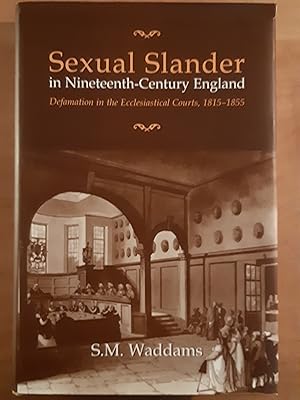
Hard Cover. Condición: Very Good. Estado de la sobrecubierta: Very Good. 315pp. Hardback with DJ, VG, index, appendices, figures and tables, "'You are a nasty bloody thundering whore,' one Gloucester woman said to another in 1852. Most lawyers and historians are surprised to learn that until 1855 language of this sort was punish…able in the ecclesiastical courts. In a study based on court records and lawyers' correspondence, Stephen Waddams shows how the law worked not only in theory but in practice".
 Más imágenes
Idioma: Inglés
Editorial: University of Toronto Press, Toronto Buffalo London, 2000
- Tapa dura
- Primera edición
Librería: WOLFHOUND BOOKS, South Slocan, BC, CanadaWOLFHOUND BOOKS
Contactar con el vendedorVendedor de 5 estrellasCondición: Usado - Muy bueno
EUR 40,57
Envío por EUR 23,63Se envía de Canada a Estados Unidos de AmericaCantidad disponible: 1 disponibles
Hardcover. Condición: Near Fine. Estado de la sobrecubierta: Good. 1st Edition. Very light edge wear to mustard colored boards. Jacket has moderate wear with scuffing, curling at top and bottom edges, and a quarter inch tear to the front top corner. (3).

- Tapa dura
- Primera edición
Librería: killarneybooks, Inagh, CLARE, Irlandakillarneybooks
Contactar con el vendedorVendedor de 5 estrellasCondición: Usado - Bueno
EUR 49,50
Envío por EUR 33,70Se envía de Irlanda a Estados Unidos de AmericaCantidad disponible: 1 disponibles
Hardcover. Condición: Very Good. Estado de la sobrecubierta: Very Good. 1st Edition. Cloth hardcover, xvi + 315pp + 12 pages of b&w plates, NOT ex-library. Limited gentle wear; clean with unmarked text, no inscriptions, no stamps, firm binding. Dust jacket shows a bit of creasing to the upper edges. -- The book offers a detailed… legal and social analysis of sexual defamation in early 19th-century England by examining the functioning of the ecclesiastical courts between 1815-1855. It focuses on the specialized jurisdiction over spoken accusations of sexual misconduct - specifically slander imputing adultery or fornication. The work is based on extensive archival research, drawing primarily on ecclesiastical court records across England, Wales and the Isle of Man, including act books, cause papers and rare correspondence from legal professionals such as proctor William Askwith. Part I sets the legal groundwork by distinguishing between the common law and ecclesiastical law approaches to slander. The ecclesiastical jurisdiction retained authority over oral sexual slander without requiring proof of actual damages, whereas common law generally required demonstrable loss to sustain a claim. The book details how ecclesiastical procedures were formally initiated and controlled by plaintiffs, with no public prosecutor involved, and typically concluded in orders for public penance rather than monetary damages. It also discusses the legal ambiguity surrounding defenses such as truth and the inconsistencies in judicial interpretations across dioceses, underlining the fragmented nature of ecclesiastical legal administration. Part II explores the procedural mechanics and institutional context of ecclesiastical litigation. Chapters cover the court structure, personnel, patterns of litigation, types of admissible evidence, cost structures and the use of penance as a legal remedy. Litigation was shaped by a complex blend of local practices, varying record-keeping standards and discretionary judicial powers. Costs were often unpredictable and could be used to discourage plaintiffs or penalize successful defendants. Penance, usually performed in church, served as both a symbolic reparation and a public reaffirmation of community norms, though it was increasingly regarded as outdated. Part III focuses on the nature and diversity of the cases themselves, categorizing them by party composition, the specific allegations and the outcomes. It emphasizes that while most suits were initiated by women (about 90 percent of cases), the motivations and contexts varied. Defamation often emerged from intra-family disputes, neighborhood conflicts or deteriorating romantic engagements. Plaintiffs typically belonged to lower or lower-middle social strata and many suits were initiated in the hope of salvaging reputation in small communities where social surveillance was intense. The chapter on motives examines how cases were driven by concerns about marriage prospects, social standing and community participation. It also highlights how slander could be used strategically during property disputes, inheritance conflicts or in retaliation. Chapter 11 examines the effects of the litigation process, both in legal and social terms, and explores how ecclesiastical rulings shaped reputational dynamics within communities. The book underscores the significance of ecclesiastical slander litigation as a venue for women's legal agency in a period otherwise marked by legal disenfranchisement. The disappearance of this jurisdiction in 1855 left a legal vacuum until the passage of the Slander of Women Act in 1891. The volume integrates legal history with insights from gender studies and the history of sexuality. It leverages uncatalogued and underused sources to build a picture of how slander law functioned in practice and how it intersected with everyday social life. It makes a broader contribution to understanding legal pluralism in 19th-century Britain while offering a framework for interpreting informal social control mechanisms in pre-modern legal cultures.


