

Importe total (1 artículo artículos):
Destino del pedido:

9780334026532 - God and the Web of Creation de Page, Ruth (21 resultados)
Ir a los resultados principales
Filtros de búsqueda
Tipo de artículo
- Todos los tipos de productos
- Libros (21)
- Revistas y publicaciones (No hay ningún otro resultado que coincida con este filtro.)
- Cómics (No hay ningún otro resultado que coincida con este filtro.)
- Partituras (No hay ningún otro resultado que coincida con este filtro.)
- Arte, grabados y pósters (No hay ningún otro resultado que coincida con este filtro.)
- Fotografías (No hay ningún otro resultado que coincida con este filtro.)
- Mapas (No hay ningún otro resultado que coincida con este filtro.)
- Manuscritos y coleccionismo de papel (No hay ningún otro resultado que coincida con este filtro.)
Condición Más información
- Nuevo (13)
- Como nuevo, Excelente o Muy bueno (No hay ningún otro resultado que coincida con este filtro.)
- Bueno o Aceptable (7)
- Regular o Pobre (1)
- Tal como se indica (No hay ningún otro resultado que coincida con este filtro.)
Encuadernación
- Todas
- Tapa dura (No hay ningún otro resultado que coincida con este filtro.)
- Tapa blanda (21)
Más atributos
- Primera edición (No hay ningún otro resultado que coincida con este filtro.)
- Firmado (No hay ningún otro resultado que coincida con este filtro.)
- Sobrecubierta (No hay ningún otro resultado que coincida con este filtro.)
- Con imágenes (6)
- No impresión bajo demanda (17)
Idioma (1)
Gastos de envío gratis
Ubicación del vendedor
Valoración de los vendedores
-
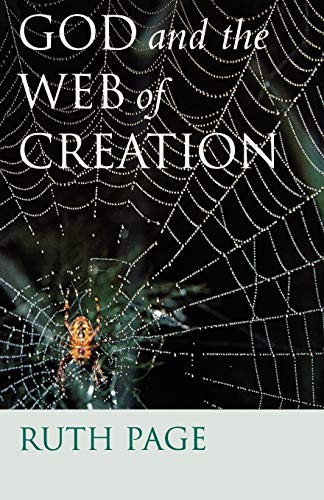
God and the Web of Creation
Idioma: Inglés
Publicado por Hymns Ancient & Modern Ltd, 1996
ISBN 10: 0334026539 ISBN 13: 9780334026532
Librería: Better World Books Ltd, Dunfermline, Reino Unido
Calificación del vendedor: 5 de 5 estrellas

EUR 5,39
Envío por EUR 5,74
Se envía de Reino Unido a Estados Unidos de AmericaCantidad disponible: 1 disponibles
Añadir al carritoCondición: Very Good. Former library copy. Pages intact with possible writing/highlighting. Binding strong with minor wear. Dust jackets/supplements may not be included. Includes library markings. Stock photo provided. Product includes identifying sticker. Better World Books: Buy Books. Do Good.
-
God and the Web of Creation
Idioma: Inglés
Publicado por Hymns Ancient & Modern Ltd, 1996
ISBN 10: 0334026539 ISBN 13: 9780334026532
Librería: Better World Books Ltd, Dunfermline, Reino Unido
Calificación del vendedor: 5 de 5 estrellas
EUR 5,39
Envío por EUR 5,74
Se envía de Reino Unido a Estados Unidos de AmericaCantidad disponible: 1 disponibles
Añadir al carritoCondición: Very Good. Pages intact with possible writing/highlighting. Binding strong with minor wear. Dust jackets/supplements may not be included. Stock photo provided. Product includes identifying sticker. Better World Books: Buy Books. Do Good.
-
God and the Web of Creation
Idioma: Inglés
Publicado por Hymns Ancient & Modern Ltd, 1996
ISBN 10: 0334026539 ISBN 13: 9780334026532
Librería: MusicMagpie, Stockport, Reino Unido
Calificación del vendedor: 5 de 5 estrellas
EUR 5,50
Envío por EUR 6,30
Se envía de Reino Unido a Estados Unidos de AmericaCantidad disponible: 1 disponibles
Añadir al carritoCondición: Very Good. 1770037951. 2/2/2026 1:12:31 PM.
-
God and the Web of Creation
Idioma: Inglés
Publicado por SCM Press, United Kingdom, London, 1996
ISBN 10: 0334026539 ISBN 13: 9780334026532
Librería: WorldofBooks, Goring-By-Sea, WS, Reino Unido
Calificación del vendedor: 5 de 5 estrellas
EUR 10,90
Envío por EUR 6,43
Se envía de Reino Unido a Estados Unidos de AmericaCantidad disponible: 1 disponibles
Añadir al carritoPaperback. Condición: Very Good. The ongoing ecological crisis keeps raising important questions for traditional Christian theology. If belief in God as creator means not only that God created the world in the first place but is involved in all that goes on in it, valuing creation and desiring its good, what form does divine action take in the world of today? Surely, for Christian belief, God cannot just be a distressed but helpless onlooker while human beings are exhorted to get on with what has to be done? Furthermore, what in the light of God's relation to the world, is the relation of human beings to non-human creation? Central to Dr Page's book is the view that there is too much anthropocentricity in doctrines of the creation, so that the world of nature is too often seen as it relates to human beings and not in its own right. She argues that a rethinking of fundamental doctrine is needed, if only as penance for what Christian doctrine has allowed human beings to get away with. Her new approach begins with the view that what God created was possibility, a more important characteristic of the world than has ever been acknowledged. All creation, not just the human world, is by its very being a response to the divine gift of possibility. Every creature, from the tree frog to the cheetah, lives in God's presence and has it own relationship with God, to whom it is all valuable and intimately known. Against this background, not only the doctrine of creation but the whole question of human ethical conduct takes on a new form, and any vision of eternity must be kaleidoscopic enough to include the whole web of creation. The book has been read, but is in excellent condition. Pages are intact and not marred by notes or highlighting. The spine remains undamaged.
-
God and the Web of Creation
Librería: AwesomeBooks, Wallingford, Reino Unido
Calificación del vendedor: 5 de 5 estrellas
EUR 11,80
Envío por EUR 5,73
Se envía de Reino Unido a Estados Unidos de AmericaCantidad disponible: 1 disponibles
Añadir al carritoCondición: Very Good. This book is in very good condition and will be shipped within 24 hours of ordering. The cover may have some limited signs of wear but the pages are clean, intact and the spine remains undamaged. This book has clearly been well maintained and looked after thus far. Money back guarantee if you are not satisfied. See all our books here, order more than 1 book and get discounted shipping. .
-
God and the Web of Creation
Librería: Anybook.com, Lincoln, Reino Unido
Calificación del vendedor: 5 de 5 estrellas
EUR 2,96
Envío por EUR 15,38
Se envía de Reino Unido a Estados Unidos de AmericaCantidad disponible: 1 disponibles
Añadir al carritoCondición: Good. This is an ex-library book and may have the usual library/used-book markings inside.This book has soft covers. Clean from markings. In good all round condition. Please note the Image in this listing is a stock photo and may not match the covers of the actual item,300grams, ISBN:9780334026532.
-
God and the Web of Creation
Librería: Bahamut Media, Reading, Reino Unido
Calificación del vendedor: 4 de 5 estrellas

EUR 11,80
Envío por EUR 8,01
Se envía de Reino Unido a Estados Unidos de AmericaCantidad disponible: 1 disponibles
Añadir al carritoCondición: Very Good. Shipped within 24 hours from our UK warehouse. Clean, undamaged book with no damage to pages and minimal wear to the cover. Spine still tight, in very good condition. Remember if you are not happy, you are covered by our 100% money back guarantee.
-
God and the Web of Creation
Idioma: Inglés
Publicado por Hymns Ancient & Modern Ltd, 1996
ISBN 10: 0334026539 ISBN 13: 9780334026532
Librería: Christian Value Books, Papanui, Nueva Zelanda
Calificación del vendedor: 3 de 5 estrellas

EUR 7,85
Envío por EUR 21,06
Se envía de Nueva Zelanda a Estados Unidos de AmericaCantidad disponible: 1 disponibles
Añadir al carritoSoftcover/Paperback. Condición: Fair. The ongoing ecological crisis keeps raising important questions for traditional Christian theology. If belief in God as creator means not only that God created the world in the first place but is involved in all that goes on in it, valuing creation and desiring its good, what form does divine action take in the world of today? Surely, for Christian belief, God cannot just be a distressed but helpless onlooker while human beings are exhorted to get on with what has to be done? Furthermore, what in the light of God's relation to the world, is the relation of human beings to non-human creation? Central to Dr Page's book is the view that there is too much anthropocentricity in doctrines of the creation, so that the world of nature is too often seen as it relates to human beings and not in its own right. She argues that a rethinking of fundamental doctrine is needed, if only as penance for what Christian doctrine has allowed human beings to get away with. Her new approach begins with the view that what God created was possibility, a more important characteristic of the world than has ever been acknowledged. All creation, not just the human world, is by its very being a response to the divine gift of possibility. Every creature, from the tree frog to the cheetah, lives in God's presence and has it own relationship with God, to whom it is all valuable and intimately known. Against this background, not only the doctrine of creation but the whole question of human ethical conduct takes on a new form, and any vision of eternity must be kaleidoscopic enough to include the whole web of creation.
-

God and the Web of Creation
Librería: Rarewaves USA, OSWEGO, IL, Estados Unidos de America
Calificación del vendedor: 5 de 5 estrellas
EUR 32,36
Gastos de envío gratis
Se envía dentro de Estados Unidos de AmericaCantidad disponible: Más de 20 disponibles
Añadir al carritoPaperback. Condición: New. The ongoing ecological crisis keeps raising important questions for traditional Christian theology. If belief in God as creator means not only that God created the world in the first place but is involved in all that goes on in it, valuing creation and desiring its good, what form does divine action take in the world of today? Surely, for Christian belief, God cannot just be a distressed but helpless onlooker while human beings are exhorted to get on with what has to be done? Furthermore, what in the light of God's relation to the world, is the relation of human beings to non-human creation?Central to Dr Page's book is the view that there is too much anthropocentricity in doctrines of the creation, so that the world of nature is too often seen as it relates to human beings and not in its own right. She argues that a rethinking of fundamental doctrine is needed, if only as penance for what Christian doctrine has allowed human beings to get away with.Her new approach begins with the view that what God created was possibility, a more important characteristic of the world than has ever been acknowledged. All creation, not just the human world, is by its very being a response to the divine gift of possibility. Every creature, from the tree frog to the cheetah, lives in God's presence and has it own relationship with God, to whom it is all valuable and intimately known. Against this background, not only the doctrine of creation but the whole question of human ethical conduct takes on a new form, and any vision of eternity must be kaleidoscopic enough to include the whole web of creation.
-
God and the Web of Creation
Idioma: Inglés
Publicado por Hymns Ancient & Modern Ltd, 1996
ISBN 10: 0334026539 ISBN 13: 9780334026532
Librería: Lucky's Textbooks, Dallas, TX, Estados Unidos de America
Calificación del vendedor: 5 de 5 estrellas
EUR 28,91
Envío por EUR 3,36
Se envía dentro de Estados Unidos de AmericaCantidad disponible: Más de 20 disponibles
Añadir al carritoCondición: New.
-

God and the Web of Creation
Librería: Rarewaves.com USA, London, LONDO, Reino Unido
Calificación del vendedor: 5 de 5 estrellas
EUR 34,12
Gastos de envío gratis
Se envía de Reino Unido a Estados Unidos de AmericaCantidad disponible: Más de 20 disponibles
Añadir al carritoPaperback. Condición: New. The ongoing ecological crisis keeps raising important questions for traditional Christian theology. If belief in God as creator means not only that God created the world in the first place but is involved in all that goes on in it, valuing creation and desiring its good, what form does divine action take in the world of today? Surely, for Christian belief, God cannot just be a distressed but helpless onlooker while human beings are exhorted to get on with what has to be done? Furthermore, what in the light of God's relation to the world, is the relation of human beings to non-human creation?Central to Dr Page's book is the view that there is too much anthropocentricity in doctrines of the creation, so that the world of nature is too often seen as it relates to human beings and not in its own right. She argues that a rethinking of fundamental doctrine is needed, if only as penance for what Christian doctrine has allowed human beings to get away with.Her new approach begins with the view that what God created was possibility, a more important characteristic of the world than has ever been acknowledged. All creation, not just the human world, is by its very being a response to the divine gift of possibility. Every creature, from the tree frog to the cheetah, lives in God's presence and has it own relationship with God, to whom it is all valuable and intimately known. Against this background, not only the doctrine of creation but the whole question of human ethical conduct takes on a new form, and any vision of eternity must be kaleidoscopic enough to include the whole web of creation.
-
God and the Web of Creation
Librería: Chiron Media, Wallingford, Reino Unido
Calificación del vendedor: 5 de 5 estrellas
EUR 28,41
Envío por EUR 17,77
Se envía de Reino Unido a Estados Unidos de AmericaCantidad disponible: 10 disponibles
Añadir al carritoPaperback. Condición: New.
-
God and the Web of Creation
Idioma: Inglés
Publicado por Hymns Ancient & Modern Ltd, 1996
ISBN 10: 0334026539 ISBN 13: 9780334026532
Librería: Ria Christie Collections, Uxbridge, Reino Unido
Calificación del vendedor: 5 de 5 estrellas
EUR 31,67
Envío por EUR 13,75
Se envía de Reino Unido a Estados Unidos de AmericaCantidad disponible: Más de 20 disponibles
Añadir al carritoCondición: New. In.
-

God and the Web of Creation
Librería: Rarewaves USA United, OSWEGO, IL, Estados Unidos de America
Calificación del vendedor: 5 de 5 estrellas
EUR 31,35
Envío por EUR 42,13
Se envía dentro de Estados Unidos de AmericaCantidad disponible: Más de 20 disponibles
Añadir al carritoPaperback. Condición: New. The ongoing ecological crisis keeps raising important questions for traditional Christian theology. If belief in God as creator means not only that God created the world in the first place but is involved in all that goes on in it, valuing creation and desiring its good, what form does divine action take in the world of today? Surely, for Christian belief, God cannot just be a distressed but helpless onlooker while human beings are exhorted to get on with what has to be done? Furthermore, what in the light of God's relation to the world, is the relation of human beings to non-human creation?Central to Dr Page's book is the view that there is too much anthropocentricity in doctrines of the creation, so that the world of nature is too often seen as it relates to human beings and not in its own right. She argues that a rethinking of fundamental doctrine is needed, if only as penance for what Christian doctrine has allowed human beings to get away with.Her new approach begins with the view that what God created was possibility, a more important characteristic of the world than has ever been acknowledged. All creation, not just the human world, is by its very being a response to the divine gift of possibility. Every creature, from the tree frog to the cheetah, lives in God's presence and has it own relationship with God, to whom it is all valuable and intimately known. Against this background, not only the doctrine of creation but the whole question of human ethical conduct takes on a new form, and any vision of eternity must be kaleidoscopic enough to include the whole web of creation.
-
God and the Web of Creation
Idioma: Inglés
Publicado por Hymns Ancient & Modern Ltd, 1996
ISBN 10: 0334026539 ISBN 13: 9780334026532
Librería: BennettBooksLtd, Los Angeles, CA, Estados Unidos de America
Calificación del vendedor: 5 de 5 estrellas
EUR 70,16
Envío por EUR 5,86
Se envía dentro de Estados Unidos de AmericaCantidad disponible: 1 disponibles
Añadir al carritopaperback. Condición: New. In shrink wrap. Looks like an interesting title!
-

God and the Web of Creation
Librería: moluna, Greven, Alemania
Calificación del vendedor: 4 de 5 estrellas
EUR 37,37
Envío por EUR 48,99
Se envía de Alemania a Estados Unidos de AmericaCantidad disponible: Más de 20 disponibles
Añadir al carritoCondición: New. KlappentextThe ongoing ecological crisis keeps raising important questions for traditional Christian theology. If belief in God as creator means not only that God created the world in the first place but is involved in all that goes on i.
-

God and the Web of Creation
Librería: Rarewaves.com UK, London, Reino Unido
Calificación del vendedor: 5 de 5 estrellas
EUR 31,35
Envío por EUR 74,58
Se envía de Reino Unido a Estados Unidos de AmericaCantidad disponible: Más de 20 disponibles
Añadir al carritoPaperback. Condición: New. The ongoing ecological crisis keeps raising important questions for traditional Christian theology. If belief in God as creator means not only that God created the world in the first place but is involved in all that goes on in it, valuing creation and desiring its good, what form does divine action take in the world of today? Surely, for Christian belief, God cannot just be a distressed but helpless onlooker while human beings are exhorted to get on with what has to be done? Furthermore, what in the light of God's relation to the world, is the relation of human beings to non-human creation?Central to Dr Page's book is the view that there is too much anthropocentricity in doctrines of the creation, so that the world of nature is too often seen as it relates to human beings and not in its own right. She argues that a rethinking of fundamental doctrine is needed, if only as penance for what Christian doctrine has allowed human beings to get away with.Her new approach begins with the view that what God created was possibility, a more important characteristic of the world than has ever been acknowledged. All creation, not just the human world, is by its very being a response to the divine gift of possibility. Every creature, from the tree frog to the cheetah, lives in God's presence and has it own relationship with God, to whom it is all valuable and intimately known. Against this background, not only the doctrine of creation but the whole question of human ethical conduct takes on a new form, and any vision of eternity must be kaleidoscopic enough to include the whole web of creation.
-
God and the Web of Creation
Idioma: Inglés
Publicado por Hymns Ancient and Modern, 1996
ISBN 10: 0334026539 ISBN 13: 9780334026532
Librería: PBShop.store US, Wood Dale, IL, Estados Unidos de America
Calificación del vendedor: 5 de 5 estrellas
EUR 34,53
Gastos de envío gratis
Se envía dentro de Estados Unidos de AmericaCantidad disponible: Más de 20 disponibles
Añadir al carritoPAP. Condición: New. New Book. Shipped from UK. THIS BOOK IS PRINTED ON DEMAND. Established seller since 2000.
-
God and the Web of Creation
Idioma: Inglés
Publicado por Hymns Ancient and Modern, 1996
ISBN 10: 0334026539 ISBN 13: 9780334026532
Librería: PBShop.store UK, Fairford, GLOS, Reino Unido
Calificación del vendedor: 4 de 5 estrellas
EUR 32,09
Envío por EUR 4,77
Se envía de Reino Unido a Estados Unidos de AmericaCantidad disponible: Más de 20 disponibles
Añadir al carritoPAP. Condición: New. New Book. Delivered from our UK warehouse in 4 to 14 business days. THIS BOOK IS PRINTED ON DEMAND. Established seller since 2000.
-
God and the Web of Creation
Librería: THE SAINT BOOKSTORE, Southport, Reino Unido
Calificación del vendedor: 5 de 5 estrellas
EUR 36,74
Envío por EUR 15,57
Se envía de Reino Unido a Estados Unidos de AmericaCantidad disponible: Más de 20 disponibles
Añadir al carritoPaperback / softback. Condición: New. This item is printed on demand. New copy - Usually dispatched within 5-9 working days.
-

God and the Web of Creation
Librería: AHA-BUCH GmbH, Einbeck, Alemania
Calificación del vendedor: 5 de 5 estrellas
EUR 44,82
Envío por EUR 61,37
Se envía de Alemania a Estados Unidos de AmericaCantidad disponible: 1 disponibles
Añadir al carritoTaschenbuch. Condición: Neu. nach der Bestellung gedruckt Neuware - Printed after ordering - The ongoing ecological crisis keeps raising important questions for traditional Christian theology. If belief in God as creator means not only that God created the world in the first place but is involved in all that goes on in it, valuing creation and desiring its good, what form does divine action take in the world of today Surely, for Christian belief, God cannot just be a distressed but helpless onlooker while human beings are exhorted to get on with what has to be done Furthermore, what in the light of God's relation to the world, is the relation of human beings to non-human creation Central to Dr Page's book is the view that there is too much antropocentricity in doctrines of the creation, so that the world of nature is too often seen as it relates to human beings and not in its own right. She argues that a rethinking of fundamental doctrine is needed, if only as penance for what Christian doctrine has allowed human beings to get away with. Her new approach begins with the view that what God created was possibility, a more important characteristic of the world than has ever been acknowledged. All creation, not just the human world, is by its very being a response to the divine gift of possibility. Every creature, from the tree frog to the cheetah, lives in God's presence and has it own relationship with God, to whom it is all valuable and intimately known. Against this background, not only the doctrine of creation but the whole question of human ethical conduct takes on a new form, and any vision of eternity must be kaleidoscopic enough to include the whole web of creation.


