

Importe total (1 artículo artículos):
Destino del pedido:

9780199239191 - The Humans Who Went Extinct: Why Neanderthals died out and we survived (24 resultados)
Ir a los resultados principales
Filtros de búsqueda
Tipo de artículo
- Todos los tipos de productos
- Libros (24)
- Revistas y publicaciones (No hay ningún otro resultado que coincida con este filtro.)
- Cómics (No hay ningún otro resultado que coincida con este filtro.)
- Partituras (No hay ningún otro resultado que coincida con este filtro.)
- Arte, grabados y pósters (No hay ningún otro resultado que coincida con este filtro.)
- Fotografías (No hay ningún otro resultado que coincida con este filtro.)
- Mapas (No hay ningún otro resultado que coincida con este filtro.)
- Manuscritos y coleccionismo de papel (No hay ningún otro resultado que coincida con este filtro.)
Condición Más información
- Nuevo (16)
- Como nuevo, Excelente o Muy bueno (No hay ningún otro resultado que coincida con este filtro.)
- Bueno o Aceptable (8)
- Regular o Pobre (No hay ningún otro resultado que coincida con este filtro.)
- Tal como se indica (No hay ningún otro resultado que coincida con este filtro.)
Encuadernación
Más atributos
- Primera edición (1)
- Firmado (No hay ningún otro resultado que coincida con este filtro.)
- Sobrecubierta (No hay ningún otro resultado que coincida con este filtro.)
- Con imágenes (7)
- No impresión bajo demanda (24)
Idioma (1)
Precio
- Cualquier precio
- Menos de EUR 20
- EUR 20 a EUR 45
- Más de EUR 45 (No hay ningún otro resultado que coincida con este filtro.)
Gastos de envío gratis
Ubicación del vendedor
Valoración de los vendedores
-

The Humans Who Went Extinct: Why Neanderthals died out and we survived
Librería: WeBuyBooks, Rossendale, LANCS, Reino Unido
Calificación del vendedor: 5 de 5 estrellas

EUR 1,88
Envío por EUR 5,78
Se envía de Reino Unido a Estados Unidos de AmericaCantidad disponible: 1 disponibles
Añadir al carritoCondición: Very Good. Most items will be dispatched the same or the next working day. A copy that has been read, but is in excellent condition. Pages are intact and not marred by notes or highlighting. The spine remains undamaged.
-

The Humans Who Went Extinct: Why Neanderthals died out and we survived
Idioma: Inglés
Publicado por Oxford University Press, 2010
ISBN 10: 0199239193 ISBN 13: 9780199239191
Librería: WorldofBooks, Goring-By-Sea, WS, Reino Unido
Calificación del vendedor: 5 de 5 estrellas
EUR 1,35
Envío por EUR 6,47
Se envía de Reino Unido a Estados Unidos de AmericaCantidad disponible: 1 disponibles
Añadir al carritoPaperback. Condición: Good. The book has been read but remains in clean condition. All pages are intact and the cover is intact. Some minor wear to the spine.
-
The Humans Who Went Extinct: Why Neanderthals died out and we survived
Idioma: Inglés
Publicado por Oxford University Press, 2010
ISBN 10: 0199239193 ISBN 13: 9780199239191
Librería: WorldofBooks, Goring-By-Sea, WS, Reino Unido
Calificación del vendedor: 5 de 5 estrellas
EUR 1,35
Envío por EUR 6,47
Se envía de Reino Unido a Estados Unidos de AmericaCantidad disponible: 7 disponibles
Añadir al carritoPaperback. Condición: Very Good. The book has been read, but is in excellent condition. Pages are intact and not marred by notes or highlighting. The spine remains undamaged.
-
The Humans Who Went Extinct: Why Neanderthals Died Out and We Survived
Idioma: Inglés
Publicado por Oxford University Press, 2010
ISBN 10: 0199239193 ISBN 13: 9780199239191
Librería: Half Price Books Inc., Dallas, TX, Estados Unidos de America
Calificación del vendedor: 5 de 5 estrellas
EUR 6,29
Envío por EUR 3,00
Se envía dentro de Estados Unidos de AmericaCantidad disponible: 1 disponibles
Añadir al carritoPaperback. Condición: Very Good. Connecting readers with great books since 1972! Used books may not include companion materials, and may have some shelf wear or limited writing. We ship orders daily and Customer Service is our top priority!
-
The Humans Who Went Extinct: Why Neanderthals Died Out and We Survived
Idioma: Inglés
Publicado por Oxford University Press, 2010
ISBN 10: 0199239193 ISBN 13: 9780199239191
Librería: Last Word Books, Olympia, WA, Estados Unidos de America
Calificación del vendedor: 4 de 5 estrellas

EUR 14,18
Gastos de envío gratis
Se envía dentro de Estados Unidos de AmericaCantidad disponible: 1 disponibles
Añadir al carritoPaperback. Condición: Very Good. Trade paperback binding. ~Very Good. Light shelf wear to covers/corners; satisfaction guaranteed. Thank you for supporting Last Word Books and independent bookstores.
-
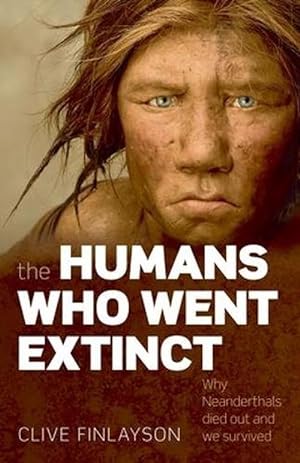
The Humans Who Went Extinct (Paperback)
Idioma: Inglés
Publicado por Oxford University Press, Oxford, 2010
ISBN 10: 0199239193 ISBN 13: 9780199239191
Librería: Grand Eagle Retail, Bensenville, IL, Estados Unidos de America
Calificación del vendedor: 5 de 5 estrellas
EUR 19,57
Gastos de envío gratis
Se envía dentro de Estados Unidos de AmericaCantidad disponible: 1 disponibles
Añadir al carritoPaperback. Condición: new. Paperback. Just 28,000 years ago, the blink of an eye in geological time, the last of Neanderthals died out in their last outpost, in caves near Gibraltar. Thanks to cartoons and folk accounts we have a distorted view of these other humans - for that is what they were. We think of them as crude and clumsy and not very bright, easily driven to extinction by the lithe, smart modern humans that came out of Africa some 100,000 years ago.But was it really assimple as that? Clive Finlayson reminds us that the Neanderthals were another kind of human, and their culture was not so very different from that of our own ancestors. In this book, he presents a widerview of the events that led to the migration of the moderns into Europe, what might have happened during the contact of the two populations, and what finally drove the Neanderthals to extinction. It is a view that considers climate, ecology, and migrations of populations, as well as culture and interaction.His conclusion is that the destiny of the Neanderthals and the Moderns was sealed by ecological factors and contingencies. It was a matter of luck that we survived andspread while the Neanderthals dwindled and perished. Had the climate not changed in our favour some 50 million years ago, things would have been very different.There is muchcurrent research interest in Neanderthals, much of it driven by attempts to map some of their DNA. But it's not just a question of studying the DNA. The rise and fall of populations is profoundly moulded by the larger scale forces of climate and ecology. And it is only by taking this wider view that we can fully understand the course of events that led to our survival and their demise. The fact that Neanderthals survived until virtually yesterday makes our relationship with them and theirtragedy even more poignant. They almost made it, after all. Neanderthals - no less than another kind of human - almost made it, finally dying out just 28,000 years ago. What caused us to survive while they went extinct? Ecology holds the clues, argues Clive Finlayson. It comes down to climate change and chance. There was little in it, and things could have turned out quite differently. Shipping may be from multiple locations in the US or from the UK, depending on stock availability.
-
HUMANS WHO WENT EXTINCT
Idioma: Inglés
Publicado por Oxford University Press, 2010
ISBN 10: 0199239193 ISBN 13: 9780199239191
Librería: Speedyhen LLC, Hialeah, FL, Estados Unidos de America
Calificación del vendedor: 5 de 5 estrellas
EUR 21,73
Gastos de envío gratis
Se envía dentro de Estados Unidos de AmericaCantidad disponible: 4 disponibles
Añadir al carritoCondición: NEW.
-
The Humans Who Went Extinct: Why Neanderthals died out and we survived
Librería: Greener Books, London, Reino Unido
Calificación del vendedor: 4 de 5 estrellas
EUR 4,54
Envío por EUR 18,47
Se envía de Reino Unido a Estados Unidos de AmericaCantidad disponible: 1 disponibles
Añadir al carritoPaperback. Condición: Used; Very Good. **SHIPPED FROM UK** We believe you will be completely satisfied with our quick and reliable service. All orders are dispatched as swiftly as possible! Buy with confidence! Greener Books.
-
The Humans Who Went Extinct: Why Neanderthals died out and we survived
Librería: Brit Books, Milton Keynes, Reino Unido
Calificación del vendedor: 4 de 5 estrellas
EUR 4,54
Envío por EUR 18,47
Se envía de Reino Unido a Estados Unidos de AmericaCantidad disponible: 2 disponibles
Añadir al carritoPaperback. Condición: Used; Very Good. ***Simply Brit*** Welcome to our online used book store, where affordability meets great quality. Dive into a world of captivating reads without breaking the bank. We take pride in offering a wide selection of used books, from classics to hidden gems, ensuring there is something for every literary palate. All orders are shipped within 24 hours and our lightning fast-delivery within 48 hours coupled with our prompt customer service ensures a smooth journey from ordering to delivery. Discover the joy of reading with us, your trusted source for affordable books that do not compromise on quality.
-
The Humans Who Went Extinct: Why Neanderthals Died Out and We Survived
Librería: Revaluation Books, Exeter, Reino Unido
Calificación del vendedor: 5 de 5 estrellas
EUR 15,34
Envío por EUR 11,55
Se envía de Reino Unido a Estados Unidos de AmericaCantidad disponible: 1 disponibles
Añadir al carritoPaperback. Condición: Brand New. 11.9.2010 edition. 256 pages. 8.00x5.25x1.00 inches. In Stock.
-
The Humans Who Went Extinct: Why Neanderthals died out and we survived
Idioma: Inglés
Publicado por Oxford University Press, 2010
ISBN 10: 0199239193 ISBN 13: 9780199239191
Librería: Kennys Bookshop and Art Galleries Ltd., Galway, GY, Irlanda
Calificación del vendedor: 5 de 5 estrellas
Original o primera edición
EUR 17,42
Envío por EUR 10,50
Se envía de Irlanda a Estados Unidos de AmericaCantidad disponible: 2 disponibles
Añadir al carritoCondición: New. 2010. 1st Edition. Paperback. Neanderthals - no less than another kind of human - almost made it, finally dying out just 28,000 years ago. What caused us to survive while they went extinct? Ecology holds the clues, argues Clive Finlayson. It comes down to climate change and chance. There was little in it, and things could have turned out quite differently. Num Pages: 288 pages, 5 black and white illustrations and 1 table. BIC Classification: PDZ; PSXE. Category: (G) General (US: Trade). Dimension: 195 x 130 x 18. Weight in Grams: 214. . . . . .
-
The Humans Who Went Extinct: Why Neanderthals died out and we survived
Idioma: Inglés
Publicado por Oxford University Press, 2010
ISBN 10: 0199239193 ISBN 13: 9780199239191
Librería: Kennys Bookstore, Olney, MD, Estados Unidos de America
Calificación del vendedor: 5 de 5 estrellas
EUR 20,58
Envío por EUR 9,04
Se envía dentro de Estados Unidos de AmericaCantidad disponible: 2 disponibles
Añadir al carritoCondición: New. 2010. 1st Edition. Paperback. Neanderthals - no less than another kind of human - almost made it, finally dying out just 28,000 years ago. What caused us to survive while they went extinct? Ecology holds the clues, argues Clive Finlayson. It comes down to climate change and chance. There was little in it, and things could have turned out quite differently. Num Pages: 288 pages, 5 black and white illustrations and 1 table. BIC Classification: PDZ; PSXE. Category: (G) General (US: Trade). Dimension: 195 x 130 x 18. Weight in Grams: 214. . . . . . Books ship from the US and Ireland.
-
The Humans Who Went Extinct: Why Neanderthals Died Out and We Survived
Idioma: Inglés
Publicado por Oxford University Press, 2010
ISBN 10: 0199239193 ISBN 13: 9780199239191
Librería: Ria Christie Collections, Uxbridge, Reino Unido
Calificación del vendedor: 5 de 5 estrellas
EUR 16,52
Envío por EUR 13,84
Se envía de Reino Unido a Estados Unidos de AmericaCantidad disponible: 2 disponibles
Añadir al carritoCondición: New. In.
-
The Humans Who Went Extinct: Why Neanderthals died out and we survived
Librería: Chiron Media, Wallingford, Reino Unido
Calificación del vendedor: 5 de 5 estrellas
EUR 12,52
Envío por EUR 17,89
Se envía de Reino Unido a Estados Unidos de AmericaCantidad disponible: 2 disponibles
Añadir al carritopaperback. Condición: New.
-
The Humans Who Went Extinct: Why Neanderthals died out and we survived
Idioma: Inglés
Publicado por Oxford University Press, 2010
ISBN 10: 0199239193 ISBN 13: 9780199239191
Librería: THE SAINT BOOKSTORE, Southport, Reino Unido
Calificación del vendedor: 5 de 5 estrellas
EUR 17,77
Envío por EUR 15,65
Se envía de Reino Unido a Estados Unidos de AmericaCantidad disponible: 2 disponibles
Añadir al carritoPaperback / softback. Condición: New. New copy - Usually dispatched within 3 working days.
-
The Humans Who Went Extinct: Why Neanderthals Died Out and We Survived
Librería: Revaluation Books, Exeter, Reino Unido
Calificación del vendedor: 5 de 5 estrellas
EUR 22,06
Envío por EUR 11,55
Se envía de Reino Unido a Estados Unidos de AmericaCantidad disponible: 1 disponibles
Añadir al carritoPaperback. Condición: Brand New. 11.9.2010 edition. 256 pages. 8.00x5.25x1.00 inches. In Stock.
-
The Humans Who Went Extinct: Why Neanderthals died out and we survived (eng)
Idioma: Inglés
Publicado por Oxford University Press, 2010
ISBN 10: 0199239193 ISBN 13: 9780199239191
Librería: Brook Bookstore On Demand, Napoli, NA, Italia
Calificación del vendedor: 4 de 5 estrellas
EUR 27,01
Envío por EUR 11,00
Se envía de Italia a Estados Unidos de AmericaCantidad disponible: Más de 20 disponibles
Añadir al carritoCondición: new.
-

The Humans Who Went Extinct (Paperback)
Idioma: Inglés
Publicado por Oxford University Press, Oxford, 2010
ISBN 10: 0199239193 ISBN 13: 9780199239191
Librería: CitiRetail, Stevenage, Reino Unido
Calificación del vendedor: 5 de 5 estrellas
EUR 16,04
Envío por EUR 42,74
Se envía de Reino Unido a Estados Unidos de AmericaCantidad disponible: 1 disponibles
Añadir al carritoPaperback. Condición: new. Paperback. Just 28,000 years ago, the blink of an eye in geological time, the last of Neanderthals died out in their last outpost, in caves near Gibraltar. Thanks to cartoons and folk accounts we have a distorted view of these other humans - for that is what they were. We think of them as crude and clumsy and not very bright, easily driven to extinction by the lithe, smart modern humans that came out of Africa some 100,000 years ago.But was it really assimple as that? Clive Finlayson reminds us that the Neanderthals were another kind of human, and their culture was not so very different from that of our own ancestors. In this book, he presents a widerview of the events that led to the migration of the moderns into Europe, what might have happened during the contact of the two populations, and what finally drove the Neanderthals to extinction. It is a view that considers climate, ecology, and migrations of populations, as well as culture and interaction.His conclusion is that the destiny of the Neanderthals and the Moderns was sealed by ecological factors and contingencies. It was a matter of luck that we survived andspread while the Neanderthals dwindled and perished. Had the climate not changed in our favour some 50 million years ago, things would have been very different.There is muchcurrent research interest in Neanderthals, much of it driven by attempts to map some of their DNA. But it's not just a question of studying the DNA. The rise and fall of populations is profoundly moulded by the larger scale forces of climate and ecology. And it is only by taking this wider view that we can fully understand the course of events that led to our survival and their demise. The fact that Neanderthals survived until virtually yesterday makes our relationship with them and theirtragedy even more poignant. They almost made it, after all. Neanderthals - no less than another kind of human - almost made it, finally dying out just 28,000 years ago. What caused us to survive while they went extinct? Ecology holds the clues, argues Clive Finlayson. It comes down to climate change and chance. There was little in it, and things could have turned out quite differently. Shipping may be from our UK warehouse or from our Australian or US warehouses, depending on stock availability.
-

The Humans Who Went Extinct (Paperback)
Idioma: Inglés
Publicado por Oxford University Press, Oxford, 2010
ISBN 10: 0199239193 ISBN 13: 9780199239191
Librería: AussieBookSeller, Truganina, VIC, Australia
Calificación del vendedor: 5 de 5 estrellas
EUR 29,01
Envío por EUR 31,86
Se envía de Australia a Estados Unidos de AmericaCantidad disponible: 1 disponibles
Añadir al carritoPaperback. Condición: new. Paperback. Just 28,000 years ago, the blink of an eye in geological time, the last of Neanderthals died out in their last outpost, in caves near Gibraltar. Thanks to cartoons and folk accounts we have a distorted view of these other humans - for that is what they were. We think of them as crude and clumsy and not very bright, easily driven to extinction by the lithe, smart modern humans that came out of Africa some 100,000 years ago.But was it really assimple as that? Clive Finlayson reminds us that the Neanderthals were another kind of human, and their culture was not so very different from that of our own ancestors. In this book, he presents a widerview of the events that led to the migration of the moderns into Europe, what might have happened during the contact of the two populations, and what finally drove the Neanderthals to extinction. It is a view that considers climate, ecology, and migrations of populations, as well as culture and interaction.His conclusion is that the destiny of the Neanderthals and the Moderns was sealed by ecological factors and contingencies. It was a matter of luck that we survived andspread while the Neanderthals dwindled and perished. Had the climate not changed in our favour some 50 million years ago, things would have been very different.There is muchcurrent research interest in Neanderthals, much of it driven by attempts to map some of their DNA. But it's not just a question of studying the DNA. The rise and fall of populations is profoundly moulded by the larger scale forces of climate and ecology. And it is only by taking this wider view that we can fully understand the course of events that led to our survival and their demise. The fact that Neanderthals survived until virtually yesterday makes our relationship with them and theirtragedy even more poignant. They almost made it, after all. Neanderthals - no less than another kind of human - almost made it, finally dying out just 28,000 years ago. What caused us to survive while they went extinct? Ecology holds the clues, argues Clive Finlayson. It comes down to climate change and chance. There was little in it, and things could have turned out quite differently. Shipping may be from our Sydney, NSW warehouse or from our UK or US warehouse, depending on stock availability.
-
HUMANS WHO WENT EXTINCT
Idioma: Inglés
Publicado por Oxford University Press, 2010
ISBN 10: 0199239193 ISBN 13: 9780199239191
Librería: Speedyhen, Hertfordshire, Reino Unido
Calificación del vendedor: 5 de 5 estrellas
EUR 13,98
Envío por EUR 47,36
Se envía de Reino Unido a Estados Unidos de AmericaCantidad disponible: 2 disponibles
Añadir al carritoCondición: NEW.
-
The Humans Who Went Extinct: Why Neanderthals died out and we survived
Idioma: Inglés
Publicado por Oxford University Press, Oxford, 2010
ISBN 10: 0199239193 ISBN 13: 9780199239191
Librería: Edmonton Book Store, Edmonton, AB, Canada
Miembro de asociación: ABAC ILAB
Calificación del vendedor: 4 de 5 estrellas
EUR 13,30
Envío por EUR 49,08
Se envía de Canada a Estados Unidos de AmericaCantidad disponible: 1 disponibles
Añadir al carritoCondición: very good. Estado de la sobrecubierta: no dustjacket. 8vo pp.273. book.
-

The Humans Who Went Extinct
Idioma: Inglés
Publicado por Oxford University Press, 2010
ISBN 10: 0199239193 ISBN 13: 9780199239191
Librería: moluna, Greven, Alemania
Calificación del vendedor: 4 de 5 estrellas
EUR 19,64
Envío por EUR 48,99
Se envía de Alemania a Estados Unidos de AmericaCantidad disponible: 1 disponibles
Añadir al carritoGebunden. Condición: New. Neanderthals - no less than another kind of human - almost made it, finally dying out just 28,000 years ago. What caused us to survive while they went extinct? Ecology holds the clues, argues Clive Finlayson. It comes down to climate change and chance. Ther.
-

The Humans Who Went Extinct : Why Neanderthals died out and we survived
Idioma: Inglés
Publicado por Oxford University Press Nov 2010, 2010
ISBN 10: 0199239193 ISBN 13: 9780199239191
Librería: AHA-BUCH GmbH, Einbeck, Alemania
Calificación del vendedor: 5 de 5 estrellas
EUR 17,49
Envío por EUR 61,08
Se envía de Alemania a Estados Unidos de AmericaCantidad disponible: 1 disponibles
Añadir al carritoTaschenbuch. Condición: Neu. Neuware - Just 28,000 years ago, the blink of an eye in geological time, the last of Neanderthals died out in their last outpost, in caves near Gibraltar. Thanks to cartoons and folk accounts we have a distorted view of these other humans - for that is what they were. We think of them as crude and clumsy and not very bright, easily driven to extinction by the lithe, smart modern humans that came out of Africa some 100,000 years ago.But was it really as simple as that Clive Finlayson reminds us that the Neanderthals were another kind of human, and their culture was not so very different from that of our own ancestors. In this book, he presents a wider view of the events that led to the migration of the moderns into Europe, what might have happened during the contact of the two populations, and what finally drove the Neanderthals to extinction. It is a view that considers climate, ecology, and migrations of populations, aswell as culture and interaction.His conclusion is that the destiny of the Neanderthals and the Moderns was sealed by ecological factors and contingencies. It was a matter of luck that we survived and spread while the Neanderthals dwindled and perished. Had the climate not changed in our favour some 50 million years ago, things would have been very different.There is much current research interest in Neanderthals, much of it driven by attempts to map some of their DNA. But it's not just a question of studying the DNA. The rise and fall of populations is profoundly moulded by the larger scale forces of climate and ecology. And it is only by taking this wider view that we can fully understand the course of events that led to our survival and their demise. The fact that Neanderthals survived until virtually yesterday makes our relationship with themand their tragedy even more poignant. They almost made it, after all.
-

The Humans Who Went Extinct | Why Neanderthals died out and we survived
Idioma: Inglés
Publicado por Oxford University Press, 2010
ISBN 10: 0199239193 ISBN 13: 9780199239191
Librería: preigu, Osnabrück, Alemania
Calificación del vendedor: 5 de 5 estrellas
EUR 21,45
Envío por EUR 70,00
Se envía de Alemania a Estados Unidos de AmericaCantidad disponible: 1 disponibles
Añadir al carritoTaschenbuch. Condición: Neu. The Humans Who Went Extinct | Why Neanderthals died out and we survived | Finlayson | Taschenbuch | Kartoniert / Broschiert | Englisch | 2010 | Oxford University Press | EAN 9780199239191 | Verantwortliche Person für die EU: Deutsche Bibelgesellschaft, Postfach:81 03 40, 70567 Stuttgart, vertrieb[at]dbg[dot]de | Anbieter: preigu.

