

Importe total (1 artículo artículos):
Destino del pedido:

zadoks jan (23 resultados)
Ir a los resultados principales
Filtros de búsqueda
Tipo de artículo
- Todos los tipos de productos
- Libros (23)
- Revistas y publicaciones (No hay ningún otro resultado que coincida con este filtro.)
- Cómics (No hay ningún otro resultado que coincida con este filtro.)
- Partituras (No hay ningún otro resultado que coincida con este filtro.)
- Arte, grabados y pósters (No hay ningún otro resultado que coincida con este filtro.)
- Fotografías (No hay ningún otro resultado que coincida con este filtro.)
- Mapas (No hay ningún otro resultado que coincida con este filtro.)
- Manuscritos y coleccionismo de papel (No hay ningún otro resultado que coincida con este filtro.)
Condición Más información
Encuadernación
Más atributos
- Primera edición (2)
- Firmado (No hay ningún otro resultado que coincida con este filtro.)
- Sobrecubierta (1)
- Con imágenes (13)
- No impresión bajo demanda (15)
Idioma (2)
Gastos de envío gratis
Ubicación del vendedor
Valoración de los vendedores
-

Epidemiology and Plant Disease Management
Idioma: Inglés
Publicado por Oxford University Press, Incorporated, 1979
ISBN 10: 0195024516 ISBN 13: 9780195024517
Librería: Better World Books, Mishawaka, IN, Estados Unidos de America
Calificación del vendedor: 5 de 5 estrellas

EUR 18,29
Gastos de envío gratis
Se envía dentro de Estados Unidos de AmericaCantidad disponible: 1 disponibles
Añadir al carritoCondición: Good. Former library copy. Pages intact with minimal writing/highlighting. The binding may be loose and creased. Dust jackets/supplements are not included. Includes library markings. Stock photo provided. Product includes identifying sticker. Better World Books: Buy Books. Do Good.
-
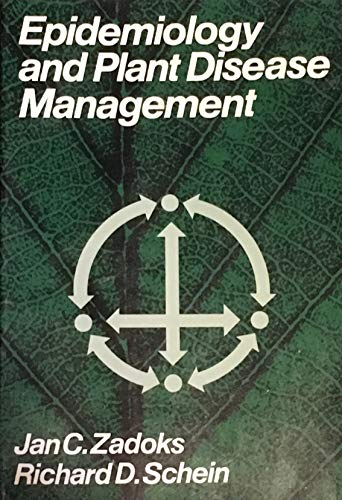
Epidemiology and Plant Disease Management
Idioma: Inglés
Publicado por Oxford University Press, 1979
ISBN 10: 0195024524 ISBN 13: 9780195024524
Librería: ThriftBooks-Dallas, Dallas, TX, Estados Unidos de America
Calificación del vendedor: 5 de 5 estrellas
EUR 27,52
Gastos de envío gratis
Se envía dentro de Estados Unidos de AmericaCantidad disponible: 1 disponibles
Añadir al carritoPaperback. Condición: Fair. No Jacket. Readable copy. Pages may have considerable notes/highlighting. ~ ThriftBooks: Read More, Spend Less.
-
Epidemiology and Plant Disease Management.
Idioma: Inglés
Publicado por Oxford University Press, 1979
ISBN 10: 0195024524 ISBN 13: 9780195024524
Librería: Plurabelle Books Ltd, Cambridge, Reino Unido
Miembro de asociación: GIAQ
Calificación del vendedor: 5 de 5 estrellas
Original o primera edición
EUR 23,88
Envío por EUR 9,27
Se envía de Reino Unido a Estados Unidos de AmericaCantidad disponible: 1 disponibles
Añadir al carritoPaperback. Condición: Very Good. xiii 427p large paperback in very good condition, leaf-green cover, only a little wear, spine and covers a bit bent, binding firm, pages clean and neat, many graphs and diagrams, a good copy Language: English Weight (g): 595.
-

Epidemiology and Plant Disease Management
Idioma: Inglés
Publicado por Oxford University Press, 1979
ISBN 10: 0195024516 ISBN 13: 9780195024517
Librería: Riverhorse Books, Saginaw, MI, Estados Unidos de America
Calificación del vendedor: 5 de 5 estrellas
EUR 40,71
Envío por EUR 4,17
Se envía dentro de Estados Unidos de AmericaCantidad disponible: 1 disponibles
Añadir al carritoHardcover. Condición: Fine. Estado de la sobrecubierta: Fine. Book has no internal or external markings, no rem-mark, and is clean and tight.PO registered forrester impression on FEP. DJ is not price-clipped, and has no tears, chips or folds, and is bright and clean. 427 pgs. W/index and B&W illustrations.
-
Epidemiology and Plant Disease Management
Idioma: Inglés
Publicado por Oxford University Press, 1979
ISBN 10: 0195024516 ISBN 13: 9780195024517
Librería: ThriftBooksVintage, Tukwila, WA, Estados Unidos de America
Calificación del vendedor: 5 de 5 estrellas
EUR 48,85
Gastos de envío gratis
Se envía dentro de Estados Unidos de AmericaCantidad disponible: 1 disponibles
Añadir al carritoHardcover. Condición: Good. No Jacket. Ex-Library copy with typical library marks and stamps. Dust jacket missing. Shelf and handling wear to cover and binding, with general signs of previous use. Boards have light shelf wear with scuffing and bumping. Binding is sound. Rear endpage has glue soiling with library sleeve. Page edges are lightly scuffed and smudged. Interior pages are unmarked. Secure packaging for safe delivery.
-

Black Shank of Tobacco in the Former Dutch East Indies, Caused by Phytophthora Nicotianae: Original Papers by Jacob Van Breda De Haan, 1895 and Thung Tjeng Hiang, 1931 & 1938
Librería: Revaluation Books, Exeter, Reino Unido
Calificación del vendedor: 5 de 5 estrellas
EUR 77,11
Envío por EUR 11,59
Se envía de Reino Unido a Estados Unidos de AmericaCantidad disponible: 2 disponibles
Añadir al carritoPaperback. Condición: Brand New. 01 edition. 230 pages. 9.75x6.75x0.50 inches. In Stock.
-
Epidemiology and plant disease Management
Idioma: Inglés
Publicado por Oxford university Press, New York, 1979
ISBN 10: 0195024516 ISBN 13: 9780195024517
Librería: Webbooks, Wigtown, Wigtown, Reino Unido
Miembro de asociación: PBFA
Calificación del vendedor: 5 de 5 estrellas
Original o primera edición
EUR 57,30
Envío por EUR 34,77
Se envía de Reino Unido a Estados Unidos de AmericaCantidad disponible: 1 disponibles
Añadir al carritoHard Cover. Condición: Good. No Jacket. First Edition. From an academic library with the usual stamps etc.
-

Black shank of tobacco in the former Dutch East Indies, caused by Phytophthora nicotianae
Idioma: Inglés
Publicado por Sidestone Press Dez 2014, 2014
ISBN 10: 9088902836 ISBN 13: 9789088902833
Librería: AHA-BUCH GmbH, Einbeck, Alemania
Calificación del vendedor: 5 de 5 estrellas
EUR 37,95
Envío por EUR 62,28
Se envía de Alemania a Estados Unidos de AmericaCantidad disponible: 1 disponibles
Añadir al carritoTaschenbuch. Condición: Neu. Neuware - Jacob van Breda de Haan is known as the author of the name Phytophthora nicotianae n.sp., the causal agent of 'black shank', an important disease of tobacco. Who was he Where did he work What did he publish He published in Dutch, 1896, in a Dutch colonial report series. Next question: what more on tobacco diseases was written in obscure, colonial Dutch documents Another scientist, Thung Tjeng Hiang, better known as the first Wageningen professor of plant virology, presented two original papers in Dutch on 'black shank' with the word 'epidemiologie' in their title, 1931 and 1938. Therewith Thung was an early bird in plant disease epidemiology. The foundational paper by van Breda de Haan and two important papers by Thung are presented here in English translation. Both authors worked in the former Dutch East Indies, present Indonesia, the first on the island of Sumatera, the latter on that of Java. Both were in the service of tobacco planters; they had to solve immediate problems as fast as possible. In a pioneer situation, van Breda de Haan was confronted with a sudden seedling disease which devastated the tobacco seedlings in the seed beds and which, yes, could lead to 'black shank' in adult plants. Thung, working in a well-organized environment, had to prevent 'black shank' in the tobacco plantations. Both authors were successful in controlling disease by means of a combination of ecological intervention and chemical treatment. Whereas van Breda de Haan could only dream of genetic control, Thung could incorporate the use of a fairly resistant cultivar in his recommendations. The 1896 paper has epidemiological observations scattered throughout, without using the word epidemiology. The 1931 and 1938 papers are probably 'firsts' in the Dutch phytopathological literature having epidemiology in their title, one an early study in quantitative, comparative epidemiology and the other an early version of landscape epidemiology. The three papers are preceded by a sketch of tobacco cultivation in the former Dutch East Indies, describing the position of the two authors in the tobacco scene; they are followed by a long-due biography of a forgotten plant pathologist, Jacob van Breda de Haan.
-

Crop Protection in Medieval Agriculture: Studies in Pre-Modern Organic Agriculture
Librería: ECOSPHERE, Champs sur marne, Francia
Calificación del vendedor: 5 de 5 estrellas
EUR 41,90
Envío por EUR 65,00
Se envía de Francia a Estados Unidos de AmericaCantidad disponible: 1 disponibles
Añadir al carritoCouverture souple. Condición: Neuf.
-
Crop Protection in Medieval Agriculture: Studies in Pre-modern Organic Agriculture
Librería: Revaluation Books, Exeter, Reino Unido
Calificación del vendedor: 5 de 5 estrellas
EUR 99,15
Envío por EUR 14,49
Se envía de Reino Unido a Estados Unidos de AmericaCantidad disponible: 2 disponibles
Añadir al carritoPaperback. Condición: Brand New. 01 edition. 333 pages. 10.00x7.00x0.75 inches. In Stock.
-
Epidemiology and Plant Disease Management
Idioma: Inglés
Publicado por Oxford University Press, 1979
ISBN 10: 0195024516 ISBN 13: 9780195024517
Librería: Phatpocket Limited, Waltham Abbey, HERTS, Reino Unido
Calificación del vendedor: 5 de 5 estrellas
EUR 106,19
Envío por EUR 12,33
Se envía de Reino Unido a Estados Unidos de AmericaCantidad disponible: 1 disponibles
Añadir al carritoCondición: Good. Your purchase helps support Sri Lankan Children's Charity 'The Rainbow Centre'. Ex-library, so some stamps and wear, but in good overall condition. Our donations to The Rainbow Centre have helped provide an education and a safe haven to hundreds of children who live in appalling conditions.
-
Epidemiology and Plant Disease Management
Idioma: Inglés
Publicado por Oxford University Press, 1979
ISBN 10: 0195024516 ISBN 13: 9780195024517
Librería: Mispah books, Redhill, SURRE, Reino Unido
Calificación del vendedor: 4 de 5 estrellas

EUR 175,50
Envío por EUR 28,98
Se envía de Reino Unido a Estados Unidos de AmericaCantidad disponible: 1 disponibles
Añadir al carritoHardcover. Condición: Like New. LIKE NEW. SHIPS FROM MULTIPLE LOCATIONS. book.
-

Modern Crop Protection: Developments and Perspectives
Librería: Mispah books, Redhill, SURRE, Reino Unido
Calificación del vendedor: 4 de 5 estrellas
EUR 208,92
Envío por EUR 28,98
Se envía de Reino Unido a Estados Unidos de AmericaCantidad disponible: 1 disponibles
Añadir al carritohardcover. Condición: Like New. LIKE NEW. SHIPS FROM MULTIPLE LOCATIONS. book.
-

Yellow Rust on Wheat : Studies in Epidemiology and Physiologic Specialization
Publicado por Veenman & Zonen, Wageningen [Netherlands], 1961
Librería: Expatriate Bookshop of Denmark, Svendborg, Dinamarca
Calificación del vendedor: 5 de 5 estrellas
EUR 48,85
Envío por EUR 59,00
Se envía de Dinamarca a Estados Unidos de AmericaCantidad disponible: 1 disponibles
Añadir al carritoorig. wrappers. Condición: Minor wear. VG. Textual maps. Ilustrador. 24x15cm, viii,188 pp, University of Amsterdam doctoral dissertation.
-

EPIDEMIOLOGY AND PLANT DISEASE MANAGEMENT
Librería: Moby Dick, Noordwijk, Holanda
Calificación del vendedor: 4 de 5 estrellas
EUR 15,00
Envío por EUR 49,10
Se envía de Holanda a Estados Unidos de AmericaCantidad disponible: 1 disponibles
Añadir al carritoNew York 1979, 427 pp.,ill. (code C-21).
-

Black shank of tobacco in the former Dutch East Indies, caused by Phytophthora nicotianae
Idioma: Inglés
Publicado por Sidestone Press Dez 2014, 2014
ISBN 10: 9088902836 ISBN 13: 9789088902833
Librería: BuchWeltWeit Ludwig Meier e.K., Bergisch Gladbach, Alemania
Calificación del vendedor: 5 de 5 estrellas
EUR 35,00
Envío por EUR 23,00
Se envía de Alemania a Estados Unidos de AmericaCantidad disponible: 2 disponibles
Añadir al carritoTaschenbuch. Condición: Neu. This item is printed on demand - it takes 3-4 days longer - Neuware -Jacob van Breda de Haan is known as the author of the name Phytophthora nicotianae n.sp., the causal agent of 'black shank', an important disease of tobacco. Who was he Where did he work What did he publish He published in Dutch, 1896, in a Dutch colonial report series. Next question: what more on tobacco diseases was written in obscure, colonial Dutch documents Another scientist, Thung Tjeng Hiang, better known as the first Wageningen professor of plant virology, presented two original papers in Dutch on 'black shank' with the word 'epidemiologie' in their title, 1931 and 1938. Therewith Thung was an early bird in plant disease epidemiology. The foundational paper by van Breda de Haan and two important papers by Thung are presented here in English translation. Both authors worked in the former Dutch East Indies, present Indonesia, the first on the island of Sumatera, the latter on that of Java. Both were in the service of tobacco planters; they had to solve immediate problems as fast as possible. In a pioneer situation, van Breda de Haan was confronted with a sudden seedling disease which devastated the tobacco seedlings in the seed beds and which, yes, could lead to 'black shank' in adult plants. Thung, working in a well-organized environment, had to prevent 'black shank' in the tobacco plantations. Both authors were successful in controlling disease by means of a combination of ecological intervention and chemical treatment. Whereas van Breda de Haan could only dream of genetic control, Thung could incorporate the use of a fairly resistant cultivar in his recommendations. The 1896 paper has epidemiological observations scattered throughout, without using the word epidemiology. The 1931 and 1938 papers are probably 'firsts' in the Dutch phytopathological literature having epidemiology in their title, one an early study in quantitative, comparative epidemiology and the other an early version of landscape epidemiology. The three papers are preceded by a sketch of tobacco cultivation in the former Dutch East Indies, describing the position of the two authors in the tobacco scene; they are followed by a long-due biography of a forgotten plant pathologist, Jacob van Breda de Haan. 204 pp. Englisch.
-

Crop Protection in Medieval Agriculture
Idioma: Inglés
Publicado por Sidestone Press Okt 2013, 2013
ISBN 10: 9088901872 ISBN 13: 9789088901874
Librería: BuchWeltWeit Ludwig Meier e.K., Bergisch Gladbach, Alemania
Calificación del vendedor: 5 de 5 estrellas
EUR 45,00
Envío por EUR 23,00
Se envía de Alemania a Estados Unidos de AmericaCantidad disponible: 2 disponibles
Añadir al carritoTaschenbuch. Condición: Neu. This item is printed on demand - it takes 3-4 days longer - Neuware -Mediterranean and West European pre-modern agriculture (agriculture before 1600) was by necessity 'organic agriculture'. Crop protection is part and parcel of this agriculture, with weed control in the forefront. Crop protection is embedded in the medieval agronomy text books but specialised sections do occur. Weeds, insects and diseases are described but identification in modern terms is not easy. The pre-modern 'Crop Portfolio' is well filled, certainly in the Mediterranean area. The medieval 'Pest Portfolio' differs from the modern one because agriculture then was a Low External Input Agriculture, and because the proportion of cultivated to non-cultivated land was drastically lower than today. The pre-modern 'Control Portfolio' is surprisingly rich, both in preventive and interventive measures. Prevention was by risk management, intensive tillage, and careful storage. Intervention was mechanical and chemical. Chemical intervention used natural substances such as sulphur, pitch, and 'botanicals'. Some fifty plant species are mentioned in a crop protection context. Though application methods look rather modern they are typically low-tech. Among them are seed disinfection, spraying, dusting, fumigation, grease banding, wound care, and hand-picking but also scarification, now outdated. The reality of pest outbreaks and other damages is explored as to frequency, intensity, and extent. Information on the practical use of the recommended treatments is scanty. If applied, their effectiveness remains enigmatic. Three medieval agronomists are at the heart of this book, but historical developments in crop protection from early Punic, Greek, and Roman authors to the first modern author are outlined. The readership of these writers was the privileged class of landowners but hints pointing to the exchange of ideas between them and the common peasant were found. Consideration is given to the pre-modern reasoning in matters of crop protection. Comparison of pre-modern crop protection and its counterpart in modern organic agriculture is difficult because of drastic changes in the relation between crop areas and non-crop areas, and because of the great difference in yield levels then and now, with several associated differences. 334 pp. Englisch.
-

Black shank of tobacco in the former Dutch East Indies, caused by Phytophthora nicotianae
Librería: moluna, Greven, Alemania
Calificación del vendedor: 5 de 5 estrellas
EUR 30,60
Envío por EUR 48,99
Se envía de Alemania a Estados Unidos de AmericaCantidad disponible: Más de 20 disponibles
Añadir al carritoKartoniert / Broschiert. Condición: New. Dieser Artikel ist ein Print on Demand Artikel und wird nach Ihrer Bestellung fuer Sie gedruckt. Jacob van Breda de Haan is known as the author of the name Phytophthora nicotianae n.sp., the causal agent of black shank , an important disease of tobacco. Who was he? Where did he work? What did he publish? He published in Dutch, 1896, in a Dutch colonia.
-

Crop Protection in Medieval Agriculture
Librería: moluna, Greven, Alemania
Calificación del vendedor: 5 de 5 estrellas
EUR 38,05
Envío por EUR 48,99
Se envía de Alemania a Estados Unidos de AmericaCantidad disponible: Más de 20 disponibles
Añadir al carritoCondición: New. Dieser Artikel ist ein Print on Demand Artikel und wird nach Ihrer Bestellung fuer Sie gedruckt. Mediterranean and West European pre-modern agriculture (agriculture before 1600) was by necessity organic agriculture . Crop protection is part and parcel of this agriculture, with weed control in the forefront. Crop protection is embedded in the medieval.
-

Black shank of tobacco in the former Dutch East Indies, caused by Phytophthora nicotianae
Idioma: Inglés
Publicado por Sidestone Press Dez 2014, 2014
ISBN 10: 9088902836 ISBN 13: 9789088902833
Librería: buchversandmimpf2000, Emtmannsberg, BAYE, Alemania
Calificación del vendedor: 5 de 5 estrellas
EUR 35,00
Envío por EUR 60,00
Se envía de Alemania a Estados Unidos de AmericaCantidad disponible: 1 disponibles
Añadir al carritoTaschenbuch. Condición: Neu. This item is printed on demand - Print on Demand Titel. Neuware -Jacob van Breda de Haan is known as the author of the name Phytophthora nicotianae n.sp., the causal agent of ¿black shank¿, an important disease of tobacco. Who was he Where did he work What did he publish He published in Dutch, 1896, in a Dutch colonial report series. Next question: what more on tobacco diseases was written in obscure, colonial Dutch documents Another scientist, Thung Tjeng Hiang, better known as the first Wageningen professor of plant virology, presented two original papers in Dutch on ¿black shank¿ with the word ¿epidemiologie¿ in their title, 1931 and 1938. Therewith Thung was an early bird in plant disease epidemiology.The foundational paper by van Breda de Haan and two important papers by Thung are presented here in English translation. Both authors worked in the former Dutch East Indies, present Indonesia, the first on the island of Sumatera, the latter on that of Java. Both were in the service of tobacco planters; they had to solve immediate problems as fast as possible. In a pioneer situation, van Breda de Haan was confronted with a sudden seedling disease which devastated the tobacco seedlings in the seed beds and which, yes, could lead to ¿black shank¿ in adult plants. Thung, working in a well-organized environment, had to prevent ¿black shank¿ in the tobacco plantations.Both authors were successful in controlling disease by means of a combination of ecological intervention and chemical treatment. Whereas van Breda de Haan could only dream of genetic control, Thung could incorporate the use of a fairly resistant cultivar in his recommendations. The 1896 paper has epidemiological observations scattered throughout, without using the word epidemiology. The 1931 and 1938 papers are probably ¿firsts¿ in the Dutch phytopathological literature having epidemiology in their title, one an early study in quantitative, comparative epidemiology and the other an early version of landscape epidemiology.The three papers are preceded by a sketch of tobacco cultivation in the former Dutch East Indies, describing the position of the two authors in the tobacco scene; they are followed by a long-due biography of a forgotten plant pathologist, Jacob van Breda de Haan.Books on Demand GmbH, Überseering 33, 22297 Hamburg 204 pp. Englisch.
-
Black shank of tobacco in the former Dutch East Indies, caused by Phytophthora nicotianae
Librería: preigu, Osnabrück, Alemania
Calificación del vendedor: 5 de 5 estrellas
EUR 31,80
Envío por EUR 70,00
Se envía de Alemania a Estados Unidos de AmericaCantidad disponible: 5 disponibles
Añadir al carritoTaschenbuch. Condición: Neu. Black shank of tobacco in the former Dutch East Indies, caused by Phytophthora nicotianae | Jan C. Zadoks | Taschenbuch | 204 S. | Englisch | 2014 | Sidestone Press | EAN 9789088902833 | Verantwortliche Person für die EU: BoD - Books on Demand, In de Tarpen 42, 22848 Norderstedt, info[at]bod[dot]de | Anbieter: preigu Print on Demand.
-
Crop Protection in Medieval Agriculture
Librería: preigu, Osnabrück, Alemania
Calificación del vendedor: 5 de 5 estrellas
EUR 39,55
Envío por EUR 70,00
Se envía de Alemania a Estados Unidos de AmericaCantidad disponible: 5 disponibles
Añadir al carritoTaschenbuch. Condición: Neu. Crop Protection in Medieval Agriculture | Jan C. Zadoks | Taschenbuch | 334 S. | Englisch | 2013 | Sidestone Press | EAN 9789088901874 | Verantwortliche Person für die EU: BoD - Books on Demand, In de Tarpen 42, 22848 Norderstedt, info[at]bod[dot]de | Anbieter: preigu Print on Demand.
-

Crop Protection in Medieval Agriculture
Librería: AHA-BUCH GmbH, Einbeck, Alemania
Calificación del vendedor: 5 de 5 estrellas
EUR 47,19
Envío por EUR 63,65
Se envía de Alemania a Estados Unidos de AmericaCantidad disponible: 1 disponibles
Añadir al carritoTaschenbuch. Condición: Neu. nach der Bestellung gedruckt Neuware - Printed after ordering - Mediterranean and West European pre-modern agriculture (agriculture before 1600) was by necessity 'organic agriculture'. Crop protection is part and parcel of this agriculture, with weed control in the forefront. Crop protection is embedded in the medieval agronomy text books but specialised sections do occur. Weeds, insects and diseases are described but identification in modern terms is not easy. The pre-modern 'Crop Portfolio' is well filled, certainly in the Mediterranean area. The medieval 'Pest Portfolio' differs from the modern one because agriculture then was a Low External Input Agriculture, and because the proportion of cultivated to non-cultivated land was drastically lower than today. The pre-modern 'Control Portfolio' is surprisingly rich, both in preventive and interventive measures. Prevention was by risk management, intensive tillage, and careful storage. Intervention was mechanical and chemical. Chemical intervention used natural substances such as sulphur, pitch, and 'botanicals'. Some fifty plant species are mentioned in a crop protection context. Though application methods look rather modern they are typically low-tech. Among them are seed disinfection, spraying, dusting, fumigation, grease banding, wound care, and hand-picking but also scarification, now outdated. The reality of pest outbreaks and other damages is explored as to frequency, intensity, and extent. Information on the practical use of the recommended treatments is scanty. If applied, their effectiveness remains enigmatic. Three medieval agronomists are at the heart of this book, but historical developments in crop protection from early Punic, Greek, and Roman authors to the first modern author are outlined. The readership of these writers was the privileged class of landowners but hints pointing to the exchange of ideas between them and the common peasant were found. Consideration is given to the pre-modern reasoning in matters of crop protection. Comparison of pre-modern crop protection and its counterpart in modern organic agriculture is difficult because of drastic changes in the relation between crop areas and non-crop areas, and because of the great difference in yield levels then and now, with several associated differences.


