

Importe total (1 artículo artículos):
Destino del pedido:

verdine brian (20 resultados)
Ir a los resultados principales
Filtros de búsqueda
Tipo de artículo
- Todos los tipos de productos
- Libros (20)
- Revistas y publicaciones (No hay ningún otro resultado que coincida con este filtro.)
- Cómics (No hay ningún otro resultado que coincida con este filtro.)
- Partituras (No hay ningún otro resultado que coincida con este filtro.)
- Arte, grabados y pósters (No hay ningún otro resultado que coincida con este filtro.)
- Fotografías (No hay ningún otro resultado que coincida con este filtro.)
- Mapas (No hay ningún otro resultado que coincida con este filtro.)
- Manuscritos y coleccionismo de papel (No hay ningún otro resultado que coincida con este filtro.)
Condición Más información
- Nuevo (17)
- Como nuevo, Excelente o Muy bueno (2)
- Bueno o Aceptable (1)
- Regular o Pobre (No hay ningún otro resultado que coincida con este filtro.)
- Tal como se indica (No hay ningún otro resultado que coincida con este filtro.)
Encuadernación
- Todas
- Tapa dura (No hay ningún otro resultado que coincida con este filtro.)
- Tapa blanda (20)
Más atributos
- Primera edición (1)
- Firmado (No hay ningún otro resultado que coincida con este filtro.)
- Sobrecubierta (No hay ningún otro resultado que coincida con este filtro.)
- Con imágenes (7)
- No impresión bajo demanda (20)
Idioma (1)
Precio
- Cualquier precio
- Menos de EUR 20 (No hay ningún otro resultado que coincida con este filtro.)
- EUR 20 a EUR 45
- Más de EUR 45
Gastos de envío gratis
Ubicación del vendedor
Valoración de los vendedores
-
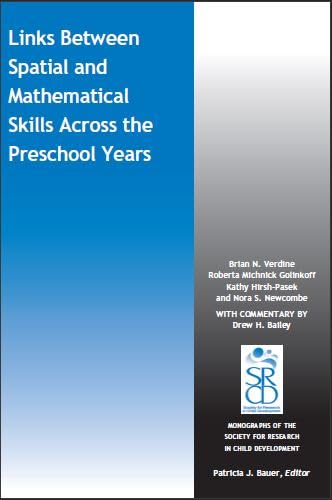
Link Between Spatial and Mathematical Skills Across the Preschool Years
Librería: GreatBookPrices, Columbia, MD, Estados Unidos de America
Calificación del vendedor: 5 de 5 estrellas

EUR 33,80
Envío por EUR 2,27
Se envía dentro de Estados Unidos de AmericaCantidad disponible: Más de 20 disponibles
Añadir al carritoCondición: New.
-
Link between Spatial and Mathematical Skills across the Preschool Years
Idioma: Inglés
Publicado por Wiley & Sons, Incorporated, John, 2017
ISBN 10: 1119402506 ISBN 13: 9781119402503
Librería: Better World Books, Mishawaka, IN, Estados Unidos de America
Calificación del vendedor: 5 de 5 estrellas
EUR 36,15
Gastos de envío gratis
Se envía dentro de Estados Unidos de AmericaCantidad disponible: 1 disponibles
Añadir al carritoCondición: Good. Former library copy. Pages intact with minimal writing/highlighting. The binding may be loose and creased. Dust jackets/supplements are not included. Includes library markings. Stock photo provided. Product includes identifying sticker. Better World Books: Buy Books. Do Good.
-
Link between Spatial and Mathematical Skills across the Preschool Years Format: Paperback
Librería: INDOO, Avenel, NJ, Estados Unidos de America
Calificación del vendedor: 5 de 5 estrellas
EUR 36,15
Gastos de envío gratis
Se envía dentro de Estados Unidos de AmericaCantidad disponible: Más de 20 disponibles
Añadir al carritoCondición: New.
-

Link Between Spatial and Mathematical Skills Across the Preschool Years
Librería: GreatBookPrices, Columbia, MD, Estados Unidos de America
Calificación del vendedor: 5 de 5 estrellas
EUR 37,15
Envío por EUR 2,27
Se envía dentro de Estados Unidos de AmericaCantidad disponible: Más de 20 disponibles
Añadir al carritoCondición: As New. Unread book in perfect condition.
-

Link between Spatial and Mathematical Skills across the Preschool Years
Idioma: Inglés
Publicado por John Wiley and Sons Ltd, GB, 2017
ISBN 10: 1119402506 ISBN 13: 9781119402503
Librería: Rarewaves.com USA, London, LONDO, Reino Unido
Calificación del vendedor: 5 de 5 estrellas
EUR 39,77
Gastos de envío gratis
Se envía de Reino Unido a Estados Unidos de AmericaCantidad disponible: 2 disponibles
Añadir al carritoPaperback. Condición: New. Understanding the development of spatial skills is important for improving overall success in STEM (science, technology, engineering, and mathematics) fields (e.g., Wai, Lubinski, Benbow, and Steiger, 2010). Children use spatial skills to understand the world and can practice them via spatial assembly activities like puzzles or blocks. These skills have been linked to success in subjects like mathematics (Mix and Cheng, 2012) and science (Pallrand and Seeber, 1984; Pribyl and Bodner, 1987). This monograph sought to answer four questions about early spatial development: 1) Can we reliably measure spatial skills in 3- and 4-year-olds?; 2) Do spatial skills measured at 3 predict spatial skills at age 5?; 3) Do preschool spatial skills predict mathematics skills at age 5?; and 4) What factors contribute to individual differences in preschool spatial skills (e.g., SES, gender, fine-motor skills, vocabulary, and executive function)? Longitudinal data generated from a new spatial skill test for 3-year-old children, called the TOSA (Test of Spatial Assembly), show that it is a reliable and valid measure of early spatial skills that provides strong prediction to spatial skills measured with established tests at age 5. New data using this measure finds links between early spatial skill and mathematics, language, and executive function skills. Analyses suggest that preschool spatial experiences may play a central role in early mathematical skills. Executive function skills further predict mathematical performance and individual differences, specifically socio economic status, are related to spatial and mathematical skill. We conclude by exploring ways of providing rich early spatial experiences.
-
Link between Spatial and Mathematical Skills across the Preschool Years (eng)
Librería: Brook Bookstore On Demand, Napoli, NA, Italia
Calificación del vendedor: 3 de 5 estrellas

EUR 39,23
Envío por EUR 4,00
Se envía de Italia a Estados Unidos de AmericaCantidad disponible: 3 disponibles
Añadir al carritoCondición: new.
-

Link between Spatial and Mathematical Skills across the Preschool Years (Paperback)
Idioma: Inglés
Publicado por John Wiley and Sons Ltd, Hoboken, 2017
ISBN 10: 1119402506 ISBN 13: 9781119402503
Librería: Grand Eagle Retail, Bensenville, IL, Estados Unidos de America
Calificación del vendedor: 5 de 5 estrellas
EUR 44,76
Gastos de envío gratis
Se envía dentro de Estados Unidos de AmericaCantidad disponible: 1 disponibles
Añadir al carritoPaperback. Condición: new. Paperback. Understanding the development of spatial skills is important for improving overall success in STEM (science, technology, engineering, and mathematics) fields (e.g., Wai, Lubinski, Benbow, & Steiger, 2010). Children use spatial skills to understand the world and can practice them via spatial assembly activities like puzzles or blocks. These skills have been linked to success in subjects like mathematics (Mix & Cheng, 2012) and science (Pallrand & Seeber, 1984; Pribyl & Bodner, 1987). This monograph sought to answer four questions about early spatial development: 1) Can we reliably measure spatial skills in 3- and 4-year-olds?; 2) Do spatial skills measured at 3 predict spatial skills at age 5?; 3) Do preschool spatial skills predict mathematics skills at age 5?; and 4) What factors contribute to individual differences in preschool spatial skills (e.g., SES, gender, fine-motor skills, vocabulary, and executive function)? Longitudinal data generated from a new spatial skill test for 3-year-old children, called the TOSA (Test of Spatial Assembly), show that it is a reliable and valid measure of early spatial skills that provides strong prediction to spatial skills measured with established tests at age 5. New data using this measure finds links between early spatial skill and mathematics, language, and executive function skills. Analyses suggest that preschool spatial experiences may play a central role in early mathematical skills. Executive function skills further predict mathematical performance and individual differences, specifically socio economic status, are related to spatial and mathematical skill. We conclude by exploring ways of providing rich early spatial experiences. Shipping may be from multiple locations in the US or from the UK, depending on stock availability.
-
Link between Spatial and Mathematical Skills across the Preschool Years
Librería: PBShop.store UK, Fairford, GLOS, Reino Unido
Calificación del vendedor: 4 de 5 estrellas

EUR 42,40
Envío por EUR 3,80
Se envía de Reino Unido a Estados Unidos de AmericaCantidad disponible: 3 disponibles
Añadir al carritoPAP. Condición: New. New Book. Shipped from UK. Established seller since 2000.
-
Link between Spatial and Mathematical Skills across the Preschool Years
Librería: Majestic Books, Hounslow, Reino Unido
Calificación del vendedor: 4 de 5 estrellas
EUR 47,49
Envío por EUR 7,51
Se envía de Reino Unido a Estados Unidos de AmericaCantidad disponible: 3 disponibles
Añadir al carritoCondición: New.
-
Link between Spatial and Mathematical Skills across the Preschool Years
Librería: THE SAINT BOOKSTORE, Southport, Reino Unido
Calificación del vendedor: 5 de 5 estrellas
EUR 41,64
Envío por EUR 13,98
Se envía de Reino Unido a Estados Unidos de AmericaCantidad disponible: 3 disponibles
Añadir al carritoPaperback / softback. Condición: New. New copy - Usually dispatched within 4 working days.
-
Link between Spatial and Mathematical Skills across the Preschool Years
Librería: Ubiquity Trade, Miami, FL, Estados Unidos de America
Calificación del vendedor: 4 de 5 estrellas
EUR 56,03
Envío por EUR 2,58
Se envía dentro de Estados Unidos de AmericaCantidad disponible: Más de 20 disponibles
Añadir al carritoCondición: New. Brand new! Please provide a physical shipping address.
-

Link Between Spatial and Mathematical Skills Across the Preschool Years
Librería: GreatBookPricesUK, Woodford Green, Reino Unido
Calificación del vendedor: 5 de 5 estrellas
EUR 41,58
Envío por EUR 17,32
Se envía de Reino Unido a Estados Unidos de AmericaCantidad disponible: Más de 20 disponibles
Añadir al carritoCondición: New.
-

Link Between Spatial and Mathematical Skills Across the Preschool Years
Librería: GreatBookPricesUK, Woodford Green, Reino Unido
Calificación del vendedor: 5 de 5 estrellas
EUR 41,82
Envío por EUR 17,32
Se envía de Reino Unido a Estados Unidos de AmericaCantidad disponible: Más de 20 disponibles
Añadir al carritoCondición: As New. Unread book in perfect condition.
-
Link Between Spatial and Mathematical Skills Across the Preschool Years
Librería: Revaluation Books, Exeter, Reino Unido
Calificación del vendedor: 5 de 5 estrellas
EUR 47,99
Envío por EUR 11,55
Se envía de Reino Unido a Estados Unidos de AmericaCantidad disponible: 2 disponibles
Añadir al carritoPaperback. Condición: Brand New. 150 pages. 9.06x5.91x0.39 inches. In Stock.
-
Link Between Spatial and Mathematical Skills Across the Preschool Years
Idioma: Inglés
Publicado por John Wiley and Sons Ltd, 2017
ISBN 10: 1119402506 ISBN 13: 9781119402503
Librería: Kennys Bookshop and Art Galleries Ltd., Galway, GY, Irlanda
Calificación del vendedor: 5 de 5 estrellas
Original o primera edición
EUR 47,84
Envío por EUR 10,50
Se envía de Irlanda a Estados Unidos de AmericaCantidad disponible: 15 disponibles
Añadir al carritoCondición: New. BIC Classification: JH. Category: (P) Professional & Vocational. Weight in Grams: 666. . 2017. 1st Edition. Paperback. . . . .
-
Link Between Spatial and Mathematical Skills Across the Preschool Years
Idioma: Inglés
Publicado por Wiley-Blackwell 2017-04-14, 2017
ISBN 10: 1119402506 ISBN 13: 9781119402503
Librería: Chiron Media, Wallingford, Reino Unido
Calificación del vendedor: 5 de 5 estrellas
EUR 42,64
Envío por EUR 17,89
Se envía de Reino Unido a Estados Unidos de AmericaCantidad disponible: 3 disponibles
Añadir al carritoPaperback. Condición: New.
-
Link Between Spatial and Mathematical Skills Across the Preschool Years
Idioma: Inglés
Publicado por John Wiley and Sons Ltd, 2017
ISBN 10: 1119402506 ISBN 13: 9781119402503
Librería: Kennys Bookstore, Olney, MD, Estados Unidos de America
Calificación del vendedor: 5 de 5 estrellas
EUR 59,03
Envío por EUR 9,04
Se envía dentro de Estados Unidos de AmericaCantidad disponible: 15 disponibles
Añadir al carritoCondición: New. BIC Classification: JH. Category: (P) Professional & Vocational. Weight in Grams: 666. . 2017. 1st Edition. Paperback. . . . . Books ship from the US and Ireland.
-

Link between Spatial and Mathematical Skills across the Preschool Years (Paperback)
Idioma: Inglés
Publicado por John Wiley and Sons Ltd, Hoboken, 2017
ISBN 10: 1119402506 ISBN 13: 9781119402503
Librería: CitiRetail, Stevenage, Reino Unido
Calificación del vendedor: 5 de 5 estrellas
EUR 50,53
Envío por EUR 42,73
Se envía de Reino Unido a Estados Unidos de AmericaCantidad disponible: 1 disponibles
Añadir al carritoPaperback. Condición: new. Paperback. Understanding the development of spatial skills is important for improving overall success in STEM (science, technology, engineering, and mathematics) fields (e.g., Wai, Lubinski, Benbow, & Steiger, 2010). Children use spatial skills to understand the world and can practice them via spatial assembly activities like puzzles or blocks. These skills have been linked to success in subjects like mathematics (Mix & Cheng, 2012) and science (Pallrand & Seeber, 1984; Pribyl & Bodner, 1987). This monograph sought to answer four questions about early spatial development: 1) Can we reliably measure spatial skills in 3- and 4-year-olds?; 2) Do spatial skills measured at 3 predict spatial skills at age 5?; 3) Do preschool spatial skills predict mathematics skills at age 5?; and 4) What factors contribute to individual differences in preschool spatial skills (e.g., SES, gender, fine-motor skills, vocabulary, and executive function)? Longitudinal data generated from a new spatial skill test for 3-year-old children, called the TOSA (Test of Spatial Assembly), show that it is a reliable and valid measure of early spatial skills that provides strong prediction to spatial skills measured with established tests at age 5. New data using this measure finds links between early spatial skill and mathematics, language, and executive function skills. Analyses suggest that preschool spatial experiences may play a central role in early mathematical skills. Executive function skills further predict mathematical performance and individual differences, specifically socio economic status, are related to spatial and mathematical skill. We conclude by exploring ways of providing rich early spatial experiences. Shipping may be from our UK warehouse or from our Australian or US warehouses, depending on stock availability.
-
Link between Spatial and Mathematical Skills across the Preschool Years (Paperback)
Idioma: Inglés
Publicado por John Wiley and Sons Ltd, Hoboken, 2017
ISBN 10: 1119402506 ISBN 13: 9781119402503
Librería: AussieBookSeller, Truganina, VIC, Australia
Calificación del vendedor: 5 de 5 estrellas
EUR 71,76
Envío por EUR 31,85
Se envía de Australia a Estados Unidos de AmericaCantidad disponible: 1 disponibles
Añadir al carritoPaperback. Condición: new. Paperback. Understanding the development of spatial skills is important for improving overall success in STEM (science, technology, engineering, and mathematics) fields (e.g., Wai, Lubinski, Benbow, & Steiger, 2010). Children use spatial skills to understand the world and can practice them via spatial assembly activities like puzzles or blocks. These skills have been linked to success in subjects like mathematics (Mix & Cheng, 2012) and science (Pallrand & Seeber, 1984; Pribyl & Bodner, 1987). This monograph sought to answer four questions about early spatial development: 1) Can we reliably measure spatial skills in 3- and 4-year-olds?; 2) Do spatial skills measured at 3 predict spatial skills at age 5?; 3) Do preschool spatial skills predict mathematics skills at age 5?; and 4) What factors contribute to individual differences in preschool spatial skills (e.g., SES, gender, fine-motor skills, vocabulary, and executive function)? Longitudinal data generated from a new spatial skill test for 3-year-old children, called the TOSA (Test of Spatial Assembly), show that it is a reliable and valid measure of early spatial skills that provides strong prediction to spatial skills measured with established tests at age 5. New data using this measure finds links between early spatial skill and mathematics, language, and executive function skills. Analyses suggest that preschool spatial experiences may play a central role in early mathematical skills. Executive function skills further predict mathematical performance and individual differences, specifically socio economic status, are related to spatial and mathematical skill. We conclude by exploring ways of providing rich early spatial experiences. Shipping may be from our Sydney, NSW warehouse or from our UK or US warehouse, depending on stock availability.
-

Link between Spatial and Mathematical Skills across the Preschool Years
Idioma: Inglés
Publicado por John Wiley and Sons Ltd, GB, 2017
ISBN 10: 1119402506 ISBN 13: 9781119402503
Librería: Rarewaves.com UK, London, Reino Unido
Calificación del vendedor: 5 de 5 estrellas
EUR 41,57
Envío por EUR 75,06
Se envía de Reino Unido a Estados Unidos de AmericaCantidad disponible: 2 disponibles
Añadir al carritoPaperback. Condición: New. Understanding the development of spatial skills is important for improving overall success in STEM (science, technology, engineering, and mathematics) fields (e.g., Wai, Lubinski, Benbow, and Steiger, 2010). Children use spatial skills to understand the world and can practice them via spatial assembly activities like puzzles or blocks. These skills have been linked to success in subjects like mathematics (Mix and Cheng, 2012) and science (Pallrand and Seeber, 1984; Pribyl and Bodner, 1987). This monograph sought to answer four questions about early spatial development: 1) Can we reliably measure spatial skills in 3- and 4-year-olds?; 2) Do spatial skills measured at 3 predict spatial skills at age 5?; 3) Do preschool spatial skills predict mathematics skills at age 5?; and 4) What factors contribute to individual differences in preschool spatial skills (e.g., SES, gender, fine-motor skills, vocabulary, and executive function)? Longitudinal data generated from a new spatial skill test for 3-year-old children, called the TOSA (Test of Spatial Assembly), show that it is a reliable and valid measure of early spatial skills that provides strong prediction to spatial skills measured with established tests at age 5. New data using this measure finds links between early spatial skill and mathematics, language, and executive function skills. Analyses suggest that preschool spatial experiences may play a central role in early mathematical skills. Executive function skills further predict mathematical performance and individual differences, specifically socio economic status, are related to spatial and mathematical skill. We conclude by exploring ways of providing rich early spatial experiences.


