

Importe total (1 artículo artículos):
Destino del pedido:

true believer (6 resultados)
Ir a los resultados principales
Filtros de búsqueda
Tipo de artículo
- Todos los tipos de productos
- Libros (6)
- Revistas y publicaciones (No hay ningún otro resultado que coincida con este filtro.)
- Cómics (No hay ningún otro resultado que coincida con este filtro.)
- Partituras (No hay ningún otro resultado que coincida con este filtro.)
- Arte, grabados y pósters (No hay ningún otro resultado que coincida con este filtro.)
- Fotografías (No hay ningún otro resultado que coincida con este filtro.)
- Mapas (No hay ningún otro resultado que coincida con este filtro.)
- Manuscritos y coleccionismo de papel (No hay ningún otro resultado que coincida con este filtro.)
Condición Más información
- Nuevo (3)
- Como nuevo, Excelente o Muy bueno (No hay ningún otro resultado que coincida con este filtro.)
- Bueno o Aceptable (1)
- Regular o Pobre (No hay ningún otro resultado que coincida con este filtro.)
- Tal como se indica (2)
Encuadernación
Más atributos
- Primera edición (1)
- Firmado (No hay ningún otro resultado que coincida con este filtro.)
- Sobrecubierta (No hay ningún otro resultado que coincida con este filtro.)
- Con imágenes (3)
- No impresión bajo demanda (6)
Idioma (2)
Gastos de envío gratis
- Envío gratis a Estados Unidos de America (No hay ningún otro resultado que coincida con este filtro.)
Ubicación del vendedor
Valoración de los vendedores
-

Make Lemonade (Point Signature (Scholastic))
Librería: SZ Global, Toronto, ON, Canada
Calificación del vendedor: 1 de 5 estrellas

EUR 6,40
Envío por EUR 28,52
Se envía de Canada a Estados Unidos de AmericaCantidad disponible: 2 disponibles
Añadir al carritoPaperback. Condición: Collectible-Very Good.
-

Probably Still Nick Swansen: A Novel (Point Signature)
Librería: SZ Global, Toronto, ON, Canada
Calificación del vendedor: 1 de 5 estrellas
EUR 6,40
Envío por EUR 28,52
Se envía de Canada a Estados Unidos de AmericaCantidad disponible: 1 disponibles
Añadir al carritoPaperback. Condición: New. Struggling with a minimal brain dysfunction and the fear of failure, sixteen-year-old Nick Swansen finds his insecurities soaring when the fellow Special Ed student he has asked to the prom does not show up. Reprint. SLJ. AB. '.
-
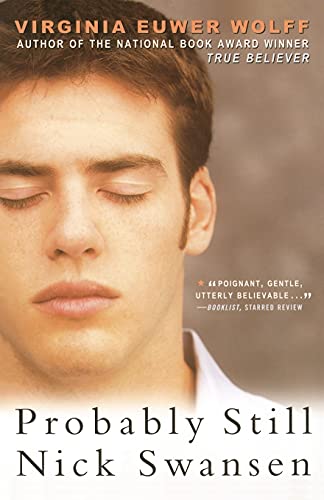
Probably Still Nick Swansen
Librería: SZ Global, Toronto, ON, Canada
Calificación del vendedor: 1 de 5 estrellas
EUR 10,87
Envío por EUR 28,52
Se envía de Canada a Estados Unidos de AmericaCantidad disponible: 1 disponibles
Añadir al carritoPaperback. Condición: Collectible-Very Good. Nick Swansen pretty much knows what it means to be Special Ed.: You can't drive, even if you're sixteen and your parents have two cars; the regular kids in school don't talk to you much; and even if you can memorize every fact about amphibians, it's hard to make sense of all the other stuff swirling in your mind. What he doesn't know is whether being Special Ed. means you shouldn't go to the prom. But since no rule says you can't, Nick decides to ask Shana.But the prom doesn't turn out at all the way Nick expects it to, and everything bad seems to get all mixed up together: the prom, what Shana does, and the terrible thing that happened to Nick's sister nine years ago. Nick doesn't want to think about any of it, but he begins to realize that unless he makes peace with all the memories that trouble him, they will haunt him forever.
-
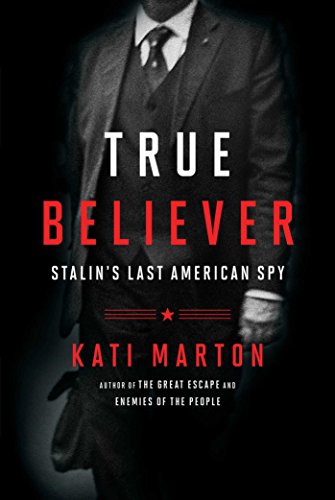
True Believer: Stalin's Last American Spy Marton, Kati
Librería: Aragon Books Canada, OTTAWA, ON, Canada
Calificación del vendedor: 3 de 5 estrellas

EUR 25,71
Envío por EUR 19,80
Se envía de Canada a Estados Unidos de AmericaCantidad disponible: 1 disponibles
Añadir al carritoCondición: New.
-
True Believer: Stalin's Last American Spy Marton, Kati
Librería: Aragon Books Canada, OTTAWA, ON, Canada
Calificación del vendedor: 3 de 5 estrellas
EUR 34,58
Envío por EUR 19,80
Se envía de Canada a Estados Unidos de AmericaCantidad disponible: 1 disponibles
Añadir al carritoCondición: New.
-
An Apology for the Naturalization of the Jews Containing, I. An Account of the Charters, Privileges and Immunities granted to the Jews, by the Kings of England, five hundred Years ago. II. The most popular Objections to their Naturalization, fairly stated and fully answered. III. The naturalization of the Jews an advantage to the Kingdom in general, and to Commerce in particular. IV. The probable happy Consequences of it to the Christian Religion. V. The Privileges enjoyed by the Jews in Foreign Countries, superior to those proposed to be granted them by Parliament. VI. The nature, Purport and Design of the present bill, explained and justified by the Facts. By a TRUE BELIEVER
Publicado por printed for M. Cooper, in Pater-noster-row, W. Reeve, Fleet-Street, and C. Sympson, at the Bible-Warehouse, Chancery-lane, London, Great Britain, 1753
Librería: Meir Turner, New York, NY, Estados Unidos de America
Calificación del vendedor: 5 de 5 estrellas

Original o primera edición
EUR 3.457,57
Envío por EUR 6,03
Se envía dentro de Estados Unidos de AmericaCantidad disponible: 1 disponibles
Añadir al carritoHardcover. Condición: Very Good. 1st Edition. (2), 30 pages. leaves]. 198 x 125 mm. (5 x 7.75 inches). Very light water stain in blank margin. Modern calf. References: English Short Title Catalogue; ESTCT14653. Roth, Bibliotheca Anglo-Judaica, page 223, number 108. In 1609 the naturalization of any foreigner settled in the England was made contingent upon receiving the Sacrament. Although this act was deliberately directed against Catholics, it incidentally would later affect Jews following the Re-Admission of 1653. This disability was lifted by the Whig Government of Henry Pelham in the Act of 1753 to permit persons professing the Jewish religion to be naturalized by Parliament. The Bill was, at best, of limited advantage to the Jews since only the wealthy would have been able to set in motion the machinery necessary to obtain naturalization. Although the measure was accepted unanimously by the House of Lords, it became a pawn in the upcoming general election campaign that resulted in its eventual repeal by the House of Commons. Taking full advantage of the prejudices and fears that the grant of naturalization to Jews had aroused, the Tory opposition fueled the unpopularity of the Act with a pamphlet and broadsheet campaign that warned of an England overrun with Jews. The Whig government was forced by public opinion to give way and the pro-Jewish legislation was duly repealed in the same year that was enacted. Our anonymous pamphleteer advocates the naturalization of the Jews, arguing that it would be an advantage to the Kingdom in general, and to commerce in particular, and that the privileges enjoyed by Jews resident in foreign countries are superior to those granted them by England. See J. Picciotto, Sketches of Anglo-Jewish History (1956), pages 73-86; A. M. Hyamson, The Sephardim of England (1951), pages 127-128; A. M. Hyamson, 'The Jew Bill of 1753" in: TJHSE, Volume VI (1908-1910), pages 156-188.


