

Importe total (1 artículo artículos):
Destino del pedido:

stig andersen (50 resultados)
Ir a los resultados principales
Filtros de búsqueda
Tipo de artículo
- Todos los tipos de productos
- Libros (50)
- Revistas y publicaciones (No hay ningún otro resultado que coincida con este filtro.)
- Cómics (No hay ningún otro resultado que coincida con este filtro.)
- Partituras (No hay ningún otro resultado que coincida con este filtro.)
- Arte, grabados y pósters (No hay ningún otro resultado que coincida con este filtro.)
- Fotografías (No hay ningún otro resultado que coincida con este filtro.)
- Mapas (No hay ningún otro resultado que coincida con este filtro.)
- Manuscritos y coleccionismo de papel (No hay ningún otro resultado que coincida con este filtro.)
Condición Más información
- Nuevo (21)
- Como nuevo, Excelente o Muy bueno (1)
- Bueno o Aceptable (7)
- Regular o Pobre (No hay ningún otro resultado que coincida con este filtro.)
- Tal como se indica (21)
Encuadernación
Más atributos
- Primera edición (1)
- Firmado (No hay ningún otro resultado que coincida con este filtro.)
- Sobrecubierta (1)
- Con imágenes (15)
- No impresión bajo demanda (41)
Idioma (4)
Gastos de envío gratis
Ubicación del vendedor
Valoración de los vendedores
-

Journey in Blue A Novel about Hans Christian Andersen
Publicado por peter owen
Librería: Hard to Find Books NZ (Internet) Ltd., Dunedin, OTAGO, Nueva Zelanda
Miembro de asociación: IOBA
Calificación del vendedor: 5 de 5 estrellas

EUR 5,29
Envío por EUR 17,38
Se envía de Nueva Zelanda a Estados Unidos de AmericaCantidad disponible: 1 disponibles
Añadir al carritolarge format paperback (near new); all our specials have minimal description to keep listing them viable. They are at least reading copies, complete and in reasonable condition, but usually secondhand; frequently they are superior examples. Ordering more than one book will reduce your overall postage cost.
-

Hoffmeyer
Idioma: Danes
Publicado por Borsen Boger, Kobenhavn, 1994
ISBN 10: 8775534703 ISBN 13: 9788775534708
Librería: PRIMOBUCH, Berlin, Alemania
Calificación del vendedor: 5 de 5 estrellas
EUR 20,00
Envío por EUR 14,50
Se envía de Alemania a Estados Unidos de AmericaCantidad disponible: 1 disponibles
Añadir al carritoPaperback. Condición: leichte Gebrauchsspuren. 2. udgave, 1. oplag. READY TO SEND! Good condition only the binding is a bit scuffed - international shipping da 275 p. 8°.
-
Att leva i storfamilj. Foto: Gregers Nielsen.
Librería: Patrik Andersson, Antikvariat., Lund, Suecia
Miembro de asociación: ILAB SVAF
Calificación del vendedor: 5 de 5 estrellas
EUR 14,34
Envío por EUR 13,00
Se envía de Suecia a Estados Unidos de AmericaCantidad disponible: 1 disponibles
Añadir al carritoStockholm; Almqvist & Wiksell, 1972. Originalets titel: Bogen om storfamilierna (Köpenhamn, 1970). Översättning av Gun och Nils A. Bengtsson. 18,5x11 cm. 199, (1 blank) s. + 12 planschblad med foton. Originalpocket. Exlibris för Berndt Gustafsson. Ryggen lätt blekt. Fint ex. "Genom intervjuer med medlemmarna i olika kollektiv ger författarna en allsidig bild av denna annorlunda samlevnadsform och det som gör att allt fler människor väljer den framför andra sätt att bo och leva." (baksidestext).
-
METABOLISM OF HUMAN GAMMA GLOBULIN: (Yss-globulin)
Publicado por F. A. Davis Company, Philadelphia, PA
Librería: Shoemaker Booksellers, Gettysburg, PA, Estados Unidos de America
Calificación del vendedor: 5 de 5 estrellas
EUR 41,52
Envío por EUR 6,43
Se envía dentro de Estados Unidos de AmericaCantidad disponible: 1 disponibles
Añadir al carritoHardcover. Condición: Very Good. Estado de la sobrecubierta: Good+. (1964) 140 pp. Original blue covers w/ gilt title on spine. Binding lightly soiled w/ tiny paper lift on rear cover. Light foxing to edges of text block and endpapers. Previous owner's name stamp on blank endpapers and some leaves. DJ lightly soiled w/ light edge wear; approx. 1/2" closed tear at top edge of front panel. Small, faint dampstain at bottom edge of front panel. Spine a bit darkened w/ approx. 1/2" closed tear to middle of spine. Illust. w/ figures. Contents nice.
-

I familien
Librería: Mooney's bookstore, Den Helder, Holanda
Calificación del vendedor: 4 de 5 estrellas

EUR 28,14
Envío por EUR 14,95
Se envía de Holanda a Estados Unidos de AmericaCantidad disponible: 1 disponibles
Añadir al carritoCondición: Very good.
-

High Voltage DC Transmission Systems
Librería: PBShop.store UK, Fairford, GLOS, Reino Unido
Calificación del vendedor: 4 de 5 estrellas
EUR 439,56
Envío por EUR 24,81
Se envía de Reino Unido a Estados Unidos de AmericaCantidad disponible: 1 disponibles
Añadir al carritoUNK. Condición: Used - Very Good. Used - Like New Book. Shipped from UK. Established seller since 2000.
-
High Voltage DC Transmission Systems
Librería: PBShop.store US, Wood Dale, IL, Estados Unidos de America
Calificación del vendedor: 5 de 5 estrellas
EUR 483,74
Gastos de envío gratis
Se envía dentro de Estados Unidos de AmericaCantidad disponible: 1 disponibles
Añadir al carritoUNK. Condición: Used - Very Good. Used - Like New Book. Shipped from UK. Established seller since 2000.
-

User Centred Networked Health Care
Idioma: Inglés
Publicado por IOS Press, Incorporated, 2011
ISBN 10: 1607508052 ISBN 13: 9781607508052
Librería: Majestic Books, Hounslow, Reino Unido
Calificación del vendedor: 4 de 5 estrellas
EUR 599,32
Envío por EUR 7,50
Se envía de Reino Unido a Estados Unidos de AmericaCantidad disponible: 1 disponibles
Añadir al carritoCondición: New. pp. 1040.
-

High Voltage DC Transmission Systems : HVDC
Librería: AHA-BUCH GmbH, Einbeck, Alemania
Calificación del vendedor: 5 de 5 estrellas
EUR 534,99
Envío por EUR 82,85
Se envía de Alemania a Estados Unidos de AmericaCantidad disponible: 1 disponibles
Añadir al carritoBuch. Condición: Neu. Druck auf Anfrage Neuware - Printed after ordering.
-
Aschehougs biografiske leksikon. 339 kendte personer der aldrig har levet.
Librería: Vangsgaards Antikvariat Aps, Copenhagen, Dinamarca
Miembro de asociación: ABF ILAB
Calificación del vendedor: 5 de 5 estrellas
EUR 10,34
Envío por EUR 29,44
Se envía de Dinamarca a Estados Unidos de AmericaCantidad disponible: 1 disponibles
Añadir al carritoAschehoug, København 1998. 379 sider. Orig. kartonbind med smudsomslag. Smudsomslag og omslag med lette brugsspor og smudsomslaget falmet på ryggen. omslaget falmet i kanterne, ellers pænt eksemplar.
-
Hvem Hvad Hvor 1981.
Librería: Vangsgaards Antikvariat Aps, Copenhagen, Dinamarca
Miembro de asociación: ABF ILAB
Calificación del vendedor: 5 de 5 estrellas
EUR 10,34
Envío por EUR 29,44
Se envía de Dinamarca a Estados Unidos de AmericaCantidad disponible: 1 disponibles
Añadir al carritoPolitikens Forlag, København 1980. 448 sider. Rigt illustreret i s/h og farver. Orig. kartonbind. Pænt eksemplar.
-
Tøger.
Librería: Vangsgaards Antikvariat Aps, Copenhagen, Dinamarca
Miembro de asociación: ABF ILAB
Calificación del vendedor: 5 de 5 estrellas
EUR 10,34
Envío por EUR 29,44
Se envía de Dinamarca a Estados Unidos de AmericaCantidad disponible: 1 disponibles
Añadir al carritoPeople s Press, København 2011. Illustreret med fotos i s/h og farver. 554 sider. Orig. illustreret kartonbind med smudsomslag. SMudsomslag med lette brugsspor, og med en tidligere mærkat på bagsiden, ellers velholdt eksemplar.
-
Aschehougs biografiske leksikon - 339 kendte personer der aldrig har levet.
Librería: Vangsgaards Antikvariat Aps, Copenhagen, Dinamarca
Miembro de asociación: ABF ILAB
Calificación del vendedor: 5 de 5 estrellas
EUR 11,72
Envío por EUR 29,44
Se envía de Dinamarca a Estados Unidos de AmericaCantidad disponible: 1 disponibles
Añadir al carritoAschehoug, København 1998. 1. oplag. 379 sider. Orig. helshirtingsbind med smudsomslag. Ryggen af omslaget jævnt falmet, men ellers velholdt eksemplar.
-
Den Amerikanske Kogebog.
Librería: Vangsgaards Antikvariat Aps, Copenhagen, Dinamarca
Miembro de asociación: ABF ILAB
Calificación del vendedor: 5 de 5 estrellas
EUR 11,72
Envío por EUR 29,44
Se envía de Dinamarca a Estados Unidos de AmericaCantidad disponible: 1 disponibles
Añadir al carritoGyldendals bogklub, København 1984. 174 sider. Vignetter i s/h. Heftet med orig. omslag.
-
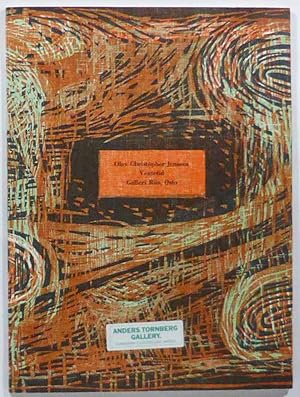
Olav Christopher Jenssen: Ventetid / Wartezeit. Galleri Riis, Oslo, 1988.
Librería: Patrik Andersson, Antikvariat., Lund, Suecia
Miembro de asociación: ILAB SVAF
Calificación del vendedor: 5 de 5 estrellas
EUR 43,01
Envío por EUR 13,00
Se envía de Suecia a Estados Unidos de AmericaCantidad disponible: 1 disponibles
Añadir al carritoOslo; Galleri Riis, 1988. 35x26 cm. (44) pp. Original printed wrappers. With the label of Anders Tornberg galley on front wrapper. Head of spine is insignificantly worn. A fine copy. Exhibition catalogue with text in Norwegian and German.
-

Frans Widerberg Norvegia La Biennale di Venezia 1978
Publicado por Tipografia John Grieg, Bergen, 1978
Librería: Antonio Pennasilico, Carpiano, MI, Italia
Calificación del vendedor: 5 de 5 estrellas
EUR 22,00
Envío por EUR 35,00
Se envía de Italia a Estados Unidos de AmericaCantidad disponible: 1 disponibles
Añadir al carritoCatalogo mostra Venezia, Padiglione Norvegia, La Biennale di Venezia 1978, testo italiano, legatura a punto metallico, formato 18x24, pagine 20 totali, illustrato a colori, ottime condizioni - 37801 ISBN non applicabile 1.
-
Svein Strand. En collage ved.
Año de publicación: 1983
Librería: Antikvariat Röde Orm, Göteborg, Suecia
Miembro de asociación: ILAB SVAF
Calificación del vendedor: 5 de 5 estrellas
EUR 23,89
Envío por EUR 22,00
Se envía de Suecia a Estados Unidos de AmericaCantidad disponible: 1 disponibles
Añadir al carritoCollage Press, OSLO 1983. Förlagets linneband med skyddsomslag. 108 (12) sidor. Illustrerad. Lite kantslitage på skyddsomslaget. Boken är i gott skick. Text: norska.
-
Die Aktualität der Saga : Festschrift für Hans Schottmann
Idioma: Alemán
Publicado por Berlin; New York : Walter de Gruyter, 1999
ISBN 10: 3110165643 ISBN 13: 9783110165647
Librería: avelibro OHG, Dinkelscherben, Alemania
Miembro de asociación: BOEV
Calificación del vendedor: 5 de 5 estrellas
Original o primera edición
EUR 69,00
Envío por EUR 10,00
Se envía de Alemania a Estados Unidos de AmericaCantidad disponible: 1 disponibles
Añadir al carrito24,5 x 17,5 cm. Condición: Sehr gut. 1. Auflage. VIII, 266 Seiten Mit einer Porträttafel. - Innen sauberer, guter Zustand. Leineneinband, mit den üblichen Bibliotheks-Markierungen, Stempeln und Einträgen, innen wie außen, siehe Bilder. Sehr gutes Bibliotheksexemplar. - Ergänzungsbände zum Reallexikon der Germanischen Altertumskunde, Band 21. DH-30-11A Sprache: Deutsch Gewicht in Gramm: 600.
-
Die Aktualität der Saga. Festschrift für Hans Schottmann.
Publicado por Berlin und New York, De Gruyter, 1999., 1999
Librería: Antiquariat Thomas Rezek, München, Alemania
Calificación del vendedor: 5 de 5 estrellas
EUR 93,50
Envío por EUR 44,00
Se envía de Alemania a Estados Unidos de AmericaCantidad disponible: 1 disponibles
Añadir al carrito8°. VIII, 266 SS. Original-Pappband Ergänzungsbände zum Reallexikon der Germanischen Altertumskunde, Band 21. - Gut erhalten.
-
Litteraturen og hverdagens virkelighed. Forelæsninger på Københavns Universitet.
Librería: Vangsgaards Antikvariat Aps, Copenhagen, Dinamarca
Miembro de asociación: ABF ILAB
Calificación del vendedor: 5 de 5 estrellas
EUR 27,57
Envío por EUR 29,44
Se envía de Dinamarca a Estados Unidos de AmericaCantidad disponible: 1 disponibles
Añadir al carritoMuseum Tusculanums Forlag, København 2021. 408 sider. Illustreret i s/h. Orig. illustreret kartonbind.
-
Hætsjj
Publicado por Eks-Skolens Trykkeri 1968-1970, Copenhagen, 1968
Librería: Boo-Hooray, New York, NY, Estados Unidos de America
Calificación del vendedor: 1 de 5 estrellas

EUR 1.457,59
Envío por EUR 4,29
Se envía dentro de Estados Unidos de AmericaCantidad disponible: 1 disponibles
Añadir al carritoA near complete run of Hætsjj, the Danish avant-garde artists' "newspaper" rarely (if ever) seen at this level of completeness, let alone in this condition. A phonetic spelling of the Danish word "hetz" ("smear" or "slander" campaign), this publication was issued, for a time, almost daily and was sold on the streets amidst the burgeoning avant-garde, collectivist movements. The publication ran from 1968 to 1970 in 48 numbers. Present here are numbers 1-7, 10-11, 13, 15, 17-18, 21 (presumably incomplete and in facsimile), 22-23, 25-30, 32-34, 36, 38, 40-43, two different versions of #45 (issued a day apart), one unnumbered issue, and four unnumbered folios (possibly inserts). Also present are numbers 1-11, 13-15 of the Hætsjj "Bulletins" for different events, performances, and happenings at the Festival 200 of 1969 each bulletin a stunning work of art in its own right. Additionally, this set contains four numbers of the Henning Christiansen's Panel 13 (#1-2, 4-5), a contemporary, similarly produced publication by his press of the same name, including the Panel 13 manifesto. An eight-page pamphlet, excerpted from Ole Grünbaum's memoir, about the founding of Hætsjj and its context accompanies these. Hætsjj arose from a pivotal moment in Danish experimental art. In 1966, The Experimental School ("Ex-School"), an important avant-garde art school set up as an alternative to the Royal Danish Academy of Fine Arts, moved into a condemned building near Fredrik's Church in the Indre By. There, the Ex-School powerfully nurtured the vanguard: in their first year in that abandoned building they hosted Nam June Paik and Charlotte Moorman, as well as Joseph Beuys, who gave his first performance with the dead hare there. Next door to this collective live-work experiment "was an equally run-down flat which was used as a headquarters for a loose group among whom was the main organiser of the Danish Provo Movement, inspired by the Dutch Provos" (Ørum, 798). The Danish Provos and their associates were organizing and creating art derived from Situationist and Fluxus aims and aesthetics; indeed, "during the late 1960s they even made similar art objects, such as treated book art and assemblages in the typical style of the underground drug culture" (ibid). The concomitant developments in offset printing techniques made it possible for these artist-organizers to produce their own newspaper for their community cheaply. The leftist politics, art-making, performance pieces, and collectivist experiments in living mixing in these two buildings alone was a potent blend of revolutionary, avant-garde spirit and the groups collaborated extensively on each other's publications. Originally founded and edited by Henning Prins and Leif Varmark, their initial goal was to be a mouthpiece of the underground movement, to "incite against the authorities and against those who choose to cooperate with them in any way." Members of both the Provos and the Ex-School contributed to Hætsjj, but the editorial oversight was eventually handed off predominantly to Ole Stig Andersen and Ole Grünbaum, and the artists at the nearby Gallery 101 (home to Joseph Beuys' "Eurasia" actions), such as Bjørn Nørgaard and Peter Louis-Jensen. The first issue was published just days after the assassination of Robert Kennedy, and following comments from Denmark's then-Prime Minister Hilmar Baunsgård, that "violent demonstrations" were "the greatest threat to democracy." The incendiary publication was issued as direct counterpoint to this pacifying, bourgeois ideology, and was made up of local, underground news, political commentary, parody, pornographic political collage, and critical commentary on art and publishing. It "was not political art, but a political activity which was part of the spectrum of activities ranging from art to everyday life, social events and political activities undertaken by the extended Ex-School circle during the late 1960s" (ibid). The publication comprised the work, thinking, art, and organizing, of innumerable groups with divergent aims and methods but who were united in their commitment to the counterculture. This heterogeneous mix was in fact part of the publication's power. Guided by neither a manifesto nor a strict aesthetic program, and published in the form of a newspaper, it offered an image of an alternative world: a self-determined yet collectivist social reality, one governed by freedom of expression, rather than the murderous machinery of capital. Indeed, "Detailed instructions on how to produce an issue of Hætsjj were published in the paper as an encouragement to everyone to contribute or to establish their own newspaper" (ibid). The Bulletins included here were produced for the seminal Festival 200 of 1969. Organized in honor of the 200th anniversary of the Charlottenborg exhibition hall, the festival featured avant-garde artists across Scandinavia. It functioned as an important site of cross-pollination for these groups similarly dedicated to reimagining the social order, collectivist living, and insurgent art. All copies of Hætsjj are extremely rare. Each beautifully made issue is a remarkable work of revolutionary ambition. Not only an important, scarcely seen record of the European vanguard, these are still genuinely inspirational works at the intersections of collectivist thought, political organizing, and anti-commercial expression. Reference: Tania Ørum, "Counterculture," in A Cultural History of the Avant-Garde in the Nordic Countries 1950-1975 (2016). Offset, silkscreen, one photomechanical reproduction. Most numbers unbound folios; one saddle-stapled in illustrated wraps (#43), one single sheet (#21, in facsimile and presumably incomplete), several "Bulletins" with unbound folios loosely inserted into posters (as issued); one corner-stapled pamphlet, annotated in an unknown hand. More than 100 sheets; most numbers 4 pp on one sheet; #43 with folded poster loosely inserted as issued. Various sizes,
-
Hætsjj
Publicado por Eks-Skolens Trykkeri 1968-1970, Copenhagen, 1968
Librería: Boo-Hooray, New York, NY, Estados Unidos de America
Calificación del vendedor: 1 de 5 estrellas
EUR 1.457,59
Envío por EUR 4,29
Se envía dentro de Estados Unidos de AmericaCantidad disponible: 1 disponibles
Añadir al carritoA near complete run of Hætsjj, the Danish avant-garde artists' "newspaper" rarely (if ever) seen at this level of completeness, let alone in this condition. A phonetic spelling of the Danish word "hetz" ("smear" or "slander" campaign), this publication was issued, for a time, almost daily and was sold on the streets amidst the burgeoning avant-garde, collectivist movements. The publication ran from 1968 to 1970 in 48 numbers. Present here are numbers 1-7, 10-11, 13, 15, 17-18, 21 (presumably incomplete and in facsimile), 22-23, 25-30, 32-34, 36, 38, 40-43, two different versions of #45 (issued a day apart), one unnumbered issue, and four unnumbered folios (possibly inserts). Also present are numbers 1-11, 13-15 of the Hætsjj "Bulletins" for different events, performances, and happenings at the Festival 200 of 1969 each bulletin a stunning work of art in its own right. Additionally, this set contains four numbers of the Henning Christiansen's Panel 13 (#1-2, 4-5), a contemporary, similarly produced publication by his press of the same name, including the Panel 13 manifesto. An eight-page pamphlet, excerpted from Ole Grünbaum's memoir, about the founding of Hætsjj and its context accompanies these. Hætsjj arose from a pivotal moment in Danish experimental art. In 1966, The Experimental School ("Ex-School"), an important avant-garde art school set up as an alternative to the Royal Danish Academy of Fine Arts, moved into a condemned building near Fredrik's Church in the Indre By. There, the Ex-School powerfully nurtured the vanguard: in their first year in that abandoned building they hosted Nam June Paik and Charlotte Moorman, as well as Joseph Beuys, who gave his first performance with the dead hare there. Next door to this collective live-work experiment "was an equally run-down flat which was used as a headquarters for a loose group among whom was the main organiser of the Danish Provo Movement, inspired by the Dutch Provos" (Ørum, 798). The Danish Provos and their associates were organizing and creating art derived from Situationist and Fluxus aims and aesthetics; indeed, "during the late 1960s they even made similar art objects, such as treated book art and assemblages in the typical style of the underground drug culture" (ibid). The concomitant developments in offset printing techniques made it possible for these artist-organizers to produce their own newspaper for their community cheaply. The leftist politics, art-making, performance pieces, and collectivist experiments in living mixing in these two buildings alone was a potent blend of revolutionary, avant-garde spirit and the groups collaborated extensively on each other's publications. Originally founded and edited by Henning Prins and Leif Varmark, their initial goal was to be a mouthpiece of the underground movement, to "incite against the authorities and against those who choose to cooperate with them in any way." Members of both the Provos and the Ex-School contributed to Hætsjj, but the editorial oversight was eventually handed off predominantly to Ole Stig Andersen and Ole Grünbaum, and the artists at the nearby Gallery 101 (home to Joseph Beuys' "Eurasia" actions), such as Bjørn Nørgaard and Peter Louis-Jensen. The first issue was published just days after the assassination of Robert Kennedy, and following comments from Denmark's then-Prime Minister Hilmar Baunsgård, that "violent demonstrations" were "the greatest threat to democracy." The incendiary publication was issued as direct counterpoint to this pacifying, bourgeois ideology, and was made up of local, underground news, political commentary, parody, pornographic political collage, and critical commentary on art and publishing. It "was not political art, but a political activity which was part of the spectrum of activities ranging from art to everyday life, social events and political activities undertaken by the extended Ex-School circle during the late 1960s" (ibid). The publication comprised the work, thinking, art, and organizing, of innumerable groups with divergent aims and methods but who were united in their commitment to the counterculture. This heterogeneous mix was in fact part of the publication's power. Guided by neither a manifesto nor a strict aesthetic program, and published in the form of a newspaper, it offered an image of an alternative world: a self-determined yet collectivist social reality, one governed by freedom of expression, rather than the murderous machinery of capital. Indeed, "Detailed instructions on how to produce an issue of Hætsjj were published in the paper as an encouragement to everyone to contribute or to establish their own newspaper" (ibid). The Bulletins included here were produced for the seminal Festival 200 of 1969. Organized in honor of the 200th anniversary of the Charlottenborg exhibition hall, the festival featured avant-garde artists across Scandinavia. It functioned as an important site of cross-pollination for these groups similarly dedicated to reimagining the social order, collectivist living, and insurgent art. All copies of Hætsjj are extremely rare. Each beautifully made issue is a remarkable work of revolutionary ambition. Not only an important, scarcely seen record of the European vanguard, these are still genuinely inspirational works at the intersections of collectivist thought, political organizing, and anti-commercial expression. Reference: Tania Ørum, "Counterculture," in A Cultural History of the Avant-Garde in the Nordic Countries 1950-1975 (2016). Offset, silkscreen, one photomechanical reproduction. Most numbers unbound folios; one saddle-stapled in illustrated wraps (#43), one single sheet (#21, in facsimile and presumably incomplete), several "Bulletins" with unbound folios loosely inserted into posters (as issued); one corner-stapled pamphlet, annotated in an unknown hand. More than 100 sheets; most numbers 4 pp on one sheet; #43 with folded poster loosely inserted as issued. Various sizes,
-
Hætsjj
Publicado por Eks-Skolens Trykkeri 1968-1970, Copenhagen, 1968
Librería: Boo-Hooray, New York, NY, Estados Unidos de America
Calificación del vendedor: 1 de 5 estrellas
EUR 1.457,59
Envío por EUR 4,29
Se envía dentro de Estados Unidos de AmericaCantidad disponible: 1 disponibles
Añadir al carritoA near complete run of Hætsjj, the Danish avant-garde artists' "newspaper" rarely (if ever) seen at this level of completeness, let alone in this condition. A phonetic spelling of the Danish word "hetz" ("smear" or "slander" campaign), this publication was issued, for a time, almost daily and was sold on the streets amidst the burgeoning avant-garde, collectivist movements. The publication ran from 1968 to 1970 in 48 numbers. Present here are numbers 1-7, 10-11, 13, 15, 17-18, 21 (presumably incomplete and in facsimile), 22-23, 25-30, 32-34, 36, 38, 40-43, two different versions of #45 (issued a day apart), one unnumbered issue, and four unnumbered folios (possibly inserts). Also present are numbers 1-11, 13-15 of the Hætsjj "Bulletins" for different events, performances, and happenings at the Festival 200 of 1969 each bulletin a stunning work of art in its own right. Additionally, this set contains four numbers of the Henning Christiansen's Panel 13 (#1-2, 4-5), a contemporary, similarly produced publication by his press of the same name, including the Panel 13 manifesto. An eight-page pamphlet, excerpted from Ole Grünbaum's memoir, about the founding of Hætsjj and its context accompanies these. Hætsjj arose from a pivotal moment in Danish experimental art. In 1966, The Experimental School ("Ex-School"), an important avant-garde art school set up as an alternative to the Royal Danish Academy of Fine Arts, moved into a condemned building near Fredrik's Church in the Indre By. There, the Ex-School powerfully nurtured the vanguard: in their first year in that abandoned building they hosted Nam June Paik and Charlotte Moorman, as well as Joseph Beuys, who gave his first performance with the dead hare there. Next door to this collective live-work experiment "was an equally run-down flat which was used as a headquarters for a loose group among whom was the main organiser of the Danish Provo Movement, inspired by the Dutch Provos" (Ørum, 798). The Danish Provos and their associates were organizing and creating art derived from Situationist and Fluxus aims and aesthetics; indeed, "during the late 1960s they even made similar art objects, such as treated book art and assemblages in the typical style of the underground drug culture" (ibid). The concomitant developments in offset printing techniques made it possible for these artist-organizers to produce their own newspaper for their community cheaply. The leftist politics, art-making, performance pieces, and collectivist experiments in living mixing in these two buildings alone was a potent blend of revolutionary, avant-garde spirit and the groups collaborated extensively on each other's publications. Originally founded and edited by Henning Prins and Leif Varmark, their initial goal was to be a mouthpiece of the underground movement, to "incite against the authorities and against those who choose to cooperate with them in any way." Members of both the Provos and the Ex-School contributed to Hætsjj, but the editorial oversight was eventually handed off predominantly to Ole Stig Andersen and Ole Grünbaum, and the artists at the nearby Gallery 101 (home to Joseph Beuys' "Eurasia" actions), such as Bjørn Nørgaard and Peter Louis-Jensen. The first issue was published just days after the assassination of Robert Kennedy, and following comments from Denmark's then-Prime Minister Hilmar Baunsgård, that "violent demonstrations" were "the greatest threat to democracy." The incendiary publication was issued as direct counterpoint to this pacifying, bourgeois ideology, and was made up of local, underground news, political commentary, parody, pornographic political collage, and critical commentary on art and publishing. It "was not political art, but a political activity which was part of the spectrum of activities ranging from art to everyday life, social events and political activities undertaken by the extended Ex-School circle during the late 1960s" (ibid). The publication comprised the work, thinking, art, and organizing, of innumerable groups with divergent aims and methods but who were united in their commitment to the counterculture. This heterogeneous mix was in fact part of the publication's power. Guided by neither a manifesto nor a strict aesthetic program, and published in the form of a newspaper, it offered an image of an alternative world: a self-determined yet collectivist social reality, one governed by freedom of expression, rather than the murderous machinery of capital. Indeed, "Detailed instructions on how to produce an issue of Hætsjj were published in the paper as an encouragement to everyone to contribute or to establish their own newspaper" (ibid). The Bulletins included here were produced for the seminal Festival 200 of 1969. Organized in honor of the 200th anniversary of the Charlottenborg exhibition hall, the festival featured avant-garde artists across Scandinavia. It functioned as an important site of cross-pollination for these groups similarly dedicated to reimagining the social order, collectivist living, and insurgent art. All copies of Hætsjj are extremely rare. Each beautifully made issue is a remarkable work of revolutionary ambition. Not only an important, scarcely seen record of the European vanguard, these are still genuinely inspirational works at the intersections of collectivist thought, political organizing, and anti-commercial expression. Reference: Tania Ørum, "Counterculture," in A Cultural History of the Avant-Garde in the Nordic Countries 1950-1975 (2016). Offset, silkscreen, one photomechanical reproduction. Most numbers unbound folios; one saddle-stapled in illustrated wraps (#43), one single sheet (#21, in facsimile and presumably incomplete), several "Bulletins" with unbound folios loosely inserted into posters (as issued); one corner-stapled pamphlet, annotated in an unknown hand. More than 100 sheets; most numbers 4 pp on one sheet; #43 with folded poster loosely inserted as issued. Various sizes,
-
Hætsjj
Publicado por Eks-Skolens Trykkeri 1968-1970, Copenhagen, 1968
Librería: Boo-Hooray, New York, NY, Estados Unidos de America
Calificación del vendedor: 1 de 5 estrellas
EUR 1.457,59
Envío por EUR 4,29
Se envía dentro de Estados Unidos de AmericaCantidad disponible: 1 disponibles
Añadir al carritoA near complete run of Hætsjj, the Danish avant-garde artists' "newspaper" rarely (if ever) seen at this level of completeness, let alone in this condition. A phonetic spelling of the Danish word "hetz" ("smear" or "slander" campaign), this publication was issued, for a time, almost daily and was sold on the streets amidst the burgeoning avant-garde, collectivist movements. The publication ran from 1968 to 1970 in 48 numbers. Present here are numbers 1-7, 10-11, 13, 15, 17-18, 21 (presumably incomplete and in facsimile), 22-23, 25-30, 32-34, 36, 38, 40-43, two different versions of #45 (issued a day apart), one unnumbered issue, and four unnumbered folios (possibly inserts). Also present are numbers 1-11, 13-15 of the Hætsjj "Bulletins" for different events, performances, and happenings at the Festival 200 of 1969 each bulletin a stunning work of art in its own right. Additionally, this set contains four numbers of the Henning Christiansen's Panel 13 (#1-2, 4-5), a contemporary, similarly produced publication by his press of the same name, including the Panel 13 manifesto. An eight-page pamphlet, excerpted from Ole Grünbaum's memoir, about the founding of Hætsjj and its context accompanies these. Hætsjj arose from a pivotal moment in Danish experimental art. In 1966, The Experimental School ("Ex-School"), an important avant-garde art school set up as an alternative to the Royal Danish Academy of Fine Arts, moved into a condemned building near Fredrik's Church in the Indre By. There, the Ex-School powerfully nurtured the vanguard: in their first year in that abandoned building they hosted Nam June Paik and Charlotte Moorman, as well as Joseph Beuys, who gave his first performance with the dead hare there. Next door to this collective live-work experiment "was an equally run-down flat which was used as a headquarters for a loose group among whom was the main organiser of the Danish Provo Movement, inspired by the Dutch Provos" (Ørum, 798). The Danish Provos and their associates were organizing and creating art derived from Situationist and Fluxus aims and aesthetics; indeed, "during the late 1960s they even made similar art objects, such as treated book art and assemblages in the typical style of the underground drug culture" (ibid). The concomitant developments in offset printing techniques made it possible for these artist-organizers to produce their own newspaper for their community cheaply. The leftist politics, art-making, performance pieces, and collectivist experiments in living mixing in these two buildings alone was a potent blend of revolutionary, avant-garde spirit and the groups collaborated extensively on each other's publications. Originally founded and edited by Henning Prins and Leif Varmark, their initial goal was to be a mouthpiece of the underground movement, to "incite against the authorities and against those who choose to cooperate with them in any way." Members of both the Provos and the Ex-School contributed to Hætsjj, but the editorial oversight was eventually handed off predominantly to Ole Stig Andersen and Ole Grünbaum, and the artists at the nearby Gallery 101 (home to Joseph Beuys' "Eurasia" actions), such as Bjørn Nørgaard and Peter Louis-Jensen. The first issue was published just days after the assassination of Robert Kennedy, and following comments from Denmark's then-Prime Minister Hilmar Baunsgård, that "violent demonstrations" were "the greatest threat to democracy." The incendiary publication was issued as direct counterpoint to this pacifying, bourgeois ideology, and was made up of local, underground news, political commentary, parody, pornographic political collage, and critical commentary on art and publishing. It "was not political art, but a political activity which was part of the spectrum of activities ranging from art to everyday life, social events and political activities undertaken by the extended Ex-School circle during the late 1960s" (ibid). The publication comprised the work, thinking, art, and organizing, of innumerable groups with divergent aims and methods but who were united in their commitment to the counterculture. This heterogeneous mix was in fact part of the publication's power. Guided by neither a manifesto nor a strict aesthetic program, and published in the form of a newspaper, it offered an image of an alternative world: a self-determined yet collectivist social reality, one governed by freedom of expression, rather than the murderous machinery of capital. Indeed, "Detailed instructions on how to produce an issue of Hætsjj were published in the paper as an encouragement to everyone to contribute or to establish their own newspaper" (ibid). The Bulletins included here were produced for the seminal Festival 200 of 1969. Organized in honor of the 200th anniversary of the Charlottenborg exhibition hall, the festival featured avant-garde artists across Scandinavia. It functioned as an important site of cross-pollination for these groups similarly dedicated to reimagining the social order, collectivist living, and insurgent art. All copies of Hætsjj are extremely rare. Each beautifully made issue is a remarkable work of revolutionary ambition. Not only an important, scarcely seen record of the European vanguard, these are still genuinely inspirational works at the intersections of collectivist thought, political organizing, and anti-commercial expression. Reference: Tania Ørum, "Counterculture," in A Cultural History of the Avant-Garde in the Nordic Countries 1950-1975 (2016). Offset, silkscreen, one photomechanical reproduction. Most numbers unbound folios; one saddle-stapled in illustrated wraps (#43), one single sheet (#21, in facsimile and presumably incomplete), several "Bulletins" with unbound folios loosely inserted into posters (as issued); one corner-stapled pamphlet, annotated in an unknown hand. More than 100 sheets; most numbers 4 pp on one sheet; #43 with folded poster loosely inserted as issued. Various sizes,
-
Hætsjj
Publicado por Eks-Skolens Trykkeri 1968-1970, Copenhagen, 1968
Librería: Boo-Hooray, New York, NY, Estados Unidos de America
Calificación del vendedor: 1 de 5 estrellas
EUR 1.457,59
Envío por EUR 4,29
Se envía dentro de Estados Unidos de AmericaCantidad disponible: 1 disponibles
Añadir al carritoA near complete run of Hætsjj, the Danish avant-garde artists' "newspaper" rarely (if ever) seen at this level of completeness, let alone in this condition. A phonetic spelling of the Danish word "hetz" ("smear" or "slander" campaign), this publication was issued, for a time, almost daily and was sold on the streets amidst the burgeoning avant-garde, collectivist movements. The publication ran from 1968 to 1970 in 48 numbers. Present here are numbers 1-7, 10-11, 13, 15, 17-18, 21 (presumably incomplete and in facsimile), 22-23, 25-30, 32-34, 36, 38, 40-43, two different versions of #45 (issued a day apart), one unnumbered issue, and four unnumbered folios (possibly inserts). Also present are numbers 1-11, 13-15 of the Hætsjj "Bulletins" for different events, performances, and happenings at the Festival 200 of 1969 each bulletin a stunning work of art in its own right. Additionally, this set contains four numbers of the Henning Christiansen's Panel 13 (#1-2, 4-5), a contemporary, similarly produced publication by his press of the same name, including the Panel 13 manifesto. An eight-page pamphlet, excerpted from Ole Grünbaum's memoir, about the founding of Hætsjj and its context accompanies these. Hætsjj arose from a pivotal moment in Danish experimental art. In 1966, The Experimental School ("Ex-School"), an important avant-garde art school set up as an alternative to the Royal Danish Academy of Fine Arts, moved into a condemned building near Fredrik's Church in the Indre By. There, the Ex-School powerfully nurtured the vanguard: in their first year in that abandoned building they hosted Nam June Paik and Charlotte Moorman, as well as Joseph Beuys, who gave his first performance with the dead hare there. Next door to this collective live-work experiment "was an equally run-down flat which was used as a headquarters for a loose group among whom was the main organiser of the Danish Provo Movement, inspired by the Dutch Provos" (Ørum, 798). The Danish Provos and their associates were organizing and creating art derived from Situationist and Fluxus aims and aesthetics; indeed, "during the late 1960s they even made similar art objects, such as treated book art and assemblages in the typical style of the underground drug culture" (ibid). The concomitant developments in offset printing techniques made it possible for these artist-organizers to produce their own newspaper for their community cheaply. The leftist politics, art-making, performance pieces, and collectivist experiments in living mixing in these two buildings alone was a potent blend of revolutionary, avant-garde spirit and the groups collaborated extensively on each other's publications. Originally founded and edited by Henning Prins and Leif Varmark, their initial goal was to be a mouthpiece of the underground movement, to "incite against the authorities and against those who choose to cooperate with them in any way." Members of both the Provos and the Ex-School contributed to Hætsjj, but the editorial oversight was eventually handed off predominantly to Ole Stig Andersen and Ole Grünbaum, and the artists at the nearby Gallery 101 (home to Joseph Beuys' "Eurasia" actions), such as Bjørn Nørgaard and Peter Louis-Jensen. The first issue was published just days after the assassination of Robert Kennedy, and following comments from Denmark's then-Prime Minister Hilmar Baunsgård, that "violent demonstrations" were "the greatest threat to democracy." The incendiary publication was issued as direct counterpoint to this pacifying, bourgeois ideology, and was made up of local, underground news, political commentary, parody, pornographic political collage, and critical commentary on art and publishing. It "was not political art, but a political activity which was part of the spectrum of activities ranging from art to everyday life, social events and political activities undertaken by the extended Ex-School circle during the late 1960s" (ibid). The publication comprised the work, thinking, art, and organizing, of innumerable groups with divergent aims and methods but who were united in their commitment to the counterculture. This heterogeneous mix was in fact part of the publication's power. Guided by neither a manifesto nor a strict aesthetic program, and published in the form of a newspaper, it offered an image of an alternative world: a self-determined yet collectivist social reality, one governed by freedom of expression, rather than the murderous machinery of capital. Indeed, "Detailed instructions on how to produce an issue of Hætsjj were published in the paper as an encouragement to everyone to contribute or to establish their own newspaper" (ibid). The Bulletins included here were produced for the seminal Festival 200 of 1969. Organized in honor of the 200th anniversary of the Charlottenborg exhibition hall, the festival featured avant-garde artists across Scandinavia. It functioned as an important site of cross-pollination for these groups similarly dedicated to reimagining the social order, collectivist living, and insurgent art. All copies of Hætsjj are extremely rare. Each beautifully made issue is a remarkable work of revolutionary ambition. Not only an important, scarcely seen record of the European vanguard, these are still genuinely inspirational works at the intersections of collectivist thought, political organizing, and anti-commercial expression. Reference: Tania Ørum, "Counterculture," in A Cultural History of the Avant-Garde in the Nordic Countries 1950-1975 (2016). Offset, silkscreen, one photomechanical reproduction. Most numbers unbound folios; one saddle-stapled in illustrated wraps (#43), one single sheet (#21, in facsimile and presumably incomplete), several "Bulletins" with unbound folios loosely inserted into posters (as issued); one corner-stapled pamphlet, annotated in an unknown hand. More than 100 sheets; most numbers 4 pp on one sheet; #43 with folded poster loosely inserted as issued. Various sizes,
-

Die Aktualität der Saga. Festschrift für Hans Schottmann.
Librería: Antiquariat Kai Groß, Gleichen OT Bischhausen, Alemania
Calificación del vendedor: 5 de 5 estrellas
EUR 75,00
Envío por EUR 48,00
Se envía de Alemania a Estados Unidos de AmericaCantidad disponible: 1 disponibles
Añadir al carrito266 S., Ln. 1-2. (Ergbde z. RGA, 21).
-
Wagner, Richard - Tannhäuser [2 DVDs]
Idioma: Alemán
Año de publicación: 2011
Librería: bemeX, Villingen-Schwenningen, Alemania
Calificación del vendedor: 5 de 5 estrellas
EUR 19,83
Envío por EUR 34,85
Se envía de Alemania a Estados Unidos de AmericaCantidad disponible: 1 disponibles
Añadir al carritodvd. Condición: Gut. Seiten; D2-033 Sprache: Deutsch Gewicht in Gramm: 500.
-
The Siphonini (Diptera: Tachinidae) of Europe.
Librería: Vangsgaards Antikvariat Aps, Copenhagen, Dinamarca
Miembro de asociación: ABF ILAB
Calificación del vendedor: 5 de 5 estrellas
EUR 68,92
Envío por EUR 29,44
Se envía de Dinamarca a Estados Unidos de AmericaCantidad disponible: 1 disponibles
Añadir al carritoE.J. Brill, Leiden 1996. 148 pages. Illustrated in b/w. Publisher's boards. Near fine. * Fauna Entomologica Scandinavica, volume 33.
-
Die Aktualität der Saga : Festschrift für Hans Schottmann
Librería: Buchpark, Trebbin, Alemania
Calificación del vendedor: 5 de 5 estrellas
EUR 65,99
Envío por EUR 105,00
Se envía de Alemania a Estados Unidos de AmericaCantidad disponible: 2 disponibles
Añadir al carritoCondición: Gut. Zustand: Gut | Seiten: 276 | Sprache: Deutsch | Produktart: Bücher | Die Germanische Altertumskunde Online wird ¿ wie bereits das in ihr aufgegangene Reallexikon ¿ durch Ergänzungsbände begleitet. Diese Reihe umfasst Monographien ebenso wie Sammelbände zu spezifischen Themen aus Archäologie, Geschichte und Literaturwissenschaft. Damit wird der Inhalt der Datenbank um jene Aspekte erweitert, die einer ausführlichen Analyse bedürfen. Inzwischen sind bereits mehr als 100 Bände erschienen von Germanenproblemen in heutiger Sicht bis zur Germanischen Altertumskunde im Wandel.
-
Die Aktualität der Saga - Festschrift für Hans Schottmann (eng)
Librería: Brook Bookstore On Demand, Napoli, NA, Italia
Calificación del vendedor: 3 de 5 estrellas

EUR 194,36
Envío por EUR 6,80
Se envía de Italia a Estados Unidos de AmericaCantidad disponible: Más de 20 disponibles
Añadir al carritoCondición: new.


