Importe total (1 artículo artículos):
Destino del pedido:

rochester roscommon (7 resultados)
Ir a los resultados principales
Filtros de búsqueda
Tipo de artículo
- Todos los tipos de productos
- Libros (7)
- Revistas y publicaciones (No hay ningún otro resultado que coincida con este filtro.)
- Cómics (No hay ningún otro resultado que coincida con este filtro.)
- Partituras (No hay ningún otro resultado que coincida con este filtro.)
- Arte, grabados y pósters (No hay ningún otro resultado que coincida con este filtro.)
- Fotografías (No hay ningún otro resultado que coincida con este filtro.)
- Mapas (No hay ningún otro resultado que coincida con este filtro.)
- Manuscritos y coleccionismo de papel (No hay ningún otro resultado que coincida con este filtro.)
Condición Más información
- Nuevo (No hay ningún otro resultado que coincida con este filtro.)
- Como nuevo, Excelente o Muy bueno (1)
- Bueno o Aceptable (3)
- Regular o Pobre (No hay ningún otro resultado que coincida con este filtro.)
- Tal como se indica (3)
Encuadernación
- Todas
- Tapa dura (7)
- Tapa blanda (No hay ningún otro resultado que coincida con este filtro.)
Más atributos
- Primera edición (4)
- Firmado (No hay ningún otro resultado que coincida con este filtro.)
- Sobrecubierta (No hay ningún otro resultado que coincida con este filtro.)
- Con imágenes (6)
- No impresión bajo demanda (7)
Idioma (1)
Precio
- Cualquier precio
- Menos de EUR 20 (No hay ningún otro resultado que coincida con este filtro.)
- EUR 20 a EUR 45
- Más de EUR 45
Gastos de envío gratis
Ubicación del vendedor
Valoración de los vendedores
-

A Complete Edition of the Poets of Great Britain. Volumes the Sixth [from engraved title page]
Publicado por James Evans; Thomas & Andrews, E. Larkin Jr., David West; Isaiah Thomas; Carter & Wilkinson, London; Boston; Worcester; Providence, 1795
Librería: Wild Hills Books, Largo, FL, Estados Unidos de America
Calificación del vendedor: 5 de 5 estrellas

Original o primera edición
EUR 44,70
Gastos de envío gratis
Se envía dentro de Estados Unidos de AmericaCantidad disponible: 1 disponibles
Añadir al carritoHardcover. Condición: Good. No Jacket. 1st Edition. 779 pages. Title from typographical title page: "The Works of the British Poets. With Prefaces Biographical and Critical by Robert Anderson. Volume Sixth." Bound in contemporary calf with some wear. Textblock is clean and tightly bound. Book.
-
The Poems of Rochester, Roscommon, and Yalden - The Works of the English Poets with prefaces by Samuel Johnson
Publicado por Printed by E Cox for Bathurst and others, London, 1779
Librería: McGonigles', Cerne Abbas, Reino Unido
Calificación del vendedor: 5 de 5 estrellas
Original o primera edición
EUR 50,09
Envío por EUR 25,47
Se envía de Reino Unido a Estados Unidos de AmericaCantidad disponible: 1 disponibles
Añadir al carritoHardcover. Condición: Very Good. No Jacket. 1st Edition. Volume the 10th of the 1st edition published in 1779 of The Works of the English Poets with prefaces, biographical and critical, by Samuel Johnson. Brown leather bound hard cover with minor wear to spine only. The pages start at 213 and finish at 452 and are clean and possibly unread. Roscommon's poems include Horace's Art of Poetry, An Essay on Translated Verse. Thomas Yalden's works include Ovid's Art of Love, The Rape of Theutilla. Earl of Rochester's works include Love and Life, A Song, A Dialogue. Published in 1779 this volume of poetry by Roscommon and Yalden, but not Rochester, is in very good condition.
-
The Odes and Satires of Horace, That have been done into English by the Most Eminent Hands with his Art of Poetry by My Lord Roscommon
Publicado por A. Bell, T. Varnha, and J. Osborn, J. Brown, and J. Baker, London, 1715
Librería: Raymond Tait, Beccles, SUFFO, Reino Unido
Calificación del vendedor: 5 de 5 estrellas
Original o primera edición
EUR 178,89
Envío por EUR 25,01
Se envía de Reino Unido a Estados Unidos de AmericaCantidad disponible: 1 disponibles
Añadir al carritoFull-Leather. Condición: Very Good. First Edition. Bound in contemporary full leather binding with four raised bands to the spine. The title panel on the spine has been lost. The spine has light chipping at the top and light edge cracking. The corners are bumped with some light rubbing. Browning to the edges of the endpapers. This book belonged to the Wale family of Shelford near Cambridge and there is a bookplate to the front pastedown along with a name, Lady Wale to the the front free endpaper which also has 'Wale' and '1900' in pencil. Brown stain to the title page and the first page of the text. The pages are a little browned but otherwise generally unmarked. First printing.
-
Selected Poetical Works of the Earls of Rochester, Roscomon and Dorset; Including The Cabinet of Love.
Publicado por London, Whitehall, 1884
Librería: McConnell Fine Books ABA & ILAB, Deal, KENT, Reino Unido
Miembro de asociación: ABA ILAB PBFA
Calificación del vendedor: 5 de 5 estrellas
EUR 417,40
Envío por EUR 4,75
Se envía de Reino Unido a Estados Unidos de AmericaCantidad disponible: 1 disponibles
Añadir al carritoHardcover. Condición: Fine. Half morocco, 7 inches tall. A neat and simple late Victorian binding with raised bands and gilt titles and top edge. No.1 in a series entitled 'Rochester Series of Reprints, limited to 100 copies, was printed privately owing to the erotic and bawdy nature of the verse. John Wilmot, 2nd Earl of Rochester is considered the most learned among the Restoration wits and was censored throughout the Victorian period, appearing only occasionally in print in such privately printed works as this.
-
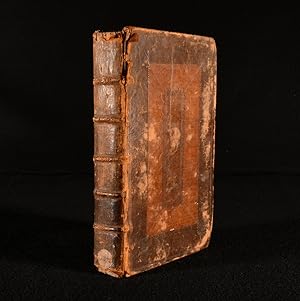
The Works of the Earls of Rochester, Roscomon [sic], and Dorset; The Dukes of Devonshire, Buckinghamshire, &c. With Memoirs of their Lives. In Two Volumes. With Additions, and Adorned with Cuts [complete with all eight copper-engravings].
Publicado por London, Printed in the Year., 1756
Librería: Inanna Rare Books Ltd., Skibbereen, CORK, Irlanda
Calificación del vendedor: 5 de 5 estrellas
EUR 475,00
Envío por EUR 28,00
Se envía de Irlanda a Estados Unidos de AmericaCantidad disponible: 1 disponibles
Añadir al carritoTwo Volumes, bound in One Volume (complete set). Small Octavo (9.3 cm x 16.2 cm). Pagination: Volume I: Frontispiece-Portrait of John, Earl of Rochester, 168 pages with five copper-engravings (plus Frontispiece) / Volume II: Frontispiece-Portrait, 168 pages with one copper-engraving (plus Frontispice). Hardcover / Original, 18th full leather of the 18th century with gilt lettering and ornament on spine. In protective Mylar. Firm with NO splitting but spine starting. Binding rubbed and some bumping to corners only. Interior in excellent condition. From the library of Daniel Conner (Connerville / Manch House), with blindstamped name of "Manch, Ballineen, Co. Cork" to endpaper and half-title. John Wilmot, 2nd Earl of Rochester (1 April 1647 (O.S.) 26 July 1680 (O.S.)) was an English poet and courtier of King Charles II's Restoration court, who reacted against the "spiritual authoritarianism" of the Puritan era. Rochester embodied a novel rebellion against the puritan programme, and he became as well known for his rakish lifestyle as for his poetry, although the two were often interlinked. He died as a result of a sexually transmitted infection at the age of 33. Rochester was described by his contemporary Andrew Marvell as "the best English satirist", and he is generally considered to be the most considerable poet and the most learned among the Restoration wits. His poetry was widely censored during the Victorian era, but enjoyed a revival from the 1920s onwards, with reappraisals from noted literary figures such as Graham Greene and Ezra Pound. The critic Vivian de Sola Pinto linked Rochester's libertinism to Hobbesian materialism. During his lifetime Rochester was best known for A Satyr Against Reason and Mankind and it remains among his best-known works today. Rochester's poetic work varies widely in form, genre, and content. He was part of a "mob of gentlemen who wrote with ease", who continued to produce their poetry in manuscripts, rather than in publication. As a consequence, some of Rochester's work deals with topical concerns, such as satires of courtly affairs in libels, to parodies of the styles of his contemporaries, such as Sir Carr Scrope. He is also notable for his impromptus, one of which is a teasing epigram on King Charles II: We have a pretty witty king, Whose word no man relies on. He never said a foolish thing, And never did a wise one. To which Charles supposedly replied, "That's true, for my words are my own, but my actions are those of my ministers". Rochester's poetry displays a range of learning and influences. These included imitations of Malherbe, Ronsard, and Boileau. He also translated or adapted from classical authors such as Petronius, Lucretius, Ovid, Anacreon, Horace, and Seneca. Rochester's writings were at once admired and infamous. A Satyr Against Mankind (1675), one of the few poems he published (in a broadside in 1679), is a scathing denunciation of rationalism and optimism that contrasts human perfidy with animal wisdom. The majority of his poetry was not published under his name until after his death. Because most of his poems circulated only in manuscript form during his lifetime, it is likely that much of his writing did not survive. Burnet claimed that Rochester's conversion experience led him to ask that "all his profane and lewd writings" be burned; it is unclear how much, if any, of Rochester's writing was destroyed. Rochester was also interested in the theatre. In addition to an interest in actresses, he wrote an adaptation of Fletcher's Valentinian (1685), a scene for Sir Robert Howard's The Conquest of China, a prologue to Elkanah Settle's The Empress of Morocco (1673), and epilogues to Sir Francis Fane's Love in the Dark (1675), Charles Davenant's Circe, a Tragedy (1677). The best-known dramatic work attributed to Rochester, Sodom, or the Quintessence of Debauchery, has never been successfully proven to be written by him. Posthumous printings of Sodom, however, gave rise to pros.
-
The Works of the Right Honourable the Earls of Rochester and Roscommon
Publicado por E. Curll, London, 1709
Librería: Rooke Books PBFA, Bath, Reino Unido
Miembro de asociación: PBFA
Calificación del vendedor: 5 de 5 estrellas
EUR 954,06
Envío por EUR 23,15
Se envía de Reino Unido a Estados Unidos de AmericaCantidad disponible: 1 disponibles
Añadir al carritoLeather. Condición: Good Only. None Ilustrador. The third edition of this scarce poetry collection of the Earls Rochester and Roscommon, both popular figures in the new court of Charles II. The third edition of this scarce work.ESTC citation number T95392.Collated, bound without the frontispiece.A selection of the poetical works of the 2nd Earl of Rochester, John Wilmot, and the 4th Earl of Roscommon, Wentworth Dillon. Both men were popular poets of the Restoration court.Rochester much embodied the rakish lifestyle of the Restoration court, his poetry often being interlinked with his lifestyle. He died due to a venereal disease at the age of thirty-three. Rochester was considered to be one of the most learned of the Restoration wits, his satirical poetry being very popular, though later much censored during the Victorian era.Roscommon was known for being a didactic writer, and his influential blank verse. He was somewhat against the low code of morals of the court, believing that it was leading to a degradation of literature.Two pages of adverts to the rear. In a full calf binding. Externally, boards and spine are rubbed, with loss of leather to the rear board, some of the remaining leather lifting to the fore edge. Small cracks to the joints. Bumping to the spine and extremities, with some loss to the head and tail of the spine. Early handwritten private shelf label to the tail of the spine. Hinges are starting but firm. Prior owner's ink inscription to the paste downs, and to the recto to the front endpaper. Internally, firmly bound. Pages are lightly age-toned and generally clean with some spots. Faint tide mark to the fore edge of some pages. Prior owner's numerical ink to the title page. Good Only. book.
-
A Collection of Poems: viz. the Temple of Death: by the Marquis of Normanby with several Original Poems, never before printed, by the E. of Roscomm. The E. of Rochester. The E. of Orrery. Sir Charles Sedley. Sir George Etherege. Mr Granville. Mr. Stepney. Mr Dryden, &c.
Publicado por London, printed for Daniel Brown and Benjamin Tooke, 1701., 1701
Librería: Bernard Quaritch Ltd ABA ILAB, London, Reino Unido
Miembro de asociación: ABA ILAB PBFA
Calificación del vendedor: 5 de 5 estrellas
Original o primera edición
EUR 596,29
Envío por EUR 37,05
Se envía de Reino Unido a Estados Unidos de AmericaCantidad disponible: 1 disponibles
Añadir al carrito8vo, pp. [viii], 453, [3 (advertisements)]; slightly foxed at extremities, but a very good, crisp copy; bound in contemporary speckled calf, gilt red morocco lettering-piece to spine, edges speckled red; rebacked, hinges worn.Fourth edition of the important 'Temple of Death' miscellany of Restoration poetry, comprising some one hundred poems, retaining most of the poems from the third edition of 1693 and adding much new material, including the first appearances of works by Roscommon and Rochester. The newly included material comprises all the poems on pp.172282 with contributions from Stepney, Arwaker, and Congreve and the poems at the end (pp. 391453), among them 'The Spleen' by Anne Finch, Countess of Winchilsea. Also notable is the first printing of John Philips's remarkably popular Miltonic imitation The Splendid Shilling. ESTC T116471; Case 151e. Language: English.


![Imagen del vendedor de The Works of the Earls of Rochester, Roscomon [sic], and Dorset; The Dukes of Devonshire, Buckinghamshire, &c. With Memoirs of their Lives. In Two Volumes. With Additions, and Adorned with Cuts [complete with all eight copper-engravings]. a la venta por Inanna Rare Books Ltd.](https://pictures.abebooks.com/inventory/md/md32377914589.jpg)