Importe total (1 artículo artículos):
Destino del pedido:

pin ki (2 resultados)
Ir a los resultados principales
Filtros de búsqueda
Tipo de artículo
- Todos los tipos de productos
- Libros (2)
- Revistas y publicaciones (No hay ningún otro resultado que coincida con este filtro.)
- Cómics (No hay ningún otro resultado que coincida con este filtro.)
- Partituras (No hay ningún otro resultado que coincida con este filtro.)
- Arte, grabados y pósters (No hay ningún otro resultado que coincida con este filtro.)
- Fotografías (No hay ningún otro resultado que coincida con este filtro.)
- Mapas (No hay ningún otro resultado que coincida con este filtro.)
- Manuscritos y coleccionismo de papel (No hay ningún otro resultado que coincida con este filtro.)
Condición Más información
- Nuevo (No hay ningún otro resultado que coincida con este filtro.)
- Como nuevo, Excelente o Muy bueno (1)
- Bueno o Aceptable (No hay ningún otro resultado que coincida con este filtro.)
- Regular o Pobre (No hay ningún otro resultado que coincida con este filtro.)
- Tal como se indica (1)
Encuadernación
Más atributos
- Primera edición (No hay ningún otro resultado que coincida con este filtro.)
- Firmado (No hay ningún otro resultado que coincida con este filtro.)
- Sobrecubierta (No hay ningún otro resultado que coincida con este filtro.)
- Con imágenes (2)
- No impresión bajo demanda (2)
Idioma (2)
Gastos de envío gratis
- Envío gratis a Estados Unidos de America (No hay ningún otro resultado que coincida con este filtro.)
Ubicación del vendedor
Valoración de los vendedores
-
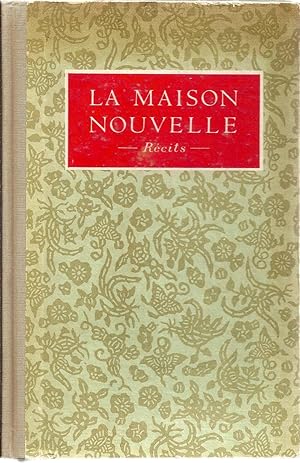
LA MAISON NOUVELLE. Récits. (Littérature chinoise)
Idioma: Francés
Publicado por Editions en langues étrangères, Pékin, 1955
Librería: Librairie Françoise Causse, COURTENAY, Francia
Calificación del vendedor: 5 de 5 estrellas

EUR 20,00
Envío por EUR 39,19
Se envía de Francia a Estados Unidos de AmericaCantidad disponible: 1 disponibles
Añadir al carritoDemi-toile. Condición: Near Fine. Wang Yao, Tsouei Pa-wa, Chou Kiun, Ai Wou, Ma Fong, Lo Pin-ki, Li Tchouen. La maison nouvelle. Récits. Pékin. Editions en langues étrangères. 1955. 1 volume 14x21 cm. de 153 pages. Demi toile beige.Titre imprimé au dos. Papier imprimé titré sur le plat. Pas de jaquette. Petits frottements sur les coupes. Bon état.
-
![Imagen del vendedor de Chuch'?n hyangyak ???? [Village Codes of Juch?n] a la venta por Jonathan A. Hill, Bookseller Inc.](https://pictures.abebooks.com/inventory/md/md32332291525.jpg)
Chuch'?n hyangyak ???? [Village Codes of Juch?n]
Librería: Jonathan A. Hill, Bookseller Inc., New York, NY, Estados Unidos de America
Miembro de asociación: ABAA ILAB
Calificación del vendedor: 5 de 5 estrellas
EUR 4.607,89
Envío por EUR 17,21
Se envía dentro de Estados Unidos de AmericaCantidad disponible: 1 disponibles
Añadir al carrito21.5 folding leaves. Small folio (320 x 212 mm.), orig. yellow patterned wrappers, new stitching. Wonyongdam ??? (North Jeolla province, Korea): Waryongam Hermitage ???, 1924. A most interesting work, printed by wooden movable type. Chuch'?n hyangyak is a local community compact a type of "village code." The title indicates it was created for the county of Juch?n, located in North Jeolla province. Following the tradition of the hyangyak genre in Korea, this book consists of collective village codes developed since the early Chos?n period (1392-1897), prescribing communal rules for mutual aid, moral conduct, dispute mediation, social order, and education, all rooted in Confucian ethics. It would have served both as guide for village governance and as lifestyle instruction for residents. Yet, this book differs from other regional hyangyak by probing explicitly secular matters, such as the control of anger and desire ????, as well as injunctions against ruthless profit-seeking behaviors. Notably, Chuch'?n hyangyak includes several Prefaces and Postscripts, each authored by different individuals and composed at various dates, including An Samun and Kim Ki-yeol (1886), Kim Tae-hyeon (1900), and Kim Dae-hyun (1924). The 1886 Preface clarifies that Kim Kuk-pin compiled the village codes of Juch?n that had existed since the 1700s and modeled them after the village compact ???? of Chinese philosopher Lü Xiangshan (1139-92). Each iteration added the latest changes in the county, reflecting contemporary social and ethical concerns and hinting at how Korean local elites responded to the Japanese colonial governance and increasing modernization. For instance, the final addition to the book is the mention of the 1908 reallocation of the Chuch'?n hyangyak's entire fund to found Hwa-dong School (still standing as Juch?n Elementary School, the second-oldest modern educational institution in North Jeolla). Some local historians characterized it as an "unusual move" by the old elite class to discard the educational format they had embodied, while others assess it as a proactive attempt to self-modernize. Fine copy. WorldCat lists only two copies: Harvard and an incomplete copy at Columbia.