Importe total (1 artículo artículos):
Destino del pedido:

pflug florian (12 resultados)
Ir a los resultados principales
Filtros de búsqueda
Tipo de artículo
- Todos los tipos de productos
- Libros (12)
- Revistas y publicaciones (No hay ningún otro resultado que coincida con este filtro.)
- Cómics (No hay ningún otro resultado que coincida con este filtro.)
- Partituras (No hay ningún otro resultado que coincida con este filtro.)
- Arte, grabados y pósters (No hay ningún otro resultado que coincida con este filtro.)
- Fotografías (No hay ningún otro resultado que coincida con este filtro.)
- Mapas (No hay ningún otro resultado que coincida con este filtro.)
- Manuscritos y coleccionismo de papel (No hay ningún otro resultado que coincida con este filtro.)
Condición Más información
- Nuevo (11)
- Como nuevo, Excelente o Muy bueno (1)
- Bueno o Aceptable (No hay ningún otro resultado que coincida con este filtro.)
- Regular o Pobre (No hay ningún otro resultado que coincida con este filtro.)
- Tal como se indica (No hay ningún otro resultado que coincida con este filtro.)
Encuadernación
- Todas
- Tapa dura (No hay ningún otro resultado que coincida con este filtro.)
- Tapa blanda (12)
Más atributos
- Primera edición (4)
- Firmado (No hay ningún otro resultado que coincida con este filtro.)
- Sobrecubierta (No hay ningún otro resultado que coincida con este filtro.)
- Con imágenes (8)
- No impresión bajo demanda (9)
Idioma (2)
Gastos de envío gratis
Ubicación del vendedor
Valoración de los vendedores
-
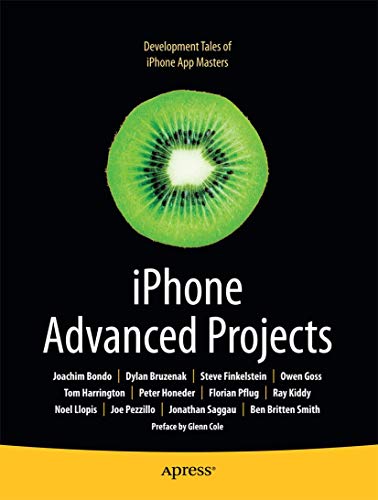
iPhone Advanced Projects
Librería: Ammareal, Morangis, Francia
Calificación del vendedor: 5 de 5 estrellas
 Oportunidad
EUR 8,24
Envío por EUR 20,50
Se envía de Francia a Estados Unidos de AmericaCantidad disponible: 1 disponibles
Añadir al carritoSoftcover. Condición: Bon. Ancien livre de bibliothèque avec équipements. Petite(s) trace(s) de pliure sur la couverture. Pages cornées. Edition 2009. Ammareal reverse jusqu'à 15% du prix net de cet article à des organisations caritatives. ENGLISH DESCRIPTION Book Condition: Used, Good. Former library book. Slightly creased cover. Dog-eared pages. Edition 2009. Ammareal gives back up to 15% of this item's net price to charity organizations.
-

iPhone Advanced Projects
Librería: Rarewaves USA, OSWEGO, IL, Estados Unidos de America
Calificación del vendedor: 5 de 5 estrellas
Original o primera edición
EUR 38,61
Gastos de envío gratis
Se envía dentro de Estados Unidos de AmericaCantidad disponible: 8 disponibles
Añadir al carritoPaperback. Condición: New. 1st ed. As the fourth book in our series of iPhone Projects based on the work and experiences of iPhone, this volume takes on the more advanced aspects of iPhone development. The first generation of iPhone applications has hit the App Store, and now it's time to optimize performance, streamline the user interface, and make every successful iPhone app just that much more sophisticated.Paired with Apress's bestselling Beginning iPhone Development: Exploring the iPhone SDK, you'll have everything you need to create the next great iPhone app that everyone is talking about.Optimize performance. Streamline your user interface. Do things with your iPhone app that other developers haven't attempted. Along with series editor Dave Mark, your guides for this exploration of the next level of iPhone development, include:Ben "Panda" Smith, discussing particle systems using OpenGL ES Joachim Bondo, demonstrating his implementation of correspondence gaming in the most recent version of his chess application, Deep Green. Tom Harrington implementing streaming audio with Core Audio, one of many iPhone OS 3 APIs. Owen Goss debugging those pesky errors in your iPhone code with an eye toward achieving professional-strength results. Dylan Bruzenak building a data-driven application with SQLite. Ray Kiddy illustrating the full application development life cycle with Core Data. Steve Finkelstein marrying an offline e-mail client to Core Data. Peter Honeder and Florian Pflug tackling the challenges of networked applications in WiFi environments. Jonathan Saggau improving interface responsiveness with some of his personal tips and tricks, including "blocks" and other esoteric techniques. Joe Pezzillo pushing thefrontiers of APNS, the new in iPhone OS 3 Apple Push Notification Service that makes the cloud the limit for iPhone apps. Noel Llopis taking mere programmers into a really advanced developmental adventure into the world of environment mapping with OpenGL ES.
-

iPhone Advanced Projects
Librería: Rarewaves.com USA, London, LONDO, Reino Unido
Calificación del vendedor: 5 de 5 estrellas
Original o primera edición
EUR 44,78
Gastos de envío gratis
Se envía de Reino Unido a Estados Unidos de AmericaCantidad disponible: 8 disponibles
Añadir al carritoPaperback. Condición: New. 1st ed. As the fourth book in our series of iPhone Projects based on the work and experiences of iPhone, this volume takes on the more advanced aspects of iPhone development. The first generation of iPhone applications has hit the App Store, and now it's time to optimize performance, streamline the user interface, and make every successful iPhone app just that much more sophisticated.Paired with Apress's bestselling Beginning iPhone Development: Exploring the iPhone SDK, you'll have everything you need to create the next great iPhone app that everyone is talking about.Optimize performance. Streamline your user interface. Do things with your iPhone app that other developers haven't attempted. Along with series editor Dave Mark, your guides for this exploration of the next level of iPhone development, include:Ben "Panda" Smith, discussing particle systems using OpenGL ES Joachim Bondo, demonstrating his implementation of correspondence gaming in the most recent version of his chess application, Deep Green. Tom Harrington implementing streaming audio with Core Audio, one of many iPhone OS 3 APIs. Owen Goss debugging those pesky errors in your iPhone code with an eye toward achieving professional-strength results. Dylan Bruzenak building a data-driven application with SQLite. Ray Kiddy illustrating the full application development life cycle with Core Data. Steve Finkelstein marrying an offline e-mail client to Core Data. Peter Honeder and Florian Pflug tackling the challenges of networked applications in WiFi environments. Jonathan Saggau improving interface responsiveness with some of his personal tips and tricks, including "blocks" and other esoteric techniques. Joe Pezzillo pushing thefrontiers of APNS, the new in iPhone OS 3 Apple Push Notification Service that makes the cloud the limit for iPhone apps. Noel Llopis taking mere programmers into a really advanced developmental adventure into the world of environment mapping with OpenGL ES.
-
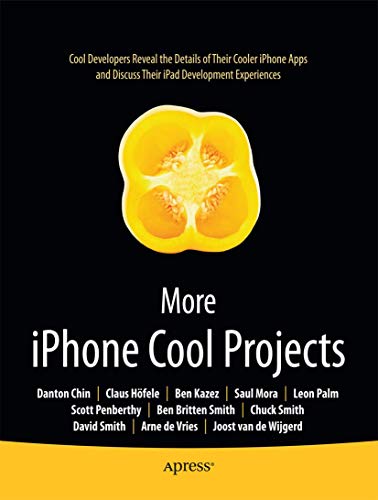
More iPhone Cool Projects: Cool Developers Reveal the Details of Their Cooler Apps
Librería: Kennys Bookshop and Art Galleries Ltd., Galway, GY, Irlanda
Calificación del vendedor: 5 de 5 estrellas
EUR 39,70
Envío por EUR 10,50
Se envía de Irlanda a Estados Unidos de AmericaCantidad disponible: 15 disponibles
Añadir al carritoCondición: New. Num Pages: 360 pages, 1, black & white illustrations. BIC Classification: UMQ; UMS. Category: (P) Professional & Vocational. Dimension: 232 x 192 x 23. Weight in Grams: 618. . 2010. Paperback. . . . .
-
More iPhone Cool Projects: Cool Developers Reveal the Details of Their Cooler Apps
Librería: Kennys Bookstore, Olney, MD, Estados Unidos de America
Calificación del vendedor: 4 de 5 estrellas

EUR 47,18
Envío por EUR 8,74
Se envía dentro de Estados Unidos de AmericaCantidad disponible: 15 disponibles
Añadir al carritoCondición: New. Num Pages: 360 pages, 1, black & white illustrations. BIC Classification: UMQ; UMS. Category: (P) Professional & Vocational. Dimension: 232 x 192 x 23. Weight in Grams: 618. . 2010. Paperback. . . . . Books ship from the US and Ireland.
-

PR-Theorien und Sport: Literaturstand der Theoriebildung und der Forschung in der Public Relations (German Edition)
Librería: California Books, Miami, FL, Estados Unidos de America
Calificación del vendedor: 5 de 5 estrellas
EUR 35,13
Gastos de envío gratis
Se envía dentro de Estados Unidos de AmericaCantidad disponible: Más de 20 disponibles
Añadir al carritoCondición: New.
-

iPhone Advanced Projects
Librería: Rarewaves USA United, OSWEGO, IL, Estados Unidos de America
Calificación del vendedor: 5 de 5 estrellas
Original o primera edición
EUR 40,77
Envío por EUR 41,60
Se envía dentro de Estados Unidos de AmericaCantidad disponible: 8 disponibles
Añadir al carritoPaperback. Condición: New. 1st ed. As the fourth book in our series of iPhone Projects based on the work and experiences of iPhone, this volume takes on the more advanced aspects of iPhone development. The first generation of iPhone applications has hit the App Store, and now it's time to optimize performance, streamline the user interface, and make every successful iPhone app just that much more sophisticated.Paired with Apress's bestselling Beginning iPhone Development: Exploring the iPhone SDK, you'll have everything you need to create the next great iPhone app that everyone is talking about.Optimize performance. Streamline your user interface. Do things with your iPhone app that other developers haven't attempted. Along with series editor Dave Mark, your guides for this exploration of the next level of iPhone development, include:Ben "Panda" Smith, discussing particle systems using OpenGL ES Joachim Bondo, demonstrating his implementation of correspondence gaming in the most recent version of his chess application, Deep Green. Tom Harrington implementing streaming audio with Core Audio, one of many iPhone OS 3 APIs. Owen Goss debugging those pesky errors in your iPhone code with an eye toward achieving professional-strength results. Dylan Bruzenak building a data-driven application with SQLite. Ray Kiddy illustrating the full application development life cycle with Core Data. Steve Finkelstein marrying an offline e-mail client to Core Data. Peter Honeder and Florian Pflug tackling the challenges of networked applications in WiFi environments. Jonathan Saggau improving interface responsiveness with some of his personal tips and tricks, including "blocks" and other esoteric techniques. Joe Pezzillo pushing thefrontiers of APNS, the new in iPhone OS 3 Apple Push Notification Service that makes the cloud the limit for iPhone apps. Noel Llopis taking mere programmers into a really advanced developmental adventure into the world of environment mapping with OpenGL ES.
-

iPhone Advanced Projects
Librería: Rarewaves.com UK, London, Reino Unido
Calificación del vendedor: 5 de 5 estrellas
Original o primera edición
EUR 41,87
Envío por EUR 74,77
Se envía de Reino Unido a Estados Unidos de AmericaCantidad disponible: 8 disponibles
Añadir al carritoPaperback. Condición: New. 1st ed. As the fourth book in our series of iPhone Projects based on the work and experiences of iPhone, this volume takes on the more advanced aspects of iPhone development. The first generation of iPhone applications has hit the App Store, and now it's time to optimize performance, streamline the user interface, and make every successful iPhone app just that much more sophisticated.Paired with Apress's bestselling Beginning iPhone Development: Exploring the iPhone SDK, you'll have everything you need to create the next great iPhone app that everyone is talking about.Optimize performance. Streamline your user interface. Do things with your iPhone app that other developers haven't attempted. Along with series editor Dave Mark, your guides for this exploration of the next level of iPhone development, include:Ben "Panda" Smith, discussing particle systems using OpenGL ES Joachim Bondo, demonstrating his implementation of correspondence gaming in the most recent version of his chess application, Deep Green. Tom Harrington implementing streaming audio with Core Audio, one of many iPhone OS 3 APIs. Owen Goss debugging those pesky errors in your iPhone code with an eye toward achieving professional-strength results. Dylan Bruzenak building a data-driven application with SQLite. Ray Kiddy illustrating the full application development life cycle with Core Data. Steve Finkelstein marrying an offline e-mail client to Core Data. Peter Honeder and Florian Pflug tackling the challenges of networked applications in WiFi environments. Jonathan Saggau improving interface responsiveness with some of his personal tips and tricks, including "blocks" and other esoteric techniques. Joe Pezzillo pushing thefrontiers of APNS, the new in iPhone OS 3 Apple Push Notification Service that makes the cloud the limit for iPhone apps. Noel Llopis taking mere programmers into a really advanced developmental adventure into the world of environment mapping with OpenGL ES.
-

PR-Theorien und Sport : Literaturstand der Theoriebildung und der Forschung in der Public Relations
Librería: AHA-BUCH GmbH, Einbeck, Alemania
Calificación del vendedor: 5 de 5 estrellas
EUR 17,95
Envío por EUR 60,31
Se envía de Alemania a Estados Unidos de AmericaCantidad disponible: 1 disponibles
Añadir al carritoTaschenbuch. Condición: Neu. Druck auf Anfrage Neuware - Printed after ordering - Studienarbeit aus dem Jahr 2004 im Fachbereich Gesundheit - Sport - Medien und Kommunikation, Note: 1,7, Technische Universität München (Lehrstuhl für Sport. Medien und Kommunikation), Veranstaltung: PR, Sprache: Deutsch, Abstract: Diese Seminararbeit wurde im Rahmen des Seminars Methodologie: Inhaltsanalyse erstellt. Es wird ein Überblick über den Literaturstand der Theoriebildung und der Forschung in der Public Relations dargestellt. Ausgehend von dieser Zusammenstellung werden Zusammenhänge, besonders im Hinblick auf das Themenfeld Sport, hergestellt. Inhaltsverzeichnis:1. Vorwort22. PR-Geschichte32.1. Frühe Formen der Öffentlichkeitsarbeit32.2. Entwicklung der Public Relations32.3. Abbildung: Chronologische Übersicht der PR-Theorien53. Definitionen von PR63.1. Hundhausen63.2. Oeckl63.3. Grunig und Hunt63.4. Meffert63.5. Harlow74. PR-Theorien84.1 Traditionelle Vorstellungen von Public Relations94.2. Organisationstheoretische Vorstellungen von Public Relations104.2.1. Die vier PR-Modelle (Stile) von Grunig und Hunt104.2.2. Das 'Symmetrie-Modell' der Public Relations124.2.3. Handlungstheoretischer Ansatz von Zerfaß134.3.Marketingtheoretische / absatzorientierte Ansätze134.4. Gesellschaftstheoretische/-politische Ansätze der PR144.4.1. Ansatz von Ronneberger154.4.2. Theorie von Ronneberger und Rühl164.4.3. Konstruktivistischer Ansatz von Merten174.4.4. Das Modell von Pflaum und Linxweiler184.4.5. Verständigungsorientierte Öffentlichkeitsarbeit195. Intersystembeziehungen PR und Journalismus215.1. Die Determinationshypothese von Baerns215.2. Das Intereffikationsmodell von Bentele/Liebert/Seeling216. Fazit237. Literaturverzeichnis247.1. Bücher:247.2. Internet25.
-

PR-Theorien und Sport
Librería: BuchWeltWeit Ludwig Meier e.K., Bergisch Gladbach, Alemania
Calificación del vendedor: 5 de 5 estrellas
EUR 17,95
Envío por EUR 23,00
Se envía de Alemania a Estados Unidos de AmericaCantidad disponible: 2 disponibles
Añadir al carritoTaschenbuch. Condición: Neu. This item is printed on demand - it takes 3-4 days longer - Neuware -Studienarbeit aus dem Jahr 2004 im Fachbereich Gesundheit - Sport - Medien und Kommunikation, Note: 1,7, Technische Universität München (Lehrstuhl für Sport. Medien und Kommunikation), Veranstaltung: PR, Sprache: Deutsch, Abstract: Diese Seminararbeit wurde im Rahmen des Seminars Methodologie: Inhaltsanalyse erstellt. Es wird ein Überblick über den Literaturstand der Theoriebildung und der Forschung in der Public Relations dargestellt. Ausgehend von dieser Zusammenstellung werden Zusammenhänge, besonders im Hinblick auf das Themenfeld Sport, hergestellt. Inhaltsverzeichnis:1. Vorwort22. PR-Geschichte32.1. Frühe Formen der Öffentlichkeitsarbeit32.2. Entwicklung der Public Relations32.3. Abbildung: Chronologische Übersicht der PR-Theorien53. Definitionen von PR63.1. Hundhausen63.2. Oeckl63.3. Grunig und Hunt63.4. Meffert63.5. Harlow74. PR-Theorien84.1 Traditionelle Vorstellungen von Public Relations94.2. Organisationstheoretische Vorstellungen von Public Relations104.2.1. Die vier PR-Modelle (Stile) von Grunig und Hunt104.2.2. Das 'Symmetrie-Modell' der Public Relations124.2.3. Handlungstheoretischer Ansatz von Zerfaß134.3.Marketingtheoretische / absatzorientierte Ansätze134.4. Gesellschaftstheoretische/-politische Ansätze der PR144.4.1. Ansatz von Ronneberger154.4.2. Theorie von Ronneberger und Rühl164.4.3. Konstruktivistischer Ansatz von Merten174.4.4. Das Modell von Pflaum und Linxweiler184.4.5. Verständigungsorientierte Öffentlichkeitsarbeit195. Intersystembeziehungen PR und Journalismus215.1. Die Determinationshypothese von Baerns215.2. Das Intereffikationsmodell von Bentele/Liebert/Seeling216. Fazit237. Literaturverzeichnis247.1. Bücher:247.2. Internet25 32 pp. Deutsch.
-

iPhone Advanced Projects
Librería: moluna, Greven, Alemania
Calificación del vendedor: 4 de 5 estrellas
EUR 31,59
Envío por EUR 48,99
Se envía de Alemania a Estados Unidos de AmericaCantidad disponible: Más de 20 disponibles
Añadir al carritoCondición: New. Dieser Artikel ist ein Print on Demand Artikel und wird nach Ihrer Bestellung fuer Sie gedruckt. First book covering advanced techniques and best practices for iPhone development Learn by ex.
-

PR-Theorien und Sport
Librería: buchversandmimpf2000, Emtmannsberg, BAYE, Alemania
Calificación del vendedor: 5 de 5 estrellas
EUR 17,95
Envío por EUR 60,00
Se envía de Alemania a Estados Unidos de AmericaCantidad disponible: 1 disponibles
Añadir al carritoTaschenbuch. Condición: Neu. This item is printed on demand - Print on Demand Titel. Neuware -Studienarbeit aus dem Jahr 2004 im Fachbereich Gesundheit - Sport - Medien und Kommunikation, Note: 1,7, Technische Universität München (Lehrstuhl für Sport. Medien und Kommunikation), Veranstaltung: PR, Sprache: Deutsch, Abstract: Diese Seminararbeit wurde im Rahmen des Seminars Methodologie: Inhaltsanalyse erstellt. Es wird ein Überblick über den Literaturstand der Theoriebildung und der Forschung in der Public Relations dargestellt. Ausgehend von dieser Zusammenstellung werden Zusammenhänge, besonders im Hinblick auf das Themenfeld Sport, hergestellt.Inhaltsverzeichnis:1. Vorwort 22. PR-Geschichte 32.1. Frühe Formen der Öffentlichkeitsarbeit 32.2. Entwicklung der Public Relations 32.3. Abbildung: Chronologische Übersicht der PR-Theorien 53. Definitionen von PR 63.1. Hundhausen 63.2. Oeckl 63.3. Grunig und Hunt 63.4. Meffert 63.5. Harlow 74. PR-Theorien 84.1 Traditionelle Vorstellungen von Public Relations 94.2. Organisationstheoretische Vorstellungen von Public Relations 104.2.1. Die vier PR-Modelle (Stile) von Grunig und Hunt 104.2.2. Das ¿Symmetrie-Modell¿ der Public Relations 124.2.3. Handlungstheoretischer Ansatz von Zerfaß 134.3. Marketingtheoretische / absatzorientierte Ansätze 134.4. Gesellschaftstheoretische/-politische Ansätze der PR 144.4.1. Ansatz von Ronneberger 154.4.2. Theorie von Ronneberger und Rühl 164.4.3. Konstruktivistischer Ansatz von Merten 174.4.4. Das Modell von Pflaum und Linxweiler 184.4.5. Verständigungsorientierte Öffentlichkeitsarbeit 195. Intersystembeziehungen PR und Journalismus 215.1. Die Determinationshypothese von Baerns 215.2. Das Intereffikationsmodell von Bentele/Liebert/Seeling 216. Fazit 237. Literaturverzeichnis 247.1. Bücher: 247.2. Internet 25Books on Demand GmbH, Überseering 33, 22297 Hamburg 32 pp. Deutsch.