

Importe total (1 artículo artículos):
Destino del pedido:

kill mockingbird (6 resultados)
Ir a los resultados principales
Filtros de búsqueda
Tipo de artículo
- Todos los tipos de productos
- Libros (5)
- Revistas y publicaciones (No hay ningún otro resultado que coincida con este filtro.)
- Cómics (No hay ningún otro resultado que coincida con este filtro.)
- Partituras (No hay ningún otro resultado que coincida con este filtro.)
- Arte, grabados y pósters (No hay ningún otro resultado que coincida con este filtro.)
- Fotografías (1)
- Mapas (No hay ningún otro resultado que coincida con este filtro.)
- Manuscritos y coleccionismo de papel (No hay ningún otro resultado que coincida con este filtro.)
Condición Más información
- Nuevo (No hay ningún otro resultado que coincida con este filtro.)
- Como nuevo, Excelente o Muy bueno (2)
- Bueno o Aceptable (2)
- Regular o Pobre (No hay ningún otro resultado que coincida con este filtro.)
- Tal como se indica (2)
Encuadernación
Más atributos
- Primera edición (1)
- Firmado (No hay ningún otro resultado que coincida con este filtro.)
- Sobrecubierta (2)
- Con imágenes (2)
- No impresión bajo demanda (6)
Idioma (2)
Gastos de envío gratis
- Envío gratis a Estados Unidos de America (No hay ningún otro resultado que coincida con este filtro.)
Ubicación del vendedor
Valoración de los vendedores
-
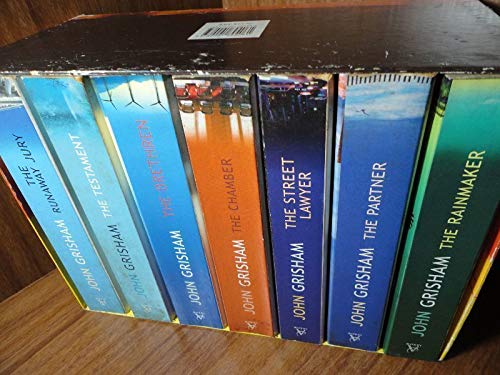
Vintage Classics Boxed Set
Librería: WorldofBooks, Goring-By-Sea, WS, Reino Unido
Calificación del vendedor: 5 de 5 estrellas

EUR 4,29
Envío por EUR 6,47
Se envía de Reino Unido a Estados Unidos de AmericaCantidad disponible: 3 disponibles
Añadir al carritoPaperback. Condición: Very Good. The book has been read, but is in excellent condition. Pages are intact and not marred by notes or highlighting. The spine remains undamaged.
-

Vintage Classics Boxed Set
Librería: WeBuyBooks, Rossendale, LANCS, Reino Unido
Calificación del vendedor: 5 de 5 estrellas
EUR 4,68
Envío por EUR 15,99
Se envía de Reino Unido a Estados Unidos de AmericaCantidad disponible: 1 disponibles
Añadir al carritoCondición: Good. Most items will be dispatched the same or the next working day. A copy that has been read but remains in clean condition. All of the pages are intact and the cover is intact and the spine may show signs of wear. The book may have minor markings which are not specifically mentioned.
-

Firsts - The Book Collectors Magazine Vol. 6, NO.12 December 1996 Including Collecting Carson McCullers
Publicado por Firsts Magazine
Librería: Terrace Horticultural Books, St. Paul, MN, Estados Unidos de America
Miembro de asociación: ABAA ILAB
Calificación del vendedor: 3 de 5 estrellas

EUR 5,32
Envío por EUR 6,01
Se envía dentro de Estados Unidos de AmericaCantidad disponible: 1 disponibles
Añadir al carritoSIngleIssueMagazine. Condición: Fine. B & W Illustrations, Color Cover Of To Kill A Mockingbird Ilustrador. Vol. 6, NO.12 December 1996. Copyright Date: 1996 Sm Quarto, December 1996, PP.84,
-
AUTOGRAPHED FOUR PLAYS OF ORPHAN'S HOME CYCLE (LIKE NEW ) ROOT IN PARCHED GROUND, CONVICTS, LILY DALE, WIDOW CLARE HCDJ1ST
Publicado por GROVE, 1988
Librería: forest primeval, Cherry tree, PA, Estados Unidos de America
Calificación del vendedor: 2 de 5 estrellas

Original o primera edición
EUR 44,30
Envío por EUR 6,02
Se envía dentro de Estados Unidos de AmericaCantidad disponible: 1 disponibles
Añadir al carritoNEW. NEW.
-
LEE, Harper
Publicado por The Franklin Library, Franklin Center, PA, 1977
Librería: Antiquarius Booksellers, Falkland, BC, Canada
Calificación del vendedor: 4 de 5 estrellas

EUR 115,18
Envío por EUR 8,17
Se envía de Canada a Estados Unidos de AmericaCantidad disponible: 1 disponibles
Añadir al carritoFull-Leather, Gilt. Condición: As New. Estado de la sobrecubierta: No Dustjacket Issued. David Millman Ilustrador. Franklin Library, Limited Edition. Franklin Library special Limited Edition of this celebrated novel published exclusively for subscribers. The unforgettable novel of a childhood in a sleepy Southern town and the crisis of conscience that rocked it. First published in 1960. Winner of the Pulitzer Prize for 1961. 301pp, illustrated by David Millman, all edges gilt, brilliant green moire silk endpapers, silk page-marker, full leather binding in dark red, attractively gilt with 22kt gold, four raised bands [hubbed] to spine. Very bright, fresh copy, absolutely 'as new'. Appears never opened and unused. Weight, 818g. Postage at cost. Anywhere in Canada for C$20.00; to the United States, US$10.00, boxed. Size: 22cm Tall. Book.
-
Civil Rights Era Film To Kill a Mockingbird Lobby Photograph Archive Depicting Racial Justice Narrative 1962
Año de publicación: 1962
Librería: Max Rambod Inc, Woodland Hills, CA, Estados Unidos de America
Miembro de asociación: ABAA ILAB
Calificación del vendedor: 5 de 5 estrellas
Fotografía
EUR 575,91
Envío por EUR 8,60
Se envía dentro de Estados Unidos de AmericaCantidad disponible: 1 disponibles
Añadir al carritoUniversal International, To Kill a Mockingbird, 1962, documents a central work in Civil Rights-era American cinema addressing racial injustice within the legal system of the Jim Crow South. Based on the 1960 novel by Harper Lee, the film presents the defense of a Black man falsely accused of a crime, situating questions of law, morality, and social hierarchy within a Southern courtroom. Featuring Gregory Peck as Atticus Finch, the material supports research into representations of race, justice, and white liberal advocacy in mid-20th-century film, as well as the broader cultural impact of Civil Rights discourse in popular media. Archive of 6 original vintage silver gelatin photographs produced for theatrical promotion, each measuring approximately 8 x 10 inches, comprising two matte and four glossy prints in black and white. The images depict key scenes from the film, including Gregory Peck in courtroom settings and the figure of Boo Radley carrying Jem Finch, emphasizing pivotal narrative moments. Two photographs include printed captions identifying Peck alongside Mary Badham, Philip Alford, and John Megna, with additional production information. Several versos bear "Girosign Ltd." distribution stamps, indicating international circulation. The photographs functioned as lobby display materials, presenting still imagery designed to convey the film's dramatic and moral themes to audiences. Produced at a time when Hollywood increasingly engaged with issues of race and justice, To Kill a Mockingbird contributed to the visual and narrative framing of the Civil Rights Movement for national audiences. Its courtroom scenes and character-driven storytelling shaped public perception of legal inequality and moral responsibility, while also reflecting the limitations of representation through its focus on a white protagonist. These photographs provide material evidence of how such themes were visually communicated and disseminated in 1960s film culture. Light handling wear with minor edge wear and occasional verso stamps; images remain sharp and well-preserved; overall very good. A focused group of promotional stills from a landmark Civil Rights-era film.


