
Importe total (1 artículo artículos):
Destino del pedido:

davide spina (10 resultados)
Ir a los resultados principales
Filtros de búsqueda
Tipo de artículo
- Todos los tipos de productos
- Libros (9)
- Revistas y publicaciones (1)
- Cómics (No hay ningún otro resultado que coincida con este filtro.)
- Partituras (No hay ningún otro resultado que coincida con este filtro.)
- Arte, grabados y pósters (No hay ningún otro resultado que coincida con este filtro.)
- Fotografías (No hay ningún otro resultado que coincida con este filtro.)
- Mapas (No hay ningún otro resultado que coincida con este filtro.)
- Manuscritos y coleccionismo de papel (No hay ningún otro resultado que coincida con este filtro.)
Condición Más información
- Nuevo (8)
- Como nuevo, Excelente o Muy bueno (No hay ningún otro resultado que coincida con este filtro.)
- Bueno o Aceptable (2)
- Regular o Pobre (No hay ningún otro resultado que coincida con este filtro.)
- Tal como se indica (No hay ningún otro resultado que coincida con este filtro.)
Encuadernación
Más atributos
- Primera edición (No hay ningún otro resultado que coincida con este filtro.)
- Firmado (No hay ningún otro resultado que coincida con este filtro.)
- Sobrecubierta (No hay ningún otro resultado que coincida con este filtro.)
- Con imágenes (4)
- No impresión bajo demanda (9)
Idioma (2)
Gastos de envío gratis
- Envío gratis a Estados Unidos de America (No hay ningún otro resultado que coincida con este filtro.)
Ubicación del vendedor
Valoración de los vendedores
-

Log 53: Why Italy Now?
Idioma: Inglés
Publicado por Anyone Corporation February 2022, 2022
ISBN 10: 1736500716 ISBN 13: 9781736500712
Librería: Hennessey + Ingalls, Los Angeles, CA, Estados Unidos de America
Calificación del vendedor: 4 de 5 estrellas

EUR 13,99
Envío por EUR 5,52
Se envía dentro de Estados Unidos de AmericaCantidad disponible: 4 disponibles
Añadir al carritoTrade Paperback. Condición: New.
-
AA Files - 72
Librería: BoundlessBookstore, Wallingford, Reino Unido
Calificación del vendedor: 5 de 5 estrellas

EUR 13,25
Envío por EUR 8,01
Se envía de Reino Unido a Estados Unidos de AmericaCantidad disponible: 1 disponibles
Añadir al carritoCondición: Good. Very good condition paperback with light wear. Contents are clean and bright throughout with no markings.
-
Log 53: Why Italy Now
Librería: Anyone Corporation, New York, NY, Estados Unidos de America
Calificación del vendedor: 5 de 5 estrellas
Revista / Publicación
EUR 15,74
Envío por EUR 5,63
Se envía dentro de Estados Unidos de AmericaCantidad disponible: 1 disponibles
Añadir al carritoSoft cover. Condición: New. Log 53 asks the simple yet provocative question "Why Italy Now?" The responses are as diverse and multifaceted as the country itself. Exploring this seemingly well-trodden ground, one discovers that because of its historic centrality and its precarity Italy remains relevant to the challenges facing architecture today. As contributor Giulia Amoresano writes: "Amid calls today to challenge the Eurocentrism of canonical histories of architecture's modernity and to work on decolonizing its theories and practices, work needs to be done on what we think canonical spaces are." Log 53 is guest edited by Alicia Imperiale in New York and Manuel Orazi in Macerata. Essays include philosopher Giorgio Agamben on a Venetian door, theorist Mario Carpo on blight in Piedmont, architect ElDante' Winston on violence in Bologna, historian Edward Eigen on the Club of Rome, architect Fabrizio Furiassi on the Mafia in Sicily, and reporter Mario Calvo-Platero on colonial architecture in Tripoli. Emilia Giorgi explores unplanned greenery in Rome, while Gabriele Mastrigli highlights the planned greenery of EUR. Iwan Strauven reviews books on Carlo Aymonino and Aldo Rossi, Britt Eversole parses the trove of untranslated Italian theory, and Ingrid D. Rowland details her translation of Vitruvius. Paulette Singley sets the place for Italian cuisine, and Giulia Amoresano sources caffè espresso in the colonization of southern Italy. An Tairan revisits an 18th-century earthquake, Daniele Profeta analyzes the impact of the 19th-century Grand Tour, and Davide Spina exposes the dark side of postwar architecture culture. Greg Lynn talks with art historian Marilyn Aronberg Lavin about her digital analysis of Piero della Francesca, and Patrick Templeton asks writer and podcaster Alex Hochuli about Italy's political legacy. Log 53 also presents projects by women building in Italy today Lina Malfona, Elisabetta Terragni, and Maria Alessandra Segantini as well as in the past overlooked Neapolitan modernist Stefania Filo Speziale.
-

Zappa e Spada. Spaghetti fantasy
Libro 1 de 2: Zappa e SpadaLibrería: medimops, Berlin, Alemania
Calificación del vendedor: 5 de 5 estrellas
EUR 5,96
Envío por EUR 15,00
Se envía de Alemania a Estados Unidos de AmericaCantidad disponible: 1 disponibles
Añadir al carritoCondición: good. Befriedigend/Good: Durchschnittlich erhaltenes Buch bzw. Schutzumschlag mit Gebrauchsspuren, aber vollständigen Seiten. / Describes the average WORN book or dust jacket that has all the pages present.
-
Log 53 - Why Italy Now? Fall 2021
Librería: Art Data, London, Reino Unido
Calificación del vendedor: 4 de 5 estrellas
EUR 17,74
Envío por EUR 28,70
Se envía de Reino Unido a Estados Unidos de AmericaCantidad disponible: 6 disponibles
Añadir al carritoPaperback. Condición: Brand New. Paperback.Width: 17 cm. Height: 24cm. 192 pages. English text.
-
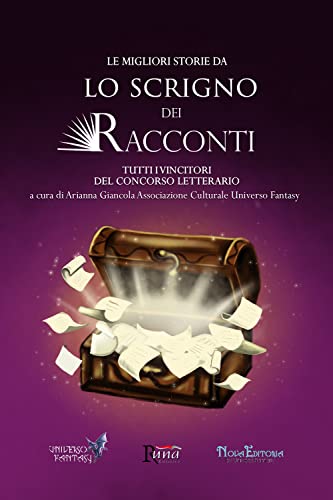
Le migliori storie da Lo Scrigno dei Racconti
Librería: libreriauniversitaria.it, Occhiobello, RO, Italia
Calificación del vendedor: 4 de 5 estrellas
EUR 10,00
Envío por EUR 17,95
Se envía de Italia a Estados Unidos de AmericaCantidad disponible: 3 disponibles
Añadir al carritoCondición: NEW. Alessandra Valenti Ilustrador.
-
Zappa e Spada. Spaghetti fantasy
Libro 1 de 2: Zappa e SpadaLibrería: libreriauniversitaria.it, Occhiobello, RO, Italia
Calificación del vendedor: 4 de 5 estrellas
EUR 12,35
Envío por EUR 17,95
Se envía de Italia a Estados Unidos de AmericaCantidad disponible: 2 disponibles
Añadir al carritoCondición: NEW.
-
Zappa e Spada. Spaghetti fantasy
Libro 1 de 2: Zappa e SpadaLibrería: Revaluation Books, Exeter, Reino Unido
Calificación del vendedor: 5 de 5 estrellas
EUR 29,33
Envío por EUR 11,48
Se envía de Reino Unido a Estados Unidos de AmericaCantidad disponible: 1 disponibles
Añadir al carritoPaperback. Condición: Brand New. Italian language. 8.27x5.67x0.94 inches. In Stock.
-

Landscapes Across the Mediterranean-Volume 2 : Interdisciplinary Approaches in Cultural Landscape Management in the Built Environment
Idioma: Inglés
Publicado por Springer, Berlin, Springer, 2025
ISBN 10: 3032091446 ISBN 13: 9783032091444
Librería: AHA-BUCH GmbH, Einbeck, Alemania
Calificación del vendedor: 5 de 5 estrellas
EUR 307,29
Envío por EUR 65,00
Se envía de Alemania a Estados Unidos de AmericaCantidad disponible: 2 disponibles
Añadir al carritoBuch. Condición: Neu. Druck auf Anfrage Neuware - Printed after ordering - This book presents a comprehensive exploration of the interplay between cultural heritage, landscape, and sustainable development in the Mediterranean region. This book opens with a focus on Cultural Heritage, Landscape, and Identity, examining the material and symbolic dimensions of historic environments.The book also features rich case studies that highlight the relationship between natural and built heritage, including the Posta Fibreno Lake, the rock settlements of Monte San Giuliano, and the cultural significance of sites like Capo Colonna and Gerace. Also, this book addresses Adaptive Reuse and Sustainable Development of Cultural Landscapes, offering innovative strategies such as sustainable reuse of abandoned railways, circular regeneration plans for rural villages, and the balancing of natural preservation with urban and coastal development, including Venice's response to rising sea levels. In addition to this book delves into Nature-Based Solutions and Environmental Regeneration, showcasing tools for environmental offsetting, green infrastructure integration, climate resilience in Marzamemi, and the spatial impacts of tourism in Puglia and the Adriatic. In Technological Innovation, Energy and Environmental Sustainability, the book examines advanced methodologies --ranging from fuzzy logic models for energy systems to wildfire risk management and urban heat mapping --while also addressing accessibility and green mobility. Structural Safety, Material Innovation, and Conservation Technologies follows, highlighting digital tools in structural analysis, AI-powered crack detection, and sustainable construction materials such as cactus-based roof tiles. Finally, the book section on Sustainable Design, Regeneration, and Circular Economy Practices reflects on design and manufacturing synergy, public space revitalization, housing equity, and resource management, drawing lessons from both Mediterranean and international contexts. Together, these chapters of this book offer a rich, multidisciplinary approach to heritage preservation and future-oriented environmental and architectural practices.
-

Landscapes Across the Mediterranean-Volume 2
Idioma: Inglés
Publicado por Springer, Berlin, Springer, 2025
ISBN 10: 3032091446 ISBN 13: 9783032091444
Librería: BuchWeltWeit Ludwig Meier e.K., Bergisch Gladbach, Alemania
Calificación del vendedor: 5 de 5 estrellas
EUR 299,59
Envío por EUR 23,00
Se envía de Alemania a Estados Unidos de AmericaCantidad disponible: 2 disponibles
Añadir al carritoBuch. Condición: Neu. This item is printed on demand - it takes 3-4 days longer - Neuware -This book presents a comprehensive exploration of the interplay between cultural heritage, landscape, and sustainable development in the Mediterranean region. This book opens with a focus on Cultural Heritage, Landscape, and Identity, examining the material and symbolic dimensions of historic environments.The book also features rich case studies that highlight the relationship between natural and built heritage, including the Posta Fibreno Lake, the rock settlements of Monte San Giuliano, and the cultural significance of sites like Capo Colonna and Gerace. Also, this book addresses Adaptive Reuse and Sustainable Development of Cultural Landscapes, offering innovative strategies such as sustainable reuse of abandoned railways, circular regeneration plans for rural villages, and the balancing of natural preservation with urban and coastal development, including Venice's response to rising sea levels. In addition to this book delves into Nature-Based Solutions and Environmental Regeneration, showcasing tools for environmental offsetting, green infrastructure integration, climate resilience in Marzamemi, and the spatial impacts of tourism in Puglia and the Adriatic. In Technological Innovation, Energy and Environmental Sustainability, the book examines advanced methodologies --ranging from fuzzy logic models for energy systems to wildfire risk management and urban heat mapping --while also addressing accessibility and green mobility. Structural Safety, Material Innovation, and Conservation Technologies follows, highlighting digital tools in structural analysis, AI-powered crack detection, and sustainable construction materials such as cactus-based roof tiles. Finally, the book section on Sustainable Design, Regeneration, and Circular Economy Practices reflects on design and manufacturing synergy, public space revitalization, housing equity, and resource management, drawing lessons from both Mediterranean and international contexts. Together, these chapters of this book offer a rich, multidisciplinary approach to heritage preservation and future-oriented environmental and architectural practices. Englisch.


