

Importe total (1 artículo artículos):
Destino del pedido:

cox paul stan (9 resultados)
Ir a los resultados principales
Filtros de búsqueda
Tipo de artículo
- Todos los tipos de productos
- Libros (9)
- Revistas y publicaciones (No hay ningún otro resultado que coincida con este filtro.)
- Cómics (No hay ningún otro resultado que coincida con este filtro.)
- Partituras (No hay ningún otro resultado que coincida con este filtro.)
- Arte, grabados y pósters (No hay ningún otro resultado que coincida con este filtro.)
- Fotografías (No hay ningún otro resultado que coincida con este filtro.)
- Mapas (No hay ningún otro resultado que coincida con este filtro.)
- Manuscritos y coleccionismo de papel (No hay ningún otro resultado que coincida con este filtro.)
Condición Más información
- Nuevo (4)
- Como nuevo, Excelente o Muy bueno (3)
- Bueno o Aceptable (2)
- Regular o Pobre (No hay ningún otro resultado que coincida con este filtro.)
- Tal como se indica (No hay ningún otro resultado que coincida con este filtro.)
Encuadernación
- Todas
- Tapa dura (9)
- Tapa blanda (No hay ningún otro resultado que coincida con este filtro.)
Más atributos
- Primera edición (No hay ningún otro resultado que coincida con este filtro.)
- Firmado (No hay ningún otro resultado que coincida con este filtro.)
- Sobrecubierta (1)
- Con imágenes (2)
- No impresión bajo demanda (9)
Idioma (1)
Gastos de envío gratis
Ubicación del vendedor
Valoración de los vendedores
-
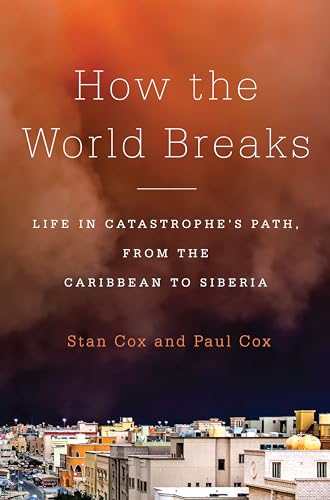
How the World Breaks : Life in Catastrophe's Path, from the Caribbean to Siberia
Librería: Better World Books, Mishawaka, IN, Estados Unidos de America
Calificación del vendedor: 5 de 5 estrellas

EUR 6,84
Gastos de envío gratis
Se envía dentro de Estados Unidos de AmericaCantidad disponible: 1 disponibles
Añadir al carritoCondición: Fine. Used book that is in almost brand-new condition. May contain a remainder mark. Better World Books: Buy Books. Do Good.
-
How the World Breaks : Life in Catastrophe's Path, from the Caribbean to Siberia
Librería: Better World Books, Mishawaka, IN, Estados Unidos de America
Calificación del vendedor: 5 de 5 estrellas
EUR 6,84
Gastos de envío gratis
Se envía dentro de Estados Unidos de AmericaCantidad disponible: 1 disponibles
Añadir al carritoCondición: Very Good. Former library copy. Pages intact with possible writing/highlighting. Binding strong with minor wear. Dust jackets/supplements may not be included. Includes library markings. Stock photo provided. Product includes identifying sticker. Better World Books: Buy Books. Do Good.
-
How the World Breaks: Life in Catastrophe's Path, from the Caribbean to Siberia
Librería: ThriftBooks-Atlanta, AUSTELL, GA, Estados Unidos de America
Calificación del vendedor: 5 de 5 estrellas
EUR 8,17
Gastos de envío gratis
Se envía dentro de Estados Unidos de AmericaCantidad disponible: 1 disponibles
Añadir al carritoHardcover. Condición: Very Good. No Jacket. Former library book; May have limited writing in cover pages. Pages are unmarked. ~ ThriftBooks: Read More, Spend Less.
-
How the World Breaks: Life in Catastrophe's Path, from the Caribbean to Siberia
Librería: BookEnds Bookstore & Curiosities, Ojai, CA, Estados Unidos de America
Calificación del vendedor: 5 de 5 estrellas
EUR 10,68
Envío por EUR 3,46
Se envía dentro de Estados Unidos de AmericaCantidad disponible: 1 disponibles
Añadir al carritoHardcover. Condición: Fine. Estado de la sobrecubierta: Fine. Fine condition Hardcover maroon boards with silver lettering on the spine. Includes Notes and Index, 399 pages. The DJ is in Fine condition.
-
How the World Breaks Format: Hardcover
Librería: INDOO, Avenel, NJ, Estados Unidos de America
Calificación del vendedor: 5 de 5 estrellas
EUR 28,44
Gastos de envío gratis
Se envía dentro de Estados Unidos de AmericaCantidad disponible: 12 disponibles
Añadir al carritoCondición: As New. Unread copy in mint condition.
-
How the World Breaks Format: Hardcover
Librería: INDOO, Avenel, NJ, Estados Unidos de America
Calificación del vendedor: 5 de 5 estrellas
EUR 28,53
Gastos de envío gratis
Se envía dentro de Estados Unidos de AmericaCantidad disponible: 12 disponibles
Añadir al carritoCondición: New. Brand New.
-

How the World Breaks
Librería: Rarewaves USA, OSWEGO, IL, Estados Unidos de America
Calificación del vendedor: 5 de 5 estrellas
EUR 45,37
Gastos de envío gratis
Se envía dentro de Estados Unidos de AmericaCantidad disponible: 6 disponibles
Añadir al carritoHardback. Condición: New. We've always lived on a dangerous planet, but its disasters aren't what they used to be. How the World Breaks gives us a breathtaking new view of crisis and recovery on the unstable landscapes of the Earth's hazard zones. Father and son authors Stan and Paul Cox take us to the explosive fire fronts of overheated Australia, the future lost city of Miami, the fights over whether and how to fortify New York City in the wake of Sandy, the Indonesian mud volcano triggered by natural gas drilling, and other communities that are reimagining their lives after quakes, superstorms, tornadoes, and landslides.In the very decade when we should be rushing to heal the atmosphere and address the enormous inequalities of risk, a strange idea has taken hold of global disaster policy: resilience. Its proponents say that threatened communities must simply learn the art of resilience, adapt to risk, and thereby survive. This doctrine obscures the human hand in creating disasters and requires the planet's most beleaguered people to absorb the rush of floodwaters and the crush of landslides, freeing the world economy to go on undisturbed. The Coxes' great contribution is to pull the disaster debate out of the realm of theory and into the muck and ash of the world's broken places. There we learn that change is more than mere adaptation and life is more than mere survival. Ultimately, How the World Breaks reveals why-unless we address the social, ecological, and economic roots of disaster-millions more people every year will find themselves spiraling into misery. It is essential reading for our time.
-
How the World Breaks: Life in Catastrophe's Path, from the Caribbean to Siberia
Librería: Revaluation Books, Exeter, Reino Unido
Calificación del vendedor: 5 de 5 estrellas
EUR 45,01
Envío por EUR 14,48
Se envía de Reino Unido a Estados Unidos de AmericaCantidad disponible: 1 disponibles
Añadir al carritoHardcover. Condición: Brand New. 384 pages. 9.75x6.25x1.50 inches. In Stock.
-

How the World Breaks
Librería: Rarewaves USA United, OSWEGO, IL, Estados Unidos de America
Calificación del vendedor: 5 de 5 estrellas
EUR 47,27
Envío por EUR 43,21
Se envía dentro de Estados Unidos de AmericaCantidad disponible: 6 disponibles
Añadir al carritoHardback. Condición: New. We've always lived on a dangerous planet, but its disasters aren't what they used to be. How the World Breaks gives us a breathtaking new view of crisis and recovery on the unstable landscapes of the Earth's hazard zones. Father and son authors Stan and Paul Cox take us to the explosive fire fronts of overheated Australia, the future lost city of Miami, the fights over whether and how to fortify New York City in the wake of Sandy, the Indonesian mud volcano triggered by natural gas drilling, and other communities that are reimagining their lives after quakes, superstorms, tornadoes, and landslides.In the very decade when we should be rushing to heal the atmosphere and address the enormous inequalities of risk, a strange idea has taken hold of global disaster policy: resilience. Its proponents say that threatened communities must simply learn the art of resilience, adapt to risk, and thereby survive. This doctrine obscures the human hand in creating disasters and requires the planet's most beleaguered people to absorb the rush of floodwaters and the crush of landslides, freeing the world economy to go on undisturbed. The Coxes' great contribution is to pull the disaster debate out of the realm of theory and into the muck and ash of the world's broken places. There we learn that change is more than mere adaptation and life is more than mere survival. Ultimately, How the World Breaks reveals why-unless we address the social, ecological, and economic roots of disaster-millions more people every year will find themselves spiraling into misery. It is essential reading for our time.
