

Importe total (1 artículo artículos):
Destino del pedido:

barbara littenberg (24 resultados)
Ir a los resultados principales
Filtros de búsqueda
Tipo de artículo
- Todos los tipos de productos
- Libros (24)
- Revistas y publicaciones (No hay ningún otro resultado que coincida con este filtro.)
- Cómics (No hay ningún otro resultado que coincida con este filtro.)
- Partituras (No hay ningún otro resultado que coincida con este filtro.)
- Arte, grabados y pósters (No hay ningún otro resultado que coincida con este filtro.)
- Fotografías (No hay ningún otro resultado que coincida con este filtro.)
- Mapas (No hay ningún otro resultado que coincida con este filtro.)
- Manuscritos y coleccionismo de papel (No hay ningún otro resultado que coincida con este filtro.)
Condición Más información
- Nuevo (16)
- Como nuevo, Excelente o Muy bueno (2)
- Bueno o Aceptable (6)
- Regular o Pobre (No hay ningún otro resultado que coincida con este filtro.)
- Tal como se indica (No hay ningún otro resultado que coincida con este filtro.)
Encuadernación
- Todas
- Tapa dura (No hay ningún otro resultado que coincida con este filtro.)
- Tapa blanda (24)
Más atributos
- Primera edición (No hay ningún otro resultado que coincida con este filtro.)
- Firmado (No hay ningún otro resultado que coincida con este filtro.)
- Sobrecubierta (No hay ningún otro resultado que coincida con este filtro.)
- Con imágenes (8)
- No impresión bajo demanda (24)
Idioma (1)
Gastos de envío gratis
Ubicación del vendedor
Valoración de los vendedores
-
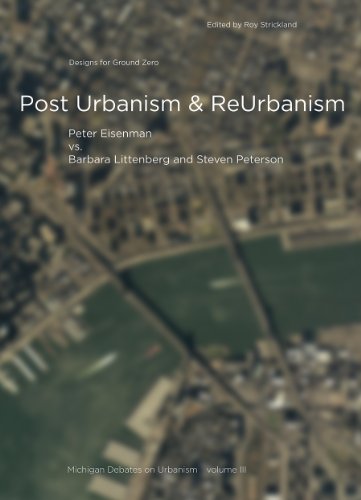
Post Urbanism & ReUrbanism: Michigan Debates on Urbanism, Vol. 3
Idioma: Inglés
Publicado por University of Michigan, Taubman, 2005
ISBN 10: 1891197363 ISBN 13: 9781891197369
Librería: agoodealofbooks, Ypsilanti, MI, Estados Unidos de America
Calificación del vendedor: 4 de 5 estrellas

EUR 16,60
Envío por EUR 4,29
Se envía dentro de Estados Unidos de AmericaCantidad disponible: 1 disponibles
Añadir al carritoPaperback. Condición: Very Good. very clean softcover. no marks. clean text. solid binding. very light wear. ISBN matches listing Fast service with confirmation, no international or priority orders over 4lbs.
-
Post Urbanism: Michigan Debates on Urbanism III
Idioma: Inglés
Publicado por University of Michigan, Taubman College of Archite February 2005, 2005
ISBN 10: 1891197363 ISBN 13: 9781891197369
Librería: Hennessey + Ingalls, Los Angeles, CA, Estados Unidos de America
Calificación del vendedor: 4 de 5 estrellas
EUR 15,91
Envío por EUR 5,59
Se envía dentro de Estados Unidos de AmericaCantidad disponible: 1 disponibles
Añadir al carritoTrade Paperback. Condición: Used - Very Good. Previous owner stamped his name on text edge. Very nice clean, tight copy free of any marks.
-
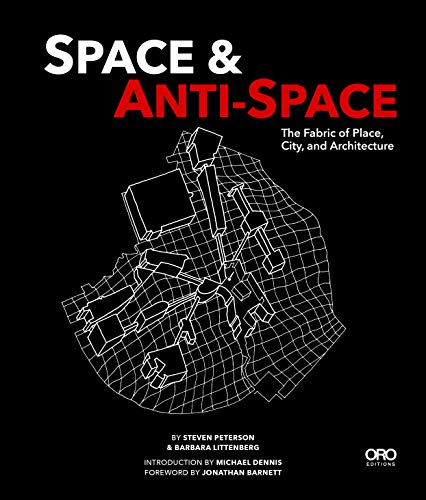
Space and Anti-Space: The Fabric of Place, City and Architecture
Librería: ThriftBooks-Atlanta, AUSTELL, GA, Estados Unidos de America
Calificación del vendedor: 5 de 5 estrellas

EUR 22,50
Gastos de envío gratis
Se envía dentro de Estados Unidos de AmericaCantidad disponible: 1 disponibles
Añadir al carritoPaperback. Condición: Very Good. No Jacket. May have limited writing in cover pages. Pages are unmarked. ~ ThriftBooks: Read More, Spend Less.
-
Space and Anti-Space: The Fabric of Place, City and Architecture
Librería: Books From California, Simi Valley, CA, Estados Unidos de America
Calificación del vendedor: 4 de 5 estrellas
EUR 20,25
Envío por EUR 4,29
Se envía dentro de Estados Unidos de AmericaCantidad disponible: 1 disponibles
Añadir al carritopaperback. Condición: Good.
-
Space & Anti-Space : The Fabric of Place, City, and Architecture
Librería: GreatBookPrices, Columbia, MD, Estados Unidos de America
Calificación del vendedor: 5 de 5 estrellas
EUR 35,16
Envío por EUR 2,27
Se envía dentro de Estados Unidos de AmericaCantidad disponible: 11 disponibles
Añadir al carritoCondición: As New. Unread book in perfect condition.
-
Space and Anti-Space: The Fabric of Place, City and Architecture
Librería: PBShop.store UK, Fairford, GLOS, Reino Unido
Calificación del vendedor: 5 de 5 estrellas
EUR 28,95
Envío por EUR 8,83
Se envía de Reino Unido a Estados Unidos de AmericaCantidad disponible: 1 disponibles
Añadir al carritoPAP. Condición: Used - Very Good. Used - Like New Book. Shipped from UK. Established seller since 2000.
-
Space and Anti-Space: The Fabric of Place, City and Architecture
Librería: PBShop.store UK, Fairford, GLOS, Reino Unido
Calificación del vendedor: 5 de 5 estrellas
EUR 28,95
Envío por EUR 8,83
Se envía de Reino Unido a Estados Unidos de AmericaCantidad disponible: 3 disponibles
Añadir al carritoPAP. Condición: New. New Book. Shipped from UK. Established seller since 2000.
-
Space & Anti-Space : The Fabric of Place, City, and Architecture
Librería: GreatBookPrices, Columbia, MD, Estados Unidos de America
Calificación del vendedor: 5 de 5 estrellas
EUR 36,55
Envío por EUR 2,27
Se envía dentro de Estados Unidos de AmericaCantidad disponible: 11 disponibles
Añadir al carritoCondición: New.
-
Space and Anti-Space: The Fabric of Place, City and Architecture
Librería: INDOO, Avenel, NJ, Estados Unidos de America
Calificación del vendedor: 5 de 5 estrellas
EUR 38,90
Gastos de envío gratis
Se envía dentro de Estados Unidos de AmericaCantidad disponible: 20 disponibles
Añadir al carritoCondición: New.
-
Space and Anti-Space: The Fabric of Place, City and Architecture
Librería: PBShop.store US, Wood Dale, IL, Estados Unidos de America
Calificación del vendedor: 5 de 5 estrellas
EUR 39,12
Gastos de envío gratis
Se envía dentro de Estados Unidos de AmericaCantidad disponible: 1 disponibles
Añadir al carritoPAP. Condición: Used - Very Good. Used - Like New Book. Shipped from UK. Established seller since 2000.
-
Space and Anti-Space: The Fabric of Place, City and Architecture
Librería: PBShop.store US, Wood Dale, IL, Estados Unidos de America
Calificación del vendedor: 5 de 5 estrellas
EUR 39,12
Gastos de envío gratis
Se envía dentro de Estados Unidos de AmericaCantidad disponible: 3 disponibles
Añadir al carritoPAP. Condición: New. New Book. Shipped from UK. Established seller since 2000.
-

Space and Anti-Space: The Fabric of Place, City and Architecture
Librería: Rarewaves USA, OSWEGO, IL, Estados Unidos de America
Calificación del vendedor: 5 de 5 estrellas
EUR 41,53
Gastos de envío gratis
Se envía dentro de Estados Unidos de AmericaCantidad disponible: 8 disponibles
Añadir al carritoPaperback. Condición: New. This book challenges the conventional idea of what constitutes the physical form of the contemporary city. Observing the absence of extended urban fabrics - the missing urbanism - in the new global cities developed today, it argues that these cities are merely statistical accumulations of density that lack the positive attributes of a genuine urban condition. Cities as urban places cannot be made by individual buildings alone but rather depend on the intertwined combination of an architecture that is bound to the creation of public spaces and streets, and engaged in the structure of urban blocks to form a complex field pattern of interactive solids and voids. Broad in scope, the book explores the nature of the fundamental relationship between architecture and urbanism as one of spatial formation. As an independently designed entity, the city forms the ordering framework in which architecture is partially subordinated to the mutual sustainability of the overall urban fabric. If a new urban architecture is to be an integral constituent of public place making, it must be composed using a radically different paradigm of positive, figurally constructed 'space' rather than the indefinite background of 'anti-space' as exemplified in the chapter on Mies van der Rohe's architectural quest for the ineffable modern void. These two different spatial models are explored in depth in the eponymous article, 'Space and Anti Space,' first published in the Harvard Architectural Review in 1980, which forms the core of the book and postulates that the underlying attitudes toward spatial formation, at both domestic and urban scales, determine our ability to shape place and human experience. In a series of essays, articles and urban projects extensively illustrated by plans, analytic diagrams, and dramatic images, this book makes a visual and verbal argument for the steps that need to be taken to re-urbanise the city in order to achieve an urbanity consisting of multiple discrete places that depend on the essential concept of contained geometrical space. These spatial ideas are illustrated in this book in three proposals: for Rome, in 'Roma Interrotta,' 1979; Paris, the 'Consultation Internationale pour L'Aménagement du Quartier des Halles,' 1980; and New York in the 'World Trade Center Site Innovative Design Study,' 2002.
-

Space and Anti-Space: The Fabric of Place, City and Architecture
Librería: Rarewaves.com USA, London, LONDO, Reino Unido
Calificación del vendedor: 5 de 5 estrellas
EUR 41,53
Gastos de envío gratis
Se envía de Reino Unido a Estados Unidos de AmericaCantidad disponible: 3 disponibles
Añadir al carritoPaperback. Condición: New. This book challenges the conventional idea of what constitutes the physical form of the contemporary city. Observing the absence of extended urban fabrics - the missing urbanism - in the new global cities developed today, it argues that these cities are merely statistical accumulations of density that lack the positive attributes of a genuine urban condition. Cities as urban places cannot be made by individual buildings alone but rather depend on the intertwined combination of an architecture that is bound to the creation of public spaces and streets, and engaged in the structure of urban blocks to form a complex field pattern of interactive solids and voids. Broad in scope, the book explores the nature of the fundamental relationship between architecture and urbanism as one of spatial formation. As an independently designed entity, the city forms the ordering framework in which architecture is partially subordinated to the mutual sustainability of the overall urban fabric. If a new urban architecture is to be an integral constituent of public place making, it must be composed using a radically different paradigm of positive, figurally constructed 'space' rather than the indefinite background of 'anti-space' as exemplified in the chapter on Mies van der Rohe's architectural quest for the ineffable modern void. These two different spatial models are explored in depth in the eponymous article, 'Space and Anti Space,' first published in the Harvard Architectural Review in 1980, which forms the core of the book and postulates that the underlying attitudes toward spatial formation, at both domestic and urban scales, determine our ability to shape place and human experience. In a series of essays, articles and urban projects extensively illustrated by plans, analytic diagrams, and dramatic images, this book makes a visual and verbal argument for the steps that need to be taken to re-urbanise the city in order to achieve an urbanity consisting of multiple discrete places that depend on the essential concept of contained geometrical space. These spatial ideas are illustrated in this book in three proposals: for Rome, in 'Roma Interrotta,' 1979; Paris, the 'Consultation Internationale pour L'Aménagement du Quartier des Halles,' 1980; and New York in the 'World Trade Center Site Innovative Design Study,' 2002.
-
Space and Anti-Space: The Fabric of Place, City and Architecture (Paperback)
Idioma: Inglés
Publicado por Oro Editions, San Rafael, 2020
ISBN 10: 1941806775 ISBN 13: 9781941806777
Librería: Grand Eagle Retail, Bensenville, IL, Estados Unidos de America
Calificación del vendedor: 5 de 5 estrellas
EUR 44,81
Gastos de envío gratis
Se envía dentro de Estados Unidos de AmericaCantidad disponible: 1 disponibles
Añadir al carritoPaperback. Condición: new. Paperback. This book challenges the conventional idea of what constitutes the physical form of the contemporary city. Observing the absence of extended urban fabrics - the missing urbanism - in the new global cities developed today, it argues that these cities are merely statistical accumulations of density that lack the positive attributes of a genuine urban condition. Cities as urban places cannot be made by individual buildings alone but rather depend on the intertwined combination of an architecture that is bound to the creation of public spaces and streets, and engaged in the structure of urban blocks to form a complex field pattern of interactive solids and voids. Broad in scope, the book explores the nature of the fundamental relationship between architecture and urbanism as one of spatial formation. As an independently designed entity, the city forms the ordering framework in which architecture is partially subordinated to the mutual sustainability of the overall urban fabric. If a new urban architecture is to be an integral constituent of public place making, it must be composed using a radically different paradigm of positive, figurally constructed 'space' rather than the indefinite background of 'anti-space' as exemplified in the chapter on Mies van der Rohe's architectural quest for the ineffable modern void. These two different spatial models are explored in depth in the eponymous article, 'Space and Anti Space,' first published in the Harvard Architectural Review in 1980, which forms the core of the book and postulates that the underlying attitudes toward spatial formation, at both domestic and urban scales, determine our ability to shape place and human experience. AUTHORS: Barbara Littenberg and Steven Peterson are New York-based architects, urban designers, and educators, who pursued an unconventional practice that explored the relationship between architecture and cities through an amalgam of competitions, public debates, lectures, seminars, teaching and collaborative charrettes. They have worked on urban problems at sites in Rome, Paris, Montreal, and New York, culminating in their proposal for the 'World Trade Center Site Innovative Design Study' competition of 2002. Barbara taught architecture for 25 years. She was Associate Professor at the Yale University Graduate School of Architecture for 10 years, directing the Graduate Urban Housing studio. She was on the faculty of graduate schools of architecture at Princeton, Columbia and Harvard universities, and the Kei Distinguished Professor at the University of Maryland. She also taught in Rome, Italy for Notre Dame University's architectural program. SELLING POINT: In a series of essays, articles and urban projects extensively illustrated by plans, analytic diagrams, and dramatic images, this book makes a visual and verbal argument for the steps that need to be taken to re-urbanise the city in order to achieve an urbanity that consists of multiple discrete places that depend on the essential concept of contained geometrical space 250 colour images This book challenges the conventional idea of what constitutes the physical form of the contemporary city. Observing the absence of extended urban fabrics - the missing urbanism - in the new global cities developed today, it argues that these cities are merely statistical accumulations of density that lack the positive attributes of a genuine urban Shipping may be from multiple locations in the US or from the UK, depending on stock availability.
-

Space & Anti-Space : The Fabric of Place, City, and Architecture
Librería: GreatBookPricesUK, Woodford Green, Reino Unido
Calificación del vendedor: 5 de 5 estrellas
EUR 28,94
Envío por EUR 17,36
Se envía de Reino Unido a Estados Unidos de AmericaCantidad disponible: 12 disponibles
Añadir al carritoCondición: New.
-
Space and Anti-Space: The Fabric of Place, City and Architecture
Librería: Ria Christie Collections, Uxbridge, Reino Unido
Calificación del vendedor: 5 de 5 estrellas
EUR 34,97
Envío por EUR 13,87
Se envía de Reino Unido a Estados Unidos de AmericaCantidad disponible: 12 disponibles
Añadir al carritoCondición: New. In.
-
Space & Anti-Space : The Fabric of Place, City, and Architecture
Librería: GreatBookPricesUK, Woodford Green, Reino Unido
Calificación del vendedor: 5 de 5 estrellas
EUR 34,11
Envío por EUR 17,36
Se envía de Reino Unido a Estados Unidos de AmericaCantidad disponible: 12 disponibles
Añadir al carritoCondición: As New. Unread book in perfect condition.
-
Space and Anti-space: The Fabric of Place, City and Architecture
Librería: Revaluation Books, Exeter, Reino Unido
Calificación del vendedor: 5 de 5 estrellas
EUR 37,38
Envío por EUR 17,36
Se envía de Reino Unido a Estados Unidos de AmericaCantidad disponible: 2 disponibles
Añadir al carritoPaperback. Condición: Brand New. 295 pages. 9.50x8.25x1.25 inches. In Stock.
-
Space and Anti-Space: The Fabric of Place, City and Architecture
Librería: moluna, Greven, Alemania
Calificación del vendedor: 5 de 5 estrellas
EUR 31,20
Envío por EUR 48,99
Se envía de Alemania a Estados Unidos de AmericaCantidad disponible: 1 disponibles
Añadir al carritoCondición: New. This book challenges the conventional idea of what constitutes the physical form of the contemporary city.Über den AutorrnrnBarbara Littenberg and Steven Peterson are New York-based architects, urban designers, and educators, who pursue.
-

Space and Anti-Space: The Fabric of Place, City and Architecture
Librería: Rarewaves USA United, OSWEGO, IL, Estados Unidos de America
Calificación del vendedor: 5 de 5 estrellas
EUR 43,54
Envío por EUR 43,02
Se envía dentro de Estados Unidos de AmericaCantidad disponible: 8 disponibles
Añadir al carritoPaperback. Condición: New. This book challenges the conventional idea of what constitutes the physical form of the contemporary city. Observing the absence of extended urban fabrics - the missing urbanism - in the new global cities developed today, it argues that these cities are merely statistical accumulations of density that lack the positive attributes of a genuine urban condition. Cities as urban places cannot be made by individual buildings alone but rather depend on the intertwined combination of an architecture that is bound to the creation of public spaces and streets, and engaged in the structure of urban blocks to form a complex field pattern of interactive solids and voids. Broad in scope, the book explores the nature of the fundamental relationship between architecture and urbanism as one of spatial formation. As an independently designed entity, the city forms the ordering framework in which architecture is partially subordinated to the mutual sustainability of the overall urban fabric. If a new urban architecture is to be an integral constituent of public place making, it must be composed using a radically different paradigm of positive, figurally constructed 'space' rather than the indefinite background of 'anti-space' as exemplified in the chapter on Mies van der Rohe's architectural quest for the ineffable modern void. These two different spatial models are explored in depth in the eponymous article, 'Space and Anti Space,' first published in the Harvard Architectural Review in 1980, which forms the core of the book and postulates that the underlying attitudes toward spatial formation, at both domestic and urban scales, determine our ability to shape place and human experience. In a series of essays, articles and urban projects extensively illustrated by plans, analytic diagrams, and dramatic images, this book makes a visual and verbal argument for the steps that need to be taken to re-urbanise the city in order to achieve an urbanity consisting of multiple discrete places that depend on the essential concept of contained geometrical space. These spatial ideas are illustrated in this book in three proposals: for Rome, in 'Roma Interrotta,' 1979; Paris, the 'Consultation Internationale pour L'Aménagement du Quartier des Halles,' 1980; and New York in the 'World Trade Center Site Innovative Design Study,' 2002.
-
Space and Anti-Space: The Fabric of Place, City and Architecture (Paperback)
Idioma: Inglés
Publicado por Oro Editions, San Rafael, 2020
ISBN 10: 1941806775 ISBN 13: 9781941806777
Librería: AussieBookSeller, Truganina, VIC, Australia
Calificación del vendedor: 5 de 5 estrellas
EUR 73,99
Envío por EUR 31,84
Se envía de Australia a Estados Unidos de AmericaCantidad disponible: 1 disponibles
Añadir al carritoPaperback. Condición: new. Paperback. This book challenges the conventional idea of what constitutes the physical form of the contemporary city. Observing the absence of extended urban fabrics - the missing urbanism - in the new global cities developed today, it argues that these cities are merely statistical accumulations of density that lack the positive attributes of a genuine urban condition. Cities as urban places cannot be made by individual buildings alone but rather depend on the intertwined combination of an architecture that is bound to the creation of public spaces and streets, and engaged in the structure of urban blocks to form a complex field pattern of interactive solids and voids. Broad in scope, the book explores the nature of the fundamental relationship between architecture and urbanism as one of spatial formation. As an independently designed entity, the city forms the ordering framework in which architecture is partially subordinated to the mutual sustainability of the overall urban fabric. If a new urban architecture is to be an integral constituent of public place making, it must be composed using a radically different paradigm of positive, figurally constructed 'space' rather than the indefinite background of 'anti-space' as exemplified in the chapter on Mies van der Rohe's architectural quest for the ineffable modern void. These two different spatial models are explored in depth in the eponymous article, 'Space and Anti Space,' first published in the Harvard Architectural Review in 1980, which forms the core of the book and postulates that the underlying attitudes toward spatial formation, at both domestic and urban scales, determine our ability to shape place and human experience. AUTHORS: Barbara Littenberg and Steven Peterson are New York-based architects, urban designers, and educators, who pursued an unconventional practice that explored the relationship between architecture and cities through an amalgam of competitions, public debates, lectures, seminars, teaching and collaborative charrettes. They have worked on urban problems at sites in Rome, Paris, Montreal, and New York, culminating in their proposal for the 'World Trade Center Site Innovative Design Study' competition of 2002. Barbara taught architecture for 25 years. She was Associate Professor at the Yale University Graduate School of Architecture for 10 years, directing the Graduate Urban Housing studio. She was on the faculty of graduate schools of architecture at Princeton, Columbia and Harvard universities, and the Kei Distinguished Professor at the University of Maryland. She also taught in Rome, Italy for Notre Dame University's architectural program. SELLING POINT: In a series of essays, articles and urban projects extensively illustrated by plans, analytic diagrams, and dramatic images, this book makes a visual and verbal argument for the steps that need to be taken to re-urbanise the city in order to achieve an urbanity that consists of multiple discrete places that depend on the essential concept of contained geometrical space 250 colour images This book challenges the conventional idea of what constitutes the physical form of the contemporary city. Observing the absence of extended urban fabrics - the missing urbanism - in the new global cities developed today, it argues that these cities are merely statistical accumulations of density that lack the positive attributes of a genuine urban Shipping may be from our Sydney, NSW warehouse or from our UK or US warehouse, depending on stock availability.
-

Space and Anti-Space | The Fabric of Place, City and Architecture
Librería: preigu, Osnabrück, Alemania
Calificación del vendedor: 5 de 5 estrellas
EUR 35,55
Envío por EUR 70,00
Se envía de Alemania a Estados Unidos de AmericaCantidad disponible: 1 disponibles
Añadir al carritoTaschenbuch. Condición: Neu. Space and Anti-Space | The Fabric of Place, City and Architecture | Barbara Littenberg (u. a.) | Taschenbuch | Kartoniert / Broschiert | Englisch | 2020 | ACC Art Books - IPSUK | EAN 9781941806777 | Verantwortliche Person für die EU: Libri GmbH, Europaallee 1, 36244 Bad Hersfeld, gpsr[at]libri[dot]de | Anbieter: preigu.
-

Space and Anti-Space : The Fabric of Place, City and Architecture
Idioma: Inglés
Publicado por ACC Art Books - IPSUK Jul 2020, 2020
ISBN 10: 1941806775 ISBN 13: 9781941806777
Librería: AHA-BUCH GmbH, Einbeck, Alemania
Calificación del vendedor: 5 de 5 estrellas
EUR 43,72
Envío por EUR 66,47
Se envía de Alemania a Estados Unidos de AmericaCantidad disponible: 1 disponibles
Añadir al carritoTaschenbuch. Condición: Neu. Neuware - This book challenges the conventional idea of what constitutes the physical form of the contemporary city. Observing the absence of extended urban fabrics-the missing urbanism-in the new global cities developed today, it argues that these cities are merely statistical accumulations of density that lack the positive attributes of a genuine urban condition. Cities as urban places cannot be made by individual buildings alone but rather depend on the intertwined combination of an architecture that is bound to the creation of public spaces and streets, and engaged in the structure of urban blocks to form a complex field pattern of interactive solids and voids.Broad in scope, the book explores the nature of the fundamental relationship between architecture and urbanism as one of spatial formation. As an independently designed entity, the city forms the ordering framework in which architecture is partially subordinated to the mutual sustainability of the overall urban fabric. If a new urban architecture is to be an integral constituent of public place making, it must be composed using a radically different paradigm of positive, figurally constructed 'space' rather than the indefinite background of 'anti-space' as exemplified in the chapter on Mies van der Rohe's architectural quest for the ineffable modern void.These two different spatial models are explored in depth in the eponymous article, 'Space and Anti Space,' first published in the Harvard Architectural Review in 1980, which forms the core of the book and postulates that the underlying attitudes toward spatial formation, at both domestic and urban scales, determine our ability to shape place and human experience.In a series of essays, articles and urban projects extensively illustrated by plans, analytic diagrams, and dramatic images, this book makes a visual and verbal argument for the steps that need to be taken to re-urbanize the city in order to achieve an urbanity consisting of multiple discrete places that depend on the essential concept of contained geometrical space. These spatial ideas are illustrated in this book in three proposals: for Rome, in 'Roma Interrotta,' 1979; Paris, the 'Consultation Internationale pour L'Aménagement du Quartier des Halles,' 1980; and New York in the 'World Trade Center Site Innovative Design Study,' 2002.
-

Space and Anti-Space: The Fabric of Place, City and Architecture
Librería: Rarewaves.com UK, London, Reino Unido
Calificación del vendedor: 5 de 5 estrellas
EUR 38,28
Envío por EUR 75,24
Se envía de Reino Unido a Estados Unidos de AmericaCantidad disponible: 3 disponibles
Añadir al carritoPaperback. Condición: New. This book challenges the conventional idea of what constitutes the physical form of the contemporary city. Observing the absence of extended urban fabrics - the missing urbanism - in the new global cities developed today, it argues that these cities are merely statistical accumulations of density that lack the positive attributes of a genuine urban condition. Cities as urban places cannot be made by individual buildings alone but rather depend on the intertwined combination of an architecture that is bound to the creation of public spaces and streets, and engaged in the structure of urban blocks to form a complex field pattern of interactive solids and voids. Broad in scope, the book explores the nature of the fundamental relationship between architecture and urbanism as one of spatial formation. As an independently designed entity, the city forms the ordering framework in which architecture is partially subordinated to the mutual sustainability of the overall urban fabric. If a new urban architecture is to be an integral constituent of public place making, it must be composed using a radically different paradigm of positive, figurally constructed 'space' rather than the indefinite background of 'anti-space' as exemplified in the chapter on Mies van der Rohe's architectural quest for the ineffable modern void. These two different spatial models are explored in depth in the eponymous article, 'Space and Anti Space,' first published in the Harvard Architectural Review in 1980, which forms the core of the book and postulates that the underlying attitudes toward spatial formation, at both domestic and urban scales, determine our ability to shape place and human experience. In a series of essays, articles and urban projects extensively illustrated by plans, analytic diagrams, and dramatic images, this book makes a visual and verbal argument for the steps that need to be taken to re-urbanise the city in order to achieve an urbanity consisting of multiple discrete places that depend on the essential concept of contained geometrical space. These spatial ideas are illustrated in this book in three proposals: for Rome, in 'Roma Interrotta,' 1979; Paris, the 'Consultation Internationale pour L'Aménagement du Quartier des Halles,' 1980; and New York in the 'World Trade Center Site Innovative Design Study,' 2002.

