

Importe total (1 artículo artículos):
Destino del pedido:

PROF SAM TURNER (7 resultados)
Ir a los resultados principales
Filtros de búsqueda
Tipo de artículo
- Todos los tipos de productos
- Libros (7)
- Revistas y publicaciones (No hay ningún otro resultado que coincida con este filtro.)
- Cómics (No hay ningún otro resultado que coincida con este filtro.)
- Partituras (No hay ningún otro resultado que coincida con este filtro.)
- Arte, grabados y pósters (No hay ningún otro resultado que coincida con este filtro.)
- Fotografías (No hay ningún otro resultado que coincida con este filtro.)
- Mapas (No hay ningún otro resultado que coincida con este filtro.)
- Manuscritos y coleccionismo de papel (No hay ningún otro resultado que coincida con este filtro.)
Condición Más información
- Nuevo (6)
- Como nuevo, Excelente o Muy bueno (No hay ningún otro resultado que coincida con este filtro.)
- Bueno o Aceptable (1)
- Regular o Pobre (No hay ningún otro resultado que coincida con este filtro.)
- Tal como se indica (No hay ningún otro resultado que coincida con este filtro.)
Encuadernación
Más atributos
- Primera edición (No hay ningún otro resultado que coincida con este filtro.)
- Firmado (No hay ningún otro resultado que coincida con este filtro.)
- Sobrecubierta (No hay ningún otro resultado que coincida con este filtro.)
- Con imágenes (2)
- No impresión bajo demanda (7)
Idioma (1)
Gastos de envío gratis
Ubicación del vendedor
Valoración de los vendedores
-
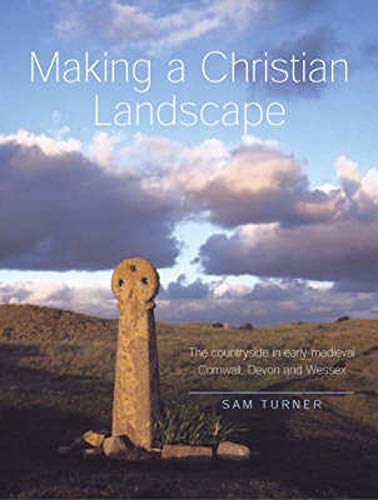
Making a Christian Landscape: The countryside in early-medieval Cornwall, Devon and Wessex
Idioma: Inglés
Publicado por University of Exeter Press, 2006
ISBN 10: 0859897850 ISBN 13: 9780859897853
Librería: WorldofBooks, Goring-By-Sea, WS, Reino Unido
Calificación del vendedor: 5 de 5 estrellas

EUR 19,63
Envío por EUR 6,46
Se envía de Reino Unido a Estados Unidos de AmericaCantidad disponible: 2 disponibles
Añadir al carritoPaperback. Condición: Very Good. The book has been read, but is in excellent condition. Pages are intact and not marred by notes or highlighting. The spine remains undamaged.
-
Making a Christian Landscape
Idioma: Inglés
Publicado por University of Exeter Press, 2006
ISBN 10: 0859897850 ISBN 13: 9780859897853
Librería: PBShop.store US, Wood Dale, IL, Estados Unidos de America
Calificación del vendedor: 5 de 5 estrellas
EUR 38,65
Gastos de envío gratis
Se envía dentro de Estados Unidos de AmericaCantidad disponible: 15 disponibles
Añadir al carritoPAP. Condición: New. New Book. Shipped from UK. Established seller since 2000.
-
Making a Christian Landscape
Idioma: Inglés
Publicado por University of Exeter Press, 2006
ISBN 10: 0859897850 ISBN 13: 9780859897853
Librería: PBShop.store UK, Fairford, GLOS, Reino Unido
Calificación del vendedor: 4 de 5 estrellas

EUR 34,02
Envío por EUR 5,79
Se envía de Reino Unido a Estados Unidos de AmericaCantidad disponible: 15 disponibles
Añadir al carritoPAP. Condición: New. New Book. Shipped from UK. Established seller since 2000.
-

Making a Christian Landscape
Idioma: Inglés
Publicado por University of Exeter, GB, 2006
ISBN 10: 0859897850 ISBN 13: 9780859897853
Librería: Rarewaves.com USA, London, LONDO, Reino Unido
Calificación del vendedor: 5 de 5 estrellas
EUR 40,02
Gastos de envío gratis
Se envía de Reino Unido a Estados Unidos de AmericaCantidad disponible: 9 disponibles
Añadir al carritoPaperback. Condición: New. Sam Turner's important interpretation of early medieval patterns of landscape development traces landscape change in the South West from the introduction of Christianity to the Norman Conquest (AD c. 450-1070).The book stresses the significance of political and religious ideology in both the 'Celtic' west (especially Cornwall) and the 'Anglo-Saxon' east (especially the Wessex counties of Devon, Somerset, Wiltshire and Dorset). Using innovative new research methods, and making use of archaeology, place-name evidence, historical sources and land-use patterns, it challenges previous work on the subject by suggesting that the two regions have much in common.Using modern mapping techniques to explore land-use trends, Turner advances a new model for the evolution of ecclesiastical institutions in south-west England. He shows that the early development of Christianity had an impact on the countryside that remains visible in the landscape we see today. Accessibly written with a glossary of terms and a comprehensive bibliography, the book will appeal to both veterans and newcomers to landscape archaeology.
-

Making a Christian Landscape
Idioma: Inglés
Publicado por University of Exeter Press, 2006
ISBN 10: 0859897745 ISBN 13: 9780859897747
Librería: PBShop.store US, Wood Dale, IL, Estados Unidos de America
Calificación del vendedor: 5 de 5 estrellas
EUR 102,86
Gastos de envío gratis
Se envía dentro de Estados Unidos de AmericaCantidad disponible: 15 disponibles
Añadir al carritoHRD. Condición: New. New Book. Shipped from UK. Established seller since 2000.
-
Making a Christian Landscape
Idioma: Inglés
Publicado por University of Exeter Press, 2006
ISBN 10: 0859897745 ISBN 13: 9780859897747
Librería: PBShop.store UK, Fairford, GLOS, Reino Unido
Calificación del vendedor: 5 de 5 estrellas
EUR 97,46
Envío por EUR 6,77
Se envía de Reino Unido a Estados Unidos de AmericaCantidad disponible: 15 disponibles
Añadir al carritoHRD. Condición: New. New Book. Shipped from UK. Established seller since 2000.
-

Making a Christian Landscape
Idioma: Inglés
Publicado por University of Exeter, GB, 2006
ISBN 10: 0859897850 ISBN 13: 9780859897853
Librería: Rarewaves.com UK, London, Reino Unido
Calificación del vendedor: 5 de 5 estrellas
EUR 36,41
Envío por EUR 74,97
Se envía de Reino Unido a Estados Unidos de AmericaCantidad disponible: 9 disponibles
Añadir al carritoPaperback. Condición: New. Sam Turner's important interpretation of early medieval patterns of landscape development traces landscape change in the South West from the introduction of Christianity to the Norman Conquest (AD c. 450-1070).The book stresses the significance of political and religious ideology in both the 'Celtic' west (especially Cornwall) and the 'Anglo-Saxon' east (especially the Wessex counties of Devon, Somerset, Wiltshire and Dorset). Using innovative new research methods, and making use of archaeology, place-name evidence, historical sources and land-use patterns, it challenges previous work on the subject by suggesting that the two regions have much in common.Using modern mapping techniques to explore land-use trends, Turner advances a new model for the evolution of ecclesiastical institutions in south-west England. He shows that the early development of Christianity had an impact on the countryside that remains visible in the landscape we see today. Accessibly written with a glossary of terms and a comprehensive bibliography, the book will appeal to both veterans and newcomers to landscape archaeology.

