
Artículos relacionados a Simulation-Based Experiential Learning: 122 (NATO ASI...
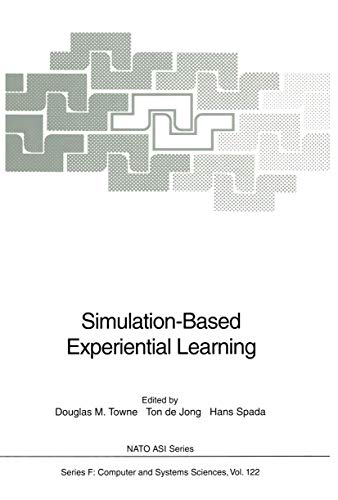
Sinopsis
In October of 1992 an assembly of researchers in simulation and computer models for instruction convened in Bonas, France, to learn from one another in a non-automated environment. The event was the Advanced Research Workshop entitled The Use of Computer Models for Explication, Analysis, and Experiential Learning. Sponsored by the Scientific Affairs Division of NATO, this workshop brought together 29 leading experts in the field loosely described as instruction and learning in simulation environments. The three-day workshop was organized in a manner to maximize exchange of knowledge, of beliefs, and of issues. The participants came from six countries with experiences to share, with opinions to voice, and with questions to explore. Starting some weeks prior to the workshop, the exchange included presentation of the scientific papers, discussions immediately following each presentation, and informal discussions outside the scheduled meeting times. Naturally, the character and content of the workshop was determined by the backgrounds and interests of the participants. One objective in drawing together these particular specialists was to achieve a congress with coherent diversity, i.e., we sought individuals who could view an emerging area from different perspectives yet had produced work of interest to many. Major topic areas included theories of instruction being developed or tested, use of multiple domain models to enhance understanding, experiential learning environments, modelling diagnostic environments, tools for authoring complex models, and case studies from industry.
"Sinopsis" puede pertenecer a otra edición de este libro.
Reseña del editor
In October of 1992 an assembly of researchers in simulation and computer models for instruction convened in Bonas, France, to learn from one another in a non-automated environment. The event was the Advanced Research Workshop entitled The Use of Computer Models for Explication, Analysis, and Experiential Learning. Sponsored by the Scientific Affairs Division of NATO, this workshop brought together 29 leading experts in the field loosely described as instruction and learning in simulation environments. The three-day workshop was organized in a manner to maximize exchange of knowledge, of beliefs, and of issues. The participants came from six countries with experiences to share, with opinions to voice, and with questions to explore. Starting some weeks prior to the workshop, the exchange included presentation of the scientific papers, discussions immediately following each presentation, and informal discussions outside the scheduled meeting times. Naturally, the character and content of the workshop was determined by the backgrounds and interests of the participants. One objective in drawing together these particular specialists was to achieve a congress with coherent diversity, i.e., we sought individuals who could view an emerging area from different perspectives yet had produced work of interest to many. Major topic areas included theories of instruction being developed or tested, use of multiple domain models to enhance understanding, experiential learning environments, modelling diagnostic environments, tools for authoring complex models, and case studies from industry.
Reseña del editor
"Proceedings of the NATO Advanced Research Workshop on the Use of Computer Models for Explication, Analysis, and Experiential Learning, held in Bonas, France, October 12-14, 1992"--T.p. verso.
"Sobre este título" puede pertenecer a otra edición de este libro.
Resultados de la búsqueda para Simulation-Based Experiential Learning: 122 (NATO ASI...

Imagen de archivo
Simulation-Based Experiential Learning (NATO ASI Subseries F:, 122)
Librería: Ria Christie Collections, Uxbridge, Reino Unido
Calificación del vendedor: 5 de 5 estrellas

Condición: New. In English. Nº de ref. del artículo: ria9783642785412_new
Comprar nuevo
EUR 129,89
Envío por EUR 13,34
Se envía de Reino Unido a Estados Unidos de America
Se envía de Reino Unido a Estados Unidos de America
Cantidad disponible: Más de 20 disponibles
Imagen de archivo
Simulation-Based Experiential Learning
Librería: GreatBookPrices, Columbia, MD, Estados Unidos de America
Calificación del vendedor: 5 de 5 estrellas
Condición: New. Nº de ref. del artículo: 18770725-n
Comprar nuevo
EUR 147,17
Envío por EUR 2,36
Se envía dentro de Estados Unidos de America
Se envía dentro de Estados Unidos de America
Cantidad disponible: 15 disponibles
Imagen del vendedor
Simulation-Based Experiential Learning
Publicado por
Springer Berlin Heidelberg, 2011
ISBN 10: 3642785417
ISBN 13: 9783642785412
Nuevo
Tapa blanda
Librería: moluna, Greven, Alemania
Calificación del vendedor: 5 de 5 estrellas
Condición: New. Proceediings of the NATO Advanced Research Workshop on The Use of Computer Models for Explication, Analysis and Experiential Learning, held in Bonas, France, October 12-14, 1992In October of 1992 an assembly of researchers in simulation and computer mod. Nº de ref. del artículo: 5070590
Comprar nuevo
EUR 118,64
Envío por EUR 48,99
Se envía de Alemania a Estados Unidos de America
Se envía de Alemania a Estados Unidos de America
Cantidad disponible: Más de 20 disponibles
Imagen de archivo
Simulation-Based Experiential Learning
Librería: Books Puddle, Woodside, NY, Estados Unidos de America
Calificación del vendedor: 4 de 5 estrellas

Condición: New. pp. 296. Nº de ref. del artículo: 2658589535
Comprar nuevo
EUR 166,34
Envío por EUR 3,56
Se envía dentro de Estados Unidos de America
Se envía dentro de Estados Unidos de America
Cantidad disponible: 4 disponibles
Imagen de archivo
Simulation-based Experiential Learning (Nato Asi Series (Closed) / Nato Asi Subseries F: (Closed))
Librería: Revaluation Books, Exeter, Reino Unido
Calificación del vendedor: 5 de 5 estrellas
Paperback. Condición: Brand New. reprint edition. 288 pages. 9.25x6.10x0.70 inches. In Stock. Nº de ref. del artículo: x-3642785417
Comprar nuevo
EUR 158,90
Envío por EUR 11,82
Se envía de Reino Unido a Estados Unidos de America
Se envía de Reino Unido a Estados Unidos de America
Cantidad disponible: 2 disponibles
Imagen de archivo
Simulation-Based Experiential Learning
Impresión bajo demandaLibrería: Majestic Books, Hounslow, Reino Unido
Calificación del vendedor: 4 de 5 estrellas
Condición: New. Print on Demand pp. 296 81 Figures, 49:B&W 6.14 x 9.21 in or 234 x 156 mm (Royal 8vo) Perfect Bound on White w/Gloss Lam. Nº de ref. del artículo: 50970240
Comprar nuevo
EUR 172,25
Envío por EUR 7,68
Se envía de Reino Unido a Estados Unidos de America
Se envía de Reino Unido a Estados Unidos de America
Cantidad disponible: 4 disponibles
Imagen de archivo
Simulation-Based Experiential Learning
Impresión bajo demandaLibrería: Biblios, Frankfurt am main, HESSE, Alemania
Calificación del vendedor: 4 de 5 estrellas
Condición: New. PRINT ON DEMAND pp. 296. Nº de ref. del artículo: 1858589525
Comprar nuevo
EUR 170,10
Envío por EUR 9,95
Se envía de Alemania a Estados Unidos de America
Se envía de Alemania a Estados Unidos de America
Cantidad disponible: 4 disponibles
Imagen del vendedor
Simulation-Based Experiential Learning
Publicado por
Springer, Berlin, Springer Berlin Heidelberg, Springer, 2011
ISBN 10: 3642785417
ISBN 13: 9783642785412
Nuevo
Taschenbuch
Librería: AHA-BUCH GmbH, Einbeck, Alemania
Calificación del vendedor: 5 de 5 estrellas
Taschenbuch. Condición: Neu. Neuware - In October of 1992 an assembly of researchers in simulation and computer models for instruction convened in Bonas, France, to learn from one another in a non-automated environment. The event was the Advanced Research Workshop entitled The Use of Computer Models for Explication, Analysis, and Experiential Learning. Sponsored by the Scientific Affairs Division of NATO, this workshop brought together 29 leading experts in the field loosely described as instruction and learning in simulation environments. The three-day workshop was organized in a manner to maximize exchange of knowledge, of beliefs, and of issues. The participants came from six countries with experiences to share, with opinions to voice, and with questions to explore. Starting some weeks prior to the workshop, the exchange included presentation of the scientific papers, discussions immediately following each presentation, and informal discussions outside the scheduled meeting times. Naturally, the character and content of the workshop was determined by the backgrounds and interests of the participants. One objective in drawing together these particular specialists was to achieve a congress with coherent diversity, i.e., we sought individuals who could view an emerging area from different perspectives yet had produced work of interest to many. Major topic areas included theories of instruction being developed or tested, use of multiple domain models to enhance understanding, experiential learning environments, modelling diagnostic environments, tools for authoring complex models, and case studies from industry. Nº de ref. del artículo: 9783642785412
Comprar nuevo
EUR 170,25
Envío por EUR 35,00
Se envía de Alemania a Estados Unidos de America
Se envía de Alemania a Estados Unidos de America
Cantidad disponible: 2 disponibles
Imagen de archivo
Simulation-Based Experiential Learning (Nato ASI Subseries F:, 122)
Librería: Mispah books, Redhill, SURRE, Reino Unido
Calificación del vendedor: 4 de 5 estrellas
Paperback. Condición: Like New. LIKE NEW. SHIPS FROM MULTIPLE LOCATIONS. book. Nº de ref. del artículo: ERICA79636427854176
Comprar usado
EUR 185,02
Envío por EUR 29,54
Se envía de Reino Unido a Estados Unidos de America
Se envía de Reino Unido a Estados Unidos de America
Cantidad disponible: 1 disponibles
Imagen de archivo
Simulation-Based Experiential Learning
Librería: GreatBookPrices, Columbia, MD, Estados Unidos de America
Calificación del vendedor: 5 de 5 estrellas
Condición: As New. Unread book in perfect condition. Nº de ref. del artículo: 18770725
Comprar usado
EUR 219,02
Envío por EUR 2,36
Se envía dentro de Estados Unidos de America
Se envía dentro de Estados Unidos de America
Cantidad disponible: 15 disponibles