
Artículos relacionados a Pharming: Promises and risks ofbBiopharmaceuticals...
Pharming: Promises and risks ofbBiopharmaceuticals derived from genetically modified plants and animals: 35 (Ethics of Science and Technology Assessment) - Tapa blanda
Libro 7 de 18: Ethics of Science and Technology Assessment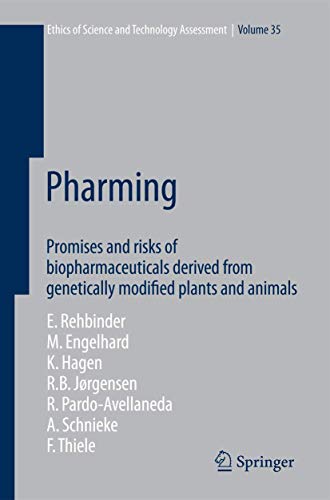
Sinopsis
Recent scientific advances have made it possible to produce biopharmaceuticals in genetically modified plants and animals, such as maize, tobacco, goats, and chickens. This new branch of biotechnology is termed pharming, composed of the terms pharmaceuticals and farming. Pharming constitutes an overlap of red and green biotechnology. It offers the prospect of a quicker, cheaper, and more flexible production of biopharmaceuticals compared with current production processes. This is a promising perspective in light of the rapidly growing market of biopharmaceuticals, although the economic competitiveness of pharming remains to be proven. Besides possible benefits for producers, patients and health care systems, pharming also raises a number of complex ecological, social, moral and legal questions that have as yet not been thoroughly discussed.
The present book contains the findings of an interdisciplinary research project that has addressed a large range of questions associated with pharming: An analysis of the state-of-the-art of plant pharming and animal pharming technologies is followed by an assessment of environmental risks related to pharming and welfare risks for pharming animals. Public views and attitudes to pharming are investigated on the basis of a comprehensive survey in 15 countries. Moreover, ethical and legal questions, posed by present and foreseeable future practices of pharming, are analysed. The concluding chapter presents the authors’ main findings and recommendations, addressed to science, industry, politics and general public interested in the chances and risks of this upcoming field of biotechnology.
"Sinopsis" puede pertenecer a otra edición de este libro.
De la contraportada
Recent scientific advances have made it possible to produce biopharmaceuticals in genetically modified plants and animals, such as maize, tobacco, goats, and chickens. This new branch of biotechnology is termed pharming, composed of the terms pharmaceuticals and farming. Pharming constitutes an overlap of red and green biotechnology. It offers the prospect of a quicker, cheaper, and more flexible production of biopharmaceuticals compared with current production processes. This is a promising perspective in light of the rapidly growing market of biopharmaceuticals, although the economic competitiveness of pharming remains to be proven. Besides possible benefits for producers, patients and health care systems, pharming also raises a number of complex ecological, social, moral and legal questions that have as yet not been thoroughly discussed.
The present book contains the findings of an interdisciplinary research project that has addressed a large range of questions associated with pharming: An analysis of the state-of-the-art of plant pharming and animal pharming technologies is followed by an assessment of environmental risks related to pharming and welfare risks for pharming animals. Public views and attitudes to pharming are investigated on the basis of a comprehensive survey in 15 countries. Moreover, ethical and legal questions, posed by present and foreseeable future practices of pharming, are analysed. The concluding chapter presents the authors main findings and recommendations, addressed to science, industry, politics and general public interested in the chances and risks of this upcoming field of biotechnology.
"Sobre este título" puede pertenecer a otra edición de este libro.
Resultados de la búsqueda para Pharming: Promises and risks ofbBiopharmaceuticals...

Imagen de archivo
Pharming (eng)
Impresión bajo demandaLibrería: Brook Bookstore On Demand, Napoli, NA, Italia
Calificación del vendedor: 5 de 5 estrellas

Condición: new. Questo è un articolo print on demand. Nº de ref. del artículo: d417cd1796cc4cd1958e89197d38007c
Comprar nuevo
EUR 86,24
Envío por EUR 6,80
Se envía de Italia a Estados Unidos de America
Se envía de Italia a Estados Unidos de America
Cantidad disponible: Más de 20 disponibles
Imagen del vendedor
Pharming : Promises and Risks of Biopharmaceuticals Derived from Genetically Modified Plants and Animals
Librería: GreatBookPrices, Columbia, MD, Estados Unidos de America
Calificación del vendedor: 5 de 5 estrellas
Condición: As New. Unread book in perfect condition. Nº de ref. del artículo: 14360096
Comprar usado
EUR 126,41
Envío por EUR 2,35
Se envía dentro de Estados Unidos de America
Se envía dentro de Estados Unidos de America
Cantidad disponible: 15 disponibles
Imagen del vendedor
Pharming
Publicado por
Springer Berlin Heidelberg Nov 2010, 2010
ISBN 10: 3642099351
ISBN 13: 9783642099359
Nuevo
Taschenbuch
Librería: BuchWeltWeit Ludwig Meier e.K., Bergisch Gladbach, Alemania
Calificación del vendedor: 5 de 5 estrellas
Taschenbuch. Condición: Neu. This item is printed on demand - it takes 3-4 days longer - Neuware -A recently established technique termed pharming uses genetically modified plants and animals for the production of biopharmaceuticals. The present interdisciplinary study comprises an extended overview of the state of the art of pharming, as well as in depth analyses of the environmental risks and other ethical and legal issues of pharming. Public attitudes to pharming are investigated on the basis of an original survey in 15 countries worldwide. The study concludes with specific recommendations addressed towards science, industry and politics. 356 pp. Englisch. Nº de ref. del artículo: 9783642099359
Comprar nuevo
EUR 106,99
Envío por EUR 23,00
Se envía de Alemania a Estados Unidos de America
Se envía de Alemania a Estados Unidos de America
Cantidad disponible: 2 disponibles
Imagen de archivo
Pharming : Promises and Risks of Biopharmaceuticals Derived from Genetically Modified Plants and Animals
Librería: GreatBookPrices, Columbia, MD, Estados Unidos de America
Calificación del vendedor: 5 de 5 estrellas
Condición: New. Nº de ref. del artículo: 14360096-n
Comprar nuevo
EUR 134,33
Envío por EUR 2,35
Se envía dentro de Estados Unidos de America
Se envía dentro de Estados Unidos de America
Cantidad disponible: 15 disponibles
Imagen del vendedor
Pharming
Publicado por
Springer Berlin Heidelberg, 2010
ISBN 10: 3642099351
ISBN 13: 9783642099359
Nuevo
Tapa blanda
Librería: moluna, Greven, Alemania
Calificación del vendedor: 5 de 5 estrellas
Condición: New. Dieser Artikel ist ein Print on Demand Artikel und wird nach Ihrer Bestellung fuer Sie gedruckt. A recently established technique termed pharming uses genetically modified plants and animals for the production of biopharmaceuticals. The present interdisciplinary study comprises an extended overview of the state of the art of pharming, as well as in . Nº de ref. del artículo: 5048923
Comprar nuevo
EUR 92,27
Envío por EUR 48,99
Se envía de Alemania a Estados Unidos de America
Se envía de Alemania a Estados Unidos de America
Cantidad disponible: Más de 20 disponibles
Imagen del vendedor
Pharming : Promises and risks ofbBiopharmaceuticals derived from genetically modified plants and animals
Librería: AHA-BUCH GmbH, Einbeck, Alemania
Calificación del vendedor: 5 de 5 estrellas
Taschenbuch. Condición: Neu. Druck auf Anfrage Neuware - Printed after ordering - Recent scientific advances have made it possible to produce biopharmaceuticals in genetically modified plants and animals, such as maize, tobacco, goats, and chickens. This new branch of biotechnology is termed pharming, composed of the terms pharmaceuticals and farming. Pharming constitutes an overlap of red and green biotechnology. It offers the prospect of a quicker, cheaper, and more flexible production of biopharmaceuticals compared with current production processes. This is a promising perspective in light of the rapidly growing market of biopharmaceuticals, although the economic competitiveness of pharming remains to be proven. Besides possible benefits for producers, patients and health care systems, pharming also raises a number of complex ecological, social, moral and legal questions that have as yet not been thoroughly discussed. The present book contains the findings of an interdisciplinary research project that has addressed a large range of questions associated with pharming: An analysis of the state-of-the-art of plant pharming and animal pharming technologies is followed by an assessment of environmental risks related to pharming and welfare risks for pharming animals. Public views and attitudes to pharming are investigated on the basis of a comprehensive survey in 15 countries. Moreover, ethical and legal questions, posed by present and foreseeable future practices of pharming, are analysed. The concluding chapter presents the authors' main findings and recommendations, addressed to science, industry, politics and general public interested in the chances and risks of this upcoming field of biotechnology. Nº de ref. del artículo: 9783642099359
Comprar nuevo
EUR 114,00
Envío por EUR 35,00
Se envía de Alemania a Estados Unidos de America
Se envía de Alemania a Estados Unidos de America
Cantidad disponible: 1 disponibles
Imagen de archivo
Pharming: Promises and risks ofbBiopharmaceuticals derived from genetically modified plants and animals (Ethics of Science and Technology Assessment, 35)
Librería: Ria Christie Collections, Uxbridge, Reino Unido
Calificación del vendedor: 5 de 5 estrellas
Condición: New. In English. Nº de ref. del artículo: ria9783642099359_new
Comprar nuevo
EUR 143,28
Envío por EUR 13,31
Se envía de Reino Unido a Estados Unidos de America
Se envía de Reino Unido a Estados Unidos de America
Cantidad disponible: Más de 20 disponibles
Imagen de archivo
Pharming
Librería: Books Puddle, Woodside, NY, Estados Unidos de America
Calificación del vendedor: 4 de 5 estrellas

Condición: New. pp. 356. Nº de ref. del artículo: 263108975
Comprar nuevo
EUR 158,29
Envío por EUR 3,55
Se envía dentro de Estados Unidos de America
Se envía dentro de Estados Unidos de America
Cantidad disponible: 4 disponibles
Imagen del vendedor
Pharming
Publicado por
Springer Vieweg, Springer Nov 2010, 2010
ISBN 10: 3642099351
ISBN 13: 9783642099359
Nuevo
Taschenbuch
Librería: buchversandmimpf2000, Emtmannsberg, BAYE, Alemania
Calificación del vendedor: 5 de 5 estrellas
Taschenbuch. Condición: Neu. This item is printed on demand - Print on Demand Titel. Neuware -Recent scientific advances have made it possible to produce biopharmaceuticals in genetically modified plants and animals, such as maize, tobacco, goats, and chickens. This new branch of biotechnology is termed pharming, composed of the terms pharmaceuticals and farming. Pharming constitutes an overlap of red and green biotechnology. It offers the prospect of a quicker, cheaper, and more flexible production of biopharmaceuticals compared with current production processes. This is a promising perspective in light of the rapidly growing market of biopharmaceuticals, although the economic competitiveness of pharming remains to be proven. Besides possible benefits for producers, patients and health care systems, pharming also raises a number of complex ecological, social, moral and legal questions that have as yet not been thoroughly discussed.The present book contains the findings of an interdisciplinary research project that has addressed a large range of questions associated with pharming: An analysis of the state-of-the-art of plant pharming and animal pharming technologies is followed by an assessment of environmental risks related to pharming and welfare risks for pharming animals. Public views and attitudes to pharming are investigated on the basis of a comprehensive survey in 15 countries. Moreover, ethical and legal questions, posed by present and foreseeable future practices of pharming, are analysed. The concluding chapter presents the authors¿ main findings and recommendations, addressed to science, industry, politics and general public interested in the chances and risks of this upcoming field of biotechnology.Springer-Verlag GmbH, Tiergartenstr. 17, 69121 Heidelberg 356 pp. Englisch. Nº de ref. del artículo: 9783642099359
Comprar nuevo
EUR 106,99
Envío por EUR 60,00
Se envía de Alemania a Estados Unidos de America
Se envía de Alemania a Estados Unidos de America
Cantidad disponible: 1 disponibles
Imagen de archivo
Pharming
Impresión bajo demandaLibrería: Majestic Books, Hounslow, Reino Unido
Calificación del vendedor: 4 de 5 estrellas
Condición: New. Print on Demand pp. 356 17 Illus. Nº de ref. del artículo: 5820336
Comprar nuevo
EUR 164,84
Envío por EUR 7,66
Se envía de Reino Unido a Estados Unidos de America
Se envía de Reino Unido a Estados Unidos de America
Cantidad disponible: 4 disponibles