
Artículos relacionados a Problems and Prospects in Long and Medium Range Weather...
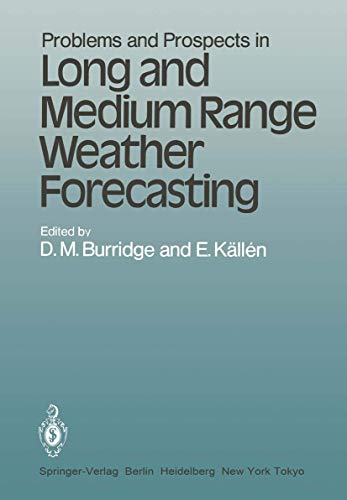
Problems and Prospects in Long and Medium Range Weather Forecasting (Topics in Atmospheric and Oceanic Sciences) - Tapa blanda
Sinopsis
Forecasting the weather for the long and medium range is a difficult and scientifically challenging problem. Since the first operational weather prediction by numerical methods was carried out (on the BESK computer in Stockholm, Sweden, 1954) . there has been an ever accelerating development in computer technology. Hand in hand has followed a tremendous increase in the complexity of the atmospheric models used for weather prediction. The ability of these models to predict future states of the atmosphere has also increased rapidly, both due to model development and due to more accurate and plentiful observations of the atmosphere to define the initial . state for model integrations. It may however be argued on theoretical grounds that even if we have an almost perfect model with almost perfect initial data, we will never be able to make an accurate weather prediction more than a few weeks ahead. This is due to the inherent instability of the atmosphere and work in this field was pioneered by E. Lorenz. It is generally referred to as atmospheric predict ability and in the opening chapter of this book Professor Lorenz gives us an overview of the problem of atmospheric predictability. The contributions to this book were originally presented at the 1981 ECMWF Seminar (ECMWF - European Centre for Medium Range Weather Forecasts) which was held at ECMWF in Reading, England, in September 1981.
"Sinopsis" puede pertenecer a otra edición de este libro.
Reseña del editor
Forecasting the weather for the long and medium range is a difficult and scientifically challenging problem. Since the first operational weather prediction by numerical methods was carried out (on the BESK computer in Stockholm, Sweden, 1954) . there has been an ever accelerating development in computer technology. Hand in hand has followed a tremendous increase in the complexity of the atmospheric models used for weather prediction. The ability of these models to predict future states of the atmosphere has also increased rapidly, both due to model development and due to more accurate and plentiful observations of the atmosphere to define the initial . state for model integrations. It may however be argued on theoretical grounds that even if we have an almost perfect model with almost perfect initial data, we will never be able to make an accurate weather prediction more than a few weeks ahead. This is due to the inherent instability of the atmosphere and work in this field was pioneered by E. Lorenz. It is generally referred to as atmospheric predict ability and in the opening chapter of this book Professor Lorenz gives us an overview of the problem of atmospheric predictability. The contributions to this book were originally presented at the 1981 ECMWF Seminar (ECMWF - European Centre for Medium Range Weather Forecasts) which was held at ECMWF in Reading, England, in September 1981.
"Sobre este título" puede pertenecer a otra edición de este libro.
Resultados de la búsqueda para Problems and Prospects in Long and Medium Range Weather...

Imagen de archivo
Topics in Atmospheric and Oceanic Sciences: Problems and Prospects in Long and Medium Range Weather Forecasting
Librería: Anybook.com, Lincoln, Reino Unido
Calificación del vendedor: 5 de 5 estrellas

Condición: Good. This is an ex-library book and may have the usual library/used-book markings inside.This book has soft covers. Clean from markings. In good all round condition. Please note the Image in this listing is a stock photo and may not match the covers of the actual item,550grams, ISBN:3540128271. Nº de ref. del artículo: 8665094
Comprar usado
EUR 19,41
Envío por EUR 15,48
Se envía de Reino Unido a Estados Unidos de America
Se envía de Reino Unido a Estados Unidos de America
Cantidad disponible: 1 disponibles
Imagen del vendedor
Problems and prospects in long and medium range weather forecasting.
Publicado por
Berlin, Springer, 1984
ISBN 10: 3540128271
ISBN 13: 9783540128274
Antiguo o usado
Softcover
Librería: Antiquariat Bookfarm, Löbnitz, Alemania
Calificación del vendedor: 5 de 5 estrellas
Softcover. Condición: Gut. XII, 274 S. Ex-library in GOOD condition with library-signature and stamp(s). Some traces of use. Ehem. Bibliotheksexemplar mit Signatur und Stempel. GUTER Zustand, ein paar Gebrauchsspuren. R-17563 3540128271 Sprache: Englisch Gewicht in Gramm: 550. Nº de ref. del artículo: 2482482
Comprar usado
EUR 5,00
Envío por EUR 40,00
Se envía de Alemania a Estados Unidos de America
Se envía de Alemania a Estados Unidos de America
Cantidad disponible: 1 disponibles
Imagen de archivo
Problems And Prospects In Long And Medium Range Weather Forecasting
Librería: Basi6 International, Irving, TX, Estados Unidos de America
Calificación del vendedor: 5 de 5 estrellas
Condición: Brand New. New. US edition. Expediting shipping for all USA and Europe orders excluding PO Box. Excellent Customer Service. Nº de ref. del artículo: ABEOCT25-238815
Comprar nuevo
EUR 77,99
Gastos de envío gratis
Se envía dentro de Estados Unidos de America
Se envía dentro de Estados Unidos de America
Cantidad disponible: 1 disponibles
Imagen de archivo
Problems And Prospects In Long And Medium Range Weather Forecasting
Librería: Romtrade Corp., STERLING HEIGHTS, MI, Estados Unidos de America
Calificación del vendedor: 5 de 5 estrellas
Condición: New. This is a Brand-new US Edition. This Item may be shipped from US or any other country as we have multiple locations worldwide. Nº de ref. del artículo: ABBB-164085
Comprar nuevo
EUR 79,05
Gastos de envío gratis
Se envía dentro de Estados Unidos de America
Se envía dentro de Estados Unidos de America
Cantidad disponible: 1 disponibles
Imagen de archivo
Problems and Prospects in Long and Medium Range Weather Forecasting
Librería: Books Puddle, Woodside, NY, Estados Unidos de America
Calificación del vendedor: 4 de 5 estrellas

Condición: Used. pp. 292. Nº de ref. del artículo: 263050288
Comprar usado
EUR 100,18
Envío por EUR 3,56
Se envía dentro de Estados Unidos de America
Se envía dentro de Estados Unidos de America
Cantidad disponible: 1 disponibles
Imagen de archivo
Problems and Prospects in Long and Medium Range Weather Forecasting
Librería: Majestic Books, Hounslow, Reino Unido
Calificación del vendedor: 4 de 5 estrellas
Condición: Used. pp. 292 67:B&W 6.69 x 9.61 in or 244 x 170 mm (Pinched Crown) Perfect Bound on White w/Gloss Lam. Nº de ref. del artículo: 5846255
Comprar usado
EUR 100,44
Envío por EUR 7,71
Se envía de Reino Unido a Estados Unidos de America
Se envía de Reino Unido a Estados Unidos de America
Cantidad disponible: 1 disponibles
Imagen de archivo
Problems and Prospects in Long and Medium Range Weather Forecasting
Librería: Biblios, Frankfurt am main, HESSE, Alemania
Calificación del vendedor: 4 de 5 estrellas
Condición: Used. pp. 292. Nº de ref. del artículo: 183050298
Comprar usado
EUR 100,83
Envío por EUR 9,95
Se envía de Alemania a Estados Unidos de America
Se envía de Alemania a Estados Unidos de America
Cantidad disponible: 1 disponibles
Imagen del vendedor
Problems and Prospects in Long and Medium Range Weather Forecasting
Librería: GreatBookPrices, Columbia, MD, Estados Unidos de America
Calificación del vendedor: 5 de 5 estrellas
Condición: As New. Unread book in perfect condition. Nº de ref. del artículo: 18657113
Comprar usado
EUR 126,85
Envío por EUR 2,35
Se envía dentro de Estados Unidos de America
Se envía dentro de Estados Unidos de America
Cantidad disponible: 15 disponibles
Imagen del vendedor
Problems and Prospects in Long and Medium Range Weather Forecasting
Publicado por
Springer Berlin Heidelberg Dez 1983, 1983
ISBN 10: 3540128271
ISBN 13: 9783540128274
Nuevo
Taschenbuch
Librería: BuchWeltWeit Ludwig Meier e.K., Bergisch Gladbach, Alemania
Calificación del vendedor: 5 de 5 estrellas
Taschenbuch. Condición: Neu. This item is printed on demand - it takes 3-4 days longer - Neuware -Forecasting the weather for the long and medium range is a difficult and scientifically challenging problem. Since the first operational weather prediction by numerical methods was carried out (on the BESK computer in Stockholm, Sweden, 1954) . there has been an ever accelerating development in computer technology. Hand in hand has followed a tremendous increase in the complexity of the atmospheric models used for weather prediction. The ability of these models to predict future states of the atmosphere has also increased rapidly, both due to model development and due to more accurate and plentiful observations of the atmosphere to define the initial . state for model integrations. It may however be argued on theoretical grounds that even if we have an almost perfect model with almost perfect initial data, we will never be able to make an accurate weather prediction more than a few weeks ahead. This is due to the inherent instability of the atmosphere and work in this field was pioneered by E. Lorenz. It is generally referred to as atmospheric predict ability and in the opening chapter of this book Professor Lorenz gives us an overview of the problem of atmospheric predictability. The contributions to this book were originally presented at the 1981 ECMWF Seminar (ECMWF - European Centre for Medium Range Weather Forecasts) which was held at ECMWF in Reading, England, in September 1981. 292 pp. Englisch. Nº de ref. del artículo: 9783540128274
Comprar nuevo
EUR 112,34
Envío por EUR 23,00
Se envía de Alemania a Estados Unidos de America
Se envía de Alemania a Estados Unidos de America
Cantidad disponible: 2 disponibles
Imagen del vendedor
Problems and Prospects in Long and Medium Range Weather Forecasting
Publicado por
Springer Berlin Heidelberg, 1983
ISBN 10: 3540128271
ISBN 13: 9783540128274
Nuevo
Tapa blanda
Librería: moluna, Greven, Alemania
Calificación del vendedor: 5 de 5 estrellas
Condición: New. Dieser Artikel ist ein Print on Demand Artikel und wird nach Ihrer Bestellung fuer Sie gedruckt. Forecasting the weather for the long and medium range is a difficult and scientifically challenging problem. Since the first operational weather prediction by numerical methods was carried out (on the BESK computer in Stockholm, Sweden, 1954) . there has be. Nº de ref. del artículo: 4881959
Comprar nuevo
EUR 92,27
Envío por EUR 48,99
Se envía de Alemania a Estados Unidos de America
Se envía de Alemania a Estados Unidos de America
Cantidad disponible: Más de 20 disponibles