
Artículos relacionados a Struggling with the Environment: Land Use and Productivity...
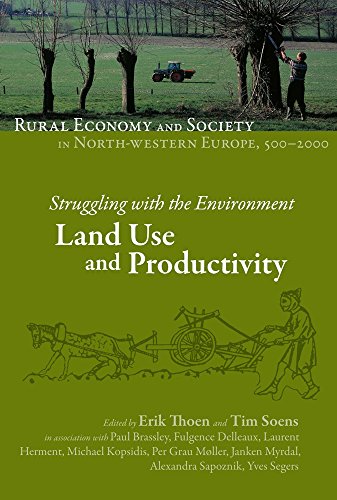
Struggling with the Environment: Land Use and Productivity English: 4 (Rural economy and society in North-western Europe 500-2000) - Tapa dura
Sinopsis
Agriculture is always a struggle with the environment since agricultural production is in fact applied ecology. However, in the past the struggle with the environment was to a large extent determined by the social organisation which was regionally very diverse. The aim of this volume is to find out how, when and within which structural boundaries, land was made useful for agriculture. In the first part of each chapter, this is studied in general, focusing on the evolution of land use: how and why was land reclaimed and by whom? How intensively was this land used? Which actors played a part in this process? What were the environmental and social limits? In the second part the production techniques and production systems are scrutinized: crop choices, crop rotations, the importance of fallow and cattle, crop yields etc. All this is looked at in light of different farming strategies and social conditions. The comparative approach of this volume also enables a new and innovating perspective on the occurrence and impact of 'agricultural' and 'green' revolutions in the past.
"Sinopsis" puede pertenecer a otra edición de este libro.
Acerca del autor
Erik Thoen is professor in rural history and environmental history at the Ghent University (B) and co-ordinator of the CORN network Guus J. Borger is emeritus professor in historical geography at the University of Amsterdam and the VU University Amsterdam (NL) Tim Soens is professor in rural history and environmental history at the University of Antwerp (B) Adriaan M.J. de Kraker is senior researcher in historical geography at the VU University Amsterdam (NL) Dries Tys is professor at the Brussels Free University (VUB) (B) Lies Vervaet is assistant specialised in rural history at the Ghent University (B) Henk J.T. Weerts is senior researcher paleogeography at the Cultural Heritage Agency of the Netherlands
"Sobre este título" puede pertenecer a otra edición de este libro.
Resultados de la búsqueda para Struggling with the Environment: Land Use and Productivity...

Imagen de archivo
Struggling with the Environment
Librería: PBShop.store UK, Fairford, GLOS, Reino Unido
Calificación del vendedor: 5 de 5 estrellas

HRD. Condición: New. New Book. Shipped from UK. Established seller since 2000. Nº de ref. del artículo: CX-9782503530475
Comprar nuevo
EUR 162,16
Envío por EUR 10,03
Se envía de Reino Unido a Estados Unidos de America
Se envía de Reino Unido a Estados Unidos de America
Cantidad disponible: 15 disponibles
Imagen de archivo
Struggling with the Environment
Publicado por
Brepols Publishers, 2015
ISBN 10: 2503530478
ISBN 13: 9782503530475
Nuevo
Tapa dura
Original o primera edición
Librería: ISD LLC, Bristol, CT, Estados Unidos de America
Calificación del vendedor: 5 de 5 estrellas
hardcover. Condición: New. 1st. Nº de ref. del artículo: 252121
Comprar nuevo
EUR 179,30
Gastos de envío gratis
Se envía dentro de Estados Unidos de America
Se envía dentro de Estados Unidos de America
Cantidad disponible: 18 disponibles
Imagen de archivo
Rural Economy and Society in North-Western Europe, 500-2000. Struggling With the Environment: Land Use and Productivity
Librería: Revaluation Books, Exeter, Reino Unido
Calificación del vendedor: 5 de 5 estrellas
Hardcover. Condición: Brand New. 01 edition. 450 pages. 10.25x7.25x1.50 inches. In Stock. Nº de ref. del artículo: __2503530478
Comprar nuevo
EUR 178,48
Envío por EUR 23,63
Se envía de Reino Unido a Estados Unidos de America
Se envía de Reino Unido a Estados Unidos de America
Cantidad disponible: 2 disponibles
Imagen del vendedor
Struggling with the Environment : Land Use and Productivity
Librería: GreatBookPricesUK, Woodford Green, Reino Unido
Calificación del vendedor: 5 de 5 estrellas
Condición: New. Nº de ref. del artículo: 19596642-n
Comprar nuevo
EUR 184,54
Envío por EUR 17,72
Se envía de Reino Unido a Estados Unidos de America
Se envía de Reino Unido a Estados Unidos de America
Cantidad disponible: 3 disponibles
Imagen del vendedor
Struggling with the Environment : Land Use and Productivity
Librería: GreatBookPrices, Columbia, MD, Estados Unidos de America
Calificación del vendedor: 5 de 5 estrellas
Condición: New. Nº de ref. del artículo: 19596642-n
Comprar nuevo
EUR 208,03
Envío por EUR 2,36
Se envía dentro de Estados Unidos de America
Se envía dentro de Estados Unidos de America
Cantidad disponible: Más de 20 disponibles
Imagen de archivo
Struggling with the Environment : Land Use and Productivity
Publicado por
Brepols N.V., 2015
ISBN 10: 2503530478
ISBN 13: 9782503530475
Antiguo o usado
Tapa dura
Librería: GreatBookPrices, Columbia, MD, Estados Unidos de America
Calificación del vendedor: 5 de 5 estrellas
Condición: As New. Unread book in perfect condition. Nº de ref. del artículo: 19596642
Comprar usado
EUR 216,83
Envío por EUR 2,36
Se envía dentro de Estados Unidos de America
Se envía dentro de Estados Unidos de America
Cantidad disponible: Más de 20 disponibles
Imagen del vendedor
STRUGGLING W/THE ENVIRONMENT
Librería: moluna, Greven, Alemania
Calificación del vendedor: 5 de 5 estrellas
Gebunden. Condición: New. Nº de ref. del artículo: 907477751
Comprar nuevo
EUR 174,10
Envío por EUR 48,99
Se envía de Alemania a Estados Unidos de America
Se envía de Alemania a Estados Unidos de America
Cantidad disponible: Más de 20 disponibles
Imagen del vendedor
Struggling with the Environment : Land Use and Productivity
Publicado por
Brepols N.V., 2015
ISBN 10: 2503530478
ISBN 13: 9782503530475
Antiguo o usado
Tapa dura
Librería: GreatBookPricesUK, Woodford Green, Reino Unido
Calificación del vendedor: 5 de 5 estrellas
Condición: As New. Unread book in perfect condition. Nº de ref. del artículo: 19596642
Comprar usado
EUR 213,59
Envío por EUR 17,72
Se envía de Reino Unido a Estados Unidos de America
Se envía de Reino Unido a Estados Unidos de America
Cantidad disponible: 3 disponibles
Imagen de archivo
Struggling with the Environment: Land Use and Productivity Erik Thoen, Tim Soens & al. (eds.)
Publicado por
Brepols Publishers, 2015
ISBN 10: 2503530478
ISBN 13: 9782503530475
Antiguo o usado
Tapa dura
Librería: BUCHSERVICE / ANTIQUARIAT Lars Lutzer, Wahlstedt, Alemania
Calificación del vendedor: 5 de 5 estrellas
Condición: gut. 2015. Struggling with the Environment: Land Use and Productivity In deutscher Sprache. pages. Nº de ref. del artículo: BN110863
Comprar usado
EUR 199,90
Envío por EUR 39,95
Se envía de Alemania a Estados Unidos de America
Se envía de Alemania a Estados Unidos de America
Cantidad disponible: 1 disponibles
Imagen de archivo
Struggling with the Environment (Hardcover)
Publicado por
Brepols N.V., Turnhout, 2015
ISBN 10: 2503530478
ISBN 13: 9782503530475
Nuevo
Tapa dura
Librería: Grand Eagle Retail, Bensenville, IL, Estados Unidos de America
Calificación del vendedor: 5 de 5 estrellas
Hardcover. Condición: new. Hardcover. Volume editorial board: Erik Thoen (Ghent University, Belgium) & Tim Soens (University of Antwerp, Belgium) in association with: Paul Brassley (University of Exeter, UK), Fulgence Delleaux (Universite de Namur, Belgium), Laurent Herment, Michael Kopsidis (IAMO, Halle, Saale, Germany), Per Grau Moller (University of Southern Denmark, Denmark), Janken Myrdal (Swedish University of Agricultural Sciences, Sweden), Alexandra Sapoznik (King's College, London, UK), Yves Segers (University of Leuven, Belgium) Agriculture is always a struggle with the environment since agricultural production is in fact applied ecology. However, in the past this struggle with environment was to a large extent determined by social organisation, which was regionally very diverse. The aim of this volume is to fi nd out how, when and within which structural boundaries, land was made useful for agriculture. In the first part of each chapter, this is studied in general, focusing on the evolution of land use: how and why was land reclaimed and by whom? How intensively was this land used? Which actors played a part in this process? What were the environmental and social limits? In the second part production techniques and production systems are scrutinized: crop choices, crop rotations, the importance of fallow and cattle, crop yields etc. All this is examined in light of diff erent farming strategies and social conditions. The comparative approach of this volume in the Rural Economy and Society Series also enables a new and innovating perspective on the occurrence and impact of 'agricultural' and 'green' revolutions in the past. The aim of this volume is to find out how, when and within which structural boundaries, land was made useful for agriculture. In the first part of each chapter, this is studied in general, focusing on the evolution of land use: how and why was land reclaimed and by whom? How intensively was this land used? Which actors played a part Shipping may be from multiple locations in the US or from the UK, depending on stock availability. Nº de ref. del artículo: 9782503530475
Comprar nuevo
EUR 247,88
Gastos de envío gratis
Se envía dentro de Estados Unidos de America
Se envía dentro de Estados Unidos de America
Cantidad disponible: 1 disponibles