
Artículos relacionados a The Hidden Freud: His Hassidic Roots
Sinopsis
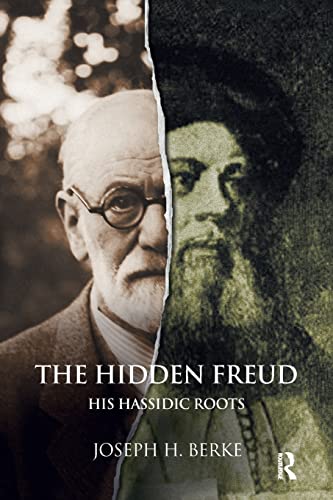
This book explores Sigmund Freud and his Jewish roots and demonstrates the input of the Jewish mystical tradition into Western culture via psychoanalysis. It shows how Freud utilized the Jewish mystical tradition to develop a science of subjectivity.
"Sinopsis" puede pertenecer a otra edición de este libro.
Acerca del autor
H. Berke, Joseph
"Sobre este título" puede pertenecer a otra edición de este libro.
Resultados de la búsqueda para The Hidden Freud: His Hassidic Roots

Imagen de archivo
The Hidden Freud (Paperback)
Publicado por
Taylor & Francis Ltd, London, 2015
ISBN 10: 1780490313
ISBN 13: 9781780490311
Nuevo
Paperback
Librería: Grand Eagle Retail, Bensenville, IL, Estados Unidos de America
Calificación del vendedor: 5 de 5 estrellas

Paperback. Condición: new. Paperback. This book explores Sigmund Freud and his Jewish roots and demonstrates the input of the Jewish mystical tradition into Western culture via psychoanalysis. It shows in particular how the ideas of Kabbalah and Hassidism have profoundly influenced and enriched our understanding of mental processes and clinical practices. Freud's own ancestors were hassidim going back many generations, and the book examines how this background influenced both his life and his work. It also shows how he struggled to deny these roots in order to be accepted as a secular, German professional, and at the same time how he used them in the development of his ideas about dreaming, sexuality, depression and mental structures as well as healing practices. The book argues that in many important respects psychoanalysis can be seen as a secular extension of Kabbalah.The author shows, for example, how Freud utilized the Jewish mystical tradition to develop a science of subjectivity. This involved the systematic exploration of human experience, uncovering the secret compartments and deepest levels of the mind (such as the preconscious and unconscious methods of thinking), expanding human consciousness beyond 'objective' reality, and the revelation of hidden, unconscious thought processes by free association and dream analysis (all linked to kabbalistic modalities such as 'skipping and jumping'). The book also explores the close connections between psychoanalysis, quantum physics, and Kabbalah.The Hidden Freud: His Hassidic Roots also uses the meetings that took place in 1903 between Freud and the great hassidic leader, the fifth Lubavitcher Rebbe, the Rebbe Rashab, as a point of departure to consider Freud's Jewish identity. While Freud may have felt himself to be "completely estranged from the religion of his fathers" he still remained a man who "never repudiated his people, who felt that he was in his essential nature a Jew, and who had no desire to alter that nature", as so many of his colleagues had done. Freud lived the life of a secular, sceptical Jewish intellectual. This was his revealed persona. But there was another, concealed Freud, who revelled in his meetings with the Rebbe, Kabbalists and Jewish scholars; who kept books on Jewish mysticism in his library; and who chose to die on Yom Kippur, 1939, the Day of Atonement. This book considers the implications of the 'concealed Freud' on his life and work. This book explores Sigmund Freud and his Jewish roots and demonstrates the input of the Jewish mystical tradition into Western culture via psychoanalysis. It shows how Freud utilized the Jewish mystical tradition to develop a science of subjectivity. This item is printed on demand. Shipping may be from multiple locations in the US or from the UK, depending on stock availability. Nº de ref. del artículo: 9781780490311
Comprar nuevo
EUR 43,03
Gastos de envío gratis
Se envía dentro de Estados Unidos de America
Se envía dentro de Estados Unidos de America
Cantidad disponible: 1 disponibles
Imagen de archivo
The Hidden Freud: His Hassidic Roots
Librería: WorldofBooks, Goring-By-Sea, WS, Reino Unido
Calificación del vendedor: 5 de 5 estrellas
Paperback. Condición: Very Good. The book has been read, but is in excellent condition. Pages are intact and not marred by notes or highlighting. The spine remains undamaged. Nº de ref. del artículo: GOR009650188
Comprar usado
EUR 44,10
Envío por EUR 6,62
Se envía de Reino Unido a Estados Unidos de America
Se envía de Reino Unido a Estados Unidos de America
Cantidad disponible: 1 disponibles
Imagen del vendedor
The Hidden Freud: His Hassidic Roots (Paperback or Softback)
Publicado por
Routledge 6/30/2015, 2015
ISBN 10: 1780490313
ISBN 13: 9781780490311
Nuevo
Paperback or Softback
Librería: BargainBookStores, Grand Rapids, MI, Estados Unidos de America
Calificación del vendedor: 5 de 5 estrellas
Paperback or Softback. Condición: New. The Hidden Freud: His Hassidic Roots. Book. Nº de ref. del artículo: BBS-9781780490311
Comprar nuevo
EUR 58,03
Gastos de envío gratis
Se envía dentro de Estados Unidos de America
Se envía dentro de Estados Unidos de America
Cantidad disponible: 5 disponibles
Imagen del vendedor
The Hidden Freud: His Hassidic Roots
Publicado por
Routledge, London, 2015
ISBN 10: 1780490313
ISBN 13: 9781780490311
Antiguo o usado
Soft cover
Original o primera edición
Librería: Peak Dragon Books, Alfreton, Reino Unido
Calificación del vendedor: 5 de 5 estrellas
Soft cover. Condición: Very Good. 1st Edition. A genuinely very good paperback with an unbroken spine and unmarked contents. Only minor shelf wear to edges. wt. 392g. xiv,235. This book has been carefully described by an experienced, independent, bookdealer, it is not for sale on other sites and the pictures are photographs of the actual book. Nº de ref. del artículo: 017094
Comprar usado
EUR 24,33
Envío por EUR 35,44
Se envía de Reino Unido a Estados Unidos de America
Se envía de Reino Unido a Estados Unidos de America
Cantidad disponible: 1 disponibles
Imagen de archivo
The Hidden Freud: His Hassidic Roots
Impresión bajo demandaLibrería: Majestic Books, Hounslow, Reino Unido
Calificación del vendedor: 4 de 5 estrellas

Condición: New. pp. 288 This item is printed on demand. Nº de ref. del artículo: 94833435
Comprar nuevo
EUR 53,16
Envío por EUR 7,68
Se envía de Reino Unido a Estados Unidos de America
Se envía de Reino Unido a Estados Unidos de America
Cantidad disponible: 3 disponibles
Imagen de archivo
The Hidden Freud: His Hassidic Roots
Librería: California Books, Miami, FL, Estados Unidos de America
Calificación del vendedor: 5 de 5 estrellas
Condición: New. Nº de ref. del artículo: I-9781780490311
Comprar nuevo
EUR 64,36
Gastos de envío gratis
Se envía dentro de Estados Unidos de America
Se envía dentro de Estados Unidos de America
Cantidad disponible: Más de 20 disponibles
Imagen de archivo
The Hidden Freud
Impresión bajo demandaLibrería: PBShop.store US, Wood Dale, IL, Estados Unidos de America
Calificación del vendedor: 5 de 5 estrellas
PAP. Condición: New. New Book. Shipped from UK. THIS BOOK IS PRINTED ON DEMAND. Established seller since 2000. Nº de ref. del artículo: L0-9781780490311
Comprar nuevo
EUR 64,42
Gastos de envío gratis
Se envía dentro de Estados Unidos de America
Se envía dentro de Estados Unidos de America
Cantidad disponible: Más de 20 disponibles
Imagen de archivo
The Hidden Freud
Impresión bajo demandaLibrería: PBShop.store UK, Fairford, GLOS, Reino Unido
Calificación del vendedor: 5 de 5 estrellas
PAP. Condición: New. New Book. Delivered from our UK warehouse in 4 to 14 business days. THIS BOOK IS PRINTED ON DEMAND. Established seller since 2000. Nº de ref. del artículo: L0-9781780490311
Comprar nuevo
EUR 61,10
Envío por EUR 4,91
Se envía de Reino Unido a Estados Unidos de America
Se envía de Reino Unido a Estados Unidos de America
Cantidad disponible: Más de 20 disponibles
Imagen del vendedor
The Hidden Freud
Impresión bajo demandaLibrería: BuchWeltWeit Ludwig Meier e.K., Bergisch Gladbach, Alemania
Calificación del vendedor: 5 de 5 estrellas
Taschenbuch. Condición: Neu. This item is printed on demand - it takes 3-4 days longer - Neuware -This book explores Sigmund Freud and his Jewish roots and demonstrates the input of the Jewish mystical tradition into Western culture via psychoanalysis. It shows how Freud utilized the Jewish mystical tradition to develop a science of subjectivity. 250 pp. Englisch. Nº de ref. del artículo: 9781780490311
Comprar nuevo
EUR 43,40
Envío por EUR 23,00
Se envía de Alemania a Estados Unidos de America
Se envía de Alemania a Estados Unidos de America
Cantidad disponible: 2 disponibles
Imagen del vendedor
The Hidden Freud
Publicado por
Taylor and Francis Ltd, GB, 2015
ISBN 10: 1780490313
ISBN 13: 9781780490311
Nuevo
Paperback
Original o primera edición
Librería: Rarewaves.com USA, London, LONDO, Reino Unido
Calificación del vendedor: 5 de 5 estrellas
Paperback. Condición: New. 1st. This book explores Sigmund Freud and his Jewish roots and demonstrates the input of the Jewish mystical tradition into Western culture via psychoanalysis. It shows in particular how the ideas of Kabbalah and Hassidism have profoundly influenced and enriched our understanding of mental processes and clinical practices. Freud's own ancestors were hassidim going back many generations, and the book examines how this background influenced both his life and his work. It also shows how he struggled to deny these roots in order to be accepted as a secular, German professional, and at the same time how he used them in the development of his ideas about dreaming, sexuality, depression and mental structures as well as healing practices. The book argues that in many important respects psychoanalysis can be seen as a secular extension of Kabbalah.The author shows, for example, how Freud utilized the Jewish mystical tradition to develop a science of subjectivity. This involved the systematic exploration of human experience, uncovering the secret compartments and deepest levels of the mind (such as the preconscious and unconscious methods of thinking), expanding human consciousness beyond 'objective' reality, and the revelation of hidden, unconscious thought processes by free association and dream analysis (all linked to kabbalistic modalities such as 'skipping and jumping'). The book also explores the close connections between psychoanalysis, quantum physics, and Kabbalah.The Hidden Freud: His Hassidic Roots also uses the meetings that took place in 1903 between Freud and the great hassidic leader, the fifth Lubavitcher Rebbe, the Rebbe Rashab, as a point of departure to consider Freud's Jewish identity. While Freud may have felt himself to be "completely estranged from the religion of his fathers" he still remained a man who "never repudiated his people, who felt that he was in his essential nature a Jew, and who had no desire to alter that nature", as so many of his colleagues had done. Freud lived the life of a secular, sceptical Jewish intellectual. This was his revealed persona. But there was another, concealed Freud, who revelled in his meetings with the Rebbe, Kabbalists and Jewish scholars; who kept books on Jewish mysticism in his library; and who chose to die on Yom Kippur, 1939, the Day of Atonement. This book considers the implications of the 'concealed Freud' on his life and work. Nº de ref. del artículo: LU-9781780490311
Comprar nuevo
EUR 66,56
Gastos de envío gratis
Se envía de Reino Unido a Estados Unidos de America
Se envía de Reino Unido a Estados Unidos de America
Cantidad disponible: Más de 20 disponibles