
Artículos relacionados a Software Takes Command: Extending the Language of New...
Software Takes Command: Extending the Language of New Media: 5 (International Texts in Critical Media Aesthetics) - Tapa blanda
Libro 5 de 14: International Texts in Critical Media Aesthetics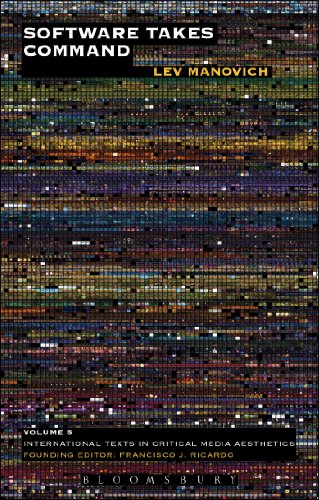
Sinopsis
This book is available as open access through the Bloomsbury Open Access programme and is available on www.bloomsburycollections.com. Software has replaced a diverse array of physical, mechanical, and electronic technologies used before 21st century to create, store, distribute and interact with cultural artifacts. It has become our interface to the world, to others, to our memory and our imagination - a universal language through which the world speaks, and a universal engine on which the world runs. What electricity and combustion engine were to the early 20th century, software is to the early 21st century. Offering the the first theoretical and historical account of software for media authoring and its effects on the practice and the very concept of 'media,' the author of The Language of New Media (2001) develops his own theory for this rapidly-growing, always-changing field. What was the thinking and motivations of people who in the 1960 and 1970s created concepts and practical techniques that underlie contemporary media software such as Photoshop, Illustrator, Maya, Final Cut and After Effects? How do their interfaces and tools shape the visual aesthetics of contemporary media and design? What happens to the idea of a 'medium' after previously media-specific tools have been simulated and extended in software? Is it still meaningful to talk about different mediums at all? Lev Manovich answers these questions and supports his theoretical arguments by detailed analysis of key media applications such as Photoshop and After Effects, popular web services such as Google Earth, and the projects in motion graphics, interactive environments, graphic design and architecture. Software Takes Command is a must for all practicing designers and media artists and scholars concerned with contemporary media.
"Sinopsis" puede pertenecer a otra edición de este libro.
Acerca del autor
Lev Manovich is a Professor in the Visual Arts Department at the University of California, San Diego, USA, and Director of the Software Studies Initiative at California Institute for Telecommunications and Information Technology. He is the author of Software Takes Command (2008), Black Box - White Cube (2005) and The Language of New Media (2001).
Lev Manovich is the author of Soft Cinema: Navigating the Database (The MIT Press, 2005), and The Language of New Media (The MIT Press, 2001) which was described as "the most suggestive and broad ranging media history since Marshall McLuhan." Manovich is a Professor at CUNY Graduate Center, a Director of the Software Studies Initiative at California Institute for Telecommunications and Information Technology, and a Visiting Professor at European Graduate School.
"Sobre este título" puede pertenecer a otra edición de este libro.
Resultados de la búsqueda para Software Takes Command: Extending the Language of New...

Imagen de archivo
Software Takes Command
Publicado por
Bloomsbury Publishing Plc, 2013
ISBN 10: 1623567459
ISBN 13: 9781623567453
Antiguo o usado
Paperback
Librería: World of Books (was SecondSale), Montgomery, IL, Estados Unidos de America
Calificación del vendedor: 5 de 5 estrellas

Paperback. Condición: Good. This book is available as open access through the Bloomsbury Open Access programme and is available on www.bloomsburycollections.com.Software has replaced a diverse array of physical, mechanical, and electronic technologies used before 21st century to create, store, distribute and interact with cultural artifacts. It has become our interface to the world, to others, to our memory and our imagination - a universal language through which the world speaks, and a universal engine on which the world runs. What electricity and combustion engine were to the early 20th century, software is to the early 21st century. Offering the the first theoretical and historical account of software for media authoring and its effects on the practice and the very concept of 'media,' the author of The Language of New Media (2001) develops his own theory for this rapidly-growing, always-changing field.What was the thinking and motivations of people who in the 1960 and 1970s created concepts and practical techniques that underlie contemporary media software such as Photoshop, Illustrator, Maya, Final Cut and After Effects? How do their interfaces and tools shape the visual aesthetics of contemporary media and design? What happens to the idea of a 'medium' after previously media-specific tools have been simulated and extended in software? Is it still meaningful to talk about different mediums at all? Lev Manovich answers these questions and supports his theoretical arguments by detailed analysis of key media applications such as Photoshop and After Effects, popular web services such as Google Earth, and the projects in motion graphics, interactive environments, graphic design and architecture. Software Takes Command is a must for all practicing designers and media artists and scholars concerned with contemporary media. Nº de ref. del artículo: 00109804970
Comprar usado
EUR 15,06
Gastos de envío gratis
Se envía dentro de Estados Unidos de America
Se envía dentro de Estados Unidos de America
Cantidad disponible: 3 disponibles
Imagen de archivo
Software Takes Command
Publicado por
Bloomsbury Academic & Professional, 2013
ISBN 10: 1623567459
ISBN 13: 9781623567453
Antiguo o usado
Tapa blanda
Librería: Better World Books, Mishawaka, IN, Estados Unidos de America
Calificación del vendedor: 5 de 5 estrellas
Condición: Very Good. Former library copy. Pages intact with possible writing/highlighting. Binding strong with minor wear. Dust jackets/supplements may not be included. Includes library markings. Stock photo provided. Product includes identifying sticker. Better World Books: Buy Books. Do Good. Nº de ref. del artículo: 15081565-6
Comprar usado
EUR 15,35
Gastos de envío gratis
Se envía dentro de Estados Unidos de America
Se envía dentro de Estados Unidos de America
Cantidad disponible: 1 disponibles
Imagen de archivo
Software Takes Command
Publicado por
Bloomsbury Academic & Professional, 2013
ISBN 10: 1623567459
ISBN 13: 9781623567453
Antiguo o usado
Tapa blanda
Librería: Better World Books, Mishawaka, IN, Estados Unidos de America
Calificación del vendedor: 5 de 5 estrellas
Condición: Good. Former library copy. Pages intact with minimal writing/highlighting. The binding may be loose and creased. Dust jackets/supplements are not included. Includes library markings. Stock photo provided. Product includes identifying sticker. Better World Books: Buy Books. Do Good. Nº de ref. del artículo: 39260148-6
Comprar usado
EUR 15,35
Gastos de envío gratis
Se envía dentro de Estados Unidos de America
Se envía dentro de Estados Unidos de America
Cantidad disponible: 1 disponibles
Imagen de archivo
Software Takes Command (International Texts in Critical Media Aesthetics)
Publicado por
Bloomsbury Academic, 2013
ISBN 10: 1623567459
ISBN 13: 9781623567453
Antiguo o usado
paperback
Librería: Open Books, Chicago, IL, Estados Unidos de America
Calificación del vendedor: 5 de 5 estrellas
paperback. Condición: Good. Light edge wear. Open Books is a nonprofit social venture that provides literacy experiences for thousands of readers each year through inspiring programs and creative capitalization of books. Nº de ref. del artículo: mon0000823016
Comprar usado
EUR 15,07
Envío por EUR 3,50
Se envía dentro de Estados Unidos de America
Se envía dentro de Estados Unidos de America
Cantidad disponible: 1 disponibles
Imagen de archivo
Software Takes Command
Publicado por
Bloomsbury Academic & Professional, 2013
ISBN 10: 1623567459
ISBN 13: 9781623567453
Antiguo o usado
Tapa blanda
Librería: Better World Books Ltd, Dunfermline, Reino Unido
Calificación del vendedor: 5 de 5 estrellas
Condición: Very Good. Former library copy. Pages intact with possible writing/highlighting. Binding strong with minor wear. Dust jackets/supplements may not be included. Includes library markings. Stock photo provided. Product includes identifying sticker. Better World Books: Buy Books. Do Good. Nº de ref. del artículo: 15081565-6
Comprar usado
EUR 18,86
Envío por EUR 5,81
Se envía de Reino Unido a Estados Unidos de America
Se envía de Reino Unido a Estados Unidos de America
Cantidad disponible: 1 disponibles
Imagen de archivo
Software Takes Command (International Texts in Critical Media Aesthetics)
Publicado por
Bloomsbury Academic, 2013
ISBN 10: 1623567459
ISBN 13: 9781623567453
Antiguo o usado
paperback
Librería: Webster's Bookstore Cafe, Inc., State College, PA, Estados Unidos de America
Calificación del vendedor: 5 de 5 estrellas
paperback. Condición: Very Good. Mild general wear to covers. Some highlighting throughout. Pages bright with a sound binding. Nº de ref. del artículo: mon0000136581
Comprar usado
EUR 19,88
Envío por EUR 4,82
Se envía dentro de Estados Unidos de America
Se envía dentro de Estados Unidos de America
Cantidad disponible: 1 disponibles
Imagen de archivo
Software Takes Command (International Texts in Critical Media Aesthetics)
Publicado por
Bloomsbury Academic, 2013
ISBN 10: 1623567459
ISBN 13: 9781623567453
Antiguo o usado
paperback
Librería: Powell's Bookstores Chicago, ABAA, Chicago, IL, Estados Unidos de America
Calificación del vendedor: 5 de 5 estrellas
paperback. Condición: Used-Very Good. Illustrated. Pap. Minor shelf wear. Else a bright, clean copy. Nº de ref. del artículo: 1964868
Comprar usado
EUR 20,80
Envío por EUR 4,39
Se envía dentro de Estados Unidos de America
Se envía dentro de Estados Unidos de America
Cantidad disponible: 1 disponibles
Imagen de archivo
Software Takes Command (International Texts in Critical Media Aesthetics)
Publicado por
Bloomsbury Academic, 2013
ISBN 10: 1623567459
ISBN 13: 9781623567453
Antiguo o usado
Paperback
Librería: WorldofBooks, Goring-By-Sea, WS, Reino Unido
Calificación del vendedor: 5 de 5 estrellas
Paperback. Condición: Very Good. The book has been read, but is in excellent condition. Pages are intact and not marred by notes or highlighting. The spine remains undamaged. Nº de ref. del artículo: GOR004966563
Comprar usado
EUR 22,53
Envío por EUR 6,51
Se envía de Reino Unido a Estados Unidos de America
Se envía de Reino Unido a Estados Unidos de America
Cantidad disponible: 1 disponibles
Imagen de archivo
Software Takes Command (International Texts in Critical Media Aesthetics)
Publicado por
Bloomsbury Academic, 2013
ISBN 10: 1623567459
ISBN 13: 9781623567453
Antiguo o usado
Tapa blanda
Librería: Phatpocket Limited, Waltham Abbey, HERTS, Reino Unido
Calificación del vendedor: 5 de 5 estrellas
Condición: Good. Your purchase helps support Sri Lankan Children's Charity 'The Rainbow Centre'. Ex-library, so some stamps and wear, but in good overall condition. Our donations to The Rainbow Centre have helped provide an education and a safe haven to hundreds of children who live in appalling conditions. Nº de ref. del artículo: Z1-M-011-02999
Comprar usado
EUR 21,24
Envío por EUR 12,37
Se envía de Reino Unido a Estados Unidos de America
Se envía de Reino Unido a Estados Unidos de America
Cantidad disponible: 1 disponibles
Imagen del vendedor
Software Takes Command (International Texts in Critical Media Aesthetics)
Publicado por
Bloomsbury Academic, 2013
ISBN 10: 1623567459
ISBN 13: 9781623567453
Antiguo o usado
Paperback
Original o primera edición
Librería: Southampton Books, Sag Harbor, NY, Estados Unidos de America
Calificación del vendedor: 5 de 5 estrellas
Paperback. Condición: Like New. First Edition. First Edition, First Printing. Published by Bloomsbury Academic, 2013. Octavo. Paperback. Book is like new. Nº de ref. del artículo: 545639
Comprar usado
EUR 31,65
Envío por EUR 4,38
Se envía dentro de Estados Unidos de America
Se envía dentro de Estados Unidos de America
Cantidad disponible: 1 disponibles