
Artículos relacionados a Research Methods for Creating and Curating Data in...
Research Methods for Creating and Curating Data in the Digital Humanities (Research Methods for the Arts and Humanities) - Tapa blanda
Libro 4 de 6: Research Methods for the Arts and Humanities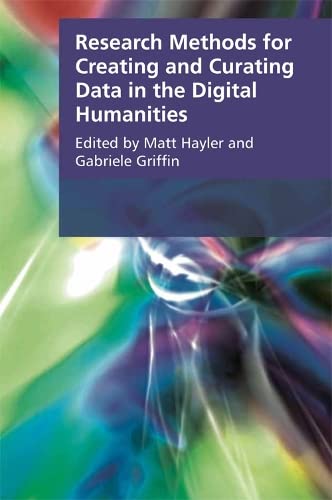
Sinopsis
The first volume to focus on digitising and curating data online as research methods for Digital Humanities As all scholars increasingly use digital tools to support their research, and every internet user becomes used to data being available, elucidating, and engaging, the creative aspects of Digital Humanities work are coming under increasing scrutiny. This volume explores the practice of making new tools, new images, new collections, and new artworks in an academic environment, detailing who needs to be involved and what their roles might be, and how they come together to produce knowledge as a collective. The chapters presented here demonstrate that creation is never neutral with political and theoretical concerns intentionally or unavoidably always being written into the fabric of what is being made, even if that’s the seeming neatness of computer code. In presenting their own creative research, the writers in this volume offer examples of practice that will be of use to anyone interested in learning more about contemporary Digital Humanities scholarship and its implications. Key features: First volume to explore digitisation practices as research methods for Humanities scholarsProvides a practical and critical approach to issues of digitisation Discusses actual digitisation projects on a ‘how-to’ basisAddresses issues such as digital photography, multi-spectral imaging, rekeying, metadata, online simulation, artistic practice online
"Sinopsis" puede pertenecer a otra edición de este libro.
Acerca de los autores
Matt Hayler is a Lecturer in post-1980s Literature at the University of Birmingham specializing in Digital and Cyberculture Studies, specifically (post)phenomenology and Cognitive Science influenced approaches to e-reading and to technology more broadly. Recent publications include Challenging the Phenomena of Technology (Palgrave 2015) and chapters on technology and the digital humanities in forthcoming volumes on Futures for English Studies (Palgrave 2016, co-written with Marilyn Deegan) and Theatre Performance and Cognition (Methuen 2016).
Gabriele Griffin is Chair in Gender Research at Uppsala University, Sweden. She has a long-standing research interest in research methods for the Humanities, and in women’s cultural production. Recent publications include The Emotional Politics of Research Collaboration (co-ed.; Routledge 2013) and The Social Politics of Research Collaboration (co-ed.; Routledge 2013). She is editor of the ‘research Methods for the Arts and Humanities’ series (Edinburgh UP).
De la contraportada
The first volume to focus on digitising and curating data online as research methods for Digital HumanitiesAs all scholars increasingly use digital tools to support their research, and every internet user becomes increasingly used to data being available, elucidating and engaging with the creative aspects of Digital Humanities work is of increasing importance. This volume explores the practice of making new tools, new images, new collections and new artworks in an academic environment, detailing who needs to be involved and what their roles might be, and how they come together to produce knowledge as a collective. The chapters presented here demonstrate that creation is never neutral with political and theoretical concerns intentionally or unavoidably always being written into the fabric of what is being made, even if that is the seeming neatness of computer code. In presenting their own creative research, the writers in this volume offer examples of practice that will be of use to anyone interested in learning more about contemporary Digital Humanities scholarship and its implications.Matt Hayler is a Lecturer in post-1980s Literature at the University of Birmingham specialising in Digital and Cyberculture Studies, specifically (post)phenomenology and Cognitive Science influenced approaches to e-reading and to technology more broadly. His recent publications include Challenging the Phenomena of Technology (2015).Gabriele Griffin is Chair in Gender Research at Uppsala University, Sweden. She has a long-standing research interest in research methods for the Humanities, and in women’s cultural production. Her recent publications include The Emotional Politics of Research Collaboration (co-ed., 2013).Cover design: riverdesign.co.ukEUP logoedinburghuniversitypress.com [please note new web address]ISBN [cover] 978-1-4744-0965-0ISBN [PPC] 978-1-4744-0964-3barcode
De la solapa interior
The first volume to focus on digitising and curating data online as research methods for Digital HumanitiesAs all scholars increasingly use digital tools to support their research, and every internet user becomes increasingly used to data being available, elucidating and engaging with the creative aspects of Digital Humanities work is of increasing importance. This volume explores the practice of making new tools, new images, new collections and new artworks in an academic environment, detailing who needs to be involved and what their roles might be, and how they come together to produce knowledge as a collective. The chapters presented here demonstrate that creation is never neutral with political and theoretical concerns intentionally or unavoidably always being written into the fabric of what is being made, even if that is the seeming neatness of computer code. In presenting their own creative research, the writers in this volume offer examples of practice that will be of use to anyone interested in learning more about contemporary Digital Humanities scholarship and its implications.Matt Hayler is a Lecturer in post-1980s Literature at the University of Birmingham specialising in Digital and Cyberculture Studies, specifically (post)phenomenology and Cognitive Science influenced approaches to e-reading and to technology more broadly. His recent publications include Challenging the Phenomena of Technology (2015).Gabriele Griffin is Chair in Gender Research at Uppsala University, Sweden. She has a long-standing research interest in research methods for the Humanities, and in women s cultural production. Her recent publications include The Emotional Politics of Research Collaboration (co-ed., 2013).Cover design: riverdesign.co.ukEUP logoedinburghuniversitypress.com [please note new web address]ISBN [cover] 978-1-4744-0965-0ISBN [PPC] 978-1-4744-0964-3barcode
"Sobre este título" puede pertenecer a otra edición de este libro.
Resultados de la búsqueda para Research Methods for Creating and Curating Data in...

Imagen de archivo
Research Methods for Digitising and Curating Data in the Digital Humanities
Publicado por
Edinburgh University Press, 2016
ISBN 10: 1474409652
ISBN 13: 9781474409650
Antiguo o usado
Tapa blanda
Original o primera edición
Librería: Better World Books Ltd, Dunfermline, Reino Unido
Calificación del vendedor: 5 de 5 estrellas

Condición: Very Good. 1st Edition. Former library copy. Pages intact with possible writing/highlighting. Binding strong with minor wear. Dust jackets/supplements may not be included. Includes library markings. Stock photo provided. Product includes identifying sticker. Better World Books: Buy Books. Do Good. Nº de ref. del artículo: 67682003-20
Comprar usado
EUR 28,69
Envío por EUR 5,89
Se envía de Reino Unido a Estados Unidos de America
Se envía de Reino Unido a Estados Unidos de America
Cantidad disponible: 1 disponibles
Imagen de archivo
Research Methods for Creating and Curating Data in the Digital Humanities
Librería: PBShop.store UK, Fairford, GLOS, Reino Unido
Calificación del vendedor: 5 de 5 estrellas
PAP. Condición: New. New Book. Shipped from UK. Established seller since 2000. Nº de ref. del artículo: FV-9781474409650
Comprar nuevo
EUR 35,86
Envío por EUR 4,90
Se envía de Reino Unido a Estados Unidos de America
Se envía de Reino Unido a Estados Unidos de America
Cantidad disponible: 1 disponibles
Imagen del vendedor
Research Methods for Creating and Curating Data in the Digital Humanities
Publicado por
Edinburgh University Press, GB, 2016
ISBN 10: 1474409652
ISBN 13: 9781474409650
Nuevo
Paperback
Librería: Rarewaves.com USA, London, LONDO, Reino Unido
Calificación del vendedor: 5 de 5 estrellas
Paperback. Condición: New. The first volume to focus on digitising and curating data online as research methods for Digital HumanitiesAs all scholars increasingly use digital tools to support their research, and every internet user becomes used to data being available, elucidating, and engaging, the creative aspects of Digital Humanities work are coming under increasing scrutiny. This volume explores the practice of making new tools, new images, new collections, and new artworks in an academic environment, detailing who needs to be involved and what their roles might be, and how they come together to produce knowledge as a collective. The chapters presented here demonstrate that creation is never neutral with political and theoretical concerns intentionally or unavoidably always being written into the fabric of what is being made, even if that's the seeming neatness of computer code. In presenting their own creative research, the writers in this volume offer examples of practice that will be of use to anyone interested in learning more about contemporary Digital Humanities scholarship and its implications.Key features:First volume to explore digitisation practices as research methods for Humanities scholarsProvides a practical and critical approach to issues of digitisation Discusses actual digitisation projects on a 'how-to' basisAddresses issues such as digital photography, multi-spectral imaging, rekeying, metadata, online simulation, artistic practice online. Nº de ref. del artículo: LU-9781474409650
Comprar nuevo
EUR 40,76
Gastos de envío gratis
Se envía de Reino Unido a Estados Unidos de America
Se envía de Reino Unido a Estados Unidos de America
Cantidad disponible: 1 disponibles
Imagen de archivo
Research Methods for Creating and Curating Data in the Digital Humanities (Paperback)
Publicado por
Edinburgh University Press, Edinburgh, 2016
ISBN 10: 1474409652
ISBN 13: 9781474409650
Nuevo
Paperback
Librería: Grand Eagle Retail, Bensenville, IL, Estados Unidos de America
Calificación del vendedor: 5 de 5 estrellas
Paperback. Condición: new. Paperback. The first volume to focus on digitising and curating data online as research methods for Digital HumanitiesAs all scholars increasingly use digital tools to support their research, and every internet user becomes used to data being available, elucidating, and engaging, the creative aspects of Digital Humanities work are coming under increasing scrutiny. This volume explores the practice of making new tools, new images, new collections, and new artworks in an academic environment, detailing who needs to be involved and what their roles might be, and how they come together to produce knowledge as a collective. The chapters presented here demonstrate that creation is never neutral with political and theoretical concerns intentionally or unavoidably always being written into the fabric of what is being made, even if thats the seeming neatness of computer code. In presenting their own creative research, the writers in this volume offer examples of practice that will be of use to anyone interested in learning more about contemporary Digital Humanities scholarship and its implications.Key features:First volume to explore digitisation practices as research methods for Humanities scholarsProvides a practical and critical approach to issues of digitisation Discusses actual digitisation projects on a how-to basisAddresses issues such as digital photography, multi-spectral imaging, rekeying, metadata, online simulation, artistic practice online In presenting their own creative research, the writers in this volume offer examples of practice that will be of use to anyone interested in learning more about contemporary Digital Humanities scholarship and its implications. Shipping may be from multiple locations in the US or from the UK, depending on stock availability. Nº de ref. del artículo: 9781474409650
Comprar nuevo
EUR 40,77
Gastos de envío gratis
Se envía dentro de Estados Unidos de America
Se envía dentro de Estados Unidos de America
Cantidad disponible: 1 disponibles
Imagen de archivo
Research Methods for Creating and C
Publicado por
Edinburgh University Press, 2016
ISBN 10: 1474409652
ISBN 13: 9781474409650
Nuevo
Tapa blanda
Librería: Brook Bookstore On Demand, Napoli, NA, Italia
Calificación del vendedor: 5 de 5 estrellas
Condición: new. Nº de ref. del artículo: 3e7be82f4efca7f7382b04c4e4291084
Comprar nuevo
EUR 37,60
Envío por EUR 5,50
Se envía de Italia a Estados Unidos de America
Se envía de Italia a Estados Unidos de America
Cantidad disponible: 10 disponibles
Imagen de archivo
Research Methods for Digitising and
Publicado por
Edinburgh University Press, 2016
ISBN 10: 1474409652
ISBN 13: 9781474409650
Nuevo
Tapa blanda
Librería: Majestic Books, Hounslow, Reino Unido
Calificación del vendedor: 4 de 5 estrellas

Condición: New. pp. Nº de ref. del artículo: 373361606
Comprar nuevo
EUR 38,90
Envío por EUR 7,66
Se envía de Reino Unido a Estados Unidos de America
Se envía de Reino Unido a Estados Unidos de America
Cantidad disponible: 3 disponibles
Imagen de archivo
Research Methods for Digitising and Curating Data in the Digital Humanities (Research Methods for the Arts and Humanities)
Librería: Chiron Media, Wallingford, Reino Unido
Calificación del vendedor: 5 de 5 estrellas
Paperback. Condición: New. Nº de ref. del artículo: 6666-MAC-9781474409650
Comprar nuevo
EUR 32,85
Envío por EUR 18,25
Se envía de Reino Unido a Estados Unidos de America
Se envía de Reino Unido a Estados Unidos de America
Cantidad disponible: 1 disponibles
Imagen de archivo
Research Methods for Creating and Curating Data in the Digital Humanities
Publicado por
Edinburgh University Press, 2016
ISBN 10: 1474409652
ISBN 13: 9781474409650
Nuevo
Tapa blanda
Original o primera edición
Librería: Kennys Bookshop and Art Galleries Ltd., Galway, GY, Irlanda
Calificación del vendedor: 5 de 5 estrellas
Condición: New. . . 2016. 1st Edition. Paperback. . . . . Nº de ref. del artículo: V9781474409650
Comprar nuevo
EUR 42,04
Envío por EUR 9,50
Se envía de Irlanda a Estados Unidos de America
Se envía de Irlanda a Estados Unidos de America
Cantidad disponible: 10 disponibles
Imagen de archivo
Research Methods for Digitising and
Publicado por
Edinburgh University Press, 2016
ISBN 10: 1474409652
ISBN 13: 9781474409650
Nuevo
Tapa blanda
Librería: Books Puddle, Woodside, NY, Estados Unidos de America
Calificación del vendedor: 4 de 5 estrellas
Condición: New. pp. Nº de ref. del artículo: 26372683801
Comprar nuevo
EUR 50,60
Envío por EUR 3,56
Se envía dentro de Estados Unidos de America
Se envía dentro de Estados Unidos de America
Cantidad disponible: 3 disponibles
Imagen de archivo
Research Methods for Digitising and
Publicado por
Edinburgh University Press, 2016
ISBN 10: 1474409652
ISBN 13: 9781474409650
Nuevo
Tapa blanda
Librería: Biblios, Frankfurt am main, HESSE, Alemania
Calificación del vendedor: 4 de 5 estrellas
Condición: New. pp. Nº de ref. del artículo: 18372683795
Comprar nuevo
EUR 45,62
Envío por EUR 9,95
Se envía de Alemania a Estados Unidos de America
Se envía de Alemania a Estados Unidos de America
Cantidad disponible: 3 disponibles