
Artículos relacionados a Introduction to Integrated Pest Management
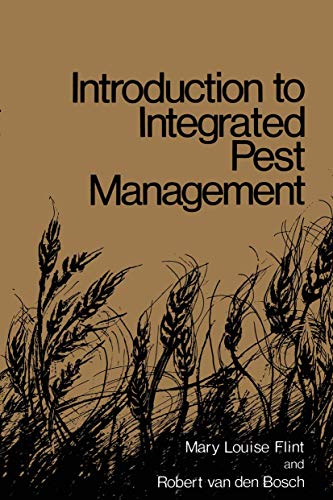
Sinopsis
Integrated control of pests was practiced early in this century, well before anyone thought to call it "integrated control" or, still later, "integrated pest management" (IPM), which is the subject of this book by Mary Louise Flint and the late Robert van den Bosch. USDA entomologists W. D. Hunter and B. R. Coad recommended the same principles in 1923, for example, for the control of boll weevil on cotton in the United States. In that program, selected pest-tolerant varieties of cotton and residue destruction were the primary means of control, with insecticides consid ered supplementary and to be used only when a measured incidence of weevil damage occurred. Likewise, plant pathologists had also developed disease management programs incorporating varietal selection and cul tural procedures, along with minimal use of the early fungicides, such as Bordeaux mixture. These and other methods were practiced well before modern chemical control technology had developed. Use of chemical pesticides expanded greatly in this century, at first slowly and then, following the launching of DDT as a broadly successful insecticide, with rapidly increasing momentum. In 1979, the President’s Council on Environmental Quality reported that production of synthetic organic pesticides had increased from less than half a million pounds in 1951 to about 1.4 billion pounds-or about 3000 times as much-in 1977.
"Sinopsis" puede pertenecer a otra edición de este libro.
Reseña del editor
Integrated control of pests was practiced early in this century, well before anyone thought to call it "integrated control" or, still later, "integrated pest management" (IPM), which is the subject of this book by Mary Louise Flint and the late Robert van den Bosch. USDA entomologists W. D. Hunter and B. R. Coad recommended the same principles in 1923, for example, for the control of boll weevil on cotton in the United States. In that program, selected pest-tolerant varieties of cotton and residue destruction were the primary means of control, with insecticides consid ered supplementary and to be used only when a measured incidence of weevil damage occurred. Likewise, plant pathologists had also developed disease management programs incorporating varietal selection and cul tural procedures, along with minimal use of the early fungicides, such as Bordeaux mixture. These and other methods were practiced well before modern chemical control technology had developed. Use of chemical pesticides expanded greatly in this century, at first slowly and then, following the launching of DDT as a broadly successful insecticide, with rapidly increasing momentum. In 1979, the President's Council on Environmental Quality reported that production of synthetic organic pesticides had increased from less than half a million pounds in 1951 to about 1.4 billion pounds-or about 3000 times as much-in 1977.
"Sobre este título" puede pertenecer a otra edición de este libro.
Resultados de la búsqueda para Introduction to Integrated Pest Management

Imagen de archivo
Introduction to Integrated Pest Management (eng)
Impresión bajo demandaLibrería: Brook Bookstore On Demand, Napoli, NA, Italia
Calificación del vendedor: 5 de 5 estrellas

Condición: new. Questo è un articolo print on demand. Nº de ref. del artículo: FR5G3DZEML
Comprar nuevo
EUR 86,24
Envío por EUR 5,50
Se envía de Italia a Estados Unidos de America
Se envía de Italia a Estados Unidos de America
Cantidad disponible: Más de 20 disponibles
Imagen del vendedor
Introduction to Integrated Pest Management
Publicado por
Springer US Jan 2012, 2012
ISBN 10: 1461592143
ISBN 13: 9781461592143
Nuevo
Taschenbuch
Librería: BuchWeltWeit Ludwig Meier e.K., Bergisch Gladbach, Alemania
Calificación del vendedor: 5 de 5 estrellas
Taschenbuch. Condición: Neu. This item is printed on demand - it takes 3-4 days longer - Neuware -Integrated control of pests was practiced early in this century, well before anyone thought to call it 'integrated control' or, still later, 'integrated pest management' (IPM), which is the subject of this book by Mary Louise Flint and the late Robert van den Bosch. USDA entomologists W. D. Hunter and B. R. Coad recommended the same principles in 1923, for example, for the control of boll weevil on cotton in the United States. In that program, selected pest-tolerant varieties of cotton and residue destruction were the primary means of control, with insecticides consid ered supplementary and to be used only when a measured incidence of weevil damage occurred. Likewise, plant pathologists had also developed disease management programs incorporating varietal selection and cul tural procedures, along with minimal use of the early fungicides, such as Bordeaux mixture. These and other methods were practiced well before modern chemical control technology had developed. Use of chemical pesticides expanded greatly in this century, at first slowly and then, following the launching of DDT as a broadly successful insecticide, with rapidly increasing momentum. In 1979, the President's Council on Environmental Quality reported that production of synthetic organic pesticides had increased from less than half a million pounds in 1951 to about 1.4 billion pounds-or about 3000 times as much-in 1977. 260 pp. Englisch. Nº de ref. del artículo: 9781461592143
Comprar nuevo
EUR 85,55
Envío por EUR 23,00
Se envía de Alemania a Estados Unidos de America
Se envía de Alemania a Estados Unidos de America
Cantidad disponible: 2 disponibles
Imagen de archivo
Introduction to Integrated Pest Management
Librería: GreatBookPrices, Columbia, MD, Estados Unidos de America
Calificación del vendedor: 5 de 5 estrellas
Condición: New. Nº de ref. del artículo: 20181718-n
Comprar nuevo
EUR 112,00
Envío por EUR 2,36
Se envía dentro de Estados Unidos de America
Se envía dentro de Estados Unidos de America
Cantidad disponible: 15 disponibles
Imagen de archivo
Introduction to Integrated Pest Management
Librería: California Books, Miami, FL, Estados Unidos de America
Calificación del vendedor: 5 de 5 estrellas
Condición: New. Nº de ref. del artículo: I-9781461592143
Comprar nuevo
EUR 121,37
Gastos de envío gratis
Se envía dentro de Estados Unidos de America
Se envía dentro de Estados Unidos de America
Cantidad disponible: Más de 20 disponibles
Imagen de archivo
Introduction to Integrated Pest Management
Librería: GreatBookPrices, Columbia, MD, Estados Unidos de America
Calificación del vendedor: 5 de 5 estrellas
Condición: As New. Unread book in perfect condition. Nº de ref. del artículo: 20181718
Comprar usado
EUR 126,58
Envío por EUR 2,36
Se envía dentro de Estados Unidos de America
Se envía dentro de Estados Unidos de America
Cantidad disponible: 15 disponibles
Imagen de archivo
Introduction to Integrated Pest Management
Librería: Ria Christie Collections, Uxbridge, Reino Unido
Calificación del vendedor: 5 de 5 estrellas
Condición: New. In English. Nº de ref. del artículo: ria9781461592143_new
Comprar nuevo
EUR 129,85
Envío por EUR 11,07
Se envía de Reino Unido a Estados Unidos de America
Se envía de Reino Unido a Estados Unidos de America
Cantidad disponible: Más de 20 disponibles
Imagen del vendedor
Introduction to Integrated Pest Management
Impresión bajo demandaLibrería: moluna, Greven, Alemania
Calificación del vendedor: 5 de 5 estrellas
Condición: New. Dieser Artikel ist ein Print on Demand Artikel und wird nach Ihrer Bestellung fuer Sie gedruckt. Integrated control of pests was practiced early in this century, well before anyone thought to call it integrated control or, still later, integrated pest management (IPM), which is the subject of this book by Mary Louise Flint and the late Robert van d. Nº de ref. del artículo: 4200754
Comprar nuevo
EUR 92,27
Envío por EUR 48,99
Se envía de Alemania a Estados Unidos de America
Se envía de Alemania a Estados Unidos de America
Cantidad disponible: Más de 20 disponibles
Imagen del vendedor
Introduction to Integrated Pest Management
Impresión bajo demandaLibrería: AHA-BUCH GmbH, Einbeck, Alemania
Calificación del vendedor: 5 de 5 estrellas
Taschenbuch. Condición: Neu. nach der Bestellung gedruckt Neuware - Printed after ordering - Integrated control of pests was practiced early in this century, well before anyone thought to call it 'integrated control' or, still later, 'integrated pest management' (IPM), which is the subject of this book by Mary Louise Flint and the late Robert van den Bosch. USDA entomologists W. D. Hunter and B. R. Coad recommended the same principles in 1923, for example, for the control of boll weevil on cotton in the United States. In that program, selected pest-tolerant varieties of cotton and residue destruction were the primary means of control, with insecticides consid ered supplementary and to be used only when a measured incidence of weevil damage occurred. Likewise, plant pathologists had also developed disease management programs incorporating varietal selection and cul tural procedures, along with minimal use of the early fungicides, such as Bordeaux mixture. These and other methods were practiced well before modern chemical control technology had developed. Use of chemical pesticides expanded greatly in this century, at first slowly and then, following the launching of DDT as a broadly successful insecticide, with rapidly increasing momentum. In 1979, the President's Council on Environmental Quality reported that production of synthetic organic pesticides had increased from less than half a million pounds in 1951 to about 1.4 billion pounds-or about 3000 times as much-in 1977. Nº de ref. del artículo: 9781461592143
Comprar nuevo
EUR 122,94
Envío por EUR 35,00
Se envía de Alemania a Estados Unidos de America
Se envía de Alemania a Estados Unidos de America
Cantidad disponible: 1 disponibles
Imagen de archivo
Introduction to Integrated Pest Management
Librería: Books Puddle, Woodside, NY, Estados Unidos de America
Calificación del vendedor: 4 de 5 estrellas

Condición: New. pp. 260. Nº de ref. del artículo: 2697845875
Comprar nuevo
EUR 156,08
Envío por EUR 3,56
Se envía dentro de Estados Unidos de America
Se envía dentro de Estados Unidos de America
Cantidad disponible: 4 disponibles
Imagen del vendedor
Introduction to Integrated Pest Management
Publicado por
Springer, Springer Jan 2012, 2012
ISBN 10: 1461592143
ISBN 13: 9781461592143
Nuevo
Taschenbuch
Librería: buchversandmimpf2000, Emtmannsberg, BAYE, Alemania
Calificación del vendedor: 5 de 5 estrellas
Taschenbuch. Condición: Neu. This item is printed on demand - Print on Demand Titel. Neuware -Integrated control of pests was practiced early in this century, well before anyone thought to call it 'integrated control' or, still later, 'integrated pest management' (IPM), which is the subject of this book by Mary Louise Flint and the late Robert van den Bosch. USDA entomologists W. D. Hunter and B. R. Coad recommended the same principles in 1923, for example, for the control of boll weevil on cotton in the United States. In that program, selected pest-tolerant varieties of cotton and residue destruction were the primary means of control, with insecticides consid ered supplementary and to be used only when a measured incidence of weevil damage occurred. Likewise, plant pathologists had also developed disease management programs incorporating varietal selection and cul tural procedures, along with minimal use of the early fungicides, such as Bordeaux mixture. These and other methods were practiced well before modern chemical control technology had developed. Use of chemical pesticides expanded greatly in this century, at first slowly and then, following the launching of DDT as a broadly successful insecticide, with rapidly increasing momentum. In 1979, the President's Council on Environmental Quality reported that production of synthetic organic pesticides had increased from less than half a million pounds in 1951 to about 1.4 billion pounds-or about 3000 times as much-in 1977.Springer-Verlag KG, Sachsenplatz 4-6, 1201 Wien 260 pp. Englisch. Nº de ref. del artículo: 9781461592143
Comprar nuevo
EUR 106,99
Envío por EUR 60,00
Se envía de Alemania a Estados Unidos de America
Se envía de Alemania a Estados Unidos de America
Cantidad disponible: 1 disponibles