
Artículos relacionados a Sources of the Self: The Making of the Modern Identity
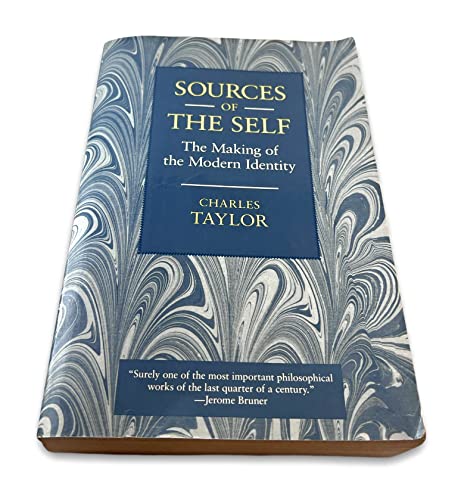
Sinopsis
“Taylor has taken on the most delicate and exacting of philosophical questions, the question of who we are and how we should live…and he has made this an adventure of self-discovery for his reader.” ―Martha Nussbaum, New Republic
In this extensive inquiry into the sources of modern selfhood, Charles Taylor demonstrates just how rich and precious those resources are. The modern turn to subjectivity, with its attendant rejection of an objective order of reason, has led―it seems to many―to mere subjectivism at the mildest and to sheer nihilism at the worst. Many critics believe that the modern order has no moral backbone and has proved corrosive to all that might foster human good. Taylor rejects this view. He argues that, properly understood, our modern notion of the self provides a framework that more than compensates for the abandonment of substantive notions of rationality.
The major insight of Sources of the Self is that modern subjectivity, in all its epistemological, aesthetic, and political ramifications, has its roots in ideas of human good. After first arguing that contemporary philosophers have ignored how self and good connect, the author defines the modern identity by describing its genesis. His effort to uncover and map our moral sources leads to novel interpretations of most of the figures and movements in the modern tradition. Taylor shows that the modern turn inward is not disastrous but is in fact the result of our long efforts to define and reach the good. At the heart of this definition he finds what he calls the affirmation of ordinary life, a value which has decisively if not completely replaced an older conception of reason as connected to a hierarchy based on birth and wealth. In telling the story of a revolution whose proponents have been Augustine, Montaigne, Luther, and a host of others, Taylor’s goal is in part to make sure we do not lose sight of their goal and endanger all that has been achieved. Sources of the Self provides a decisive defense of the modern order and a sharp rebuff to its critics.
"Sinopsis" puede pertenecer a otra edición de este libro.
Acerca del autor
Charles Taylor is Professor Emeritus in the Department of Philosophy at McGill University. Author of The Language Animal, Sources of the Self, The Ethics of Authenticity, and A Secular Age, he has received many honors, including the Templeton Prize, the Berggruen Prize, and membership in the Order of Canada.
De la contraportada
In this inquiry into the sources of modern selfhood, Charles Taylor shows that the modern turn inward is not disastrous but is in fact the result of our long efforts to define and reach the good. At the heart of this definition he finds what he calls the affirmation of ordinary life, a value that has decisively if not completely replaced an older conception of reason as connected to a hierarchy based on birth and wealth.
"Sobre este título" puede pertenecer a otra edición de este libro.
Resultados de la búsqueda para Sources of the Self: The Making of the Modern Identity

Imagen del vendedor
Sources of the Self: The Making of the Modern Identity
Publicado por
Harvard University Press, 2001
ISBN 10: 0674824261
ISBN 13: 9780674824263
Antiguo o usado
Soft cover
Librería: Mesquite Booksellers, Tucson, AZ, Estados Unidos de America
Calificación del vendedor: 5 de 5 estrellas

Soft cover. Condición: Fine. xii, 601. Stated 10th printing. Pages entirely unmarked. Minor ordinary shelfwear to the covers. If you order this from outside the United States, we will request an additional payment to help cover the postage. Please feel welcome to message us with any questions, or a request for photographs. Every order includes tracking and is wrapped and robustly packaged with care in Tucson, AZ. ~Mesquite Booksellers. Nº de ref. del artículo: 76167
Comprar usado
EUR 22,65
Envío por EUR 2,64
Se envía dentro de Estados Unidos de America
Se envía dentro de Estados Unidos de America
Cantidad disponible: 1 disponibles
Imagen de archivo
Sources of the Self: The Making of the Modern Identity
Publicado por
Harvard University Press, 1992
ISBN 10: 0674824261
ISBN 13: 9780674824263
Antiguo o usado
Paperback
Librería: World of Books (was SecondSale), Montgomery, IL, Estados Unidos de America
Calificación del vendedor: 5 de 5 estrellas
Paperback. Condición: Good. Taylor shows that the modern turn inward is not disastrous but is in fact the result of our long efforts to define and reach the good. At the heart of this definition he finds the affirmation of ordinary life, a value that has decisively if not completely replaced an older conception of reason as connected to a hierarchy based on birth and wealth. Nº de ref. del artículo: 00108893854
Comprar usado
EUR 25,94
Gastos de envío gratis
Se envía dentro de Estados Unidos de America
Se envía dentro de Estados Unidos de America
Cantidad disponible: 3 disponibles
Imagen de archivo
Sources of the Self: The Making of the Modern Identity
Publicado por
Harvard University Press, 1992
ISBN 10: 0674824261
ISBN 13: 9780674824263
Antiguo o usado
Paperback
Librería: World of Books (was SecondSale), Montgomery, IL, Estados Unidos de America
Calificación del vendedor: 5 de 5 estrellas
Paperback. Condición: Fair. Taylor shows that the modern turn inward is not disastrous but is in fact the result of our long efforts to define and reach the good. At the heart of this definition he finds the affirmation of ordinary life, a value that has decisively if not completely replaced an older conception of reason as connected to a hierarchy based on birth and wealth. Nº de ref. del artículo: 00110335494
Comprar usado
EUR 25,94
Gastos de envío gratis
Se envía dentro de Estados Unidos de America
Se envía dentro de Estados Unidos de America
Cantidad disponible: 1 disponibles
Imagen de archivo
Sources of the Self: The Making of the Modern Identity
Publicado por
Harvard University Press, 1992
ISBN 10: 0674824261
ISBN 13: 9780674824263
Antiguo o usado
Paperback
Librería: World of Books Inc, Montgomery, IL, Estados Unidos de America
Calificación del vendedor: 4 de 5 estrellas

Paperback. Condición: Good. Taylor shows that the modern turn inward is not disastrous but is in fact the result of our long efforts to define and reach the good. At the heart of this definition he finds the affirmation of ordinary life, a value that has decisively if not completely replaced an older conception of reason as connected to a hierarchy based on birth and wealth. Nº de ref. del artículo: CIN0674824261G
Comprar usado
EUR 27,76
Gastos de envío gratis
Se envía dentro de Estados Unidos de America
Se envía dentro de Estados Unidos de America
Cantidad disponible: 3 disponibles
Imagen del vendedor
Sources of the Self: The Making of the Modern Identity
Publicado por
Harvard University Press, 1992
ISBN 10: 0674824261
ISBN 13: 9780674824263
Antiguo o usado
Tapa blanda
Librería: Zoom Books Company, Lynden, WA, Estados Unidos de America
Calificación del vendedor: 5 de 5 estrellas
Condición: very_good. Book is in very good condition and may include minimal underlining highlighting. The book can also include "From the library of" labels. May not contain miscellaneous items toys, dvds, etc. . We offer 100% money back guarantee and 24 7 customer service. Nº de ref. del artículo: ZBV.0674824261.VG
Comprar usado
EUR 28,02
Gastos de envío gratis
Se envía dentro de Estados Unidos de America
Se envía dentro de Estados Unidos de America
Cantidad disponible: 1 disponibles
Imagen de archivo
Sources of the Self: The Making of the Modern Identity
Publicado por
Harvard University Press (edition Seventh Printing), 1992
ISBN 10: 0674824261
ISBN 13: 9780674824263
Antiguo o usado
Paperback
Librería: BooksRun, Philadelphia, PA, Estados Unidos de America
Calificación del vendedor: 5 de 5 estrellas
Paperback. Condición: Very Good. Seventh Printing. It's a well-cared-for item that has seen limited use. The item may show minor signs of wear. All the text is legible, with all pages included. It may have slight markings and/or highlighting. Nº de ref. del artículo: 0674824261-11-1
Comprar usado
EUR 28,80
Gastos de envío gratis
Se envía dentro de Estados Unidos de America
Se envía dentro de Estados Unidos de America
Cantidad disponible: 6 disponibles
Imagen de archivo
Sources of the Self : The Making of the Modern Identity
Publicado por
Harvard University Press, 1992
ISBN 10: 0674824261
ISBN 13: 9780674824263
Antiguo o usado
Tapa blanda
Librería: Better World Books: West, Reno, NV, Estados Unidos de America
Calificación del vendedor: 5 de 5 estrellas
Condición: Very Good. Former library copy. Pages intact with possible writing/highlighting. Binding strong with minor wear. Dust jackets/supplements may not be included. Includes library markings. Stock photo provided. Product includes identifying sticker. Better World Books: Buy Books. Do Good. Nº de ref. del artículo: 8944957-6
Comprar usado
EUR 29,62
Gastos de envío gratis
Se envía dentro de Estados Unidos de America
Se envía dentro de Estados Unidos de America
Cantidad disponible: 1 disponibles
Imagen de archivo
Sources of the Self : The Making of the Modern Identity
Publicado por
Harvard University Press, 1992
ISBN 10: 0674824261
ISBN 13: 9780674824263
Antiguo o usado
Tapa blanda
Librería: Better World Books, Mishawaka, IN, Estados Unidos de America
Calificación del vendedor: 5 de 5 estrellas
Condición: Very Good. Pages intact with possible writing/highlighting. Binding strong with minor wear. Dust jackets/supplements may not be included. Stock photo provided. Product includes identifying sticker. Better World Books: Buy Books. Do Good. Nº de ref. del artículo: 4691421-75
Comprar usado
EUR 29,62
Gastos de envío gratis
Se envía dentro de Estados Unidos de America
Se envía dentro de Estados Unidos de America
Cantidad disponible: 1 disponibles
Imagen de archivo
Sources of the Self : The Making of the Modern Identity
Publicado por
Harvard University Press, 1992
ISBN 10: 0674824261
ISBN 13: 9780674824263
Antiguo o usado
Tapa blanda
Librería: Better World Books, Mishawaka, IN, Estados Unidos de America
Calificación del vendedor: 5 de 5 estrellas
Condición: Good. Pages intact with minimal writing/highlighting. The binding may be loose and creased. Dust jackets/supplements are not included. Stock photo provided. Product includes identifying sticker. Better World Books: Buy Books. Do Good. Nº de ref. del artículo: 4744771-6
Comprar usado
EUR 29,62
Gastos de envío gratis
Se envía dentro de Estados Unidos de America
Se envía dentro de Estados Unidos de America
Cantidad disponible: 1 disponibles
Imagen de archivo
Sources of the Self: The Making of the Modern Identity
Publicado por
Harvard University Press, 1992
ISBN 10: 0674824261
ISBN 13: 9780674824263
Antiguo o usado
Paperback
Librería: HPB-Emerald, Dallas, TX, Estados Unidos de America
Calificación del vendedor: 5 de 5 estrellas
Paperback. Condición: Very Good. Connecting readers with great books since 1972! Used books may not include companion materials, and may have some shelf wear or limited writing. We ship orders daily and Customer Service is our top priority! Nº de ref. del artículo: S_486795074
Comprar usado
EUR 26,33
Envío por EUR 3,30
Se envía dentro de Estados Unidos de America
Se envía dentro de Estados Unidos de America
Cantidad disponible: 1 disponibles