
Artículos relacionados a Grooming, Gossip, and the Evolution of Language
Sinopsis
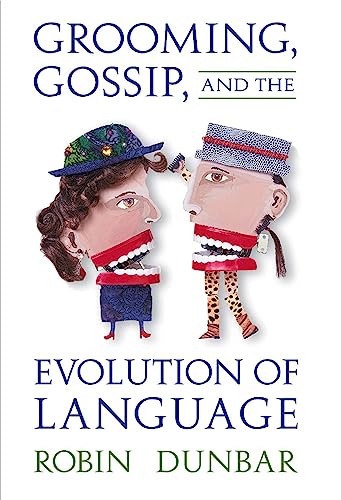
What a big brain we have for all the small talk we make. It's an evolutionary riddle that at long last makes sense in this intriguing book about what gossip has done for our talkative species. Psychologist Robin Dunbar looks at gossip as an instrument of social order and cohesion--much like the endless grooming with which our primate cousins tend to their social relationships.
Apes and monkeys, humanity's closest kin, differ from other animals in the intensity of these relationships. All their grooming is not so much about hygiene as it is about cementing bonds, making friends, and influencing fellow primates. But for early humans, grooming as a way to social success posed a problem: given their large social groups of 150 or so, our earliest ancestors would have had to spend almost half their time grooming one another--an impossible burden. What Dunbar suggests--and his research, whether in the realm of primatology or in that of gossip, confirms--is that humans developed language to serve the same purpose, but far more efficiently. It seems there is nothing idle about chatter, which holds together a diverse, dynamic group--whether of hunter-gatherers, soldiers, or workmates.
Anthropologists have long assumed that language developed in relationships among males during activities such as hunting. Dunbar's original and extremely interesting studies suggest otherwise: that language in fact evolved in response to our need to keep up to date with friends and family. We needed conversation to stay in touch, and we still need it in ways that will not be satisfied by teleconferencing, email, or any other communication technology. As Dunbar shows, the impersonal world of cyberspace will not fulfill our primordial need for face-to-face contact.
From the nit-picking of chimpanzees to our chats at coffee break, from neuroscience to paleoanthropology, Grooming, Gossip, and the Evolution of Language offers a provocative view of what makes us human, what holds us together, and what sets us apart.
"Sinopsis" puede pertenecer a otra edición de este libro.
Acerca del autor
Robin Dunbar is Professor of Evolutionary Anthropology and Director of the Institute of Cognitive & Evolutionary Anthropology at the University of Oxford.
De la contraportada
Apes and monkeys, humanity's closest kin, differ from other animals in the intensity of their social relationships. All their grooming is not so much about hygiene as it is about cementing bonds, making friends, and influencing fellow primates. But for early humans, grooming as a way to social success posed a problem: given their large social groups of 150 or so, our earliest ancestors would have had to spend almost half their time grooming one another - an impossible burden. What Dunbar suggests - and his research, whether in the realm of primatology or in that of gossip, confirms - is that humans developed language to serve the same purpose, but far more efficiently. It seems there is nothing idle about chatter, which holds together a diverse, dynamic group - whether of hunter-gatherers, soldiers, or workmates. Anthropologists have long assumed that language developed in relationships among males during activities such as hunting. Dunbar's original and extremely interesting studies suggest otherwise: that language in fact evolved in response to our need to keep up to date with friends and family. We needed conversation to stay in touch, and we still need it in ways that will not be satisfied by teleconferencing, e-mail, or any other communication technology. As Dunbar shows, the impersonal world of cyberspace will not fulfill our primordial need for face-to-face contact.
"Sobre este título" puede pertenecer a otra edición de este libro.
Resultados de la búsqueda para Grooming, Gossip, and the Evolution of Language

Imagen de archivo
Grooming, Gossip, and the Evolution of Language
Publicado por
Harvard University Press, 1998
ISBN 10: 0674363361
ISBN 13: 9780674363366
Antiguo o usado
Paperback
Librería: World of Books (was SecondSale), Montgomery, IL, Estados Unidos de America
Calificación del vendedor: 5 de 5 estrellas

Paperback. Condición: Good. Dunbar suggests that humans developed language to serve the purpose that grooming served, but far more efficiently. From the nit-picking of chimpanzees to our chats at coffee break, from neuroscience to paleoanthropology, this book offers a provocative view of what makes us human. Nº de ref. del artículo: 00110207001
Comprar usado
EUR 4,49
Gastos de envío gratis
Se envía dentro de Estados Unidos de America
Se envía dentro de Estados Unidos de America
Cantidad disponible: 2 disponibles
Imagen de archivo
Grooming, Gossip, and the Evolution of Language
Publicado por
Harvard University Press, 1998
ISBN 10: 0674363361
ISBN 13: 9780674363366
Antiguo o usado
Paperback
Librería: World of Books Inc, Montgomery, IL, Estados Unidos de America
Calificación del vendedor: 4 de 5 estrellas

Paperback. Condición: Good. Dunbar suggests that humans developed language to serve the purpose that grooming served, but far more efficiently. From the nit-picking of chimpanzees to our chats at coffee break, from neuroscience to paleoanthropology, this book offers a provocative view of what makes us human. Nº de ref. del artículo: CIN0674363361G
Comprar usado
EUR 6,33
Gastos de envío gratis
Se envía dentro de Estados Unidos de America
Se envía dentro de Estados Unidos de America
Cantidad disponible: 2 disponibles
Imagen del vendedor
Grooming, Gossip, and the Evolution of Language
Publicado por
Harvard University Press, 1998
ISBN 10: 0674363361
ISBN 13: 9780674363366
Antiguo o usado
Tapa blanda
Librería: -OnTimeBooks-, Phoenix, AZ, Estados Unidos de America
Calificación del vendedor: 5 de 5 estrellas
Condición: good. A copy that has been read, remains in good condition. All pages are intact, and the cover is intact. The spine and cover show signs of wear. Pages can include notes and highlighting and show signs of wear, and the copy can include "From the library of" labels or previous owner inscriptions. 100% GUARANTEE! Shipped with delivery confirmation, if you're not satisfied with purchase please return item! Ships via media mail. Nº de ref. del artículo: OTV.0674363361.G
Comprar usado
EUR 7,12
Gastos de envío gratis
Se envía dentro de Estados Unidos de America
Se envía dentro de Estados Unidos de America
Cantidad disponible: 2 disponibles
Imagen de archivo
Grooming, Gossip, and the Evolution of Language
Publicado por
Harvard University Press, 1998
ISBN 10: 0674363361
ISBN 13: 9780674363366
Antiguo o usado
Paperback
Librería: HPB-Red, Dallas, TX, Estados Unidos de America
Calificación del vendedor: 5 de 5 estrellas
Paperback. Condición: Good. Connecting readers with great books since 1972! Used textbooks may not include companion materials such as access codes, etc. May have some wear or writing/highlighting. We ship orders daily and Customer Service is our top priority! Nº de ref. del artículo: S_384703394
Comprar usado
EUR 4,60
Envío por EUR 3,35
Se envía dentro de Estados Unidos de America
Se envía dentro de Estados Unidos de America
Cantidad disponible: 1 disponibles
Imagen de archivo
Grooming, Gossip, and the Evolution of Language
Publicado por
Harvard University Press, 1998
ISBN 10: 0674363361
ISBN 13: 9780674363366
Antiguo o usado
Paperback
Librería: HPB-Red, Dallas, TX, Estados Unidos de America
Calificación del vendedor: 5 de 5 estrellas
Paperback. Condición: Acceptable. Connecting readers with great books since 1972. Used textbooks may not include companion materials such as access codes, etc. May have condition issues including wear and notes/highlighting. We ship orders daily and Customer Service is our top priority! Nº de ref. del artículo: S_470735498
Comprar usado
EUR 4,60
Envío por EUR 3,35
Se envía dentro de Estados Unidos de America
Se envía dentro de Estados Unidos de America
Cantidad disponible: 1 disponibles
Imagen de archivo
Grooming, Gossip, and the Evolution of Language
Publicado por
Harvard University Press, 1998
ISBN 10: 0674363361
ISBN 13: 9780674363366
Antiguo o usado
Paperback
Librería: ThriftBooks-Atlanta, AUSTELL, GA, Estados Unidos de America
Calificación del vendedor: 5 de 5 estrellas
Paperback. Condición: Very Good. No Jacket. May have limited writing in cover pages. Pages are unmarked. ~ ThriftBooks: Read More, Spend Less. Nº de ref. del artículo: G0674363361I4N00
Comprar usado
EUR 8,16
Gastos de envío gratis
Se envía dentro de Estados Unidos de America
Se envía dentro de Estados Unidos de America
Cantidad disponible: 1 disponibles
Imagen de archivo
Grooming, Gossip, and the Evolution of Language
Publicado por
Harvard University Press, 1998
ISBN 10: 0674363361
ISBN 13: 9780674363366
Antiguo o usado
Paperback
Librería: ThriftBooks-Dallas, Dallas, TX, Estados Unidos de America
Calificación del vendedor: 5 de 5 estrellas
Paperback. Condición: Fair. No Jacket. Readable copy. Pages may have considerable notes/highlighting. ~ ThriftBooks: Read More, Spend Less. Nº de ref. del artículo: G0674363361I5N00
Comprar usado
EUR 8,16
Gastos de envío gratis
Se envía dentro de Estados Unidos de America
Se envía dentro de Estados Unidos de America
Cantidad disponible: 1 disponibles
Imagen de archivo
Grooming, Gossip, and the Evolution of Language
Publicado por
Harvard University Press, 1998
ISBN 10: 0674363361
ISBN 13: 9780674363366
Antiguo o usado
Paperback
Librería: ThriftBooks-Atlanta, AUSTELL, GA, Estados Unidos de America
Calificación del vendedor: 5 de 5 estrellas
Paperback. Condición: Fair. No Jacket. Readable copy. Pages may have considerable notes/highlighting. ~ ThriftBooks: Read More, Spend Less. Nº de ref. del artículo: G0674363361I5N00
Comprar usado
EUR 8,16
Gastos de envío gratis
Se envía dentro de Estados Unidos de America
Se envía dentro de Estados Unidos de America
Cantidad disponible: 1 disponibles
Imagen del vendedor
Grooming, Gossip, and the Evolution of Language
Publicado por
Harvard University Press, 1998
ISBN 10: 0674363361
ISBN 13: 9780674363366
Antiguo o usado
Tapa blanda
Librería: Goodwill Southern California, Los Angeles, CA, Estados Unidos de America
Calificación del vendedor: 5 de 5 estrellas
Condición: good. Paperback Book. Nº de ref. del artículo: LACV.0674363361.G
Comprar usado
EUR 6,44
Envío por EUR 2,68
Se envía dentro de Estados Unidos de America
Se envía dentro de Estados Unidos de America
Cantidad disponible: 1 disponibles
Imagen de archivo
Grooming, Gossip, and the Evolution of Language
Publicado por
Harvard University Press, 1998
ISBN 10: 0674363361
ISBN 13: 9780674363366
Antiguo o usado
Tapa blanda
Librería: Better World Books, Mishawaka, IN, Estados Unidos de America
Calificación del vendedor: 5 de 5 estrellas
Condición: Very Good. Pages intact with possible writing/highlighting. Binding strong with minor wear. Dust jackets/supplements may not be included. Stock photo provided. Product includes identifying sticker. Better World Books: Buy Books. Do Good. Nº de ref. del artículo: 4184669-6
Comprar usado
EUR 10,12
Gastos de envío gratis
Se envía dentro de Estados Unidos de America
Se envía dentro de Estados Unidos de America
Cantidad disponible: 1 disponibles