
Artículos relacionados a Why Architects Still Draw: Two Lectures on Architectural...
Sinopsis
An architect's defense of drawing as a way of thinking, even in an age of electronic media.
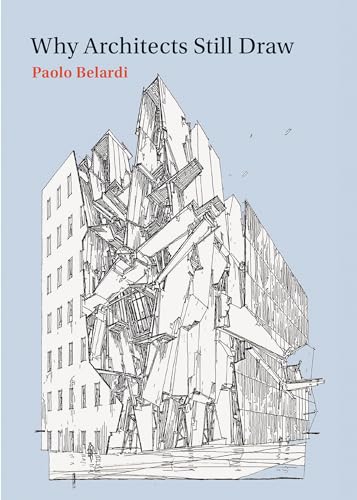
Why would an architect reach for a pencil when drawing software and AutoCAD are a click away? Use a ruler when 3D-scanners and GPS devices are close at hand? In Why Architects Still Draw, Paolo Belardi offers an elegant and ardent defense of drawing by hand as a way of thinking. Belardi is no Luddite; he doesn't urge architects to give up digital devices for watercolors and a measuring tape. Rather, he makes a case for drawing as the interface between the idea and the work itself.
A drawing, Belardi argues, holds within it the entire final design. It is the paradox of the acorn: a project emerges from a drawing—even from a sketch, rough and inchoate—just as an oak tree emerges from an acorn. Citing examples not just from architecture but also from literature, chemistry, music, archaeology, and art, Belardi shows how drawing is not a passive recording but a moment of invention pregnant with creative possibilities.
Moving from the sketch to the survey, Belardi explores the meaning of measurement in a digital era. A survey of a site should go beyond width, height, and depth; it must include two more dimensions: history and culture. Belardi shows the sterility of techniques that value metric exactitude over cultural appropriateness, arguing for an “informed drawing” that takes into consideration more than meters or feet, stone or steel. Even in the age of electronic media, Belardi writes, drawing can maintain its role as a cornerstone of architecture.
"Sinopsis" puede pertenecer a otra edición de este libro.
Acerca del autor
Paolo Belardi, an architect and poet, is Professor in the Department of Civil and Environmental Engineering at the University of Perugia. He has won numerous international prizes, including TECU Architecture Award and the Premio Internazionale di Architettura Andrea Palladio.
Zachary Nowak is a graduate student in the doctoral program for American Studies at Harvard University and Associate Director for the Food Studies Program at the Umbra Institute, in the central Italian city of Perugia.
"Sobre este título" puede pertenecer a otra edición de este libro.
Resultados de la búsqueda para Why Architects Still Draw: Two Lectures on Architectural...

Imagen de archivo
Why Architects Still Draw (Mit Press)
Publicado por
The MIT Press, 2014
ISBN 10: 0262525488
ISBN 13: 9780262525480
Antiguo o usado
paperback
Librería: HPB Inc., Dallas, TX, Estados Unidos de America
Calificación del vendedor: 5 de 5 estrellas

paperback. Condición: Very Good. Connecting readers with great books since 1972! Used books may not include companion materials, and may have some shelf wear or limited writing. We ship orders daily and Customer Service is our top priority! Nº de ref. del artículo: S_475731155
Comprar usado
EUR 4,98
Envío por EUR 3,31
Se envía dentro de Estados Unidos de America
Se envía dentro de Estados Unidos de America
Cantidad disponible: 1 disponibles
Imagen de archivo
Why Architects Still Draw
Publicado por
MIT Press Ltd, 2014
ISBN 10: 0262525488
ISBN 13: 9780262525480
Antiguo o usado
Paperback
Librería: World of Books (was SecondSale), Montgomery, IL, Estados Unidos de America
Calificación del vendedor: 5 de 5 estrellas
Paperback. Condición: Very Good. An architect's defense of drawing as a way of thinking, even in an age of electronic media.Why would an architect reach for a pencil when drawing software and AutoCAD are a click away? Use a ruler when 3D-scanners and GPS devices are close at hand? In Why Architects Still Draw, Paolo Belardi offers an elegant and ardent defense of drawing by hand as a way of thinking. Belardi is no Luddite; he doesn't urge architects to give up digital devices for watercolors and a measuring tape. Rather, he makes a case for drawing as the interface between the idea and the work itself.A drawing, Belardi argues, holds within it the entire final design. It is the paradox of the acorn: a project emerges from a drawing--even from a sketch, rough and inchoate--just as an oak tree emerges from an acorn. Citing examples not just from architecture but also from literature, chemistry, music, archaeology, and art, Belardi shows how drawing is not a passive recording but a moment of invention pregnant with creative possibilities.Moving from the sketch to the survey, Belardi explores the meaning of measurement in a digital era. A survey of a site should go beyond width, height, and depth; it must include two more dimensions: history and culture. Belardi shows the sterility of techniques that value metric exactitude over cultural appropriateness, arguing for an informed drawing that takes into consideration more than meters or feet, stone or steel. Even in the age of electronic media, Belardi writes, drawing can maintain its role as a cornerstone of architecture. Nº de ref. del artículo: 00093073531
Comprar usado
EUR 8,39
Gastos de envío gratis
Se envía dentro de Estados Unidos de America
Se envía dentro de Estados Unidos de America
Cantidad disponible: 1 disponibles
Imagen de archivo
Why Architects Still Draw
Publicado por
MIT Press Ltd, 2014
ISBN 10: 0262525488
ISBN 13: 9780262525480
Antiguo o usado
Paperback
Librería: World of Books Inc, Montgomery, IL, Estados Unidos de America
Calificación del vendedor: 4 de 5 estrellas

Paperback. Condición: Very Good. An architect's defense of drawing as a way of thinking, even in an age of electronic media.Why would an architect reach for a pencil when drawing software and AutoCAD are a click away? Use a ruler when 3D-scanners and GPS devices are close at hand? In Why Architects Still Draw, Paolo Belardi offers an elegant and ardent defense of drawing by hand as a way of thinking. Belardi is no Luddite; he doesn't urge architects to give up digital devices for watercolors and a measuring tape. Rather, he makes a case for drawing as the interface between the idea and the work itself.A drawing, Belardi argues, holds within it the entire final design. It is the paradox of the acorn: a project emerges from a drawing--even from a sketch, rough and inchoate--just as an oak tree emerges from an acorn. Citing examples not just from architecture but also from literature, chemistry, music, archaeology, and art, Belardi shows how drawing is not a passive recording but a moment of invention pregnant with creative possibilities.Moving from the sketch to the survey, Belardi explores the meaning of measurement in a digital era. A survey of a site should go beyond width, height, and depth; it must include two more dimensions: history and culture. Belardi shows the sterility of techniques that value metric exactitude over cultural appropriateness, arguing for an informed drawing that takes into consideration more than meters or feet, stone or steel. Even in the age of electronic media, Belardi writes, drawing can maintain its role as a cornerstone of architecture. Nº de ref. del artículo: CIN0262525488VG
Comprar usado
EUR 10,21
Gastos de envío gratis
Se envía dentro de Estados Unidos de America
Se envía dentro de Estados Unidos de America
Cantidad disponible: 1 disponibles
Imagen de archivo
Why Architects Still Draw
Publicado por
MIT Press, 2014
ISBN 10: 0262525488
ISBN 13: 9780262525480
Antiguo o usado
Tapa blanda
Librería: Better World Books, Mishawaka, IN, Estados Unidos de America
Calificación del vendedor: 5 de 5 estrellas
Condición: Good. Pages intact with minimal writing/highlighting. The binding may be loose and creased. Dust jackets/supplements are not included. Stock photo provided. Product includes identifying sticker. Better World Books: Buy Books. Do Good. Nº de ref. del artículo: 68432029-6
Comprar usado
EUR 12,26
Gastos de envío gratis
Se envía dentro de Estados Unidos de America
Se envía dentro de Estados Unidos de America
Cantidad disponible: 1 disponibles
Imagen de archivo
Why Architects Still Draw (The MIT Press): Two Lectures on Architectural Drawing
Publicado por
The MIT Press, 2014
ISBN 10: 0262525488
ISBN 13: 9780262525480
Antiguo o usado
Paperback
Librería: WorldofBooks, Goring-By-Sea, WS, Reino Unido
Calificación del vendedor: 5 de 5 estrellas
Paperback. Condición: Very Good. The book has been read, but is in excellent condition. Pages are intact and not marred by notes or highlighting. The spine remains undamaged. Nº de ref. del artículo: GOR007018410
Comprar usado
EUR 6,17
Envío por EUR 6,56
Se envía de Reino Unido a Estados Unidos de America
Se envía de Reino Unido a Estados Unidos de America
Cantidad disponible: 1 disponibles
Imagen del vendedor
Why Architects Still Draw : Two Lectures on Architectural Drawing
Librería: GreatBookPrices, Columbia, MD, Estados Unidos de America
Calificación del vendedor: 5 de 5 estrellas
Condición: New. Nº de ref. del artículo: 20281881-n
Comprar nuevo
EUR 12,08
Envío por EUR 2,33
Se envía dentro de Estados Unidos de America
Se envía dentro de Estados Unidos de America
Cantidad disponible: Más de 20 disponibles
Imagen del vendedor
Why Architects Still Draw
Librería: Rarewaves USA, HEBRON, KY, Estados Unidos de America
Calificación del vendedor: 5 de 5 estrellas
Paperback. Condición: New. Nº de ref. del artículo: LU-9780262525480
Comprar nuevo
EUR 14,49
Gastos de envío gratis
Se envía dentro de Estados Unidos de America
Se envía dentro de Estados Unidos de America
Cantidad disponible: Más de 20 disponibles
Imagen de archivo
Why Architects Still Draw (Paperback)
Publicado por
MIT Press Ltd, Cambridge, Mass., 2014
ISBN 10: 0262525488
ISBN 13: 9780262525480
Nuevo
Paperback
Librería: Grand Eagle Retail, Bensenville, IL, Estados Unidos de America
Calificación del vendedor: 5 de 5 estrellas
Paperback. Condición: new. Paperback. An architect's defense of drawing as a way of thinking, even in an age of electronic media.Why would an architect reach for a pencil when drawing software and AutoCAD are a click away? Use a ruler when 3D-scanners and GPS devices are close at hand? In Why Architects Still Draw, Paolo Belardi offers an elegant and ardent defense of drawing by hand as a way of thinking. Belardi is no Luddite; he doesn't urge architects to give up digital devices for watercolors and a measuring tape. Rather, he makes a case for drawing as the interface between the idea and the work itself.A drawing, Belardi argues, holds within it the entire final design. It is the paradox of the acorn: a project emerges from a drawing-even from a sketch, rough and inchoate-just as an oak tree emerges from an acorn. Citing examples not just from architecture but also from literature, chemistry, music, archaeology, and art, Belardi shows how drawing is not a passive recording but a moment of invention pregnant with creative possibilities.Moving from the sketch to the survey, Belardi explores the meaning of measurement in a digital era. A survey of a site should go beyond width, height, and depth; it must include two more dimensions: history and culture. Belardi shows the sterility of techniques that value metric exactitude over cultural appropriateness, arguing for an "informed drawing" that takes into consideration more than meters or feet, stone or steel. Even in the age of electronic media, Belardi writes, drawing can maintain its role as a cornerstone of architecture. An architect's defense of drawing as a way of thinking, even in an age of electronic media. Shipping may be from multiple locations in the US or from the UK, depending on stock availability. Nº de ref. del artículo: 9780262525480
Comprar nuevo
EUR 16,81
Gastos de envío gratis
Se envía dentro de Estados Unidos de America
Se envía dentro de Estados Unidos de America
Cantidad disponible: 1 disponibles
Imagen de archivo
Why Architects Still Draw
Librería: Massive Bookshop, Erving, MA, Estados Unidos de America
Calificación del vendedor: 4 de 5 estrellas
Paperback. Condición: New. Nº de ref. del artículo: 9780262525480
Comprar nuevo
EUR 16,32
Envío por EUR 4,19
Se envía dentro de Estados Unidos de America
Se envía dentro de Estados Unidos de America
Cantidad disponible: 10 disponibles
Imagen de archivo
Why Architects Still Draw (The MIT Press): Two Lectures on Architectural Drawing
Librería: Sell Books, Elland, YORKS, Reino Unido
Calificación del vendedor: 5 de 5 estrellas
paperback. Condición: Acceptable. Please see the condition note after this for details, if this is missing please consider Acceptable to mean poor quality that could include major staining, water damage, writing, missing dustjacket, etc etc. Our books are dispatched from a Yorkshire former cotton mill. We list via barcode/ISBN so please note that the images are stock images and may not be the exact copy you receive, furthermore the details about edition and year might not be accurate as many publishers reuse the same ISBN for multiple editions and as we simply scan a barcode or enter an ISBN we do not check the validity of the edition data when listing. If you're looking for an exact edition please don't order (at least not without checking with us first, although we don't always have time to check). We aim to dispatch prompty, the service used will depend on order value and book size. We can ship to most countries, see our shipping policies. Payment is via Abe only. Nº de ref. del artículo: L-BOZ00781-RAG-20250220-A
Comprar usado
EUR 6,66
Envío por EUR 14,23
Se envía de Reino Unido a Estados Unidos de America
Se envía de Reino Unido a Estados Unidos de America
Cantidad disponible: 1 disponibles