
Artículos relacionados a I of the Vortex: From Neurons to Self
Sinopsis
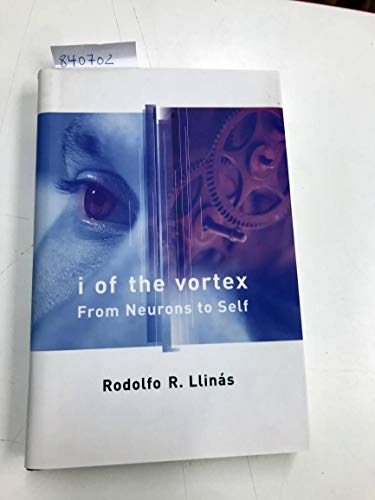
In I of the Vortex, Rodolfo Llinas, a founding father of modern brain science, presents an original view of the evolution and nature of mind. According to Llinas, the "mindness state" evolved to allow predictive interactions between mobile creatures and their environment. He illustrates the early evolution of mind through a primitive animal called the "sea squirt." The mobile larval form has a brainlike ganglion that receives sensory information about the surrounding environment. As an adult, the sea squirt attaches itself to a stationary object and then digests most of its own brain. This suggests that the nervous system evolved to allow active movement in animals. To move through the environment safely, a creature must anticipate the outcome of each movement on the basis of incoming sensory data. Thus the capacity to predict is most likely the ultimate brain function. One could even say that Self is the centralization of prediction.
At the heart of Llinas's theory is the concept of oscillation. Many neurons possess electrical activity, manifested as oscillating variations in the minute voltages across the cell membrane. On the crests of these oscillations occur larger electrical events that are the basis for neuron-to-neuron communication. Like cicadas chirping in unison, a group of neurons oscillating in phase can resonate with a distant group of neurons. This simultaneity of neuronal activity is the neurobiological root of cognition. Although the internal state that we call the mind is guided by the senses, it is also generated by the oscillations within the brain. Thus, in a certain sense, one could say that reality is not all "out there," but is a kind of virtual reality.
"Sinopsis" puede pertenecer a otra edición de este libro.
Críticas
"Anyone interested in new ways of thinking about organization of the brain would do well to give it a look."-- Ilya Farber, "Nature"
Reseña del editor
In "I of the Vortex", Rodolfo Llinas, a founding father of modern brain science, presents an original view of the evolution and nature of mind. According to Llinas, the "mindness state" evolved to allow predictive interactions between mobile creatures and their environment. He illustrates the early evolution of mind through a primitive animal called the "sea squirt". The mobile larval form has a brainlike ganglion that receives sensory information about the surrounding environment. As an adult, the sea squirt attaches itself to a stationary object then digests most of its own brain. This suggests that the nervous system evolved to allow active movement in animals. To move through the environment safely, a creature must anticipate the outcome of each movement on the basis of incoming sensory data. Thus the capacity to predict is most likely the ultimate brain function. One could even say that Self is the centralization of prediction. At the heart of Llinas's theory is the concept of oscillation. Many neurons possess electrical activity, manifested as oscillating variations in the minute voltages across the cell membrane. On the crests of these oscillations occur larger electrical events that are the basis for neuron-to-neuron communication. Like cicadas chirping in unison, a group of neurons oscillating in phase can resonate with a distant group of neurons. This simultaneity of neuronal activity is the neurobiological root of cognition. Although the internal state that we call the mind is guided by the senses, it is also generated by the oscillations within the brain. Thus, in a certain sense, one could say that reality is not all "out there", but is kind of virtual reality.
"Sobre este título" puede pertenecer a otra edición de este libro.
Resultados de la búsqueda para I of the Vortex: From Neurons to Self

Imagen de archivo
I of the Vortex: From Neurons to Self
Publicado por
MIT Press Ltd, 2001
ISBN 10: 0262122332
ISBN 13: 9780262122337
Antiguo o usado
Tapa dura
Librería: World of Books (was SecondSale), Montgomery, IL, Estados Unidos de America
Calificación del vendedor: 5 de 5 estrellas

Hardback. Condición: Good. A highly original theory of how the mind-brain works, based on the author's study of single neuronal cells.In I of the Vortex, Rodolfo Llinas, a founding father of modern brain science, presents an original view of the evolution and nature of mind. According to Llinas, the mindness state evolved to allow predictive interactions between mobile creatures and their environment. He illustrates the early evolution of mind through a primitive animal called the sea squirt. The mobile larval form has a brainlike ganglion that receives sensory information about the surrounding environment. As an adult, the sea squirt attaches itself to a stationary object and then digests most of its own brain. This suggests that the nervous system evolved to allow active movement in animals. To move through the environment safely, a creature must anticipate the outcome of each movement on the basis of incoming sensory data. Thus the capacity to predict is most likely the ultimate brain function. One could even say that Self is the centralization of prediction.At the heart of Llinas's theory is the concept of oscillation. Many neurons possess electrical activity, manifested as oscillating variations in the minute voltages across the cell membrane. On the crests of these oscillations occur larger electrical events that are the basis for neuron-to-neuron communication. Like cicadas chirping in unison, a group of neurons oscillating in phase can resonate with a distant group of neurons. This simultaneity of neuronal activity is the neurobiological root of cognition. Although the internal state that we call the mind is guided by the senses, it is also generated by the oscillations within the brain. Thus, in a certain sense, one could say that reality is not all out there, but is a kind of virtual reality. Nº de ref. del artículo: 00109096893
Comprar usado
EUR 17,00
Gastos de envío gratis
Se envía dentro de Estados Unidos de America
Se envía dentro de Estados Unidos de America
Cantidad disponible: 1 disponibles
Imagen de archivo
I of the Vortex: From Neurons to Self
Publicado por
MIT Press Ltd, 2001
ISBN 10: 0262122332
ISBN 13: 9780262122337
Antiguo o usado
Tapa dura
Librería: World of Books Inc, Montgomery, IL, Estados Unidos de America
Calificación del vendedor: 4 de 5 estrellas

Hardback. Condición: Good. A highly original theory of how the mind-brain works, based on the author's study of single neuronal cells.In I of the Vortex, Rodolfo Llinas, a founding father of modern brain science, presents an original view of the evolution and nature of mind. According to Llinas, the mindness state evolved to allow predictive interactions between mobile creatures and their environment. He illustrates the early evolution of mind through a primitive animal called the sea squirt. The mobile larval form has a brainlike ganglion that receives sensory information about the surrounding environment. As an adult, the sea squirt attaches itself to a stationary object and then digests most of its own brain. This suggests that the nervous system evolved to allow active movement in animals. To move through the environment safely, a creature must anticipate the outcome of each movement on the basis of incoming sensory data. Thus the capacity to predict is most likely the ultimate brain function. One could even say that Self is the centralization of prediction.At the heart of Llinas's theory is the concept of oscillation. Many neurons possess electrical activity, manifested as oscillating variations in the minute voltages across the cell membrane. On the crests of these oscillations occur larger electrical events that are the basis for neuron-to-neuron communication. Like cicadas chirping in unison, a group of neurons oscillating in phase can resonate with a distant group of neurons. This simultaneity of neuronal activity is the neurobiological root of cognition. Although the internal state that we call the mind is guided by the senses, it is also generated by the oscillations within the brain. Thus, in a certain sense, one could say that reality is not all out there, but is a kind of virtual reality. Nº de ref. del artículo: CIN0262122332G
Comprar usado
EUR 18,84
Gastos de envío gratis
Se envía dentro de Estados Unidos de America
Se envía dentro de Estados Unidos de America
Cantidad disponible: 1 disponibles
Imagen del vendedor
I of the Vortex: From Neurons to Self
Publicado por
Bradford Books, 2001
ISBN 10: 0262122332
ISBN 13: 9780262122337
Antiguo o usado
Tapa dura
Librería: -OnTimeBooks-, Phoenix, AZ, Estados Unidos de America
Calificación del vendedor: 5 de 5 estrellas
Condición: good. A copy that has been read, remains in good condition. All pages are intact, and the cover is intact. The spine and cover show signs of wear. Pages can include notes and highlighting and show signs of wear, and the copy can include "From the library of" labels or previous owner inscriptions. 100% GUARANTEE! Shipped with delivery confirmation, if you're not satisfied with purchase please return item! Ships via media mail. Nº de ref. del artículo: OTV.0262122332.G
Comprar usado
EUR 20,12
Gastos de envío gratis
Se envía dentro de Estados Unidos de America
Se envía dentro de Estados Unidos de America
Cantidad disponible: 1 disponibles
Imagen de archivo
I of the Vortex: From Neurons to Self
Publicado por
Bradford Books, 2001
ISBN 10: 0262122332
ISBN 13: 9780262122337
Antiguo o usado
Tapa dura
Librería: ThriftBooks-Atlanta, AUSTELL, GA, Estados Unidos de America
Calificación del vendedor: 5 de 5 estrellas
Hardcover. Condición: Good. No Jacket. Pages can have notes/highlighting. Spine may show signs of wear. ~ ThriftBooks: Read More, Spend Less. Nº de ref. del artículo: G0262122332I3N00
Comprar usado
EUR 20,65
Gastos de envío gratis
Se envía dentro de Estados Unidos de America
Se envía dentro de Estados Unidos de America
Cantidad disponible: 1 disponibles
Imagen de archivo
I of the Vortex: From Neurons to Self
Publicado por
Bradford Books, 2001
ISBN 10: 0262122332
ISBN 13: 9780262122337
Antiguo o usado
Tapa dura
Librería: ThriftBooks-Atlanta, AUSTELL, GA, Estados Unidos de America
Calificación del vendedor: 5 de 5 estrellas
Hardcover. Condición: Very Good. No Jacket. May have limited writing in cover pages. Pages are unmarked. ~ ThriftBooks: Read More, Spend Less. Nº de ref. del artículo: G0262122332I4N00
Comprar usado
EUR 20,65
Gastos de envío gratis
Se envía dentro de Estados Unidos de America
Se envía dentro de Estados Unidos de America
Cantidad disponible: 1 disponibles
Imagen del vendedor
I of the Vortex: From Neurons to Self
Publicado por
Bradford Books, 2001
ISBN 10: 0262122332
ISBN 13: 9780262122337
Antiguo o usado
Tapa dura
Ejemplar firmado
Librería: ThriftBooksVintage, Tukwila, WA, Estados Unidos de America
Calificación del vendedor: 5 de 5 estrellas
Hardcover. Condición: Very Good. No Jacket. SIGNED and inscribed by the author. Minor shelf and handling wear, overall a clean solid copy with minimal signs of use. Secure packaging for safe delivery. signed and inscribed by author. Nº de ref. del artículo: 3577294267
Comprar usado
EUR 21,15
Gastos de envío gratis
Se envía dentro de Estados Unidos de America
Se envía dentro de Estados Unidos de America
Cantidad disponible: 1 disponibles
Imagen del vendedor
I of the Vortex: From Neurons to Self
Publicado por
Bradford Books, 2001
ISBN 10: 0262122332
ISBN 13: 9780262122337
Antiguo o usado
Tapa dura
Librería: Vive Liber Books, Somers, CT, Estados Unidos de America
Calificación del vendedor: 5 de 5 estrellas
Condición: good. Good condition USED book. Pages are clean with normal wear. May have limited markings inside from previous owner. Nº de ref. del artículo: VLM.14DZ
Comprar usado
EUR 21,36
Gastos de envío gratis
Se envía dentro de Estados Unidos de America
Se envía dentro de Estados Unidos de America
Cantidad disponible: 1 disponibles
Imagen del vendedor
I of the Vortex - From Neurons to Self
Librería: Veronica's Books, Gig Harbor, WA, Estados Unidos de America
Calificación del vendedor: 5 de 5 estrellas
Hardcover. Condición: Very Good. Estado de la sobrecubierta: Very Good. 302pp. Tight copy in mylar-protected dust jacket. Nº de ref. del artículo: 064629
Comprar usado
EUR 18,39
Envío por EUR 5,80
Se envía dentro de Estados Unidos de America
Se envía dentro de Estados Unidos de America
Cantidad disponible: 1 disponibles
Imagen de archivo
I of the Vortex: From Neurons to Self
Librería: GoldBooks, Denver, CO, Estados Unidos de America
Calificación del vendedor: 5 de 5 estrellas
Hardcover. Condición: new. New Copy. Customer Service Guaranteed. Nº de ref. del artículo: 40J2_10_0262122332
Comprar nuevo
EUR 20,22
Envío por EUR 4,91
Se envía dentro de Estados Unidos de America
Se envía dentro de Estados Unidos de America
Cantidad disponible: 1 disponibles
Imagen de archivo
A Theory of Justice: Revised Edition
Publicado por
Bradford Books, 2001
ISBN 10: 0262122332
ISBN 13: 9780262122337
Antiguo o usado
Tapa dura
Original o primera edición
Librería: The Bookseller, Edmonton, AB, Canada
Calificación del vendedor: 5 de 5 estrellas
Hardcover. Condición: Very Good+. Estado de la sobrecubierta: Very Good+. 1st Edition. Minor shelf wear to book and dust jacket. Owner signature on front end paper. Otherwise a tight, unmarked book. Index. x, 302 pp. Nº de ref. del artículo: 064192
Comprar usado
EUR 16,12
Envío por EUR 16,96
Se envía de Canada a Estados Unidos de America
Se envía de Canada a Estados Unidos de America
Cantidad disponible: 1 disponibles