
Artículos relacionados a Big Hunger: The Unholy Alliance between Corporate America...
Big Hunger: The Unholy Alliance between Corporate America and Anti-Hunger Groups (Food, Health, and the Environment) - Tapa dura
Libro 5 de 12: Food, Health, and the Environment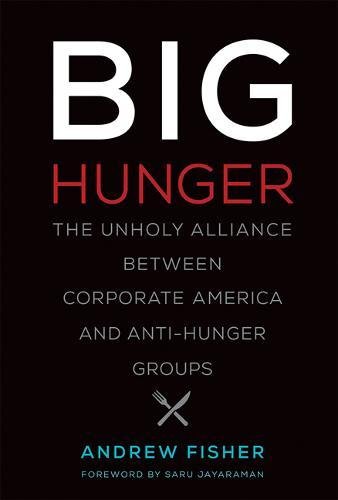
Sinopsis
How to focus anti-hunger efforts not on charity but on the root causes of food insecurity, improving public health, and reducing income inequality.
Food banks and food pantries have proliferated in response to an economic emergency. The loss of manufacturing jobs combined with the recession of the early 1980s and Reagan administration cutbacks in federal programs led to an explosion in the growth of food charity. This was meant to be a stopgap measure, but the jobs never came back, and the “emergency food system” became an industry. In Big Hunger, Andrew Fisher takes a critical look at the business of hunger and offers a new vision for the anti-hunger movement.
From one perspective, anti-hunger leaders have been extraordinarily effective. Food charity is embedded in American civil society, and federal food programs have remained intact while other anti-poverty programs have been eliminated or slashed. But anti-hunger advocates are missing an essential element of the problem: economic inequality driven by low wages. Reliant on corporate donations of food and money, anti-hunger organizations have failed to hold business accountable for offshoring jobs, cutting benefits, exploiting workers and rural communities, and resisting wage increases. They have become part of a “hunger industrial complex” that seems as self-perpetuating as the more famous military-industrial complex.
Fisher lays out a vision that encompasses a broader definition of hunger characterized by a focus on public health, economic justice, and economic democracy. He points to the work of numerous grassroots organizations that are leading the way in these fields as models for the rest of the anti-hunger sector. It is only through approaches like these that we can hope to end hunger, not just manage it.
"Sinopsis" puede pertenecer a otra edición de este libro.
Acerca del autor
Andrew Fisher has worked in the anti-hunger field for twenty-five years, as the executive director of national and local food groups, and as a researcher, organizer, policy advocate, and coalition builder. He has led successful efforts to gain passage of multiple pieces of federal food and nutrition legislation.
"Sobre este título" puede pertenecer a otra edición de este libro.
Resultados de la búsqueda para Big Hunger: The Unholy Alliance between Corporate America...

Imagen de archivo
Big Hunger: The Unholy Alliance between Corporate America and Anti-Hunger Groups
Publicado por
MIT Press Ltd, 2017
ISBN 10: 0262036088
ISBN 13: 9780262036085
Antiguo o usado
Tapa dura
Librería: World of Books (was SecondSale), Montgomery, IL, Estados Unidos de America
Calificación del vendedor: 5 de 5 estrellas

Hardback. Condición: Good. How to focus anti-hunger efforts not on charity but on the root causes of food insecurity, improving public health, and reducing income inequality.Food banks and food pantries have proliferated in response to an economic emergency. The loss of manufacturing jobs combined with the recession of the early 1980s and Reagan administration cutbacks in federal programs led to an explosion in the growth of food charity. This was meant to be a stopgap measure, but the jobs never came back, and the emergency food system became an industry. In>Big Hunger, Andrew Fisher takes a critical look at the business of hunger and offers a new vision for the anti-hunger movement.From one perspective, anti-hunger leaders have been extraordinarily effective. Food charity is embedded in American civil society, and federal food programs have remained intact while other anti-poverty programs have been eliminated or slashed. But anti-hunger advocates are missing an essential element of the problem: economic inequality driven by low wages. Reliant on corporate donations of food and money, anti-hunger organizations have failed to hold business accountable for offshoring jobs, cutting benefits, exploiting workers and rural communities, and resisting wage increases. They have become part of a hunger industrial complex that seems as self-perpetuating as the more famous military-industrial complex.Fisher lays out a vision that encompasses a broader definition of hunger characterized by a focus on public health, economic justice, and economic democracy. He points to the work of numerous grassroots organizations that are leading the way in these fields as models for the rest of the anti-hunger sector. It is only through approaches like these that we can hope to end hunger, not just manage it. Nº de ref. del artículo: 00110832955
Comprar usado
EUR 8,69
Gastos de envío gratis
Se envía dentro de Estados Unidos de America
Se envía dentro de Estados Unidos de America
Cantidad disponible: 2 disponibles
Imagen de archivo
Big Hunger : Why the Richest Nation on Earth Still Struggles with Food Insecurity
Librería: Better World Books, Mishawaka, IN, Estados Unidos de America
Calificación del vendedor: 5 de 5 estrellas
Condición: Very Good. Pages intact with possible writing/highlighting. Binding strong with minor wear. Dust jackets/supplements may not be included. Stock photo provided. Product includes identifying sticker. Better World Books: Buy Books. Do Good. Nº de ref. del artículo: 12991430-6
Comprar usado
EUR 8,70
Gastos de envío gratis
Se envía dentro de Estados Unidos de America
Se envía dentro de Estados Unidos de America
Cantidad disponible: 1 disponibles
Imagen de archivo
Big Hunger : Why the Richest Nation on Earth Still Struggles with Food Insecurity
Librería: Better World Books, Mishawaka, IN, Estados Unidos de America
Calificación del vendedor: 5 de 5 estrellas
Condición: Good. Pages intact with minimal writing/highlighting. The binding may be loose and creased. Dust jackets/supplements are not included. Stock photo provided. Product includes identifying sticker. Better World Books: Buy Books. Do Good. Nº de ref. del artículo: 14868056-6
Comprar usado
EUR 8,70
Gastos de envío gratis
Se envía dentro de Estados Unidos de America
Se envía dentro de Estados Unidos de America
Cantidad disponible: 2 disponibles
Imagen de archivo
Big Hunger : Why the Richest Nation on Earth Still Struggles with Food Insecurity
Librería: Better World Books: West, Reno, NV, Estados Unidos de America
Calificación del vendedor: 5 de 5 estrellas
Condición: Very Good. Former library copy. Pages intact with possible writing/highlighting. Binding strong with minor wear. Dust jackets/supplements may not be included. Includes library markings. Stock photo provided. Product includes identifying sticker. Better World Books: Buy Books. Do Good. Nº de ref. del artículo: 13681943-6
Comprar usado
EUR 8,70
Gastos de envío gratis
Se envía dentro de Estados Unidos de America
Se envía dentro de Estados Unidos de America
Cantidad disponible: 2 disponibles
Imagen de archivo
Big Hunger : Why the Richest Nation on Earth Still Struggles with Food Insecurity
Librería: Better World Books, Mishawaka, IN, Estados Unidos de America
Calificación del vendedor: 5 de 5 estrellas
Condición: Very Good. Former library copy. Pages intact with possible writing/highlighting. Binding strong with minor wear. Dust jackets/supplements may not be included. Includes library markings. Stock photo provided. Product includes identifying sticker. Better World Books: Buy Books. Do Good. Nº de ref. del artículo: 13681943-6
Comprar usado
EUR 8,70
Gastos de envío gratis
Se envía dentro de Estados Unidos de America
Se envía dentro de Estados Unidos de America
Cantidad disponible: 2 disponibles
Imagen de archivo
Big Hunger: The Unholy Alliance between Corporate America and Anti-Hunger Groups
Publicado por
MIT Press Ltd, 2017
ISBN 10: 0262036088
ISBN 13: 9780262036085
Antiguo o usado
Tapa dura
Librería: World of Books Inc, Montgomery, IL, Estados Unidos de America
Calificación del vendedor: 4 de 5 estrellas

Hardback. Condición: Good. How to focus anti-hunger efforts not on charity but on the root causes of food insecurity, improving public health, and reducing income inequality.Food banks and food pantries have proliferated in response to an economic emergency. The loss of manufacturing jobs combined with the recession of the early 1980s and Reagan administration cutbacks in federal programs led to an explosion in the growth of food charity. This was meant to be a stopgap measure, but the jobs never came back, and the emergency food system became an industry. In>Big Hunger, Andrew Fisher takes a critical look at the business of hunger and offers a new vision for the anti-hunger movement.From one perspective, anti-hunger leaders have been extraordinarily effective. Food charity is embedded in American civil society, and federal food programs have remained intact while other anti-poverty programs have been eliminated or slashed. But anti-hunger advocates are missing an essential element of the problem: economic inequality driven by low wages. Reliant on corporate donations of food and money, anti-hunger organizations have failed to hold business accountable for offshoring jobs, cutting benefits, exploiting workers and rural communities, and resisting wage increases. They have become part of a hunger industrial complex that seems as self-perpetuating as the more famous military-industrial complex.Fisher lays out a vision that encompasses a broader definition of hunger characterized by a focus on public health, economic justice, and economic democracy. He points to the work of numerous grassroots organizations that are leading the way in these fields as models for the rest of the anti-hunger sector. It is only through approaches like these that we can hope to end hunger, not just manage it. Nº de ref. del artículo: CIN0262036088G
Comprar usado
EUR 10,50
Gastos de envío gratis
Se envía dentro de Estados Unidos de America
Se envía dentro de Estados Unidos de America
Cantidad disponible: 2 disponibles
Imagen de archivo
Big Hunger: The Unholy Alliance Between Corporate America and Anti-Hunger Groups
Librería: ThriftBooks-Dallas, Dallas, TX, Estados Unidos de America
Calificación del vendedor: 5 de 5 estrellas
Hardcover. Condición: Good. No Jacket. Pages can have notes/highlighting. Spine may show signs of wear. ~ ThriftBooks: Read More, Spend Less. Nº de ref. del artículo: G0262036088I3N00
Comprar usado
EUR 14,58
Gastos de envío gratis
Se envía dentro de Estados Unidos de America
Se envía dentro de Estados Unidos de America
Cantidad disponible: 1 disponibles
Imagen de archivo
Big Hunger: The Unholy Alliance Between Corporate America and Anti-Hunger Groups (Inscribed)
Publicado por
Mit Pr, Cambridge, Massachusetts, 2017
ISBN 10: 0262036088
ISBN 13: 9780262036085
Antiguo o usado
Tapa dura
Original o primera edición
Ejemplar firmado
Librería: Oddball Books, Burbank, CA, Estados Unidos de America
Calificación del vendedor: 5 de 5 estrellas
Hardcover. Condición: Very Good. Estado de la sobrecubierta: Very Good. 1st Edition. The book is inscribed by Andrew Fisher in pen on the title page. The book has some minor surface wear. Inscribed by Author(s). Nº de ref. del artículo: 081524
Comprar usado
EUR 13,52
Envío por EUR 6,14
Se envía dentro de Estados Unidos de America
Se envía dentro de Estados Unidos de America
Cantidad disponible: 1 disponibles
Imagen de archivo
Big Hunger â" The Unholy Alliance between Corporate America and Antiâ"Hunger Groups (Food, Health, and the Environment)
Librería: WorldofBooks, Goring-By-Sea, WS, Reino Unido
Calificación del vendedor: 5 de 5 estrellas
Paperback. Condición: Very Good. The book has been read, but is in excellent condition. Pages are intact and not marred by notes or highlighting. The spine remains undamaged. Nº de ref. del artículo: GOR014183496
Comprar usado
EUR 19,43
Envío por EUR 6,51
Se envía de Reino Unido a Estados Unidos de America
Se envía de Reino Unido a Estados Unidos de America
Cantidad disponible: 2 disponibles
Imagen de archivo
Big Hunger The Unholy Alliance between Corporate America and AntiHunger Groups
Librería: Revaluation Books, Exeter, Reino Unido
Calificación del vendedor: 5 de 5 estrellas
Hardcover. Condición: Brand New. 328 pages. 9.00x6.00x1.25 inches. In Stock. Nº de ref. del artículo: 0262036088
Comprar nuevo
EUR 71,64
Envío por EUR 14,53
Se envía de Reino Unido a Estados Unidos de America
Se envía de Reino Unido a Estados Unidos de America
Cantidad disponible: 1 disponibles