
Importe total (1 artículo artículos):
Destino del pedido:

systems engineering automotive powertrain (7 resultados)
Ir a los resultados principales
Filtros de búsqueda
Tipo de artículo
- Todos los tipos de productos
- Libros (7)
- Revistas y publicaciones (No hay ningún otro resultado que coincida con este filtro.)
- Cómics (No hay ningún otro resultado que coincida con este filtro.)
- Partituras (No hay ningún otro resultado que coincida con este filtro.)
- Arte, grabados y pósters (No hay ningún otro resultado que coincida con este filtro.)
- Fotografías (No hay ningún otro resultado que coincida con este filtro.)
- Mapas (No hay ningún otro resultado que coincida con este filtro.)
- Manuscritos y coleccionismo de papel (No hay ningún otro resultado que coincida con este filtro.)
Condición Más información
- Nuevo (7)
- Como nuevo, Excelente o Muy bueno (No hay ningún otro resultado que coincida con este filtro.)
- Bueno o Aceptable (No hay ningún otro resultado que coincida con este filtro.)
- Regular o Pobre (No hay ningún otro resultado que coincida con este filtro.)
- Tal como se indica (No hay ningún otro resultado que coincida con este filtro.)
Encuadernación
- Todas
- Tapa dura (7)
- Tapa blanda (No hay ningún otro resultado que coincida con este filtro.)
Más atributos
- Primera edición (No hay ningún otro resultado que coincida con este filtro.)
- Firmado (No hay ningún otro resultado que coincida con este filtro.)
- Sobrecubierta (No hay ningún otro resultado que coincida con este filtro.)
- Con imágenes (4)
- No impresión bajo demanda (4)
Idioma (1)
Precio
- Cualquier precio
- Menos de EUR 20 (No hay ningún otro resultado que coincida con este filtro.)
- EUR 20 a EUR 40 (No hay ningún otro resultado que coincida con este filtro.)
- Más de EUR 40
Gastos de envío gratis
Ubicación del vendedor
Valoración de los vendedores
-
 Edición internacional
SYSTEMS ENGINEERING FOR AUTOMOTIVE POWERTRAIN DEVELOPMENT (HB 2021)
Librería: UK BOOKS STORE, London, LONDO, Reino Unido
Calificación del vendedor: 4 de 5 estrellas

EUR 771,89
Envío por EUR 3,45
Se envía de Reino Unido a Estados Unidos de AmericaCantidad disponible: 2 disponibles
Añadir al carritoCondición: New. Brand New! Fast Delivery This is an International Edition and ship within 24-48 hours. Deliver by FedEx and Dhl, & Aramex, UPS, & USPS and we do accept APO and PO BOX Addresses. Order can be delivered worldwide within 7-12 days and we do have flat rate for up to 2LB. Extra shipping charges will be requested if the Book weight is more than 5 LB. This Item May be shipped from India, United states & United Kingdom. Depending on your location and availability.
-

Systems Engineering for Automotive Powertrain Development (Hardcover)
Idioma: Inglés
Publicado por Springer International Publishing AG, Cham, 2021
ISBN 10: 3319996282 ISBN 13: 9783319996288
Librería: Grand Eagle Retail, Bensenville, IL, Estados Unidos de America
Calificación del vendedor: 5 de 5 estrellas

EUR 642,69
Gastos de envío gratis
Se envía dentro de Estados Unidos de AmericaCantidad disponible: 1 disponibles
Añadir al carritoHardcover. Condición: new. Hardcover. For the last century, the automotive industry has been dominated by internal combustion engines. Their flexibility of application, driving range, performance and sporty characteristics has resulted in several generations of this technology and has formed generations of engineers. But that is not the end of the story. Stricter legislation and increased environmental awareness have resulted in the development of new powertrain technologies in addition and parallel to the highly optimized internal combustion engine. Hybrid powertrains systems, pure battery electric systems and fuel cell systems, in conjunction with a diverse range of applications, have increased the spectrum of powertrain technologies. Furthermore, automated driving together with intelligent and highly connected systems are changing the way to get from A to B. Not only is the interaction of all these new technologies challenging, but also several different disciplines have to collaborate intensively in order for new powertrain systems to be successfully developed. These new technologies and the resulting challenges lead to an increase in system complexity. Approaches such as systems engineering are necessary to manage this complexity. To show how systems engineering manages the increasing complexity of modern powertrain systems, by providing processes, methods, organizational aspects and tools, this book has been structured into five parts.Starting with Challenges for Powertrain Development, which describes automotive-related challenges at different levels of the system hierarchy and from different point of views. The book then continues with the core part, Systems Engineering, in which all the basics of systems engineering, model-based systems engineering, and their related processes, methods, tools, and organizational matters are described. A special focus is placed on important standards and the human factor. The third part, Automotive Powertrain Systems Engineering Approach, puts the fundamentals of systems engineering into practice by adding the automotive context. This part focuses on system development and also considers the interactions to hardware and software development. Several approaches and methods are presented based on systems engineering philosophy. Part four, Powertrain Development Case Studies, adds the practical point of view by providing a range of case studies on powertrain system level and on powertrain element level and discusses the development of hybrid powertrain, internal combustion engines, e-drives, transmissions, batteries and fuel cell systems. Two case studies on a vehicle level are also presented. The final part, Outlook, considers the development of systems engineering itself with particular focus on information communication technologies. Even though this book covers systems engineering from an automotive perspective, many of the challenges, fundamental principles, conclusions and outlooks can be applied to other domains too. Therefore, this book is not only relevant for automotive engineers and students, but also for specialists in scientific and industrial positions in other domains and anyone who has to cope with the challenge of successfully developing complex systems with a large number of collaborating disciplines. Shipping may be from multiple locations in the US or from the UK, depending on stock availability.
-
Systems Engineering for Automotive Powertrain Development
Librería: Revaluation Books, Exeter, Reino Unido
Calificación del vendedor: 5 de 5 estrellas
EUR 818,95
Envío por EUR 23,06
Se envía de Reino Unido a Estados Unidos de AmericaCantidad disponible: 2 disponibles
Añadir al carritoHardcover. Condición: Brand New. 874 pages. 9.25x6.10x1.97 inches. In Stock.
-
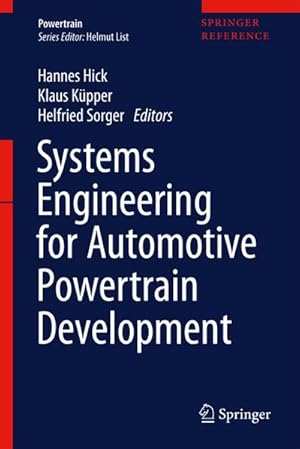
Systems Engineering for Automotive Powertrain Development
Librería: AHA-BUCH GmbH, Einbeck, Alemania
Calificación del vendedor: 5 de 5 estrellas
EUR 588,49
Envío por EUR 68,43
Se envía de Alemania a Estados Unidos de AmericaCantidad disponible: 1 disponibles
Añadir al carritoBuch. Condición: Neu. Druck auf Anfrage Neuware - Printed after ordering - For the last century, the automotive industry has been dominated by internal combustion engines. Their flexibility of application, driving range, performance and sporty characteristics has resulted in several generations of this technology and has formed generations of engineers. But that is not the end of the story. Stricter legislation and increased environmental awareness have resulted in the development of new powertrain technologies in addition and parallel to the highly optimized internal combustion engine. Hybrid powertrains systems, pure battery electric systems and fuel cell systems, in conjunction with a diverse range of applications, have increased the spectrum of powertrain technologies. Furthermore, automated driving together with intelligent and highly connected systems are changing the way to get from A to B. Not only is the interaction of all these new technologies challenging, but also several different disciplines have to collaborate intensively in order for new powertrain systems to be successfully developed. These new technologies and the resulting challenges lead to an increase in system complexity. Approaches such as systems engineering are necessary to manage this complexity. To show how systems engineering manages the increasing complexity of modern powertrain systems, by providing processes, methods, organizational aspects and tools, this book has been structured into five parts.Starting with Challenges for Powertrain Development, which describes automotive-related challenges at different levels of the system hierarchy and from different point of views. The book then continues with the core part, Systems Engineering, in which all the basics of systems engineering, model-based systems engineering, and their related processes, methods, tools, and organizational matters are described. A special focus is placed on important standards and the human factor. The third part, Automotive Powertrain Systems Engineering Approach, puts the fundamentals of systems engineering into practice by adding the automotive context. This part focuses on system development and also considers the interactions to hardware and software development. Several approaches and methods are presented based on systems engineering philosophy. Part four, Powertrain Development Case Studies, adds the practical point of view by providing a range of case studies on powertrain system level and on powertrain element level and discusses the development of hybrid powertrain, internal combustion engines, e-drives, transmissions, batteries and fuel cell systems. Two case studies on a vehicle level are also presented. The final part, Outlook, considers the development of systems engineering itself with particular focus on information communication technologies. Even though this book covers systems engineering from an automotive perspective, many of the challenges, fundamental principles, conclusions and outlooks can be applied to other domains too. Therefore, this book is not only relevant for automotive engineers and students, but also for specialists in scientific and industrial positions in other domains and anyone who has to cope with the challenge of successfully developing complex systems with a large number of collaborating disciplines.
-

Systems Engineering for Automotive Powertrain Development
Idioma: Inglés
Publicado por Springer-Verlag Gmbh Apr 2021, 2021
ISBN 10: 3319996282 ISBN 13: 9783319996288
Librería: BuchWeltWeit Ludwig Meier e.K., Bergisch Gladbach, Alemania
Calificación del vendedor: 5 de 5 estrellas
EUR 481,49
Envío por EUR 23,00
Se envía de Alemania a Estados Unidos de AmericaCantidad disponible: 2 disponibles
Añadir al carritoBuch. Condición: Neu. This item is printed on demand - it takes 3-4 days longer - Neuware -For the last century, the automotive industry has been dominated by internal combustion engines. Their flexibility of application, driving range, performance and sporty characteristics has resulted in several generations of this technology and has formed generations of engineers. But that is not the end of the story. Stricter legislation and increased environmental awareness have resulted in the development of new powertrain technologies in addition and parallel to the highly optimized internal combustion engine. Hybrid powertrains systems, pure battery electric systems and fuel cell systems, in conjunction with a diverse range of applications, have increased the spectrum of powertrain technologies. Furthermore, automated driving together with intelligent and highly connected systems are changing the way to get from A to B. Not only is the interaction of all these new technologies challenging, but also several different disciplines have to collaborate intensively in order for new powertrain systems to be successfully developed. These new technologies and the resulting challenges lead to an increase in system complexity. Approaches such as systems engineering are necessary to manage this complexity. To show how systems engineering manages the increasing complexity of modern powertrain systems, by providing processes, methods, organizational aspects and tools, this book has been structured into five parts.Starting with Challenges for Powertrain Development, which describes automotive-related challenges at different levels of the system hierarchy and from different point of views. The book then continues with the core part, Systems Engineering, in which all the basics of systems engineering, model-based systems engineering, and their related processes, methods, tools, and organizational matters are described. A special focus is placed on important standards and the human factor. The third part, Automotive Powertrain Systems Engineering Approach, puts the fundamentals of systems engineering into practice by adding the automotive context. This part focuses on system development and also considers the interactions to hardware and software development. Several approaches and methods are presented based on systems engineering philosophy. Part four, Powertrain Development Case Studies, adds the practical point of view by providing a range of case studies on powertrain system level and on powertrain element level and discusses the development of hybrid powertrain, internal combustion engines, e-drives, transmissions, batteries and fuel cell systems. Two case studies on a vehicle level are also presented. The final part, Outlook, considers the development of systems engineering itself with particular focus on information communication technologies. Even though this book covers systems engineering from an automotive perspective, many of the challenges, fundamental principles, conclusions and outlooks can be applied to other domains too. Therefore, this book is not only relevant for automotive engineers and students, but also for specialists in scientific and industrial positions in other domains and anyone who has to cope with the challenge of successfully developing complex systems with a large number of collaborating disciplines. 895 pp. Englisch.
-

Systems Engineering for Automotive Powertrain Development
Idioma: Inglés
Publicado por Springer International Publishing, 2021
ISBN 10: 3319996282 ISBN 13: 9783319996288
Librería: moluna, Greven, Alemania
Calificación del vendedor: 4 de 5 estrellas
EUR 474,81
Envío por EUR 48,99
Se envía de Alemania a Estados Unidos de AmericaCantidad disponible: Más de 20 disponibles
Añadir al carritoCondición: New. Dieser Artikel ist ein Print on Demand Artikel und wird nach Ihrer Bestellung fuer Sie gedruckt. Collects all aspects of systems engineering methodology Provides a detailed description of a new tailored approach Features a strong focus on new powertrain solutionsHannes Hick studied mechanical engineering at the Vienn.
-

Systems Engineering for Automotive Powertrain Development
Idioma: Inglés
Publicado por Springer-Verlag Gmbh Apr 2021, 2021
ISBN 10: 3319996282 ISBN 13: 9783319996288
Librería: buchversandmimpf2000, Emtmannsberg, BAYE, Alemania
Calificación del vendedor: 5 de 5 estrellas
EUR 588,49
Envío por EUR 60,00
Se envía de Alemania a Estados Unidos de AmericaCantidad disponible: 1 disponibles
Añadir al carritoBuch. Condición: Neu. This item is printed on demand - Print on Demand Titel. Neuware -For the last century, the automotive industry has been dominated by internal combustion engines. Their flexibility of application, driving range, performance and sporty characteristics has resulted in several generations of this technology and has formed generations of engineers. But that is not the end of the story. Stricter legislation and increased environmental awareness have resulted in the development of new powertrain technologies in addition and parallel to the highly optimized internal combustion engine. Hybrid powertrains systems, pure battery electric systems and fuel cell systems, in conjunction with a diverse range of applications, have increased the spectrum of powertrain technologies. Furthermore, automated driving together with intelligent and highly connected systems are changing the way to get from A to B. Not only is the interaction of all these new technologies challenging, but also several different disciplines have to collaborate intensively in order for new powertrain systems to be successfully developed. These new technologies and the resulting challenges lead to an increase in system complexity. Approaches such as systems engineering are necessary to manage this complexity.To show how systems engineering manages the increasing complexity of modern powertrain systems, by providing processes, methods, organizational aspects and tools, this book has been structured into five parts.Starting with Challenges for Powertrain Development, which describes automotive-related challenges at different levels of the system hierarchy and from different point of views.The book then continues with the core part, Systems Engineering, in which all the basics of systems engineering, model-based systems engineering, and their related processes, methods, tools, and organizational matters are described. A special focus is placed on important standards and the human factor.The third part, Automotive Powertrain Systems Engineering Approach, puts the fundamentals of systems engineering into practice by adding the automotive context. This part focuses on system development and also considers the interactions to hardware and software development. Several approaches and methods are presented based on systems engineering philosophy.Part four, Powertrain Development Case Studies, adds the practical point of view by providing a range of case studies on powertrain system level and on powertrain element level and discusses the development of hybrid powertrain, internal combustion engines, e-drives, transmissions, batteries and fuel cell systems. Two case studies on a vehicle level are also presented.The final part, Outlook, considers the development of systems engineering itself with particular focus on information communication technologies.Even though this book covers systems engineering from an automotive perspective, many of the challenges, fundamental principles, conclusions and outlooks can be applied to other domains too. Therefore, this book is not only relevant for automotive engineers and students, but also for specialists in scientific and industrial positions in other domains and anyone who has to cope with the challenge of successfully developing complex systems with a large number of collaborating disciplines.Springer-Verlag GmbH, Tiergartenstr. 17, 69121 Heidelberg 895 pp. Englisch.


