

Importe total (1 artículo artículos):
Destino del pedido:

strategy after deterrence de cimbala (14 resultados)
Ir a los resultados principales
Filtros de búsqueda
Tipo de artículo
- Todos los tipos de productos
- Libros (14)
- Revistas y publicaciones (No hay ningún otro resultado que coincida con este filtro.)
- Cómics (No hay ningún otro resultado que coincida con este filtro.)
- Partituras (No hay ningún otro resultado que coincida con este filtro.)
- Arte, grabados y pósters (No hay ningún otro resultado que coincida con este filtro.)
- Fotografías (No hay ningún otro resultado que coincida con este filtro.)
- Mapas (No hay ningún otro resultado que coincida con este filtro.)
- Manuscritos y coleccionismo de papel (No hay ningún otro resultado que coincida con este filtro.)
Condición Más información
- Nuevo (12)
- Como nuevo, Excelente o Muy bueno (No hay ningún otro resultado que coincida con este filtro.)
- Bueno o Aceptable (1)
- Regular o Pobre (1)
- Tal como se indica (No hay ningún otro resultado que coincida con este filtro.)
Encuadernación
- Todas
- Tapa dura (14)
- Tapa blanda (No hay ningún otro resultado que coincida con este filtro.)
Más atributos
- Primera edición (No hay ningún otro resultado que coincida con este filtro.)
- Firmado (1)
- Sobrecubierta (No hay ningún otro resultado que coincida con este filtro.)
- Con imágenes (3)
- No impresión bajo demanda (6)
Idioma (2)
Gastos de envío gratis
Ubicación del vendedor
Valoración de los vendedores
-

Strategy After Deterrence
Publicado por Praeger Publishers, 1991
Librería: Anybook.com, Lincoln, Reino Unido
Calificación del vendedor: 5 de 5 estrellas

EUR 5,34
Envío por EUR 15,77
Se envía de Reino Unido a Estados Unidos de AmericaCantidad disponible: 1 disponibles
Añadir al carritoCondición: Good. This is an ex-library book and may have the usual library/used-book markings inside.This book has hardback covers. Clean from markings. In good all round condition. Please note the Image in this listing is a stock photo and may not match the covers of the actual item,700grams, ISBN:
-
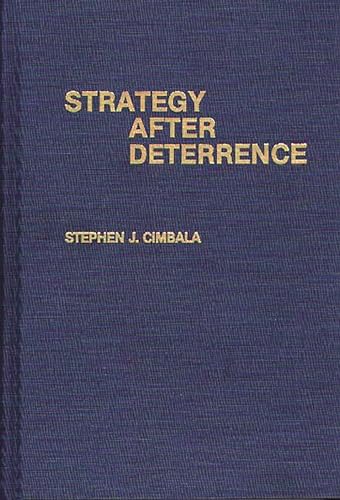
Strategy After Deterrence
Librería: Wonder Book, Frederick, MD, Estados Unidos de America
Miembro de asociación: ABAA ILAB
Calificación del vendedor: 5 de 5 estrellas
Ejemplar firmado
EUR 68,49
Gastos de envío gratis
Se envía dentro de Estados Unidos de AmericaCantidad disponible: 1 disponibles
Añadir al carritoCondición: Fair. Signed Copy . Book Good. No dust jacket. Inscribed by author on front endpage.
-
Strategy After Deterrence
Librería: Ria Christie Collections, Uxbridge, Reino Unido
Calificación del vendedor: 5 de 5 estrellas
EUR 66,79
Envío por EUR 13,89
Se envía de Reino Unido a Estados Unidos de AmericaCantidad disponible: Más de 20 disponibles
Añadir al carritoCondición: New. In.
-
Strategy After Deterrence
Librería: Kennys Bookshop and Art Galleries Ltd., Galway, GY, Irlanda
Calificación del vendedor: 5 de 5 estrellas
EUR 76,78
Envío por EUR 10,50
Se envía de Irlanda a Estados Unidos de AmericaCantidad disponible: Más de 20 disponibles
Añadir al carritoCondición: New.
-
Strategy After Deterrence
Librería: Kennys Bookstore, Olney, MD, Estados Unidos de America
Calificación del vendedor: 5 de 5 estrellas
EUR 98,05
Envío por EUR 9,19
Se envía dentro de Estados Unidos de AmericaCantidad disponible: Más de 20 disponibles
Añadir al carritoCondición: New.
-
Strategy After Deterrence
Librería: Revaluation Books, Exeter, Reino Unido
Calificación del vendedor: 5 de 5 estrellas
EUR 109,64
Envío por EUR 14,49
Se envía de Reino Unido a Estados Unidos de AmericaCantidad disponible: 2 disponibles
Añadir al carritoHardcover. Condición: Brand New. 288 pages. 9.21x6.14x0.69 inches. In Stock.
-
Strategy After Deterrence
Librería: PBShop.store US, Wood Dale, IL, Estados Unidos de America
Calificación del vendedor: 5 de 5 estrellas
EUR 72,47
Gastos de envío gratis
Se envía dentro de Estados Unidos de AmericaCantidad disponible: Más de 20 disponibles
Añadir al carritoHRD. Condición: New. New Book. Shipped from UK. THIS BOOK IS PRINTED ON DEMAND. Established seller since 2000.
-
Strategy After Deterrence
Librería: PBShop.store UK, Fairford, GLOS, Reino Unido
Calificación del vendedor: 5 de 5 estrellas
EUR 67,61
Envío por EUR 5,82
Se envía de Reino Unido a Estados Unidos de AmericaCantidad disponible: Más de 20 disponibles
Añadir al carritoHRD. Condición: New. New Book. Delivered from our UK warehouse in 4 to 14 business days. THIS BOOK IS PRINTED ON DEMAND. Established seller since 2000.
-
Strategy After Deterrence (Hardcover)
Idioma: Inglés
Publicado por Bloomsbury Publishing Plc, Westport, 1991
ISBN 10: 0275937410 ISBN 13: 9780275937416
Librería: Grand Eagle Retail, Bensenville, IL, Estados Unidos de America
Calificación del vendedor: 5 de 5 estrellas
EUR 88,97
Gastos de envío gratis
Se envía dentro de Estados Unidos de AmericaCantidad disponible: 1 disponibles
Añadir al carritoHardcover. Condición: new. Hardcover. The profound political changes in the USSR and Eastern Europe during 1989 have forced the United States and its Western European allies to reevaluate both their long held military strategy of nuclear deterrence and the traditional role of NATO in European affairs. In this volume, Stephen Cimbala considers the ways in which American military priorities will have to change now that the tangible threat to Europe has been removed, exploring the options available to America and NATO given the new political and economic realities in Europe and the Soviet Union. Drawing upon a rich literature of Soviet and American defense strategy, Cimbala examines the structure and effectiveness of deterrence as a military strategy, the relationship between conventional and nuclear weapons, the likely course of future conflicts, and alternative military strategies.Following an introductory chapter which defines the concepts of deterrence and dissuasion and offers an overview of the changing character of European politics, Cimbala reviews the political context for the development of military strategy in Europe. Subsequent chapters consider the relationship between military stability and the likelihood of winning wars in their initial stages, analyze the issue of deterrence during war, discuss the potential for atypical wars in the future, and investigate the linkages between deception and deterrence. A separate chapter addresses the attempt to substitute non-nuclear dissuasion for nuclear deterrence, in the form of anti-nuclear strategic defenses which could defeat nuclear offenses. In the final chapter, Cimbala summarizes his conclusions and makes some additional observations about the implications of our new view of NATO and deterrence. Students of international relations, foreign policy, and military studies will find Cimbala's work enlightening and provocative reading. The profound political changes in the USSR and Eastern Europe during 1989 have forced the United States and its Western European allies to reevaluate both their long held military strategy of nuclear deterrence and the traditional role of NATO in European affairs. In this volume, Stephen Cimbala considers the ways in which American military priorities will have to change now that the tangible threat to Europe has been removed, exploring the options available to America and NATO given the new political and economic realities in Europe and the Soviet Union. Drawing upon a rich literature of Soviet and American defense strategy, Cimbala examines the structure and effectiveness of deterrence as a military strategy, the relationship between conventional and nuclear weapons, the likely course of future conflicts, and alternative military strategies. Following an introductory chapter which defines the concepts of deterrence and dissuasion and offers an overview of the changing character of European politics, Cimbala reviews the political context for the development of military strategy in Europe. Subsequent chapters consider the relationship between military stability and the likelihood of winning wars in their initial stages, analyze the issue of deterrence during war, discuss the potential for atypical wars in the future, and investigate the linkages between deception and deterrence. A separate chapter addresses the attempt to substitute non-nuclear dissuasion for nuclear deterrence, in the form of anti-nuclear strategic defenses which could defeat nuclear offenses. In the final chapter, Cimbala summarizes his conclusions and makes some additional observations about the implications of our new view of NATO and deterrence. Students of international relations, foreign policy, and military studies will find Cimbala's work enlightening and provocative reading. This item is printed on demand. Shipping may be from multiple locations in the US or from the UK, depending on stock availability.
-
Strategy After Deterrence
Librería: THE SAINT BOOKSTORE, Southport, Reino Unido
Calificación del vendedor: 5 de 5 estrellas
EUR 77,66
Envío por EUR 19,49
Se envía de Reino Unido a Estados Unidos de AmericaCantidad disponible: Más de 20 disponibles
Añadir al carritoHardback. Condición: New. This item is printed on demand. New copy - Usually dispatched within 5-9 working days.
-
Strategy After Deterrence (Hardcover)
Idioma: Inglés
Publicado por Bloomsbury Publishing Plc, Westport, 1991
ISBN 10: 0275937410 ISBN 13: 9780275937416
Librería: CitiRetail, Stevenage, Reino Unido
Calificación del vendedor: 5 de 5 estrellas
EUR 72,83
Envío por EUR 42,89
Se envía de Reino Unido a Estados Unidos de AmericaCantidad disponible: 1 disponibles
Añadir al carritoHardcover. Condición: new. Hardcover. The profound political changes in the USSR and Eastern Europe during 1989 have forced the United States and its Western European allies to reevaluate both their long held military strategy of nuclear deterrence and the traditional role of NATO in European affairs. In this volume, Stephen Cimbala considers the ways in which American military priorities will have to change now that the tangible threat to Europe has been removed, exploring the options available to America and NATO given the new political and economic realities in Europe and the Soviet Union. Drawing upon a rich literature of Soviet and American defense strategy, Cimbala examines the structure and effectiveness of deterrence as a military strategy, the relationship between conventional and nuclear weapons, the likely course of future conflicts, and alternative military strategies.Following an introductory chapter which defines the concepts of deterrence and dissuasion and offers an overview of the changing character of European politics, Cimbala reviews the political context for the development of military strategy in Europe. Subsequent chapters consider the relationship between military stability and the likelihood of winning wars in their initial stages, analyze the issue of deterrence during war, discuss the potential for atypical wars in the future, and investigate the linkages between deception and deterrence. A separate chapter addresses the attempt to substitute non-nuclear dissuasion for nuclear deterrence, in the form of anti-nuclear strategic defenses which could defeat nuclear offenses. In the final chapter, Cimbala summarizes his conclusions and makes some additional observations about the implications of our new view of NATO and deterrence. Students of international relations, foreign policy, and military studies will find Cimbala's work enlightening and provocative reading. The profound political changes in the USSR and Eastern Europe during 1989 have forced the United States and its Western European allies to reevaluate both their long held military strategy of nuclear deterrence and the traditional role of NATO in European affairs. In this volume, Stephen Cimbala considers the ways in which American military priorities will have to change now that the tangible threat to Europe has been removed, exploring the options available to America and NATO given the new political and economic realities in Europe and the Soviet Union. Drawing upon a rich literature of Soviet and American defense strategy, Cimbala examines the structure and effectiveness of deterrence as a military strategy, the relationship between conventional and nuclear weapons, the likely course of future conflicts, and alternative military strategies. Following an introductory chapter which defines the concepts of deterrence and dissuasion and offers an overview of the changing character of European politics, Cimbala reviews the political context for the development of military strategy in Europe. Subsequent chapters consider the relationship between military stability and the likelihood of winning wars in their initial stages, analyze the issue of deterrence during war, discuss the potential for atypical wars in the future, and investigate the linkages between deception and deterrence. A separate chapter addresses the attempt to substitute non-nuclear dissuasion for nuclear deterrence, in the form of anti-nuclear strategic defenses which could defeat nuclear offenses. In the final chapter, Cimbala summarizes his conclusions and makes some additional observations about the implications of our new view of NATO and deterrence. Students of international relations, foreign policy, and military studies will find Cimbala's work enlightening and provocative reading. This item is printed on demand. Shipping may be from our UK warehouse or from our Australian or US warehouses, depending on stock availability.
-

Strategy After Deterrence
Librería: moluna, Greven, Alemania
Calificación del vendedor: 5 de 5 estrellas
EUR 74,23
Envío por EUR 48,99
Se envía de Alemania a Estados Unidos de AmericaCantidad disponible: Más de 20 disponibles
Añadir al carritoGebunden. Condición: New. Dieser Artikel ist ein Print on Demand Artikel und wird nach Ihrer Bestellung fuer Sie gedruckt. Über den AutorSTEPHEN J. CIMBALA is Professor of Political Science at Pennsylvania State University, Delaware County. His previous books include Strategic Impasse (Greenwood, 1989), Nuclear Endings (Praeger, 1989), and.
-
Strategy After Deterrence
Librería: preigu, Osnabrück, Alemania
Calificación del vendedor: 5 de 5 estrellas
EUR 77,05
Envío por EUR 70,00
Se envía de Alemania a Estados Unidos de AmericaCantidad disponible: 5 disponibles
Añadir al carritoBuch. Condición: Neu. Strategy After Deterrence | Stephen J. Cimbala | Buch | Gebunden | Englisch | 1991 | Praeger | EAN 9780275937416 | Verantwortliche Person für die EU: Libri GmbH, Europaallee 1, 36244 Bad Hersfeld, gpsr[at]libri[dot]de | Anbieter: preigu Print on Demand.
-

Strategy After Deterrence
Librería: AHA-BUCH GmbH, Einbeck, Alemania
Calificación del vendedor: 5 de 5 estrellas
EUR 92,02
Envío por EUR 62,98
Se envía de Alemania a Estados Unidos de AmericaCantidad disponible: 1 disponibles
Añadir al carritoBuch. Condición: Neu. nach der Bestellung gedruckt Neuware - Printed after ordering - The profound political changes in the USSR and Eastern Europe during 1989 have forced the United States and its Western European allies to reevaluate both their long held military strategy of nuclear deterrence and the traditional role of NATO in European affairs. In this volume, Stephen Cimbala considers the ways in which American military priorities will have to change now that the tangible threat to Europe has been removed, exploring the options available to America and NATO given the new political and economic realities in Europe and the Soviet Union. Drawing upon a rich literature of Soviet and American defense strategy, Cimbala examines the structure and effectiveness of deterrence as a military strategy, the relationship between conventional and nuclear weapons, the likely course of future conflicts, and alternative military strategies.Following an introductory chapter which defines the concepts of deterrence and dissuasion and offers an overview of the changing character of European politics, Cimbala reviews the political context for the development of military strategy in Europe. Subsequent chapters consider the relationship between military stability and the likelihood of winning wars in their initial stages, analyze the issue of deterrence during war, discuss the potential for atypical wars in the future, and investigate the linkages between deception and deterrence. A separate chapter addresses the attempt to substitute non-nuclear dissuasion for nuclear deterrence, in the form of anti-nuclear strategic defenses which could defeat nuclear offenses. In the final chapter, Cimbala summarizes his conclusions and makes some additional observations about the implications of our new view of NATO and deterrence. Students of international relations, foreign policy, and military studies will find Cimbala's work enlightening and provocative reading.


