

Importe total (1 artículo artículos):
Destino del pedido:

journal council fourth session general (4 resultados)
Ir a los resultados principales
Filtros de búsqueda
Tipo de artículo
- Todos los tipos de productos
- Libros (4)
- Revistas y publicaciones (No hay ningún otro resultado que coincida con este filtro.)
- Cómics (No hay ningún otro resultado que coincida con este filtro.)
- Partituras (No hay ningún otro resultado que coincida con este filtro.)
- Arte, grabados y pósters (No hay ningún otro resultado que coincida con este filtro.)
- Fotografías (No hay ningún otro resultado que coincida con este filtro.)
- Mapas (No hay ningún otro resultado que coincida con este filtro.)
- Manuscritos y coleccionismo de papel (No hay ningún otro resultado que coincida con este filtro.)
Condición Más información
- Nuevo (1)
- Como nuevo, Excelente o Muy bueno (No hay ningún otro resultado que coincida con este filtro.)
- Bueno o Aceptable (1)
- Regular o Pobre (2)
- Tal como se indica (No hay ningún otro resultado que coincida con este filtro.)
Encuadernación
Más atributos
- Primera edición (1)
- Firmado (No hay ningún otro resultado que coincida con este filtro.)
- Sobrecubierta (No hay ningún otro resultado que coincida con este filtro.)
- Con imágenes (3)
- No impresión bajo demanda (3)
Idioma (2)
Precio
- Cualquier precio
- Menos de EUR 20 (No hay ningún otro resultado que coincida con este filtro.)
- EUR 20 a EUR 45
- Más de EUR 45
Gastos de envío gratis
Ubicación del vendedor
Valoración de los vendedores
-

Journal and Proceedings of Her Majesty's Legislative Council of the Province of Nova-Scotia, Fourth and Fifth Session of the Sixteenth General Assembly 10 January - 4 April, 1839, 31 December 1839 - 27 March 1840
Idioma: Inglés
Año de publicación: 1840
Librería: Great Matter Books, Grand Rapids, MI, Estados Unidos de America
Calificación del vendedor: 5 de 5 estrellas

EUR 35,44
Envío por EUR 4,29
Se envía dentro de Estados Unidos de AmericaCantidad disponible: 1 disponibles
Añadir al carritoHardcover. Condición: Fair. Half-leather binding with front board loose. Includes assembly notes as well as appendices for the two sessions. Library sticker to spine, Library stamps to front paste down and FFEP, and library check out card and pocket on rear paste down. Binding is well worn at all corners and edges, rear hinge split but holding. Pages are complete with very occasional foxing, age toning throughout. A decent copy of an uncommon resource. All of our books are individually inspected and described. Never X-library unless specifically described as such.
-
![Imagen del vendedor de Journal of the fourth annual session of the General Council of the Indian Territory, composed of delegates duly elected from the Indian tribes legally resident therin, assembled in council at Okmulgee, Indian Territory, Dec. 1st, 1873, under the provision of the twelfth article of the treaty made and concluded at the City of Washington in the year 1866, between the United States and the Cherokee Nation, and similar treaties between the United States and the Choctaw and Chickasaw, Muscokee and Seminole tribes of Indians, of same date 1874 [LeatherBound] a la venta por S N Books World](https://pictures.abebooks.com/inventory/md/md30638503363.jpg)
Journal of the fourth annual session of the General Council of the Indian Territory, composed of delegates duly elected from the Indian tribes legally resident therin, assembled in council at Okmulgee, Indian Territory, Dec. 1st, 1873, under the provision of the twelfth article of the treaty made and concluded at the City of Washington in the year 1866, between the United States and the Cherokee Nation, and similar treaties between the United States and the Choctaw and Chickasaw, Muscokee and Seminole tribes of Indians, of same date 1874 [LeatherBound]
Idioma: Inglés
Año de publicación: 2025
Librería: S N Books World, Delhi, India
Calificación del vendedor: 5 de 5 estrellas
EUR 21,26
Gastos de envío gratis
Se envía de India a Estados Unidos de AmericaCantidad disponible: 18 disponibles
Añadir al carritoLeatherbound. Condición: NEW. BOOKS ARE EXEMPT FROM IMPORT DUTIES AND TARIFFS; NO EXTRA CHARGES APPLY. Leather Binding on Spine and Corners with Golden leaf printing on spine. Bound in genuine leather with Satin ribbon page markers and Spine with raised gilt bands. A perfect gift for your loved ones. Reprinted from 1874 edition. NO changes have been made to the original text. This is NOT a retyped or an ocr'd reprint. Illustrations, Index, if any, are included in black and white. Each page is checked manually before printing. As this print on demand book is reprinted from a very old book, there could be some missing or flawed pages, but we always try to make the book as complete as possible. Fold-outs, if any, are not part of the book. If the original book was published in multiple volumes then this reprint is of only one volume, not the whole set and contains approximately 44 pages. IF YOU WISH TO ORDER PARTICULAR VOLUME OR ALL THE VOLUMES YOU CAN CONTACT US. Resized as per current standards. Sewing binding for longer life, where the book block is actually sewn (smythe sewn/section sewn) with thread before binding which results in a more durable type of binding. Language: English.
-
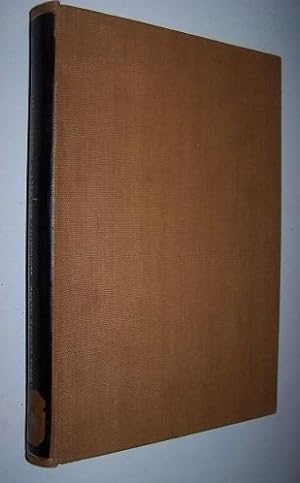
Journal of the Legislative Council of Prince Edward Island, Anno Tricesimo Quarto Victoriae Riginae, First Session of the Twenty Fourth General Assembly
Publicado por E. Reilly & Co., Herald Office, Prince Street, Charlottetown [PEI], 1871
Librería: Antiquarian Bookshop, Washington, DC, Estados Unidos de America
Calificación del vendedor: 4 de 5 estrellas

Original o primera edición
EUR 265,79
Envío por EUR 5,12
Se envía dentro de Estados Unidos de AmericaCantidad disponible: 1 disponibles
Añadir al carritoHardcover. Condición: Very Good. First Edition; First Printing. 359 pages; Tan library buckram, spine with full-length dark leather label lettered in gilt; marbled endpapers and text-block edges. With the engraved bookplate of the U. S. Department of State, paper library label mounted to the base of the spine, small oval State Department accession stamp on the verso of the title page, card pocket mounted to the rear paste-down endpaper; red ink Surplus-Duplicate stamp on the front free endpaper (certifying that this copy is properly de-accessioned from government ownership). This volume is clean and well preserved, with other library marks than those mentioned above -- (no perforations, stamps in the interior, etc.) There are a few pencil notes, and marks, but these are highly interesting and suggest that this copy had a particularly interesting role in the history of its time -- the final years during which Prince Edward Island was still resisting pressure to join the new Dominion of Canada. The residents of Prince Edward Island may have been isolated by maritime geography, but they were united in taking pride in their Island and its legislative independence from 1851 onward. Even so, with the Charlottetown Conference of 1864, PEI had been the site of the first meeting which eventually led to the eventual adoption of the Articles of Confederation and the creation of the Dominion of Canada in 1867, making the Island in some respects the birthplace of the idea of Canada. Despite this founding status, Prince Edward Islanders did not find the terms of union with Canada favorable in 1867, and its legislature choose to remain a part of Great Britain and Ireland at that time. The reasons were mostly economic. PEI was wholly dependent on agriculture and fisheries, with products exported mostly to the United States of America and Europe and the UK. Canada had a similar profile, mostly devoted to agriculture, and with ample fisheries of its own. Locals feared that entering the newly-created Canada's complex structure of tariffs and regulations would force islanders to purchase all the goods they needed from Canada, send their taxes to that Dominion's government. But, on the other hand, the economic realities of their size and relative isolation, along with the Dominion's regulatory structure, would offer them almost nothing in return. PEI was relatively densely populated; the island, virtually without minerals, had to support a population of about 90,000. The unique complications of the ownership of the limited amount of land was also a factor. Under the historic land grants from the Crown, nearly the whole Island was owned by absentee proprietors who had no willingness to sell land to their tenants, the actual residents of the Island. The new Canadian Dominion government certainly wanted to add PEI to its Dominion. And for various reasons, the British Crown also wanted PEI in the Dominion, if only to uncomplicate their obligations with regard to the defence of their North American territory. The Dominion government sweetened the terms of union to PEI in 1869, but the local legislators still resisted becoming Canadians. A new interested party inserted itself in the discussion in the form of a delegation sent to PEI in 1868 from the Congress of the United States seeking to reistablish trade reciprocity. The heart of the matter was the crucial issue of fisheries. Briefly, after the initial creation of the Dominion of Canada, regulations and tariffs in the ports of Nova Scotia and Halifax had the effect of sending most United States fishing vessels working the waters of the northeast to PEI and Charlottetown, in order to buy and sell their catch, secure provisions (especially fresh water, salt and provisions for the crew) as well as necessary repairs. This vast increase in trade was making various PEI residents rich, and their Canadian neighbors resented this, to say the least. The British Crown issued regulations which closed this advantage to PEI, and this, understandably, proved hightly unpopular. The matter was finally setttled in the year of publication of this volume with the "Treaty of Washington" -- between the United States, the British Crown, and the new Government of the Dominion of Canada. [It should be noted that this highly important Treaty settled many matters as well as the fishing rights of the region]. This fine copy of the 1871 Journal of the PEI Legislative Council is a splendid remnant of a (relatively) independent Prince Edward Island. As it happens, this copy is of special interest, as it was the copy of record in the Library of the U.S. State Department (as of May, 1893 according to the accession stamp on the verso of the title page. But this copy may be more interesting, yet. There is a pencil note on the title page which suggests that this copy have been used by the U.S. side in the negotiations over the fisheries matter. There is a pencil reference at the head of the title page: -- "See pp. 18-232 E.H." Indeed, these pages referred to form "Apendix No. 1" -- entirely devoted to the issue of fishing rights and port access. There are pencil notes in this section, executed in handwriting matching the note on the title page. These appear in the first section of the Appendix, devoted to the report on the fisheries matter prepared by Edward Palmer, Q.C. (There is also a pencil note recording that Palmer was later Chief Justice of the Island, and died in November, 1889). The initials and the nature of the notes and passages marked with vertical lines in the margins suggest that this copy may have been used by Ebenezer Rockwood Hoar [1816-1895] -- who had been President Ulysses Grant's Attourney General. Indeed, E. R. Hoar was the first Attorney General to head the newly created U. S. Department of Justice in July, 1870. Grant nominated Hoar to be an Associate Justice of the U. S. Supreme Court, but the Senate failed to confirm him (under circustances which do little credit to his political foes). Hoar's main achievement may well have been, wi.
-

Journal of the Council, At the Fourth Session of the General Assembly of the Territory of Nebraska, Begun and Held at Omaha City, N.T., December 8th, A. D., 1857 Printed and Published by Authority
Publicado por Edwin S. Chapman, Territorial Printer, Omaha City, N. T., 1858
Librería: Americana Books, ABAA, Stone Mt, GA, Estados Unidos de America
Miembro de asociación: ABAA ESA ILAB IOBA
Calificación del vendedor: 5 de 5 estrellas
EUR 310,10
Envío por EUR 5,16
Se envía dentro de Estados Unidos de AmericaCantidad disponible: 1 disponibles
Añadir al carritoWraps. Condición: Fair. Stitched wraps (approx. 9" x 6"). 162 pages. Gray paper covers with black title on the front cover. Title on the paper spine. Light damp staining throughout the text mainly on the margins. Fair condition. Nebraska territory was created in 1854 by the Kansas Nebraska. Nebraska became a state in 1867.


